





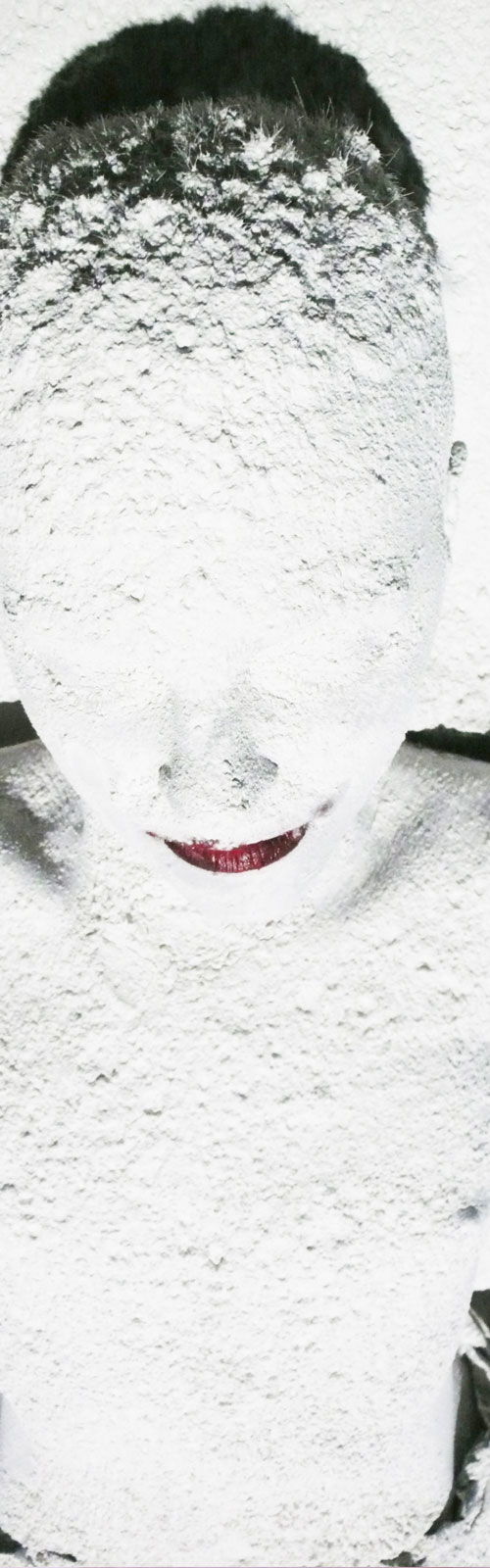
RC PYRAMUS X THISBE
The wall of history divides them.
It's a wall of noise that occasionally gives way.
A caesura for the time of a kiss
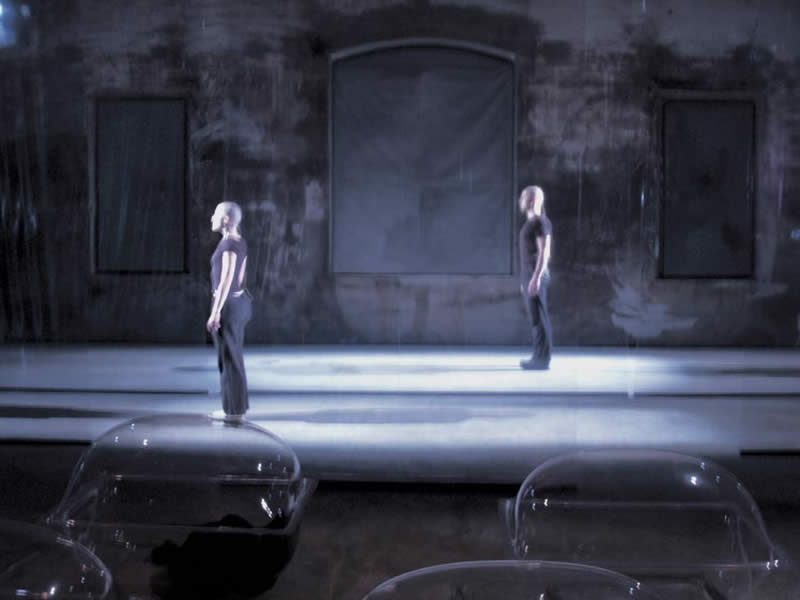
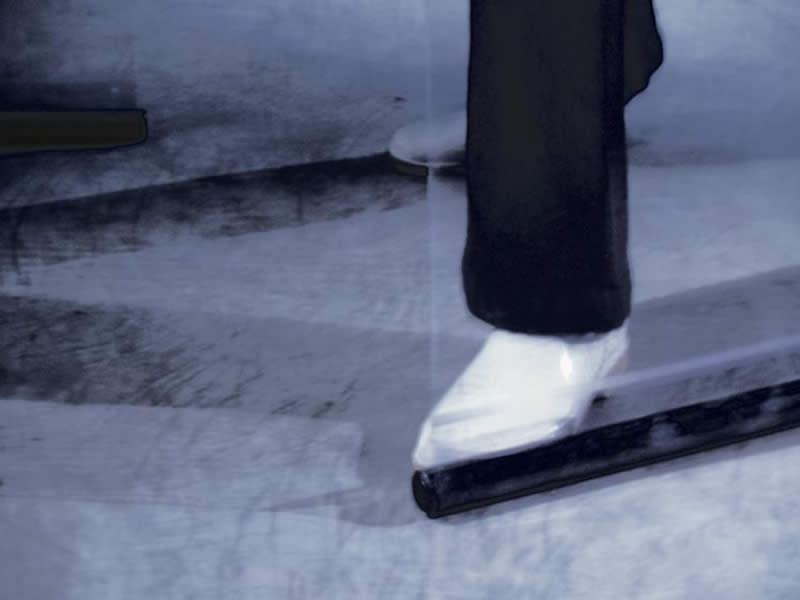
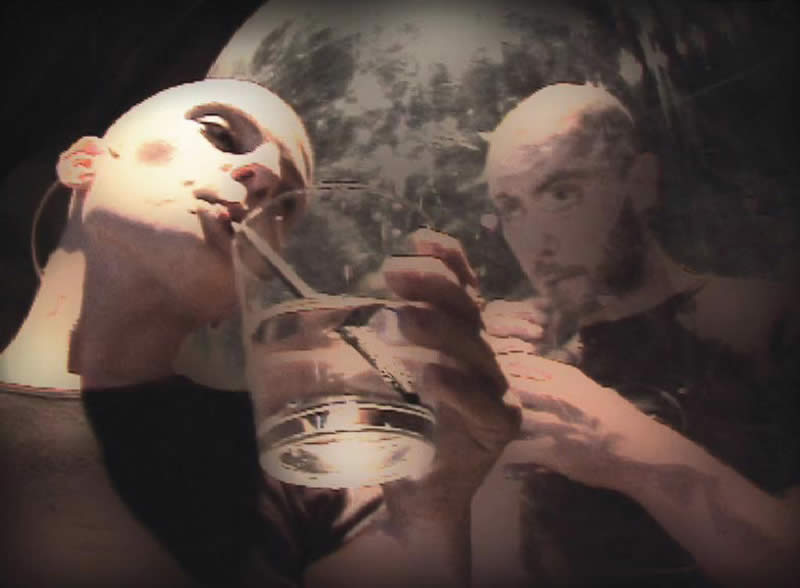
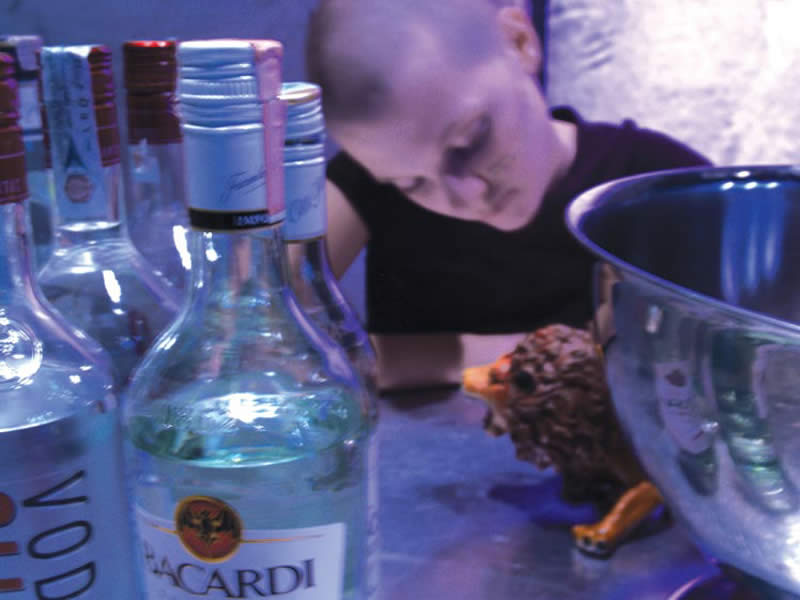
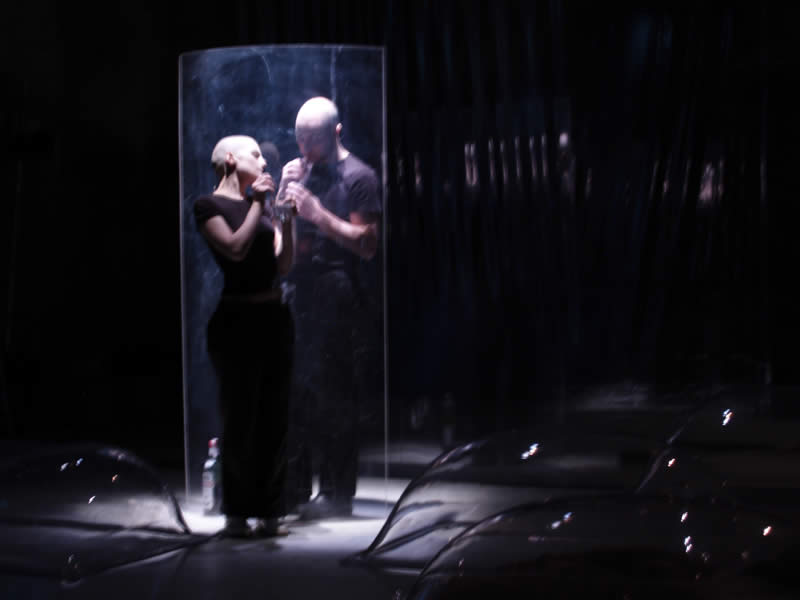
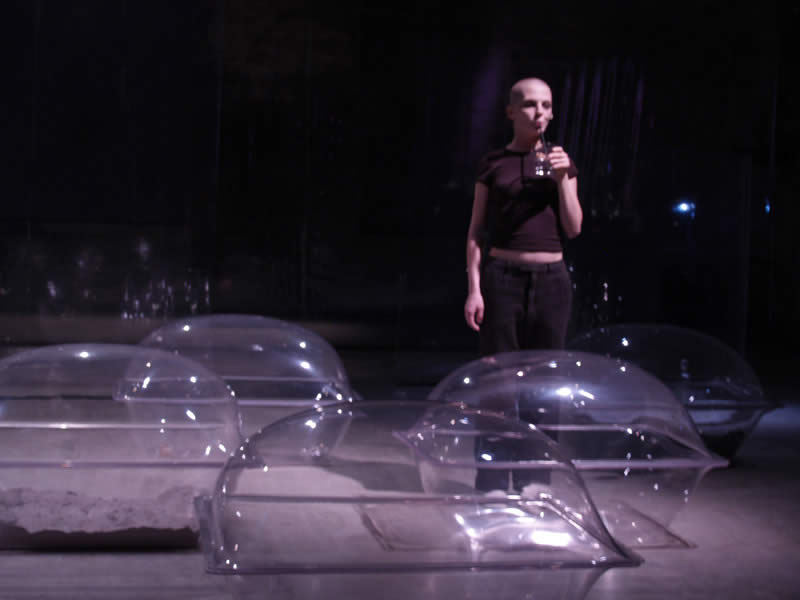
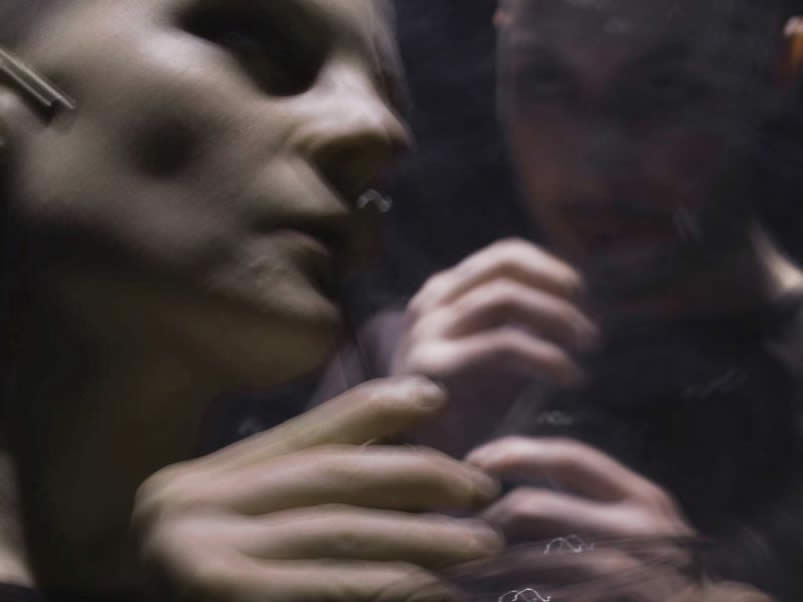
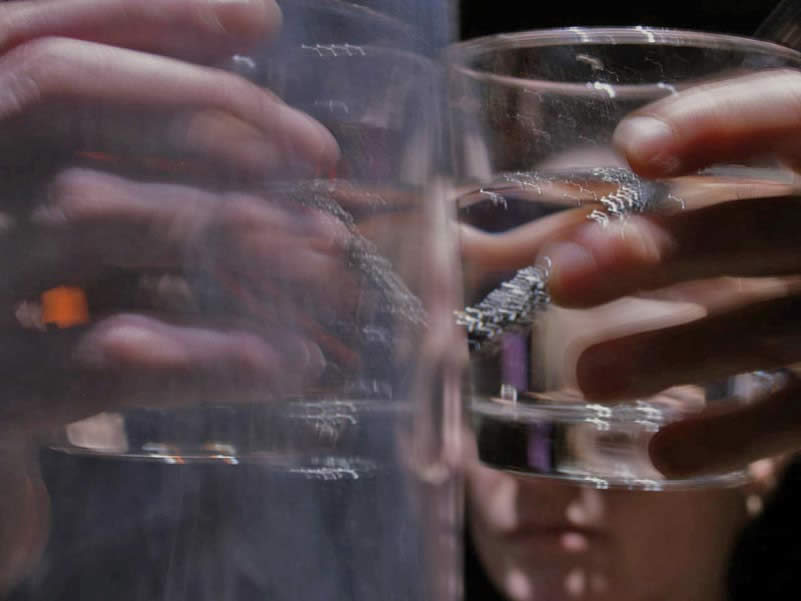
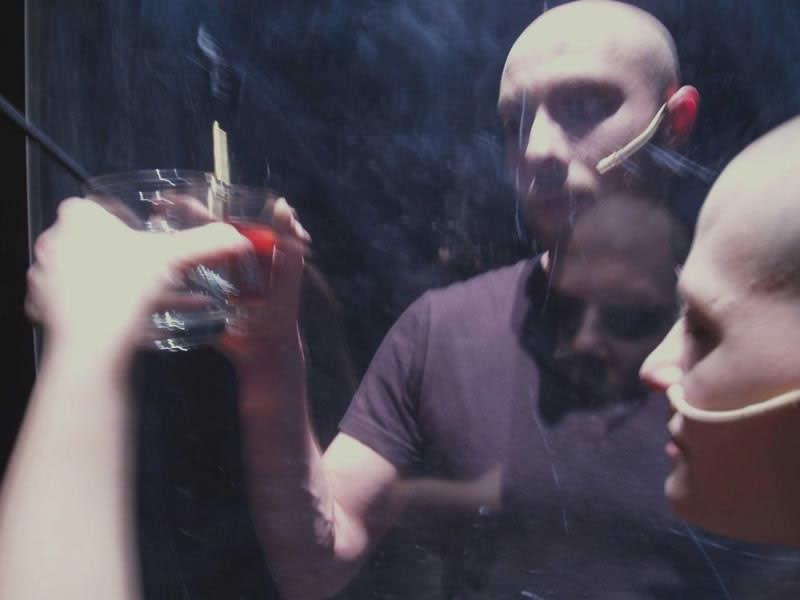
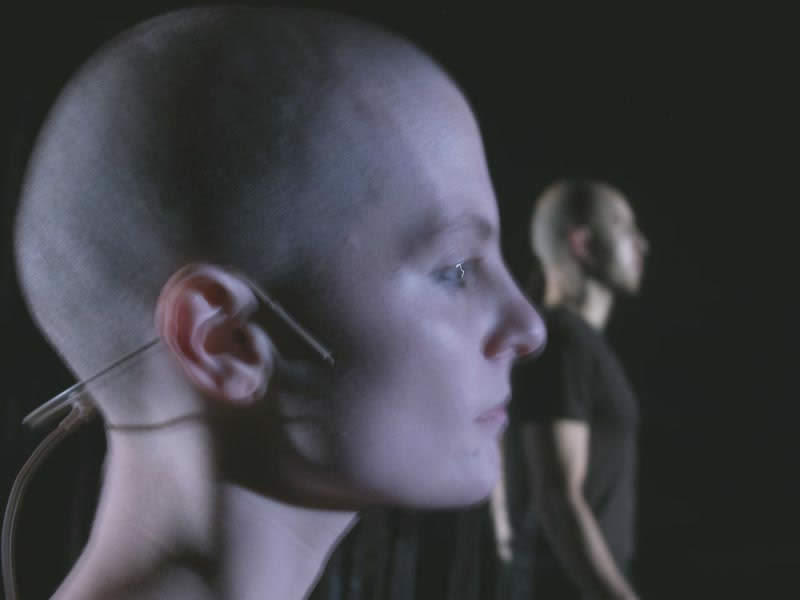
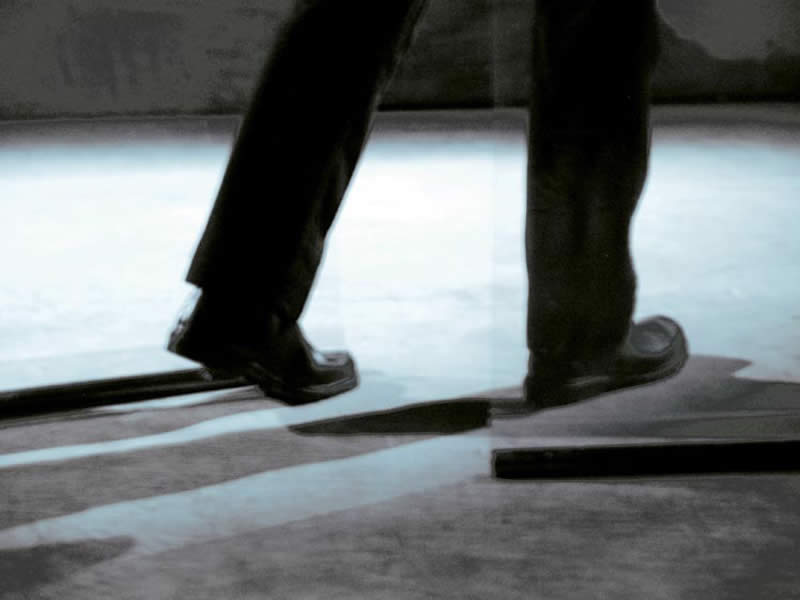
"La forza dramaturgica di Pyramus x Thisbe _RC_07 – underlines Maria Federica Maestri – it lies in the multiplication of one by the other, in the doubling of the loving body, in the rituality of the double suicide which opposes the tragic division of the Orpheus paragraph : Eurydices, played by Elisa Orlandini. In the story of the two lovers there is no metamorphosis of bodies, the mythical miracle does not take place: they only ask that a chromatic sign of their suffering remain, the mulberry tree that is stained with their blood will turn black". In the final toast of the young lovers, minimal prophecy of the metamorphosis of the berries highlighted by two cocktails of different colors, the 'non-place' of the brand, of the brand places the performance in a markedly Western ritual sub-culture, exalting the minor writing of the amorous residuality of the Ovidian episode".
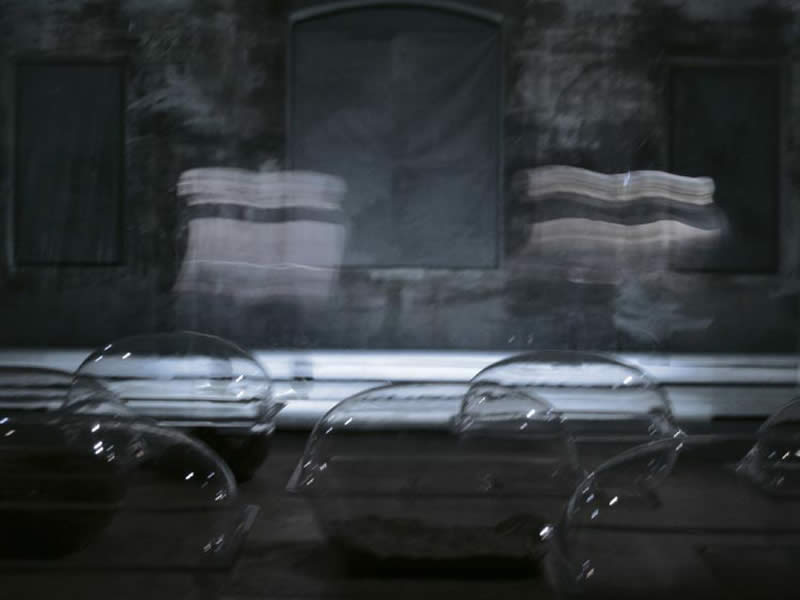
After the metamorphosis of Alcyone and Ceyx, absorbed by the audience in the room with a subtle sense of fragility and romantic enchantment, the performance space changes radically: the transparent ovules created by Maria Federica Maestri are placed in the foreground, as if they had been symbolically generated by the previous metamorphosis of Alcyone and Ceyx into seabirds. In Pyramus x Thisbe, episode of Ovid on which the director had already worked several years ago in the staging of 'A Midsummer Night's Dream', the performers will inhabit the entire space of Lenz Hall in an intense dialogue where verbality, unlike the other paragraphs of Radical Change, it will have a fundamental role in a sound continuum encrypted by a dense Latin language, intimate and anti-rhetorical.
The two young Babylonian men Pyramus and Thisbe, who love each other against the wishes of their families, they are forced to speak to each other through a crack that opens in the high wall that divides their homes. They decide, In the end, to escape together, arranging to meet near a mulberry tree. Thisbe, arrived first, he meets a lion from which he escapes, losing his veil in his escape which is stained with the blood of the beast. Pyramus, arrived at the same place a little later, he sees Thisbe's bloody veil and, believing her to be dead, stabs himself with his sword. Upon his return Thisbe finds him like this, at the end of life, but by whispering her name to him she manages for a moment to make you open your eyes again and look at her. Thisbe if he kills with the same sword of Pyramus. The two unfortunate lovers die together and the mulberry tree, soaked in their blood, it turns its fruits into a vermilion colour
PYRAMUS X THISBE
from The Metamorphoses of Publius Ovidius Naso
creation ||Maria Federica Masters | Francesco Pititto
translation | playwriting | imagoturgy || Francesco Pititto
installation | wrappers | plastic elements || Maria Federica Masters
musica || Andrew Azzali
sound direction || Maria Federica Masters
performers || Valentina Barbarini | Antonio Courses
Project care || Lisa Gilardino
light design || Gianluca Bergamini | Andrea Morarelli