






RC ORPHEUS:EURYDICES
“They set off through silent silences along a rapid uphill path, dark, immersed in a thick and dark fog. And now they were not far from the surface, when, in fear that she would disappear, and longing to see her again, full of love he turned around. And immediately it slipped back, and holding her arms she convulsively tried to cling to him and be held again, but nothing else clicked, that the elusive air"
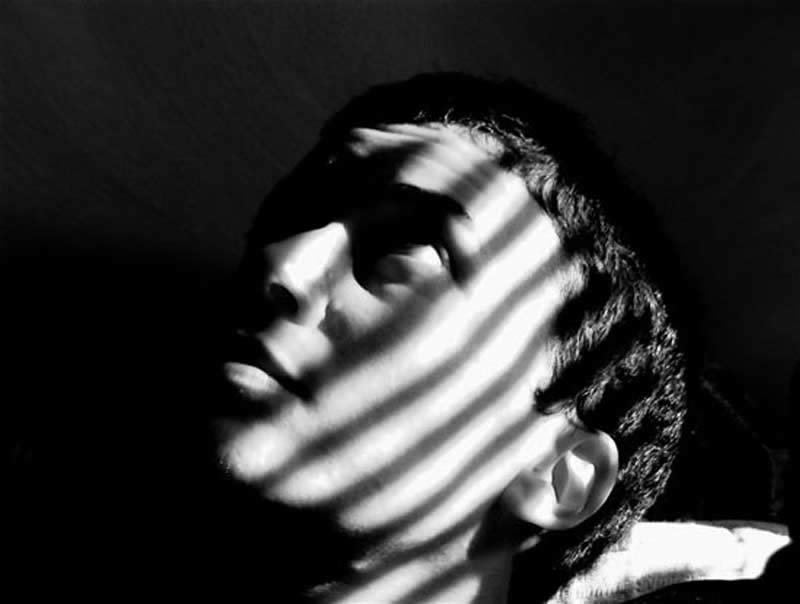
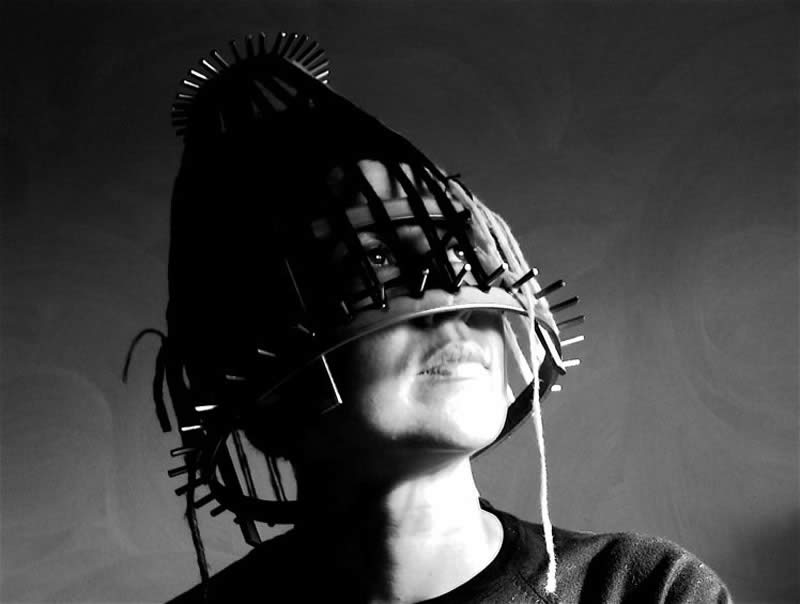
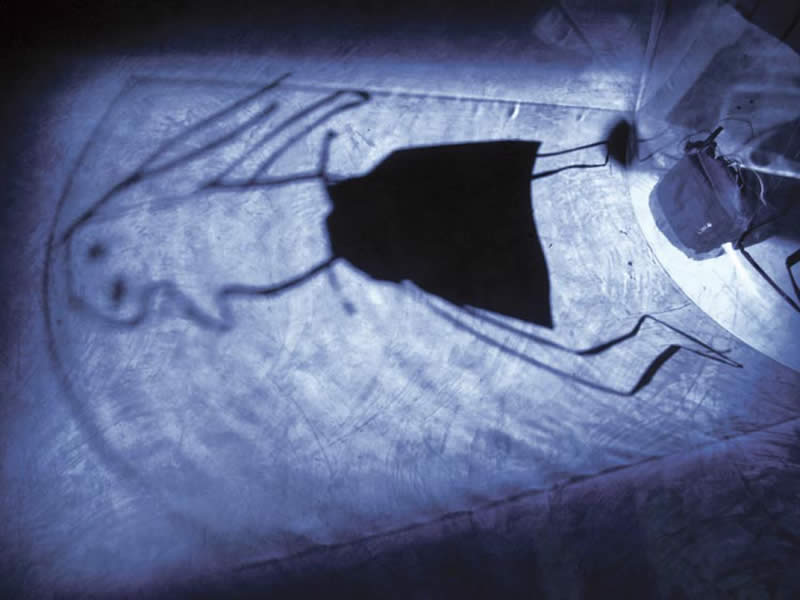
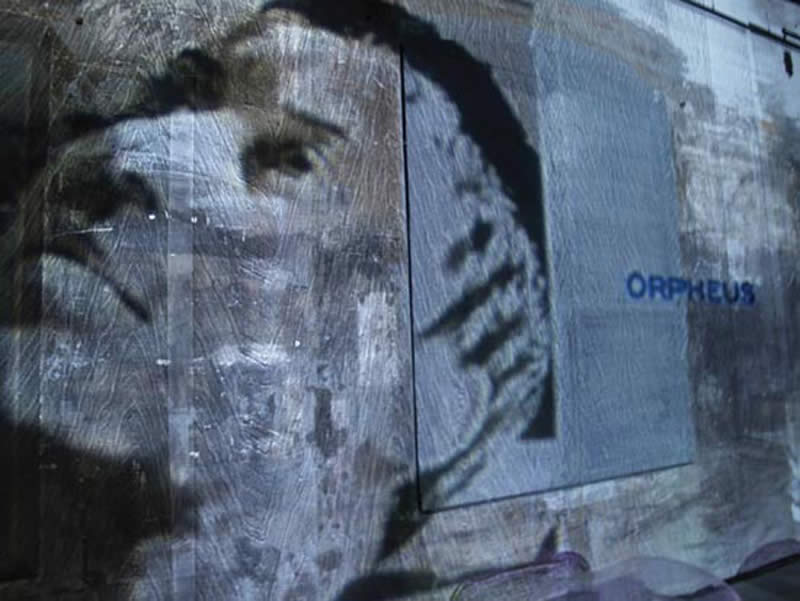
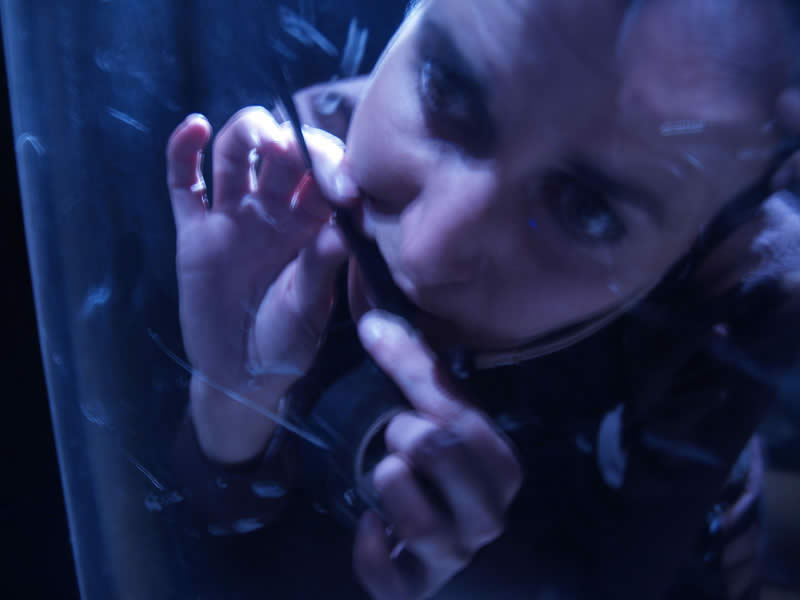
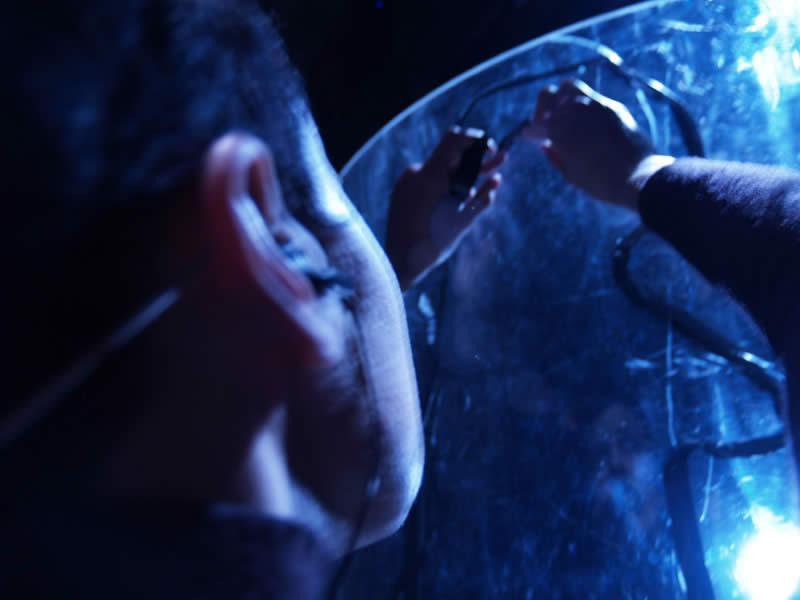
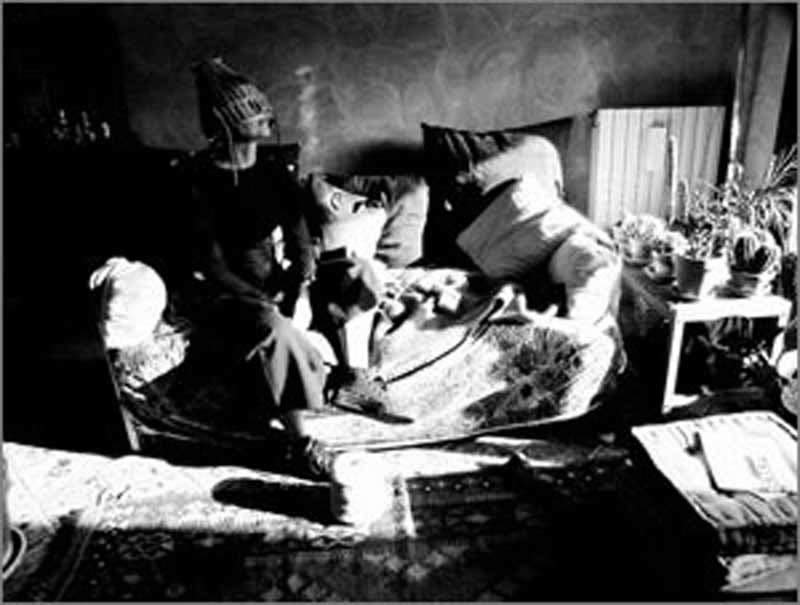
The fourth paragraph of Radical Change, Orpheus : Eurydices_RC_04 is the performance inspired by one of the most fascinating and evocative Greek mythological experiences, which are now part of the cultural universe of Western society. The myth of Orpheus, who descends into Hades, the realm of the dead inaccessible to humans, to try to bring his bride back to life, Eurydices, it has been at the center of artists' reflection, philosophy, theater directors, painters and poets over the centuries. A work that arises from rigorous research into the plastic materials to be used for the scene, attention to movements and symbolic gestures, each linked to a quote from a specific poetic passage, a thin line of syntactic definition that creates a sequence of lucid scenic situations, fast and with a strong impact.
One day the beauty of Eurydices made Aristaeus' heart burn and he fell in love with her and tried to seduce her.. To escape his insistence, the girl started running but stepped on a snake hidden in the grass which bit her., causing her instant death. Orpheus, mad with pain he decided to descend into Hades to try to snatch her from the kingdom of the dead. He convinced Charon to ferry him to the other side of the Styx and surrounded by damned souls who tried in every way to seize him, he came into the presence of Hades and Persephone. Thanks to the power of his singing, of desperation and loneliness, he managed to convince the lords of the underworld of his intent: Orpheus was thus allowed to lead Eurydices back to the realm of the living on the condition that during the journey to earth he did not turn to look at her face. Orpheus, thus taking his bride by the hand she began her journey towards the light, but during the journey he suspected that he was leading a shadow by the hand and not his beloved. Thus forgetting the promise he had made, he turned to look at her but Eurydices vanished and Orpheus helplessly witnessed her death for the second time..
Elisa Orlandini represents the historical and artistic memory of Lenz Rifrazioni, protagonist of some fundamental shows for the poetics of the company, from the trilogy inspired by the great Spanish playwright Pedro Calderón de la Barca, ('Life is a dream', 'The Magical Prodigious' and 'The Constant Prince') al 'Faust I' e 'Faust II', by Goethe, to Andersen's 'Red Shoes'.
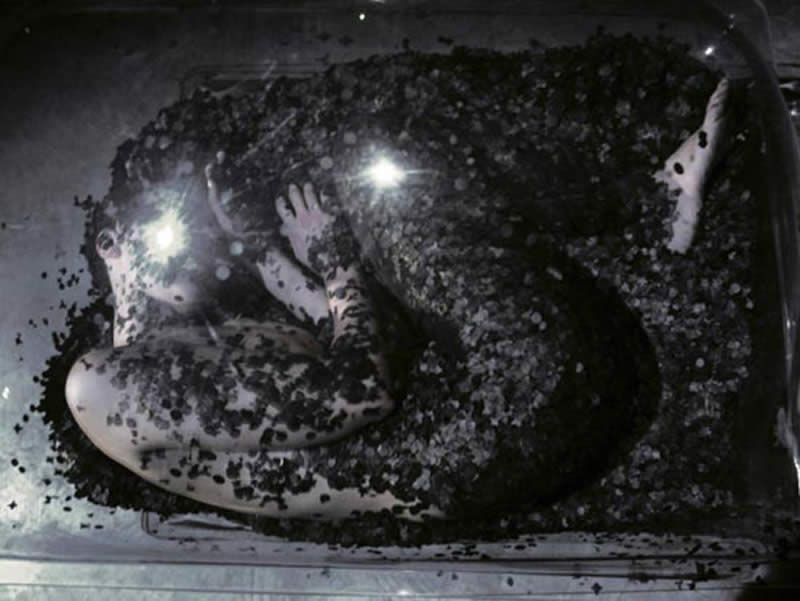
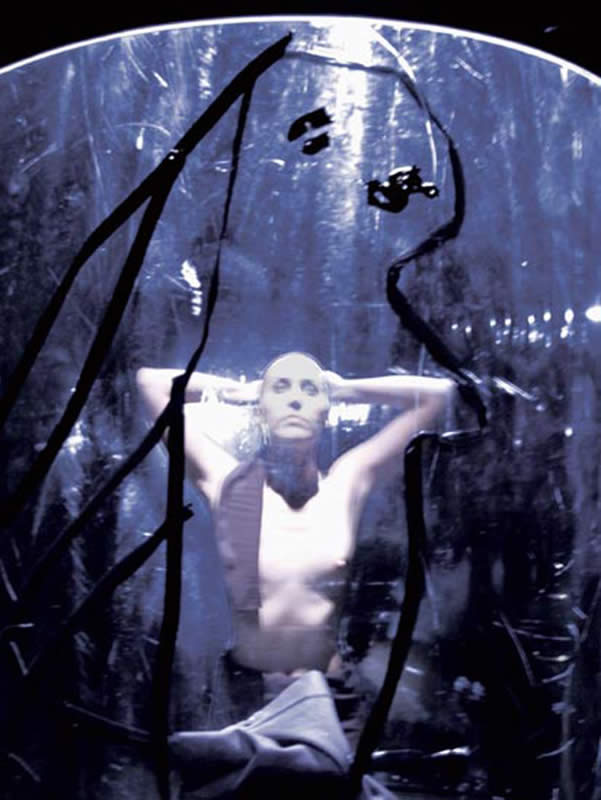
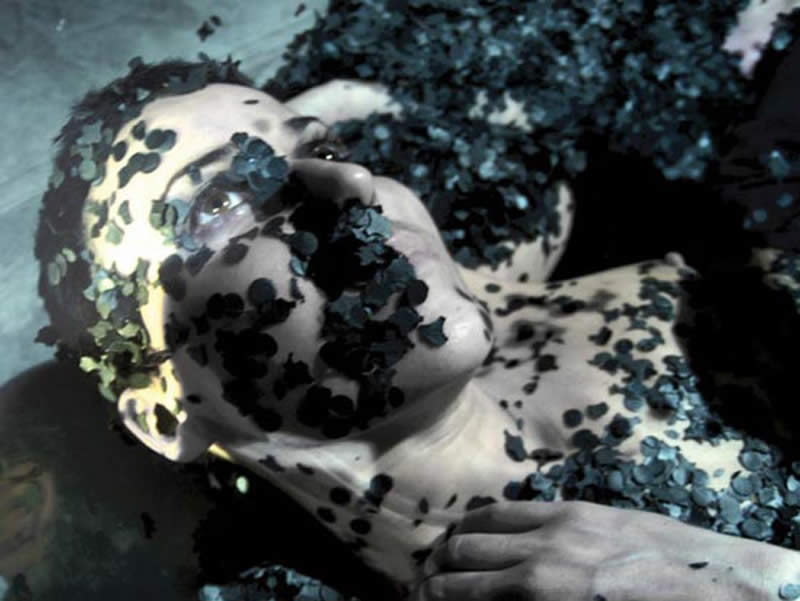
Maria Federica Maestri has created an installation situation that plastically translates the chromatic and foundational opposition of the story of Orpheus, who with his song enchants gods and beasts, and Eurydices who is a silent shadow, deexistent part of the kingdom of darkness. Hades as a non-place, but a sparse geometry of minimal and private spatial tensions. An elegy to black that feeds on material dimensions already experimented during the other performances, those ovules that represent the metamorphoses that Ovid speaks of: in the foreground of the scene is the Eurydices egg containing black confetti, symbol of the wedding celebration steeped in mourning, as narrated by Ovid and Rainer Maria Rilke, the final point where the performance will end. Poetic microtexts suggested live by a transmitter and listened to in an earpiece, black drawings of the beloved who plastically divides herself into the beloved on the transparent plane of the scene, a work that is defined in the coincidence between the power of artistic action and the need for separation from the loved object.
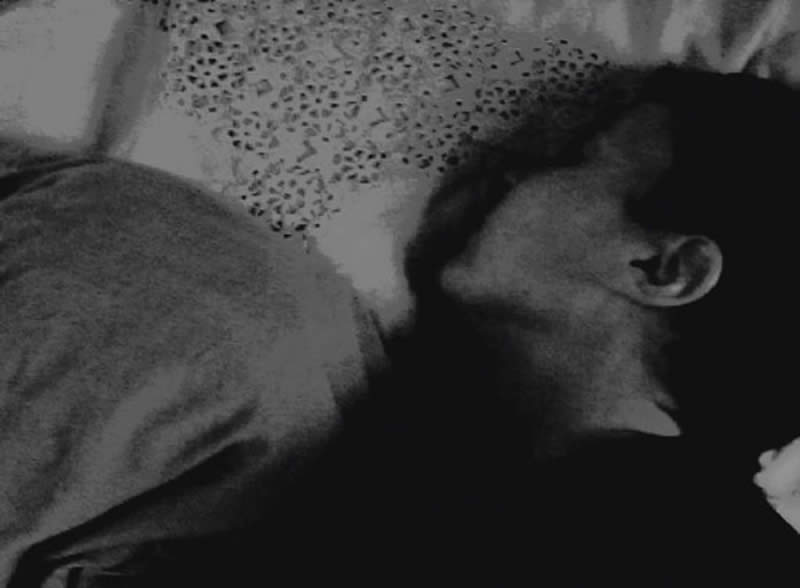
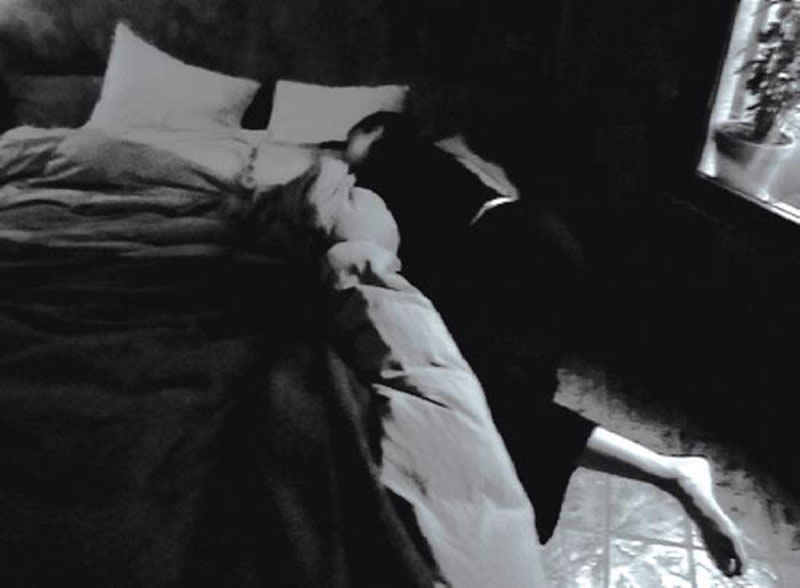
As always, Francesco Pittitto takes care of the dimension of the image through projection, simultaneously with the performance, of a black and white video, an Orphic portrait of Elisa Orlandini that will mix with the scenic syntax and performative movements.
“Orpheus : Eurydices_RC_04-underlines Maria Federica Maestri- it is the central point of exploration of the project and places within itself the coincidence between the artistic sign and the need for separation from the loved object. In Orpheus:Eurydices is the division that announces unity, to be absolutely one in the other one must divide – or multiply one by the other – but the result is always one. The performer who plays her, Elisa Orlandini, she is a metamorphic actress in herself and a poetically Lentian creature: he overcomes his own acting grammar and pushes himself into the formal thematic nucleus he is experiencing. Give up using the actor's code to invent, together with the creator, the language of that moment, in a continuous renewal of its scenic being. In formal continuity with Phoenix Death I created a very tight gestural sequence, reduced to the physical density of the shadow, sparse compared to the constant athletic bombast of Lenz Rifraczioni. The creator and the performer speak a private language, slang, an incomprehensible code made of memories and predictions.
With this sign chatter they fill the aural bed of the representation in apparent contravention with the Orphic turgidity of the video sequence created by Francesco Pititto. Sharing the three linguistic levels, visual, sonorous, performative, is at its maximum degree and the process of de-emphasizing metamorphic descriptiveness at its full completion. It will be a point beyond which it will be difficult to go. It is the paragraph that simultaneously contains the past and the artistic future of L.R.".
ORPHEUS:EURYDICES
from The Metamorphoses of Publius Ovidius Naso
creation || Maria Federica Masters | Francesco Pititto
translation | playwriting | imagoturgy || Francesco Pititto
installation | wrappers |plastic elements || Maria Federica Masters
musica || Andrew Azzali
sound direction || Maria Federica Masters
performer || Elisa Orlandini
Project care || Lisa Gilardino
light design || Gianluca BergaminI | Andrea Morarelli