







RC ECHO
“All the humors of the body are dispersed in the air. All that remains are the voice and the bones. The voice still exists:the bones took on the appearance of stones. And so it is hidden in the woods and is not seen on any mountain. But you can hear it everywhere: it is the sound that lives in her”
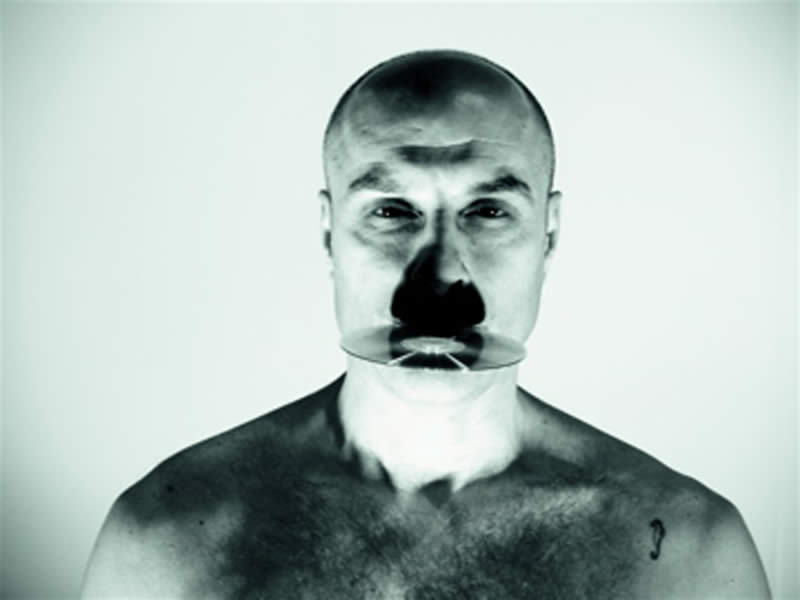
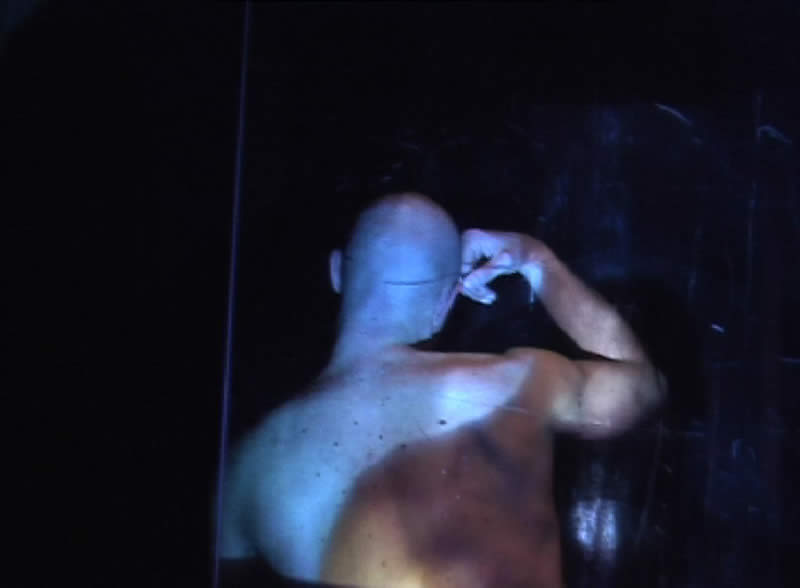

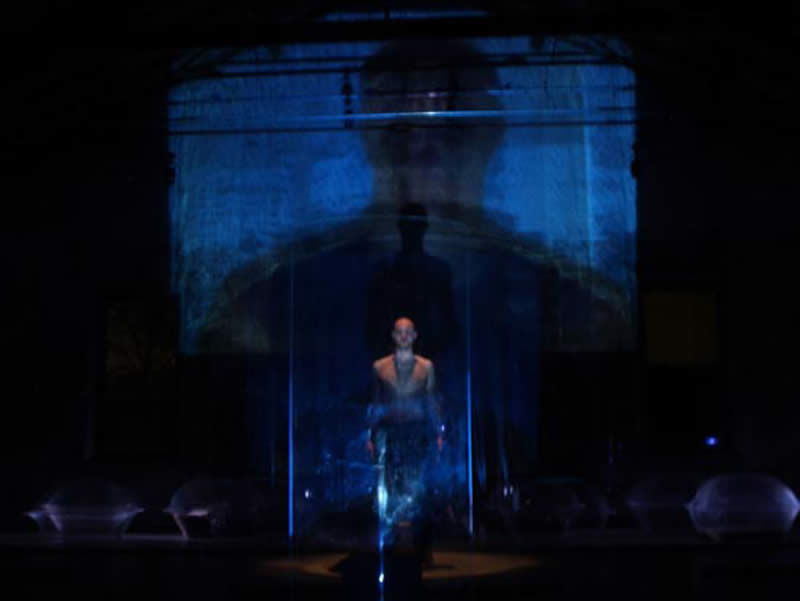
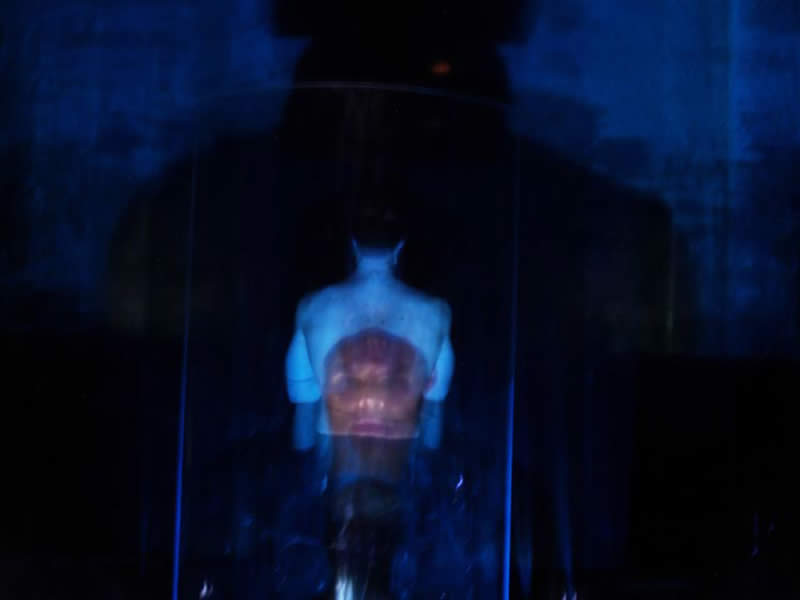
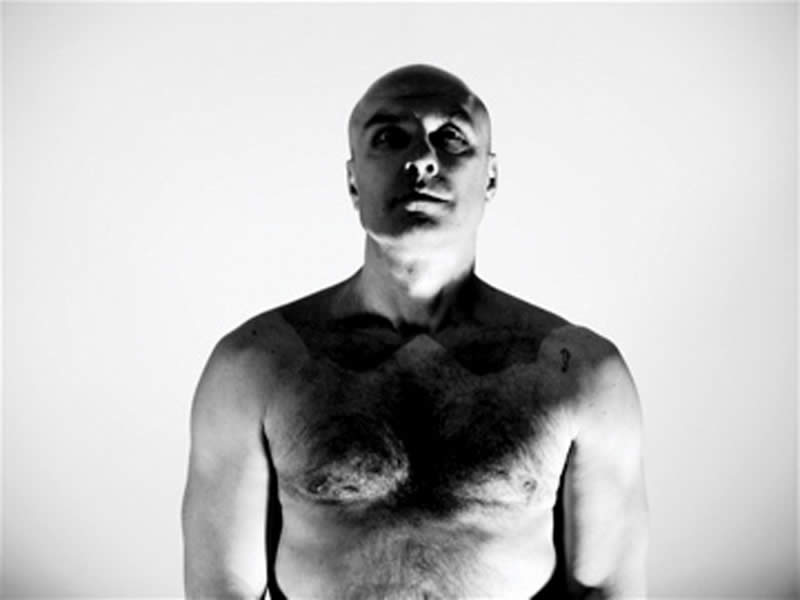
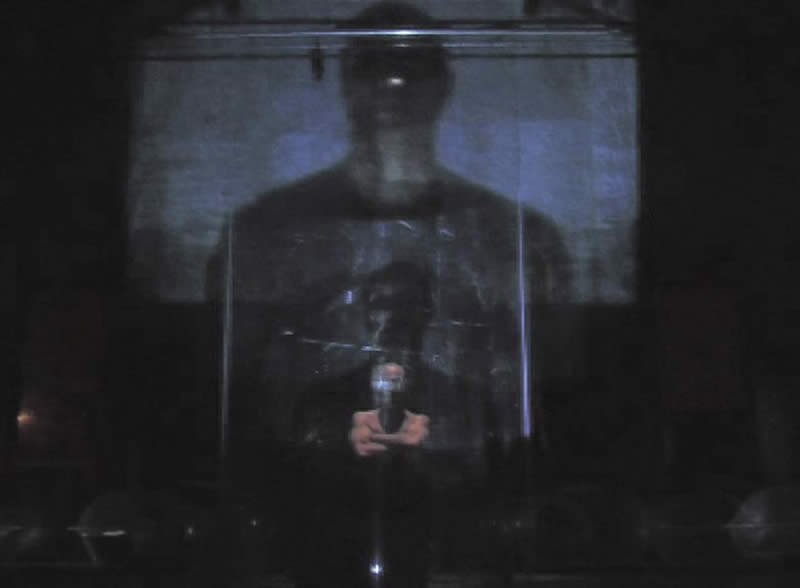
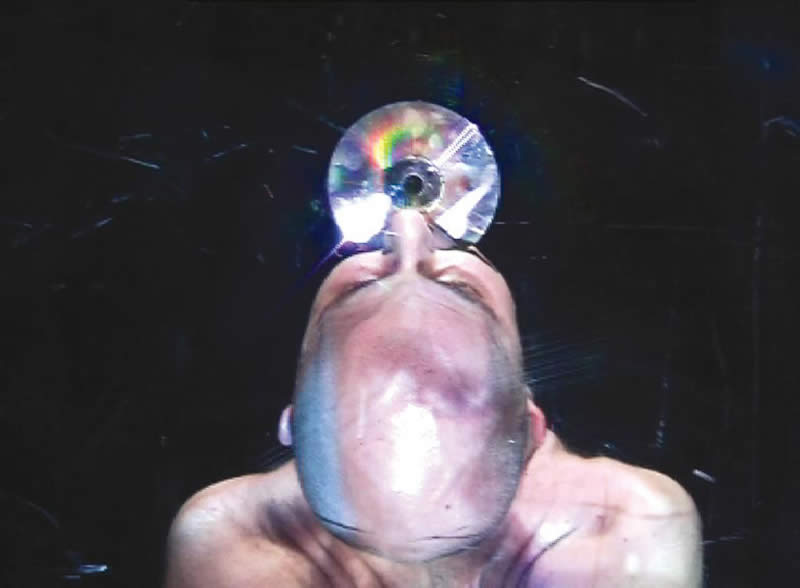
The second paragraph of Radical Change, Echo_RC_02, the metamorphosis of the nymph Echo is interpreted through a plastic-sonic translation with a live performance by Andrea Azzali. The nymph Echo, in Ovid's story, unable to confess her love to the young Narcissus and forced only to repeat his words, decides to hide, out of shame, in the midst of woods and rocky ravines, so that no one can ever find out where his voice comes from. “Like in an earthquake,” underlines Maria Federica Maestri- two levels of thrust coexist, one that reproduces from bottom to top and one that expands horizontally, This is how the first two performances of Radical Change can be interpreted: Phoenix Death is felt more strongly and directly, it immediately causes more 'damage' than beauty, the second paragraph of Radical Change is perceived more slowly, but the quality of its vibrations lasts longer. It is established in the relationship with the experimental sound language of Andrea Azzali, with his presence, 'masked' in doubling by the performer Antonio Corsi.
Finished, the loving spasm of creation is consumed, what remains is the echo of what is even more immaterial than the theatre, il suono: the sign that does not create body. The attempt was to restore the rigid body to vision, the source body, the body of music and the musician who re-assumes the forms of the Nymph, la sua carnalità, his muscular desire for sound. This performance presents a minimal modification of the installation space. The idea was to be able to redesign a dramaturgy of space not simply by reshaping the elements on stage but by redefining them, starting from the musician's space placed inside the plastic eggs, ethereal, incolori, in the guise of eternity. Set up inside this transparent cavern 3 volumi cubici, perfect form that opposes the irreducible perfection of roundness, to represent the graduated angularity of the act of knowledge. The artificial instrument was placed right on a cube, the computer, from which the memory of the original sound comes: pedestal and body of the representation. Few traits of Echo's melodramatic identity have been restored, one of the founding metamorphoses of Western culture, of his philosophical-amorous thought. On this poetic-symbolic material we operated a cooling process aimed at depriving, to thin out, to dry up the narrative body rather than passionately strengthen its representation. The opposite happened with the metamorphosis of the Phoenix, whose symbolism does not re-establish the great Western sentimental mythologems: culturally hybrid it is closer to contemporary pathos".
ECHO
from The Metamorphoses of Publius Ovidius Naso
creation || Maria Federica Masters | Francesco Pititto
translation | playwriting | imagoturgy || Francesco Pititto
installation | wrappers | plastic elements || Maria Federica Masters
musica || Andrew Azzali
sound direction || Maria Federica Masters
performer || Andrew Azzali | Antonio Courses
Project care || Lisa Gilardino
light design || Gianluca Bergamini | Andrea Morarelli