





Iphigenia in Aulis
Iphigenia
Biennial project 2018-2019
Musical scenic diptych on the sacrifice of the innocents
2018 Iphigenia in Aulis
Ah! how sweet he is, but it is difficult (Ah! and sweet, but difficult) da Euripides e Gluck
2019 Iphigenia in the Taurides
I am mute (I'm mute) da Goethe e Gluck
Iphigenia in Aulis
Ah! how sweet he is, but it is difficult
(Ah! and sweet, but difficult) da Euripide and Christoph Willibald Gluck
Ah! how sweet he is, but it is difficult it is a contemporary work that unmasks the mechanisms of power, showing what violence male figures can commit in order to exercise their dominance over the female body.
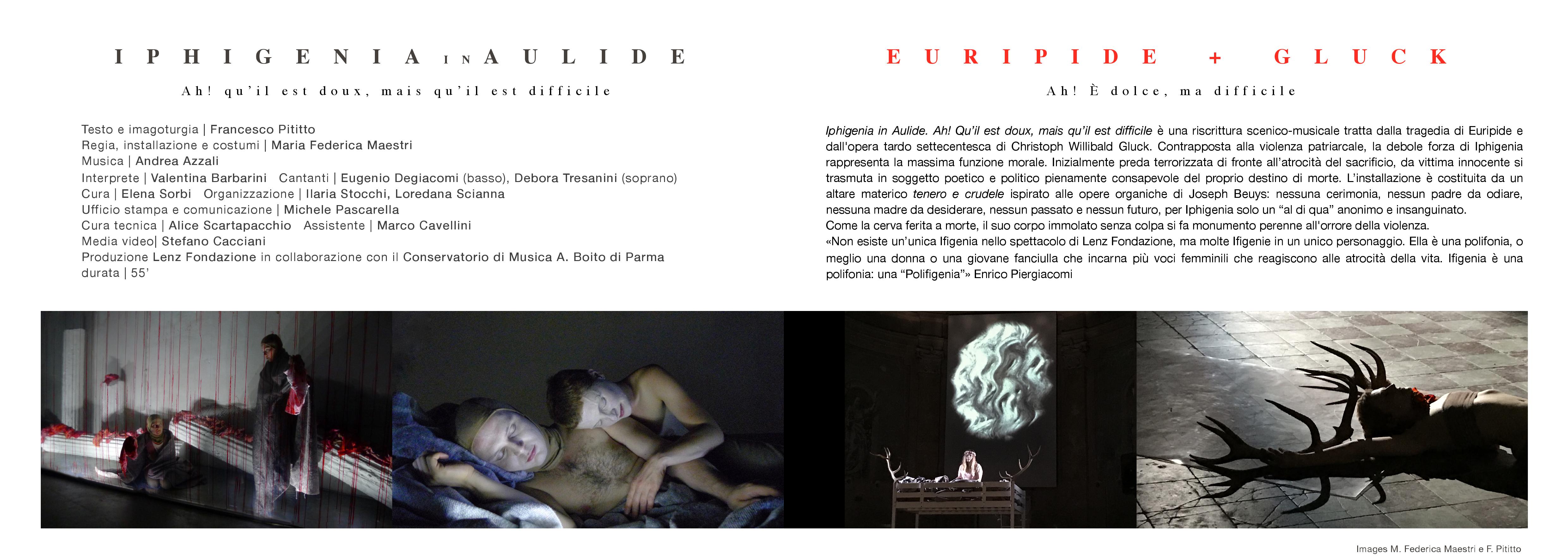
It is a scenic-musical rewriting taken from the tragedy of Euripides and the late eighteenth-century work of Christoph Willibald Gluck. Contrasted with patriarchal violence, Iphigenia's weak strength represents the highest moral function. Initially a terrified prey faced with the atrocity of the sacrifice, from an innocent victim he is transformed into a poetic and political subject fully aware of his own destiny of death.
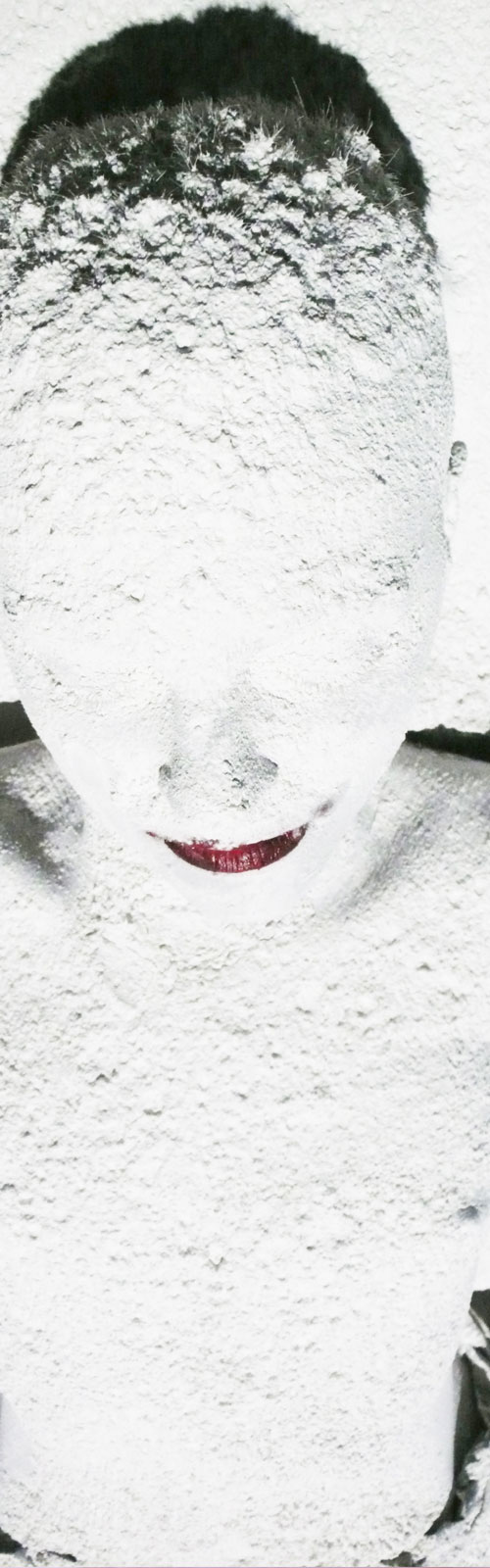
The opera is performed by Valentina Barbarini, actress repeatedly noted by critics for her powerful theatrical performances, Debora Tresanini young soprano student of the Arrigo Boito Conservatory of Parma and Eugenio Maria Degiacomi as bass.


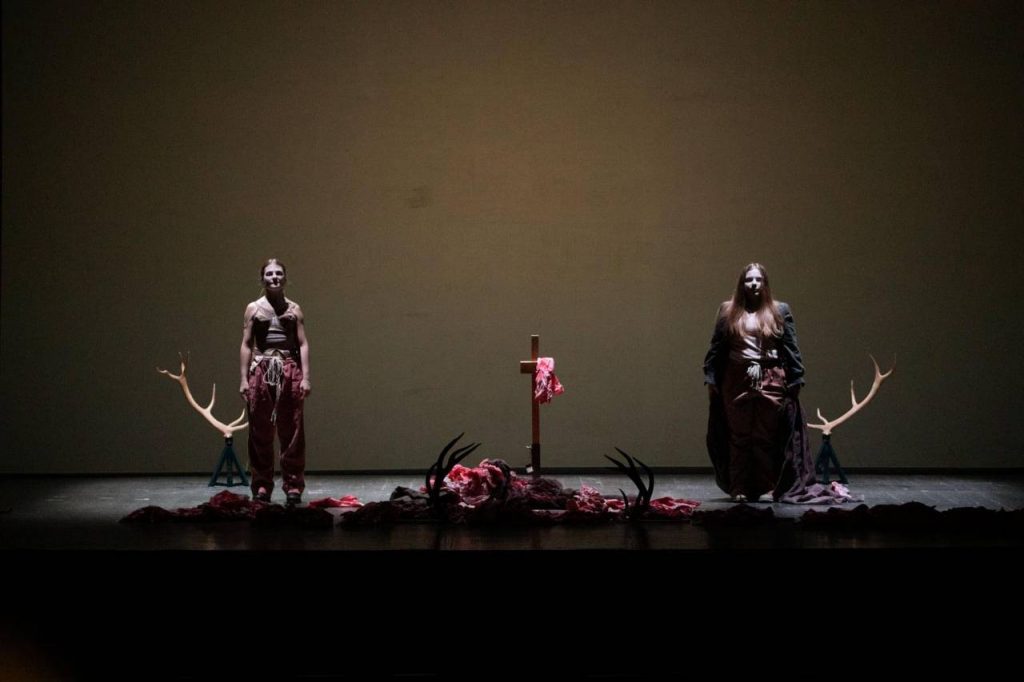
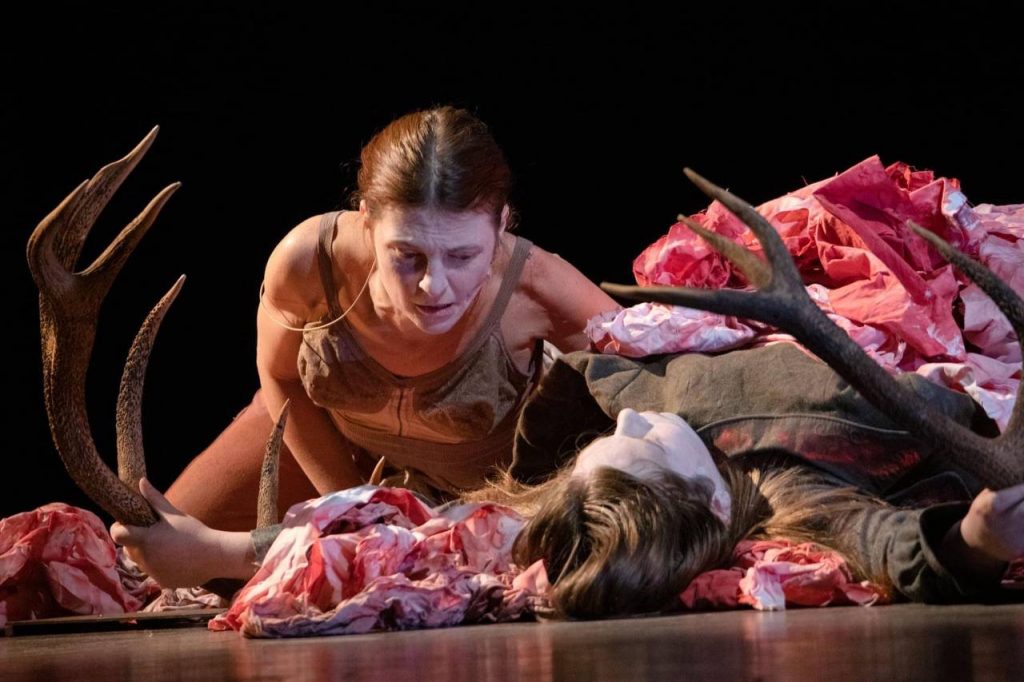
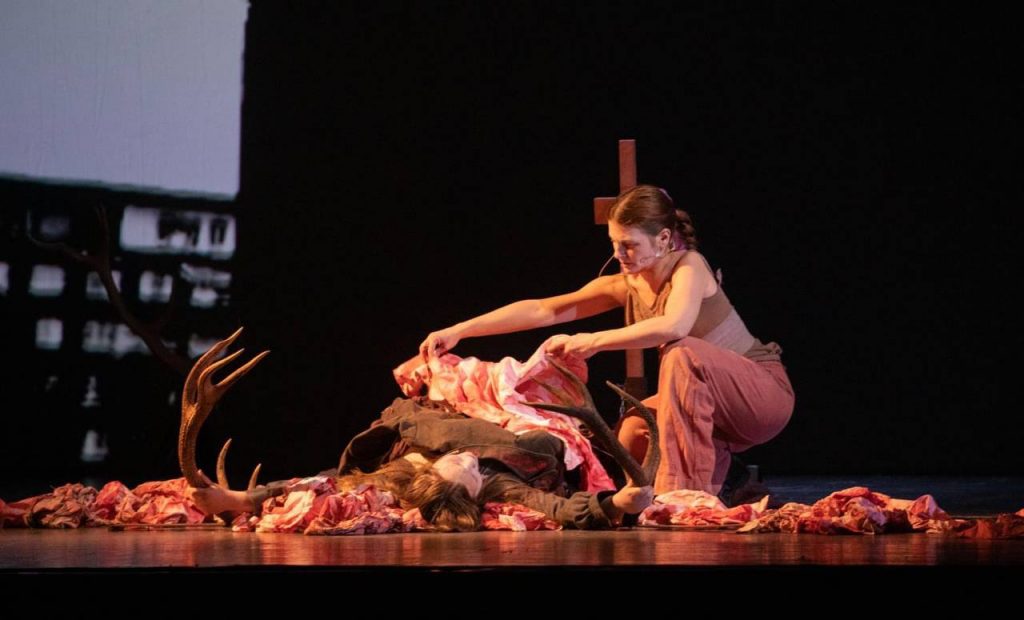
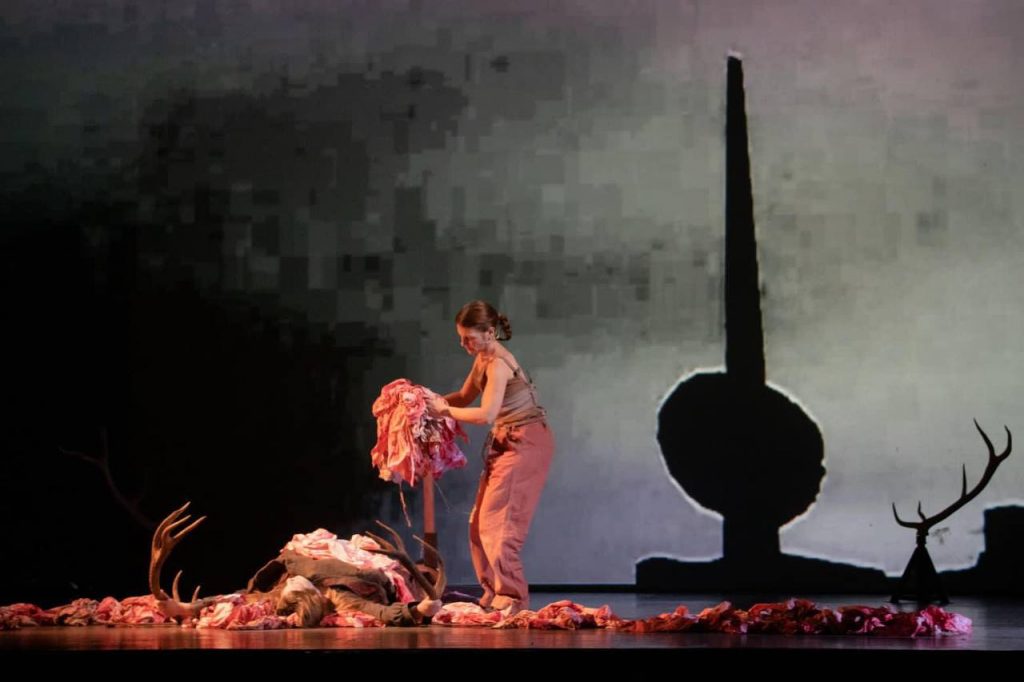
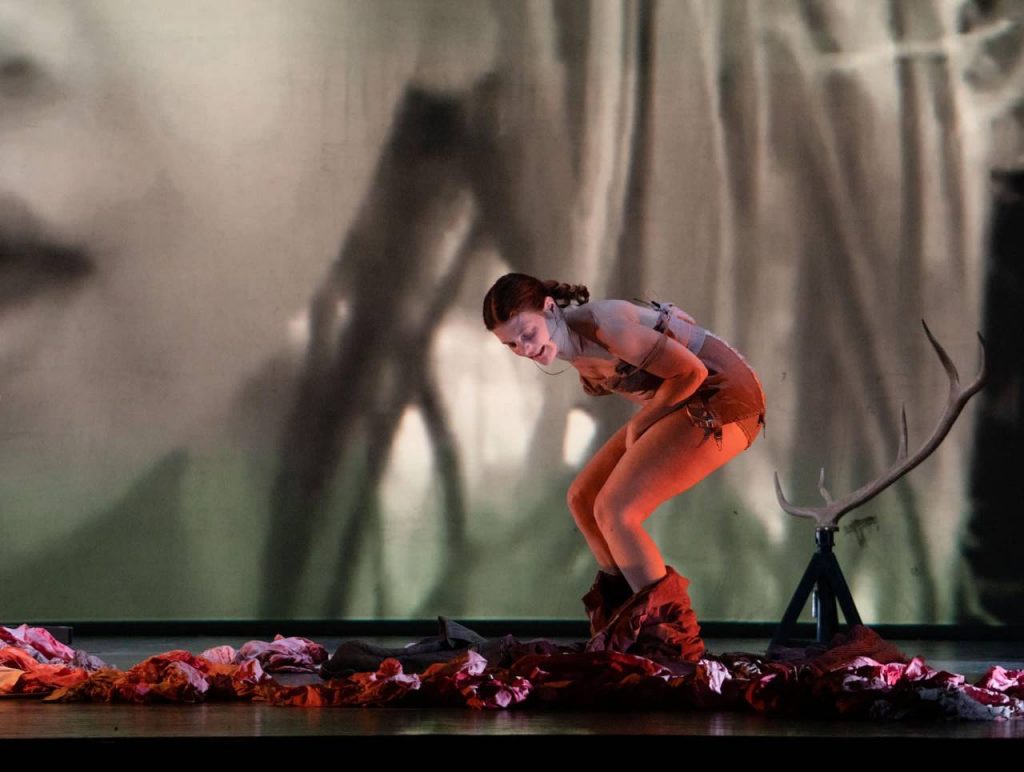
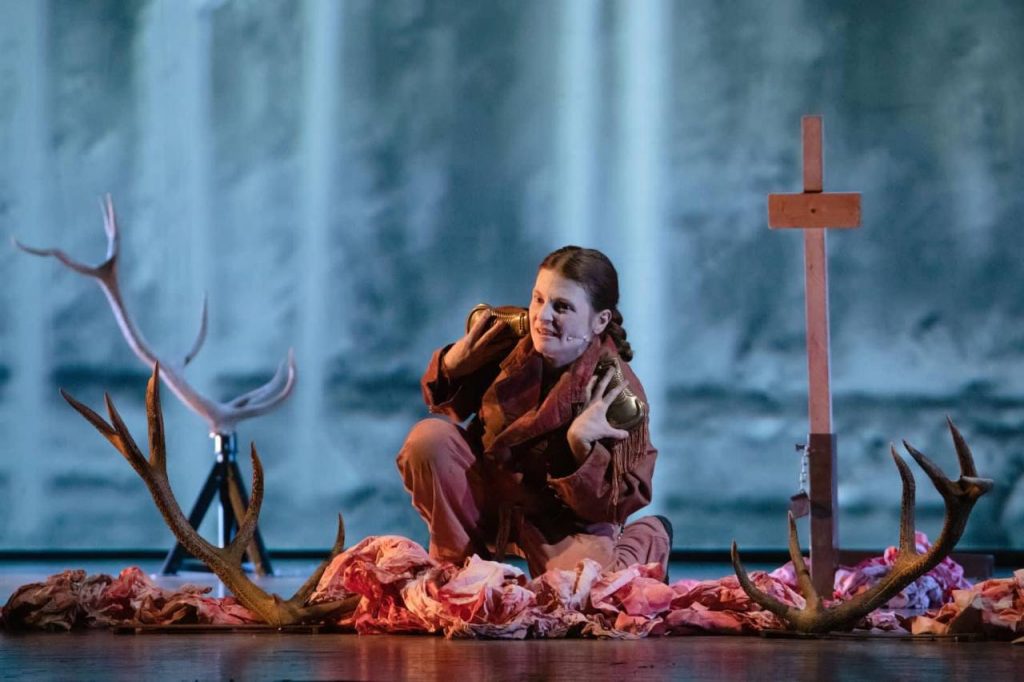
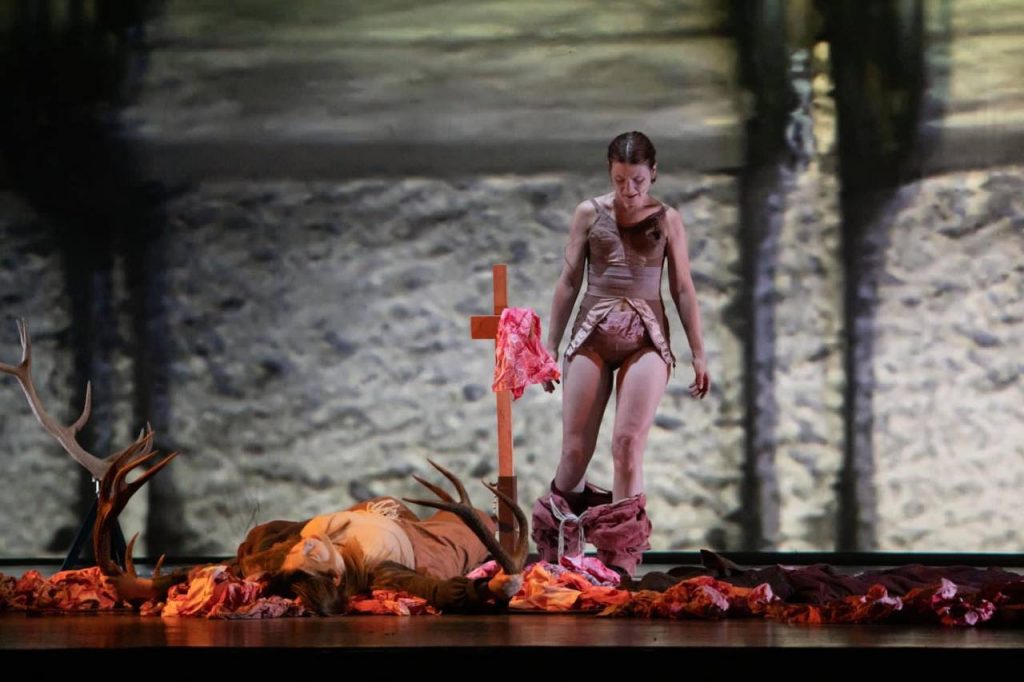


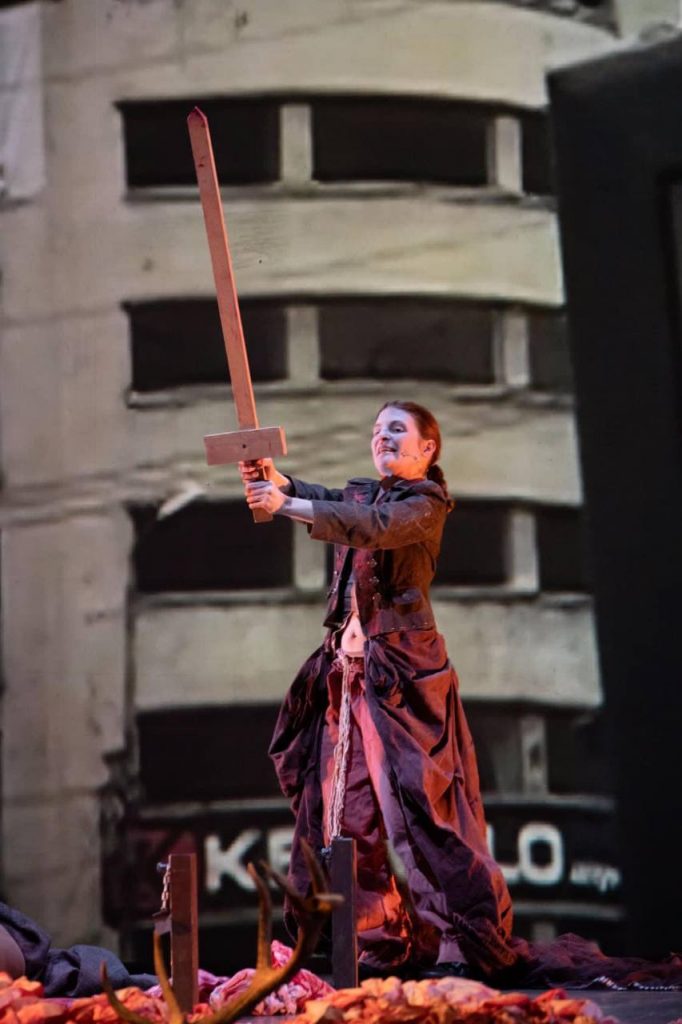

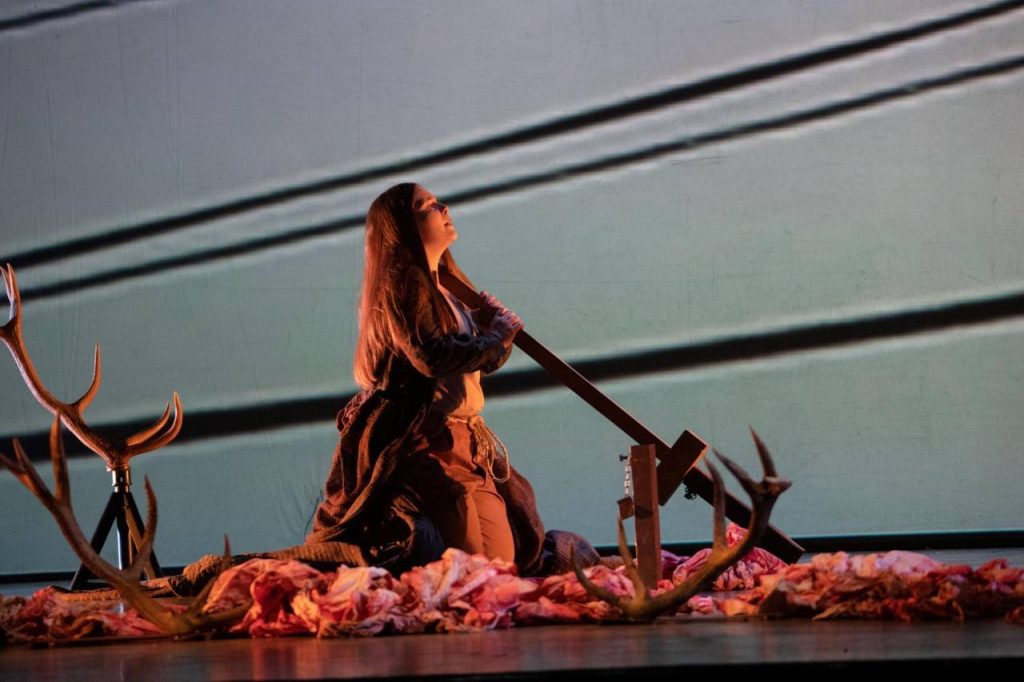
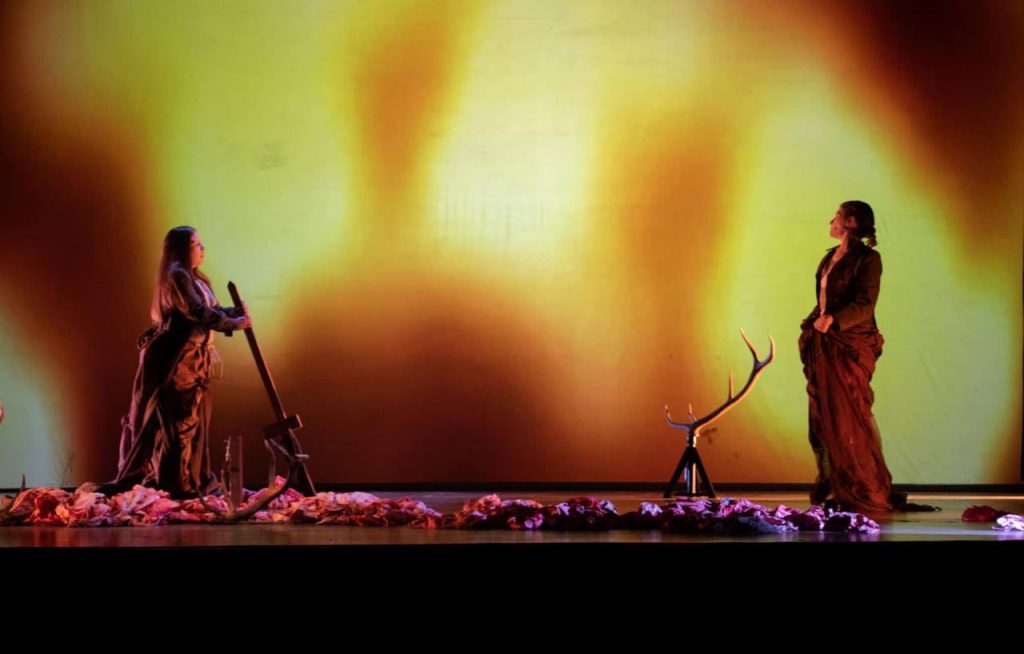
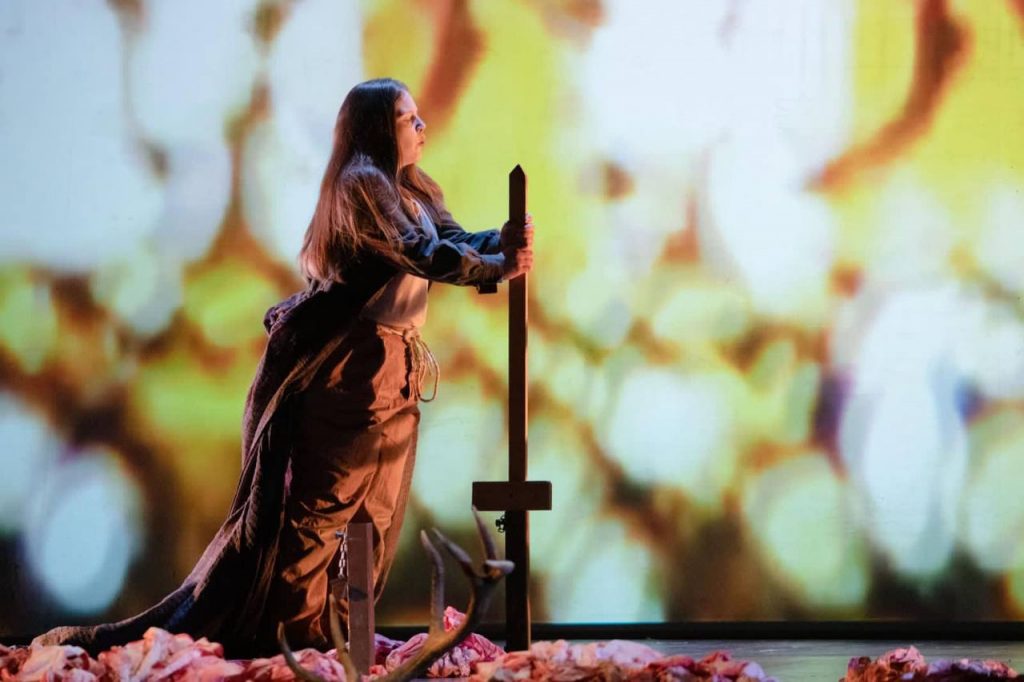

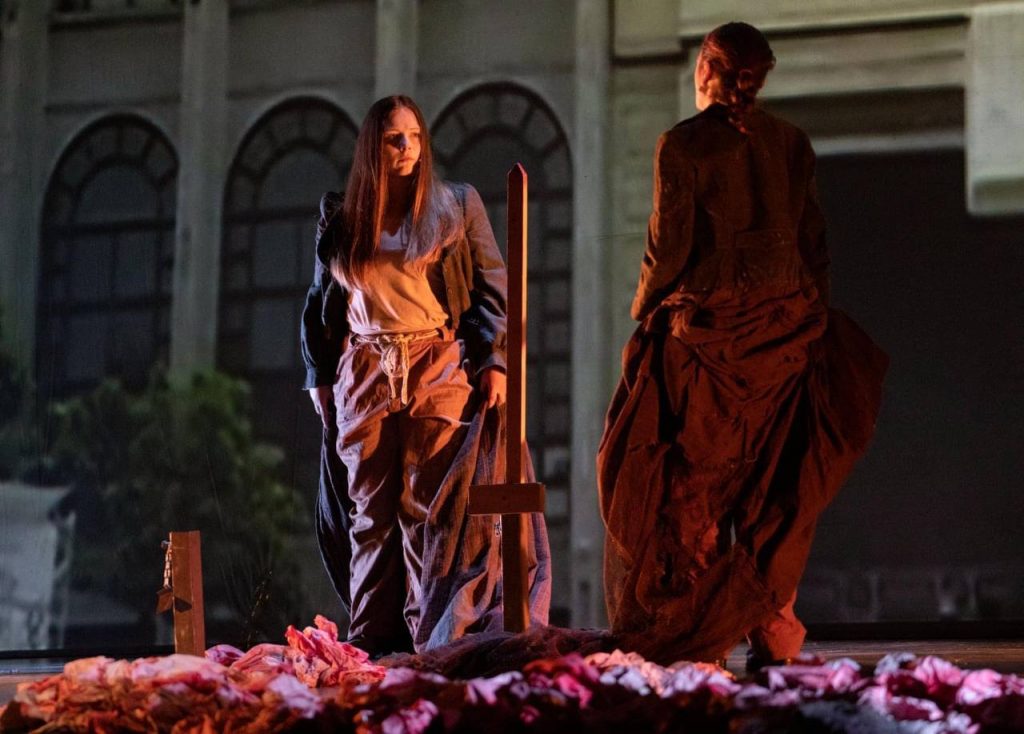
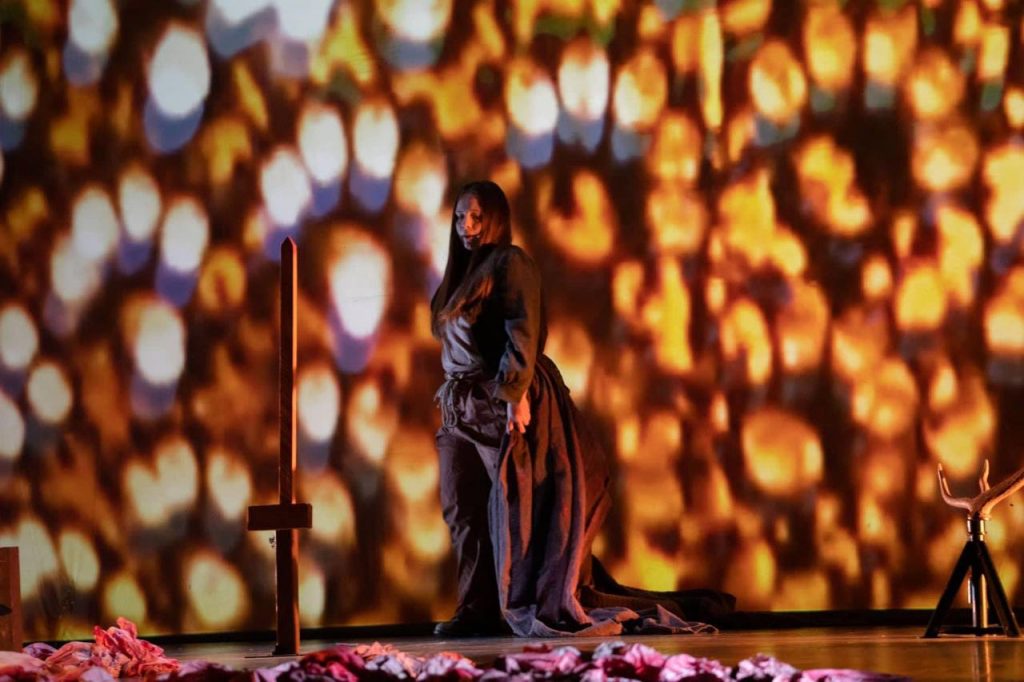
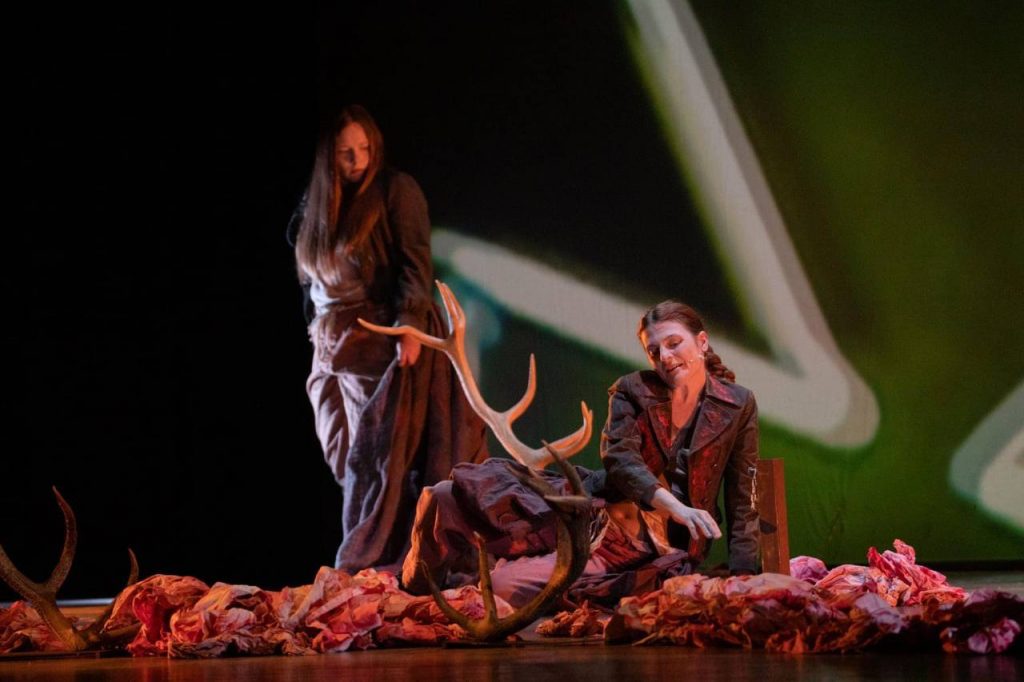
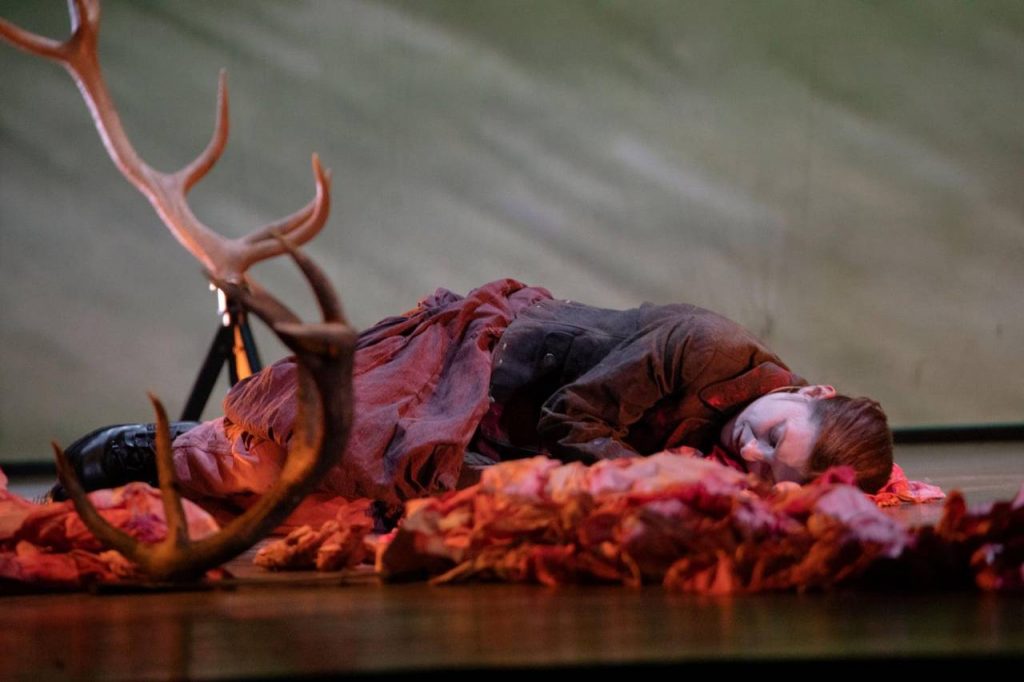
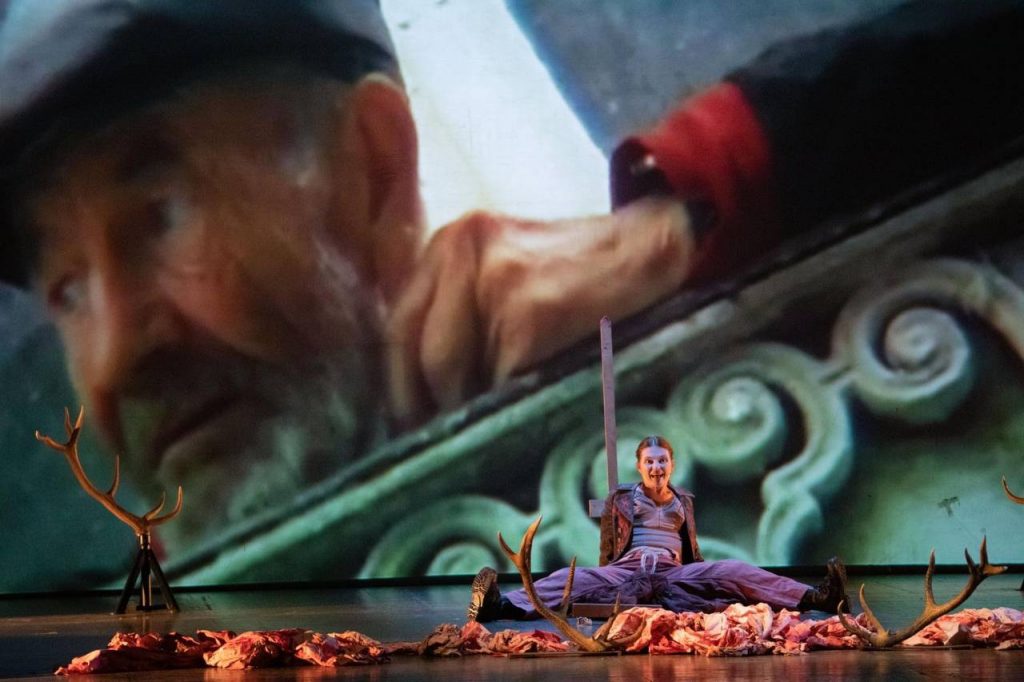
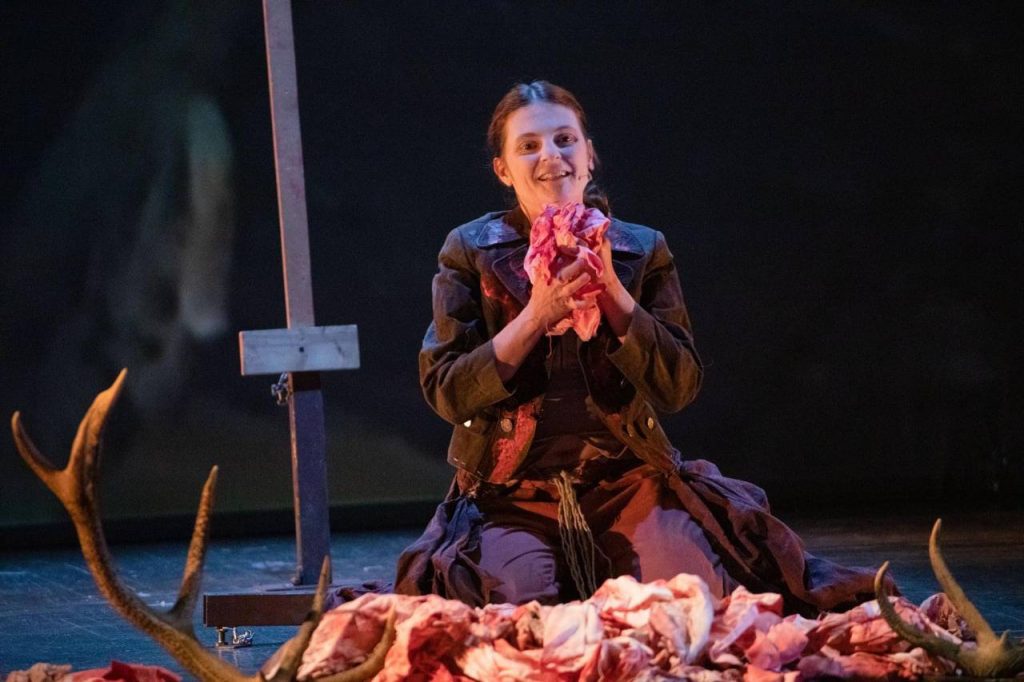

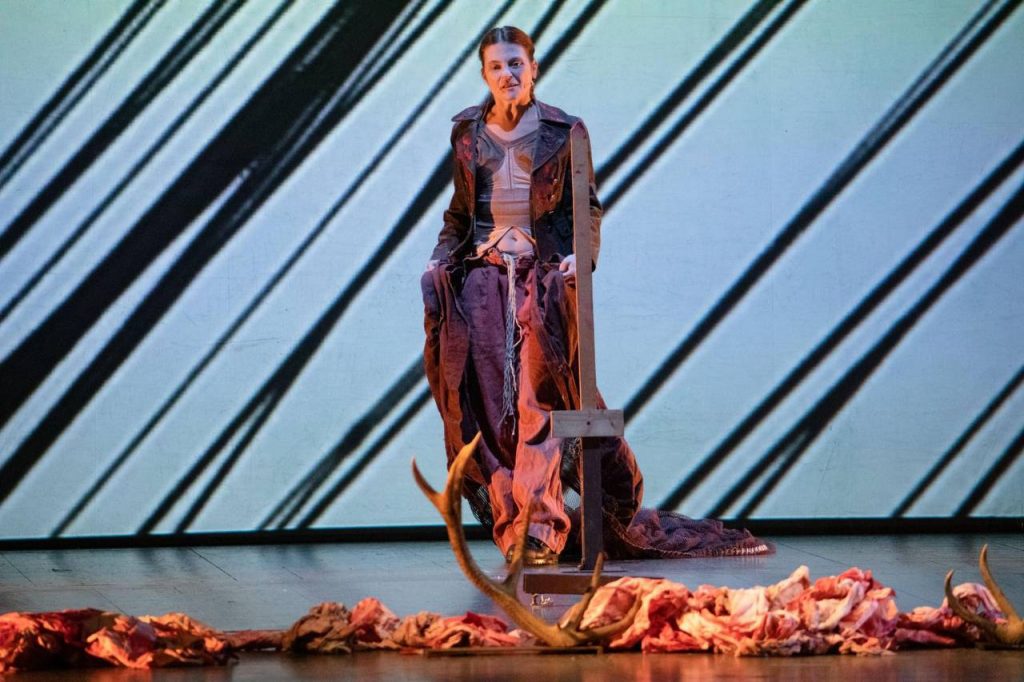
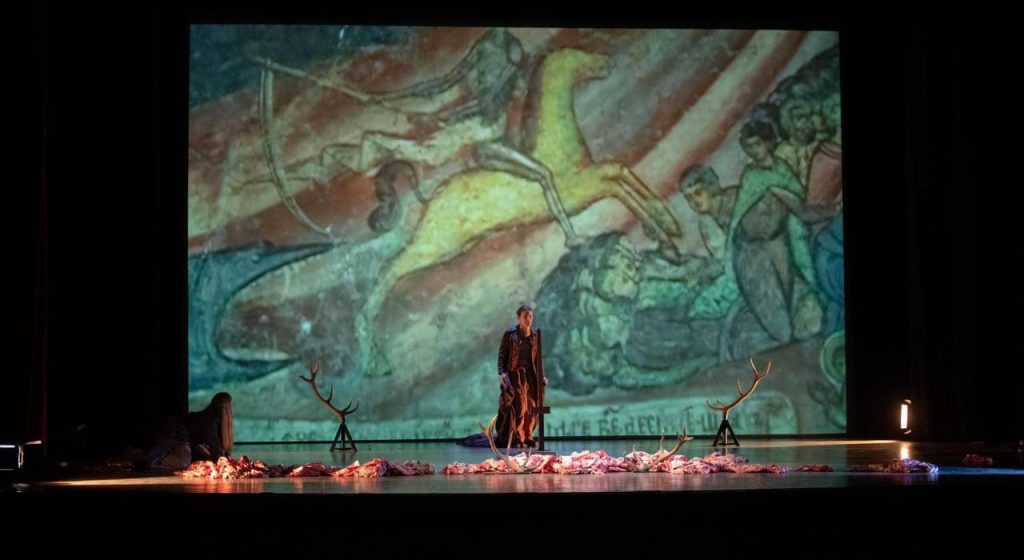


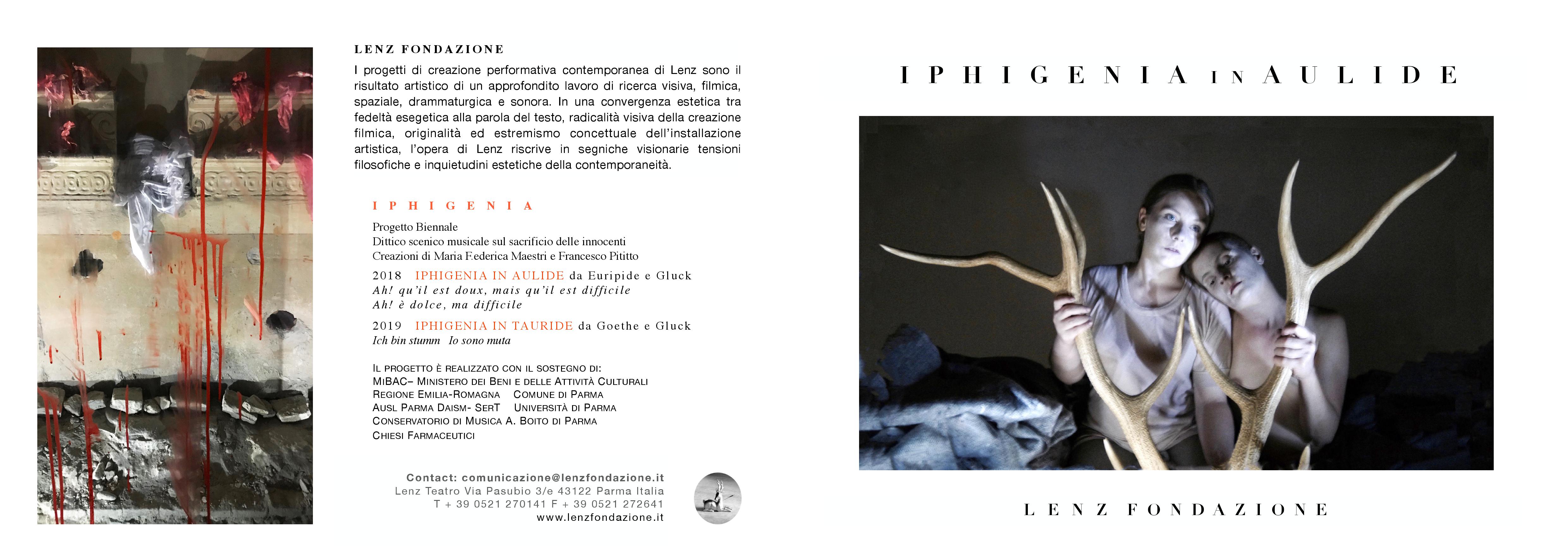
The scenic installation curated by Maria Federica Maestri will consist of a 'tender and cruel' material altar inspired by the organic works of Joseph Beuys; behind the scene an iconostasis portrays old divinities struck dumb by the massacre that is about to take place. No ceremony, no father to hate, no mother to wish for, no past and no future, just an anonymous and bloody 'this side'. Like the mortally wounded doe, a generation without identity runs towards its tragic destiny. Similar to the mangled body of Pierpaolo Pasolini, princess destined for sacrifice, the innocence of the victim is a perennial monument to the horror of violence.
Iphigenia in Aulis
Ah! how sweet he is, but it is difficult (Ah! and sweet, but difficult)
and Iphigenia in Aulis of Euripides
Text and imagery | Francesco Pititto
Installation, costumes and direction | Maria Federica Masters
Interpreters | Valentina Barbarini, Deborah Tresanini (soprano), Eugenio Maria Degiacomi (basso)
Musica | Christoph Willibald Gluck
Electronic musical composition and re-elaboration | Andrew Azzali
Treatment | Elena Sorbi
Organization | Ilaria Stocchi
Press and communication office | Elisa Barbieri
Promotion | Alessandro Conti
Technical care | Alice Scartapacchio
Media video | Stephen Cacciani
Iphigenia in Aulis is a scenic project by the Lenz Foundation in collaboration with the Arrigo Boito Conservatory of Parma, which makes use of the contribution of MiBAC Ministry for Cultural Heritage and Activities, Emilia Romagna region, Municipality of Parma, Monteparma Foundation.
trailer 2022
trailer 2018
whole wheat
Valentina Barbarini intersperses her ever-vigilant presence with the interventions of the two singers, in balance between the need to give voice to the character's words and a physical language that varies in terms of movements, postures and gestures that are animalistic, the haughty one, the sensual, the iconic. Iphigenia's relationship with Agamemnon then unfolds along the central axis of the nave, at the bottom of which, as well as seeing it flow, on the apse, the projections of Francesco Pititto, we see a white bunk bed full of blankets: altar, tent, throne, king's bedchamber, from which he imposes his will. more (…)
Franco Acquaviva, Curtain, 10 July 2018
Wonderfully articulated in situations / actions the space: on the sides those slabs to be cleaned, the cross in the center / sword with which Iphigenia herself will kill herself, around your neck that fabric flower already soaked in blood (everything repeats itself eternally, not just at the theater?), behind a raised bed of everyday life, above, in conclusion, distorted images that tend to rotate and return.
Valeria Ottolenghi, Journal of Parma, 10 July 2018
L’Iphigenia in Aulis Of Lenz Foundation thinks, Instead, that the essence of the myth in question lies in the middle: in a sort of dash that is between "horror" and "beauty". Iphigenia is not alone nor a girl who died prematurely, nor just a woman who becomes immortal by giving her life to the community. She is not in herself a winner or a victim. Iphigenia is both things together at the same time […] There is not a single Iphigenia in the Lenz Fondazione show, but many Iphigenias in one character. She is a polyphony, or rather a woman or a young girl who embodies multiple female voices that react to the atrocities of life. Iphigenia is a polyphony: a "Polyphigenia". more (…)
Enrico Piergiacomi, University of Trento, 29 July 2018