







WOYZECK_APOPLEXIA OF THE BRAIN
✩ 10 October 2023
World Mental Health Day
APOPLEXY OF THE BRAIN >> Streaming
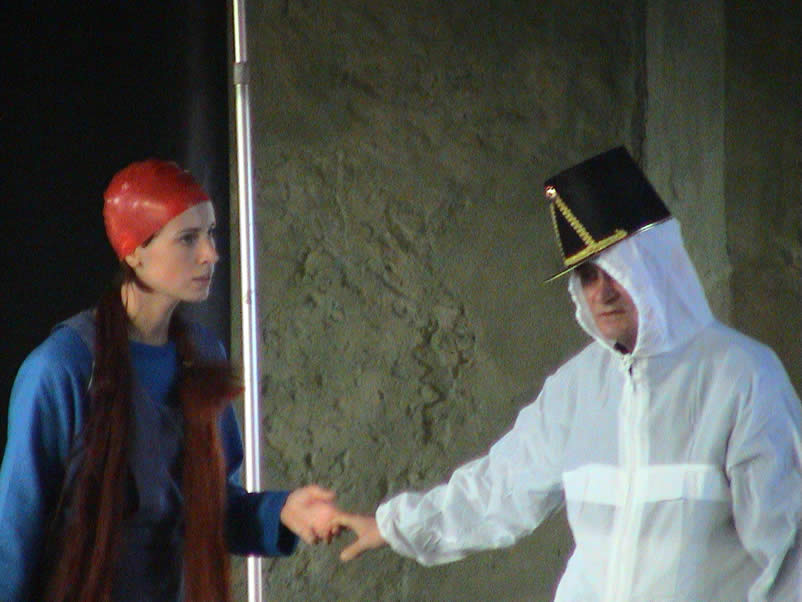
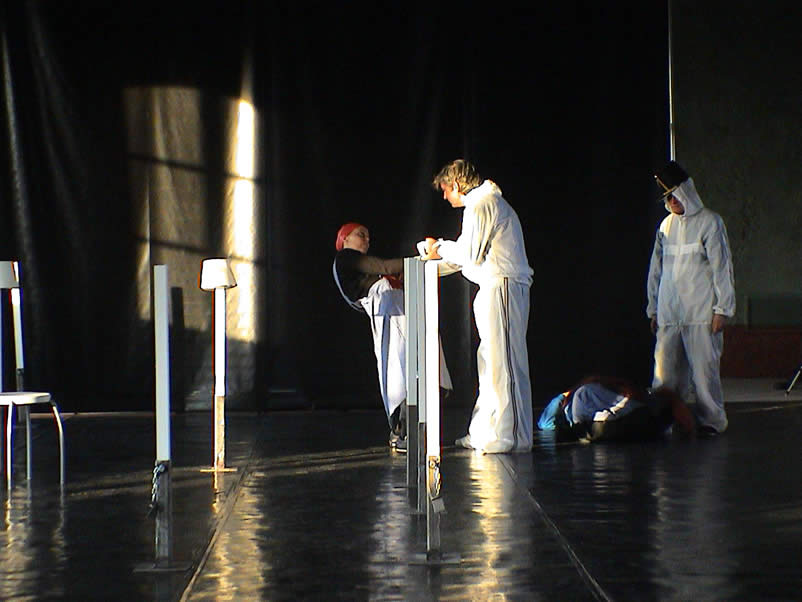
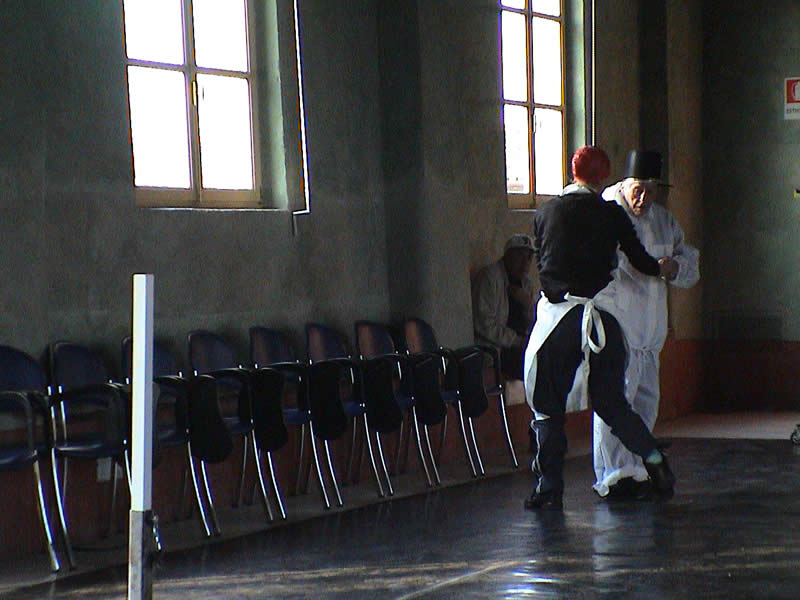
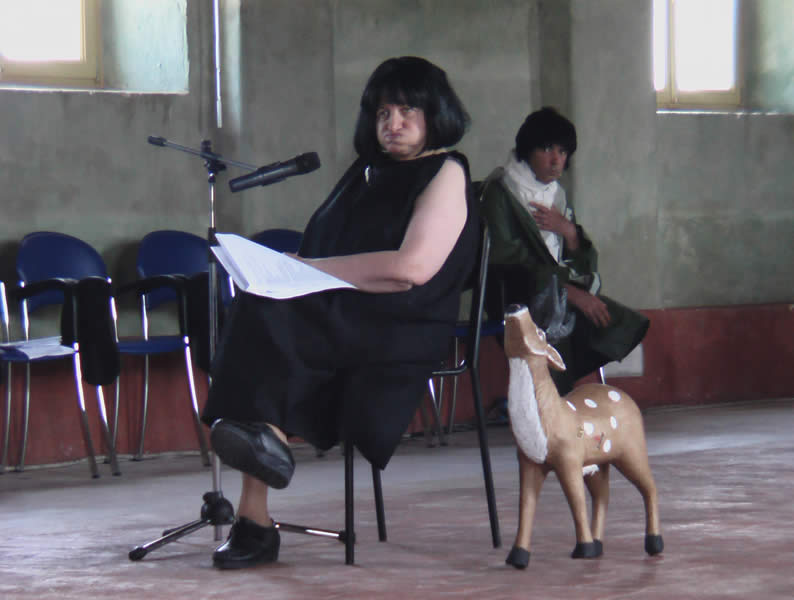
It is from a fragment of Woyzeck, inserted at the beginning of Lenz's dramaturgy, that the Company started in 1986 to the artistic path, founding the aesthetic-poetic vision of his own theatre. From the meeting with Büchner, German romantic author and precursor of modern theatre, the artistic identity of the Company originates and its subsequent entry into the universe of visionary and irregular figures of Western theatre: in addition to Lenz and Büchner, Hölderlin and Kleist, to which he has dedicated monographic and multi-year projects. After almost twenty years since its foundation, Lenz Rifrazioni returns to the Büchnerian lesson having gone through artistic experiences that have placed the sensitive actor at the center of his theatrical research, the human being in conditions of maximum fragility and vulnerability. Nel Woyzeck di Büchner, “masterpiece” unrepeatable of the romantic theatre, protagonist of the tragedy is a “last”, a miserable one, a humiliated one, driven mad by jealousy and driven to crime by the demons of pain. A little man, an antihero, who embodies the victim of functional society. In putting this terrible dramaturgy to the test of the new sensitive actor, Lenz Rifraczioni does not intend to create a process of identification between the protagonist and the interpreters, but enhance the unique quality of power and beauty that they express, in the highest dramatic elaboration of the fragility of existence. In this first approach, to deal with some fragments of Büchnerian text, they are the student actors of the Integrated Workshops directed by Maria Federica Maestri: the Specialization Laboratory aimed at able-bodied actors and sensitive actors at an advanced level and the Special Laboratory, created with a group of mentally disabled guests of the “P. Corsini” by Pellegrino Parmense.

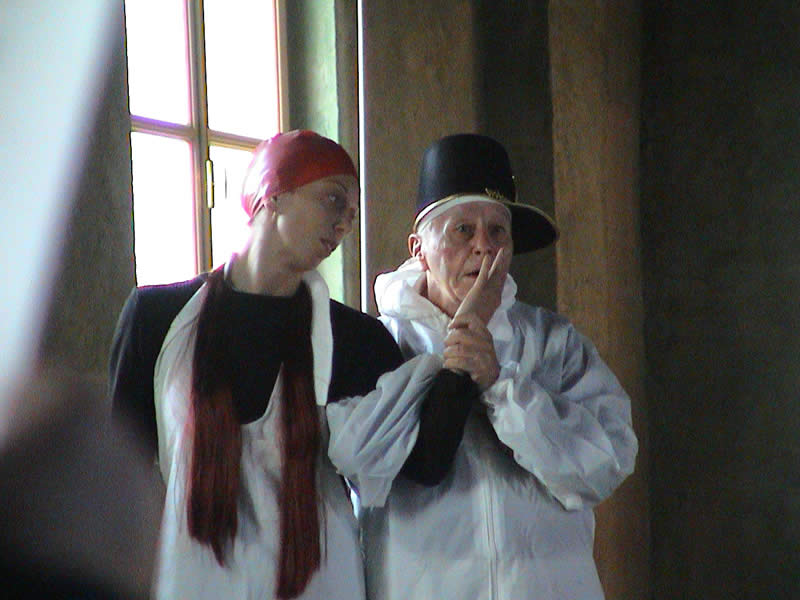
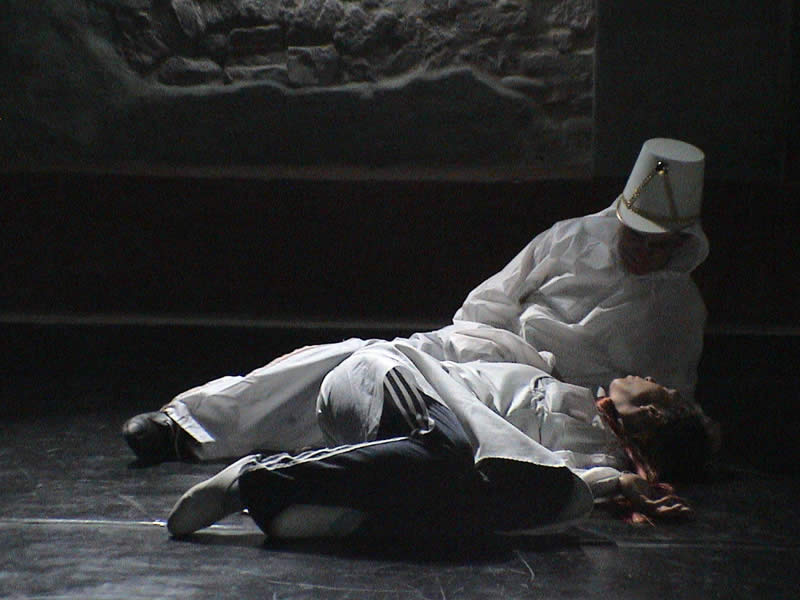
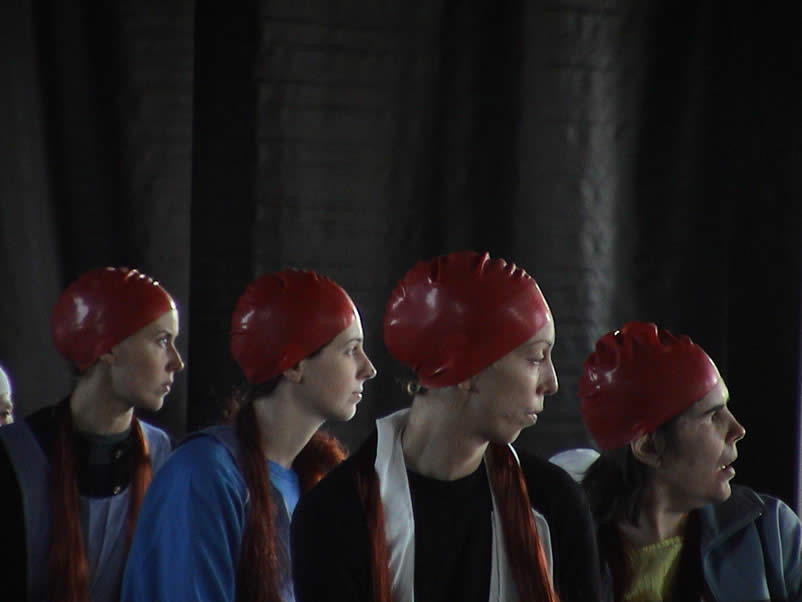

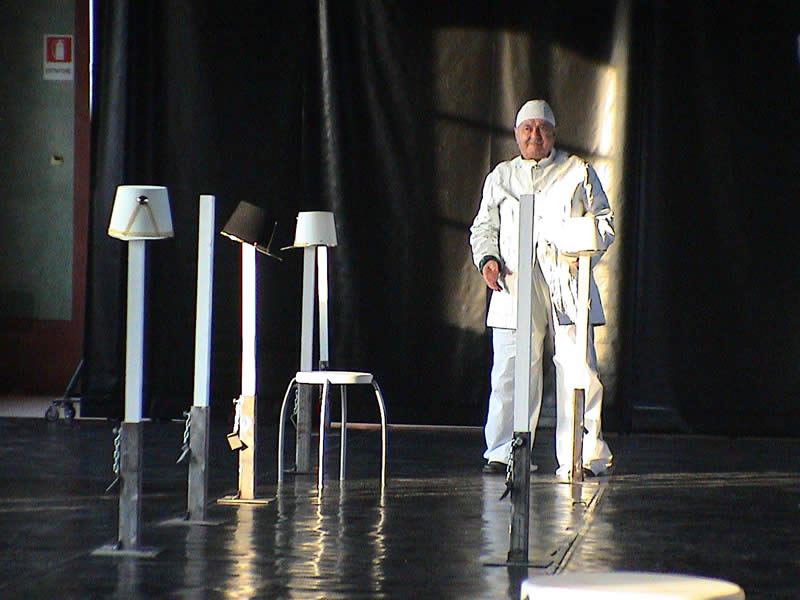


WOYZECK. THE FAIRY TALE OF COMPASSION
It's not inside, nor spirit, nor outside or consciousness, nothing other than the body as it is seen, a body that never ceases to be, even when the eye that sees it falls.
And this body is a fact.
Io.
Antonin Artaud from "Succubi and Suplizi"
From Goethe's "Faust" to Calderon de la Barca's "Life is a dream" the student-actors of Pellegrino Parmense, in the fifth year of laboratory, continue their journey of research and theatrical knowledge by working on one of the cult works of European drama: the “Woyzeck” di Georg Büchner.
Forerunner of social naturalism and expressionism Büchner wrote in 1836 a draft of a theatrical text - like Goethe for Urfaust - composed of fragments without a precise order and, above all, without an ending.
Taking inspiration from a real life event and from the character of Stolzius from "The Soldiers" by J.M.R.Lenz, Woyzeck still represents an inexhaustible source of dramatic energy today.
The fragmentation of Büchner's Woyzeck is then, paradoxically, an element of strong unity for the student-actors of the rehabilitation community.
Each sequence becomes a piece of life, a time-fragment of everyone's experience. Even the songs – “La barbiera di Torino”, “Mr Captain”, “The dead rise again”, ecc. – suddenly resurrected from memory in flashes of improvisation, they become a pretext to give life to new dramaturgy – writes Gottfried benn: “…this piece has the peace of a wheat field and resembles a popular song that accompanies the anguish of everyone's hearts and mourning”.
The knife becomes a hand and the murder is carried out with the blow of a slammed chair.
The fragmentation of everyone's life seems to be recomposed in every sequence of Buchner's text, albeit used in even more segmented parts than the German originals.
Woyzeck's figures, Marie, of the Doktor are naturally perceived almost as well-known people, love, hate, abandoned.
Coincidences of visions and psychic states, like that of melancholy (melancholy) for example, they are repeatedly proposed by each student-actor as tools of real knowledge and behavioral code.
If we consider that the melancholic state (real, according to the medical expertise of the time, in the truly lived Woyzeck) it was and still is considered a co-determining element of the pathological state we can, Perhaps, understand how the dramaturgy put into play can be particularly powerful and true.
WOYZECK_APOPLEXIA OF THE BRAIN
(Progetto Woyzeck) since Georg Büchner
translation || Francesco Pititto.
plastic director || Maria Federica Masters
musica || Adrian Engelbrecht | Andrew Azzali.
light design || Rocco Giansante
interpreters || John Abbati | Liliana Berté | Paolo Maccini | Luigi Moia | Elisa Orlandini | Angelo Pederzani | Paolo Pediri | Lino Pontremoli | Alessandro Sciarroni, Sandra Soncini | Elena Sorbi | Daniela Valenti.
first || Court of Giarola, Collecchio, Nature Gods Theater Festival, 8 October 2004.
Training project created with the support of
AUSL of Parma_Department of Mental Health
Domus – Parma coop.sociale onlus