






VERDI MACBETH
VERDI MACBETH
fantastic and true drama
a note, a single, repeated. The scraper passes through the file and vibrates the note.
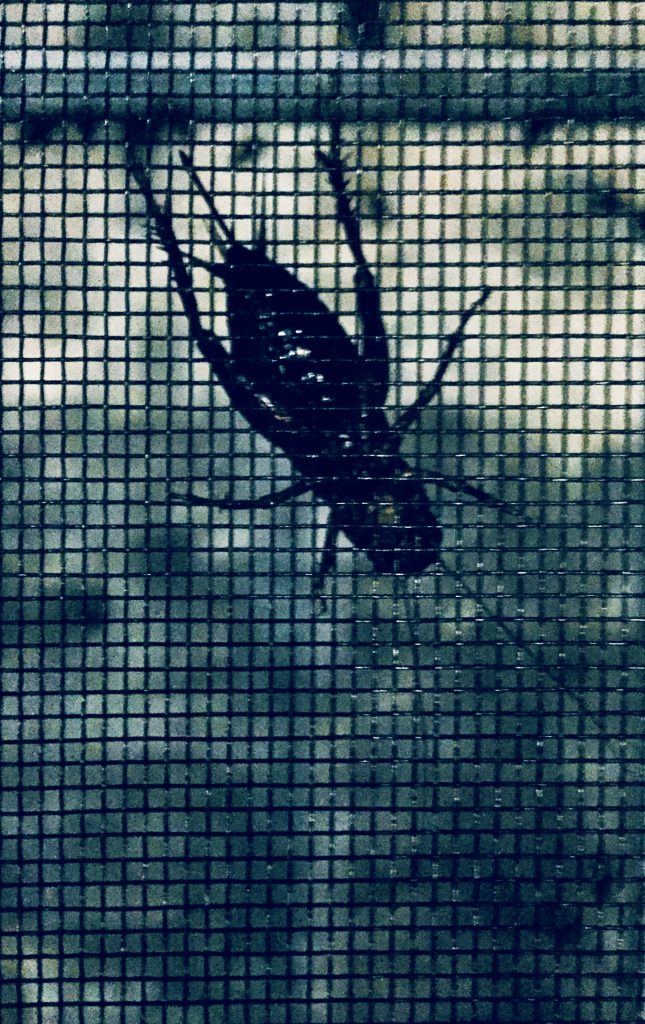
The tools are in the body, lean on your back – Gryllus campestris – and the note played is for her, the female.
Bodies and sounds, because the crickets are there, many, invertebrates present, odorants, silent in movement. And the sound is indeed a sexual appeal but also a word – talking crickets – word of complaint, drop of a penitent tear for what has already happened, even if Il Fatto has yet to happen, the assassination, betrayal, the power, the prophecy.
And the entire community of individual notes rises in song, a group of humans and invertebrates in a single chorus that rings out like a dead ringer. The linear course of history has been altered, the dramaturgy has messed up the text, indeed the two texts. Shakespeare and Piave.
Of the great people's choir, a group of teenagers remains to sing, in today, the Risorgimento and liberating impetus. Alone among cages resonating with a single note.
The Deed has been done. Before and/or after. The time that compacts is Verdi's music.
Now the chirping is for her and he is already crying for his guilt, while the glory has not yet begun.
O voluptuousness of the throne! Time merges before and after, and only the Fact remains.
Thought is formed, horrible image!, even if nothing exists yet.
The Lady doubles while remaining the same, talks to itself, one sings and one says, while the vibrant call of caged crickets marks the time of doing.
Then come the bearded witches to con/merge desire and pain, sex and tomorrow, prophecies.
And the unborn child, and the one not born of a woman, and… tomorrow and tomorrow and tomorrow.
And the hands, of who did it. And hands that ooze stains, and the hands that wash hands, and who no longer wash any hand or stain.
I heard the owl hoot and the crickets cry. Not even tears wash away the Fact, but the chirping flows like a torrent of love and lament, and the guilt resurfaces and then the guilt strikes.
And finally Hecate will have to, divinity of demons and the dead, remember who really reigns over the night of the mind, about what seems true and what really is real – a drop of vapor is hanging on the horn of the moon, and it's falling – and comes to subvert the high and the low, to put the world of male and female back on track, the human and the inhuman, comes to recover, in the obstinate concert of the crickets, the last breath of a poor lunatic.
And then he gives it up, as a last prayer, to the Lady now wandering among the teeming terrariums.
I was dying, here or later… The sublime breve.
Francesco Pititto
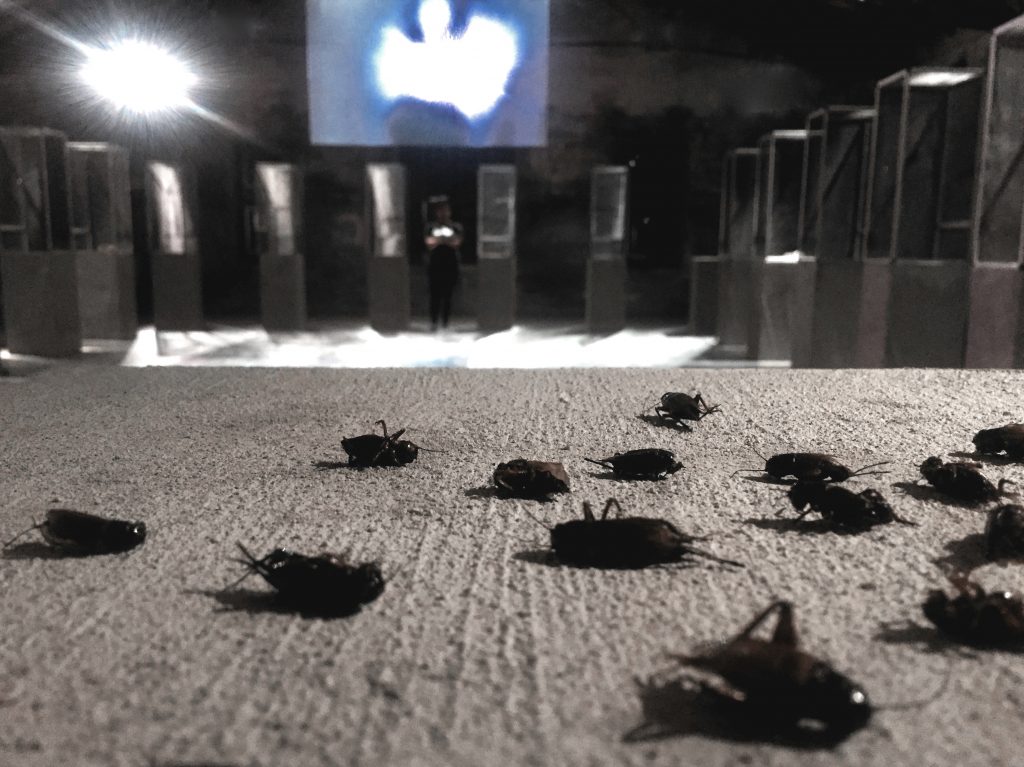
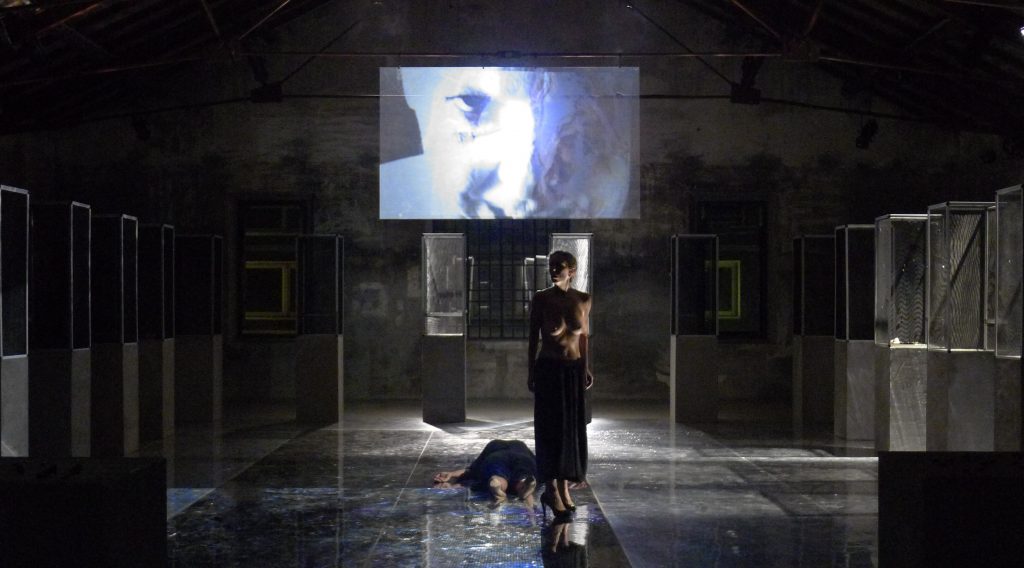
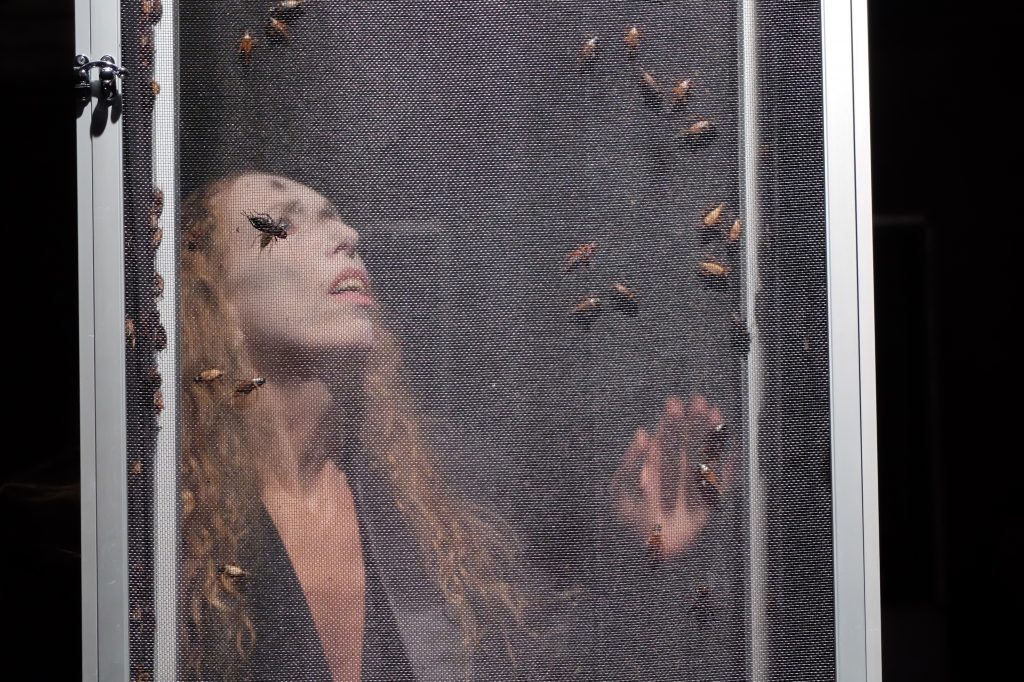
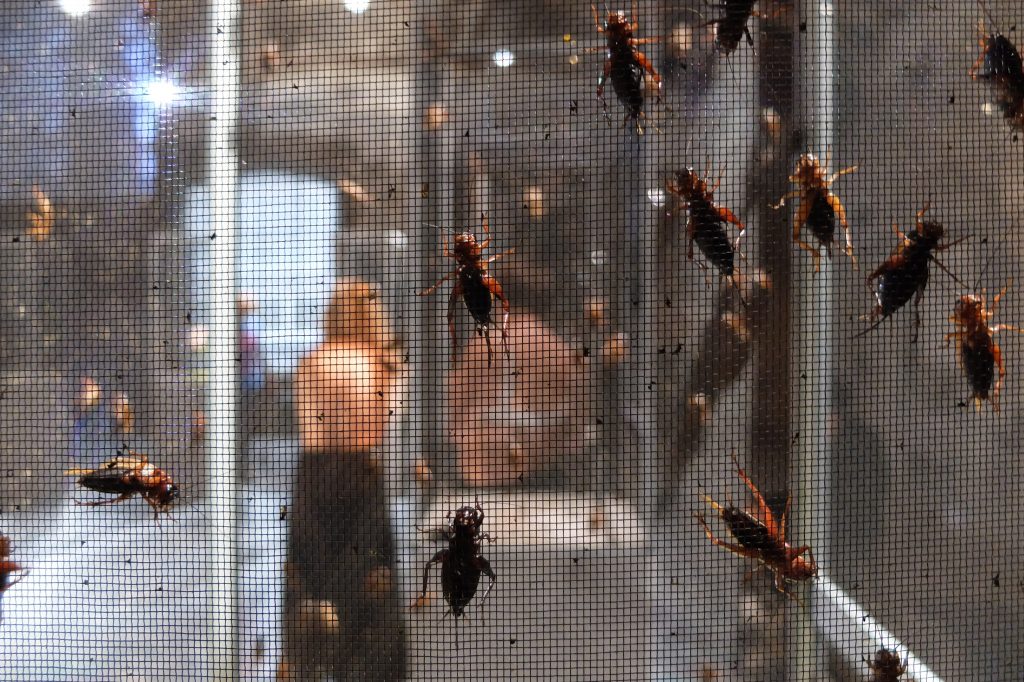
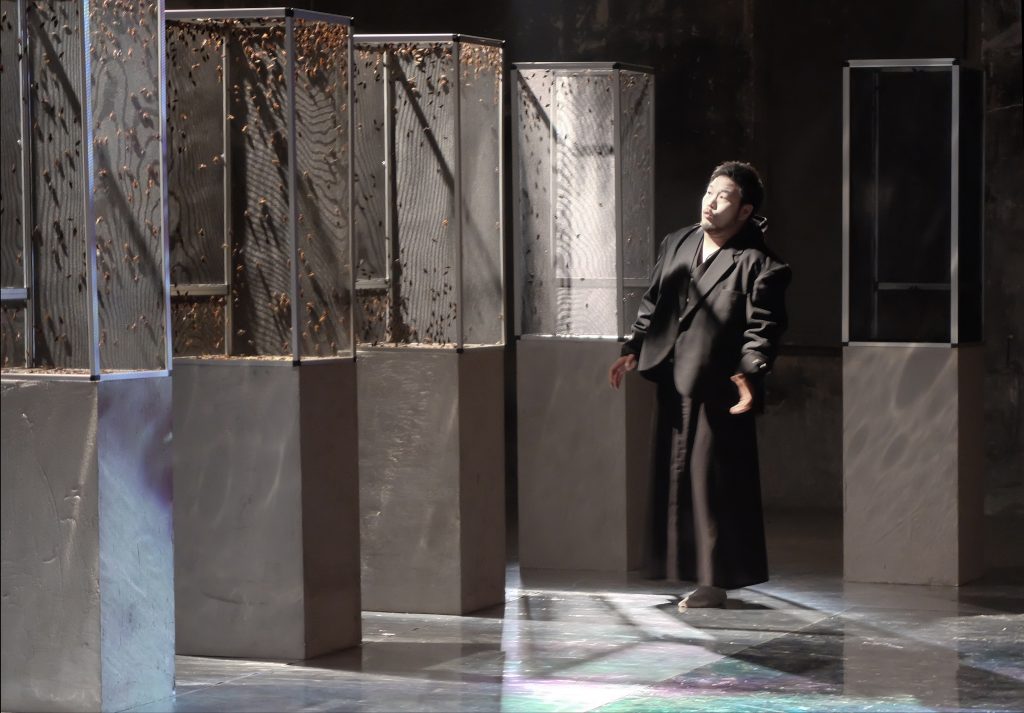
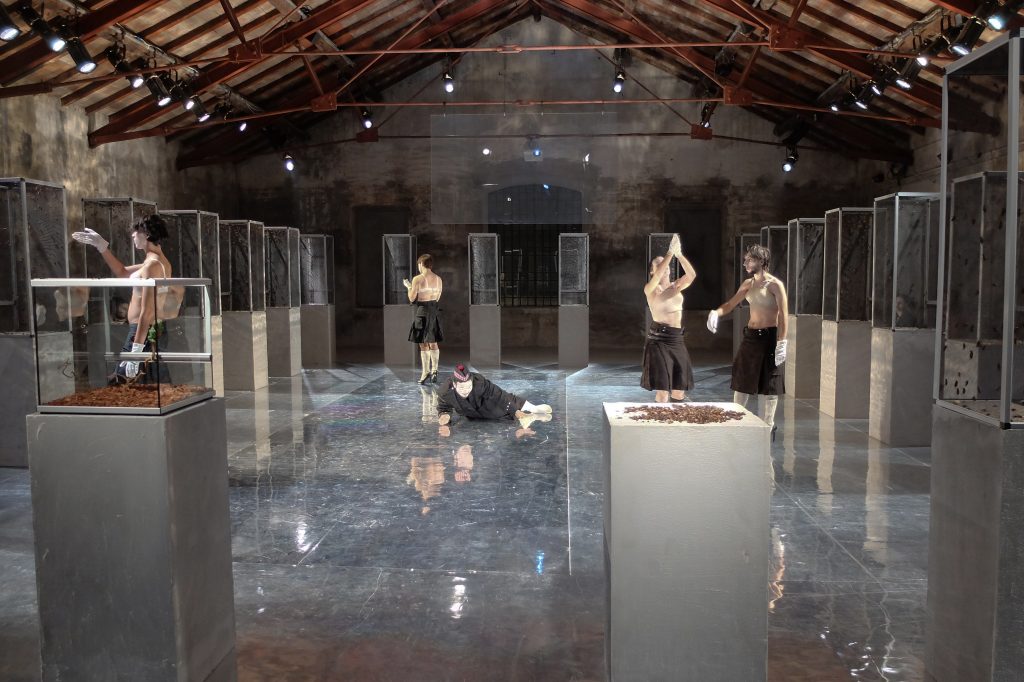
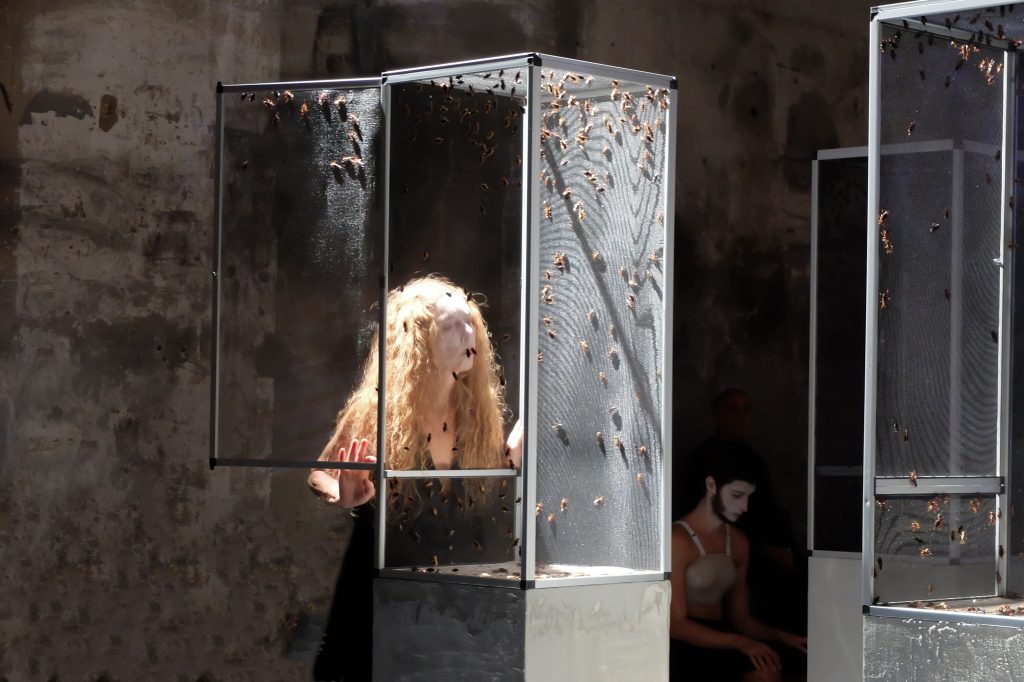
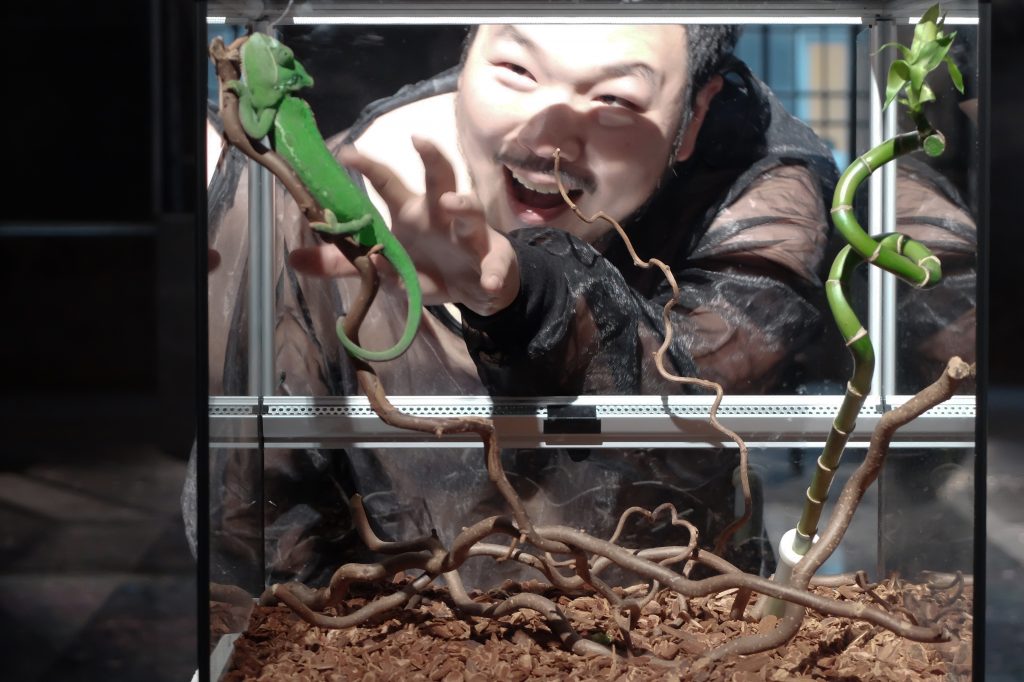
The installation of the Verdi Macbeth it is made up of twenty-four terrariums inhabited by thousands of live crickets and insects whose chirping constitutes, together with Verdi's voices, the sound material of the work. The scenic space reproduces the architectural structure of the ancient sanctuary dedicated to the cult of Hecate – divinity that reigns over demons and the dead – fundamental dramatic function of Shakespeare's work. In the sacred area the obsessive continuum of the crickets' song progressively takes over the entire sound space, in a crescendo symmetrical to the obsessions of Macbeth and Lady Macbeth. Nature enters the installation design of the work as a terrifying principle that is both fantastic and real. The inner landscape of torment, obsessions and fears are tested, sensitive extension of the subject. The inevitability of the death-life cycle in Phisis – principle and cause of all things – does not attenuate, does not evade responsibility for guilt, but it dissolves its heroic rhetoric.
Maria Federica Masters
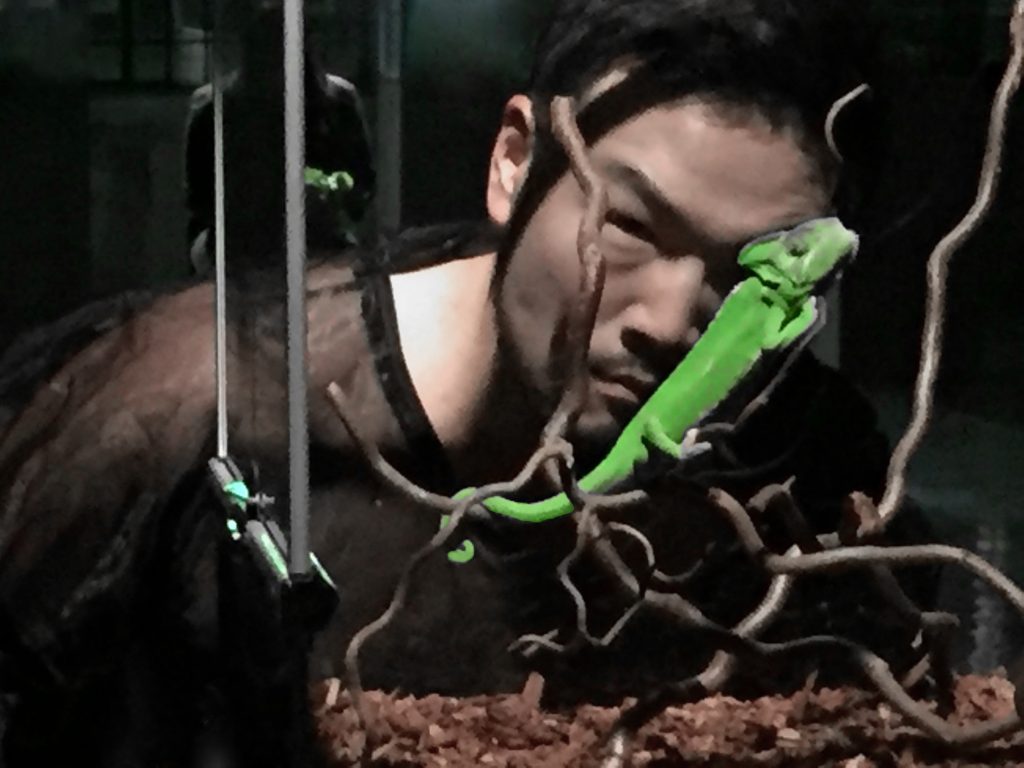
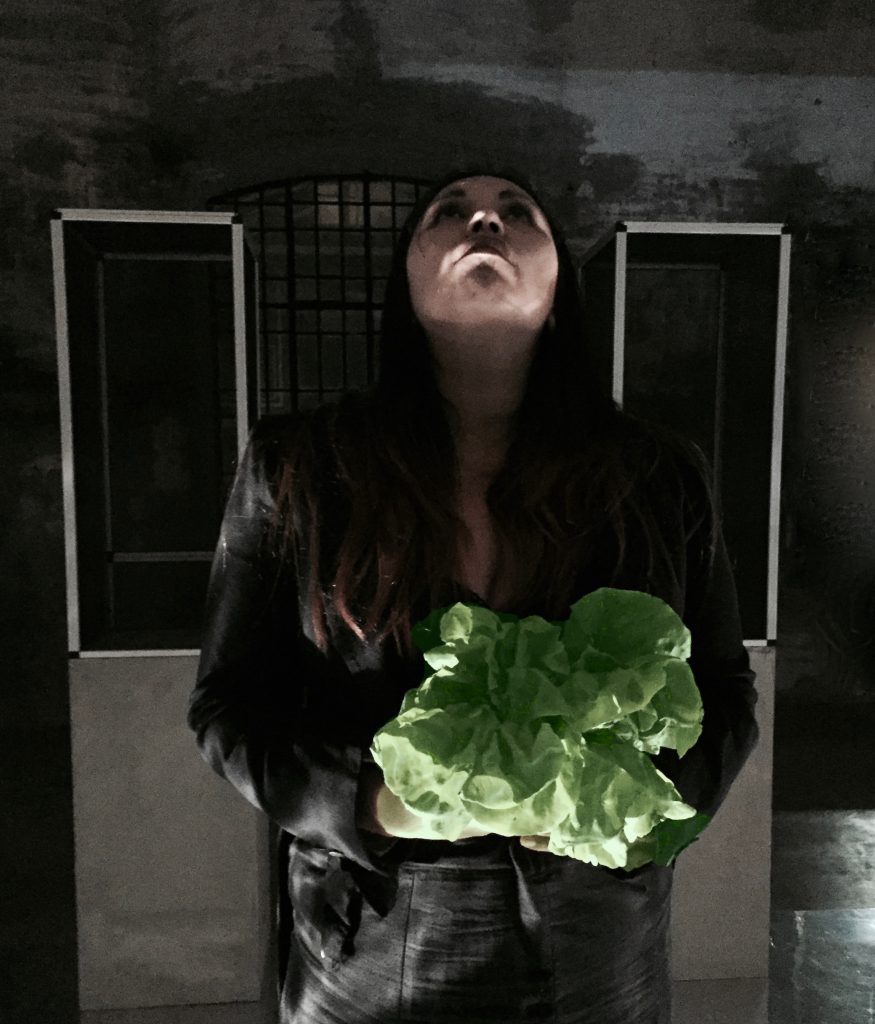
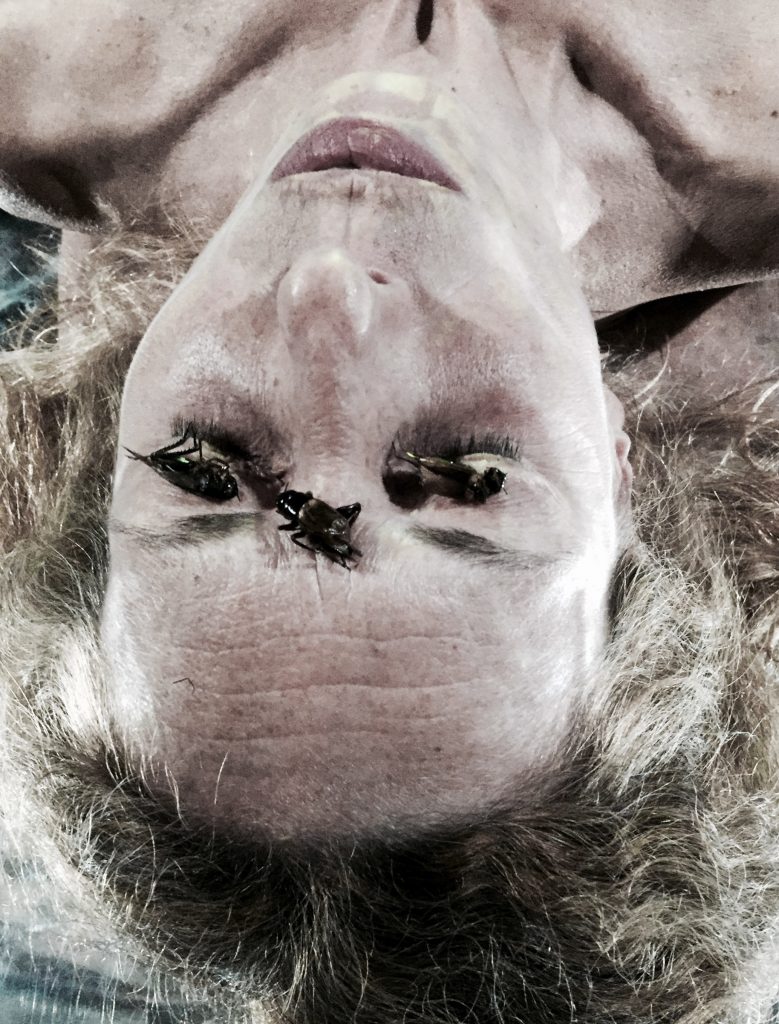
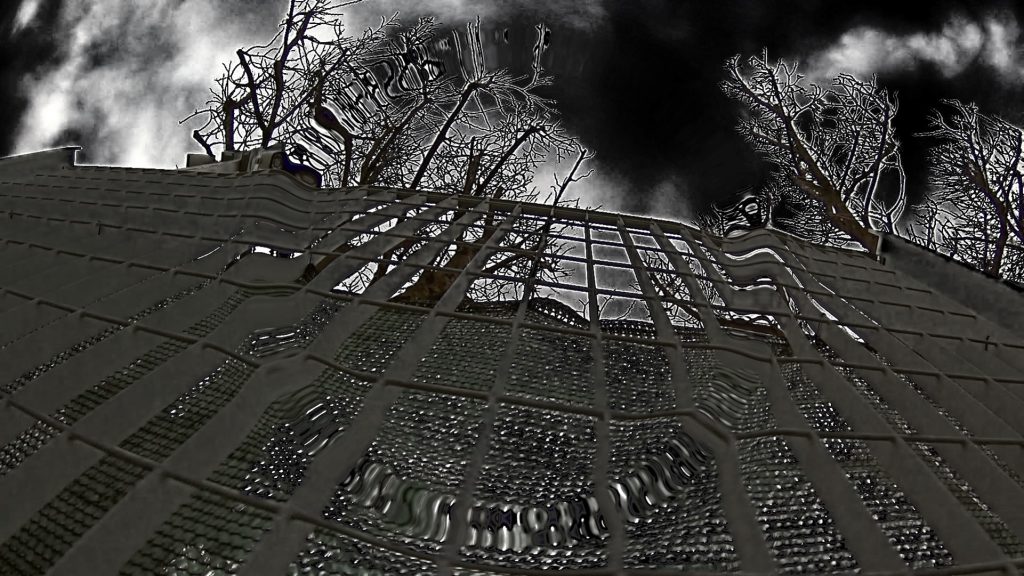
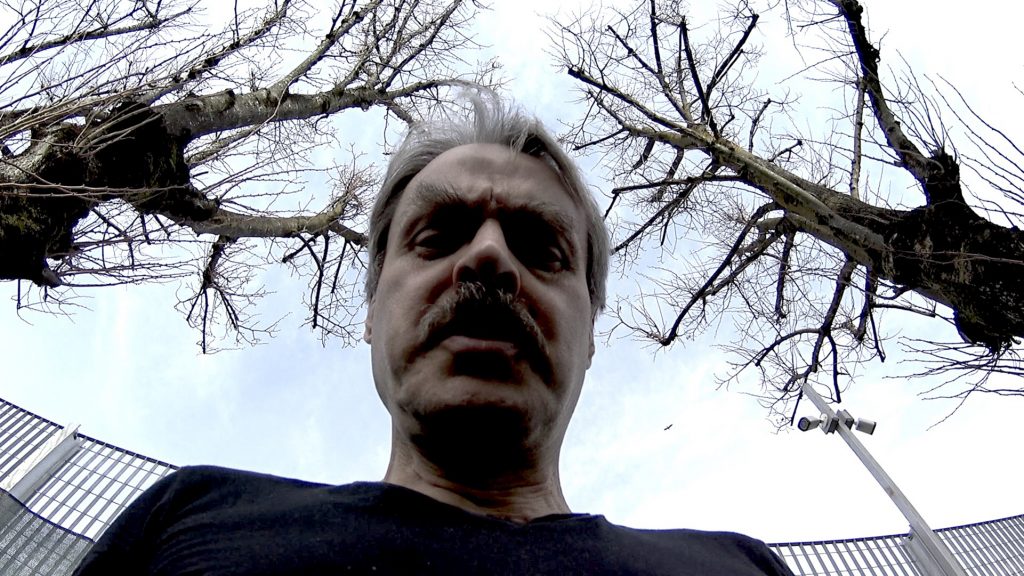
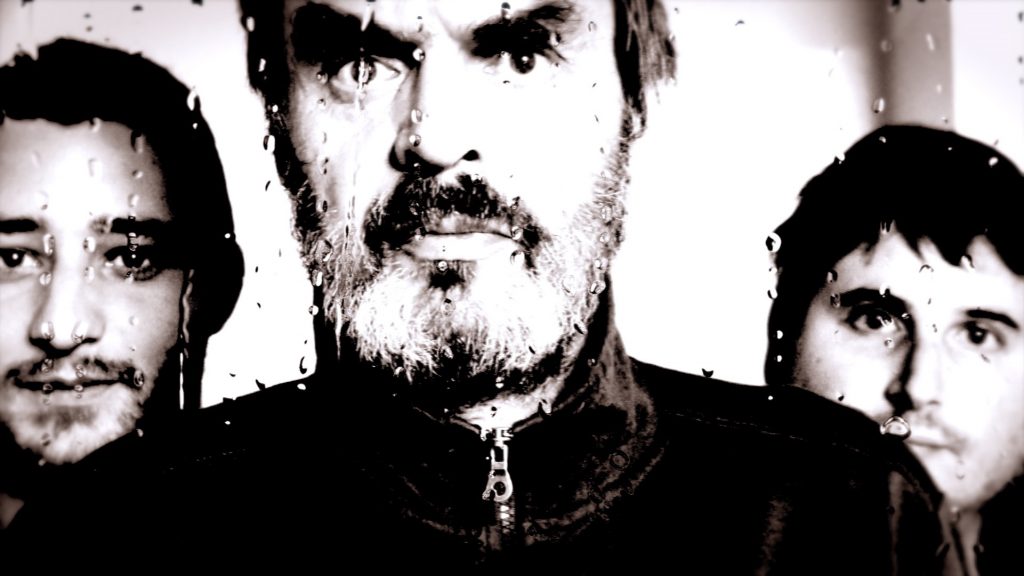

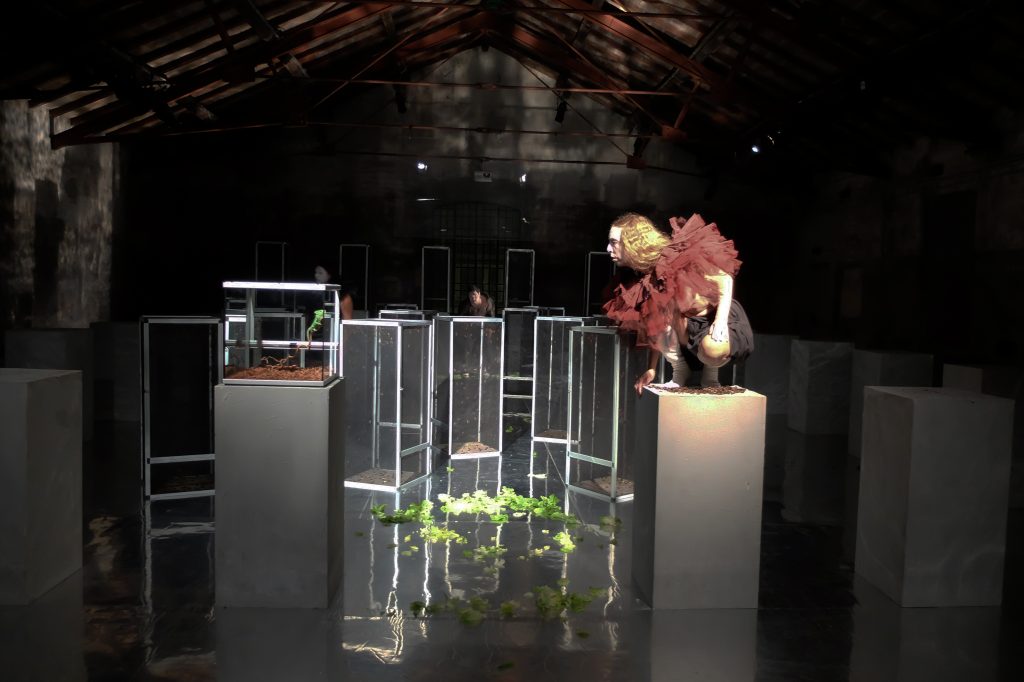
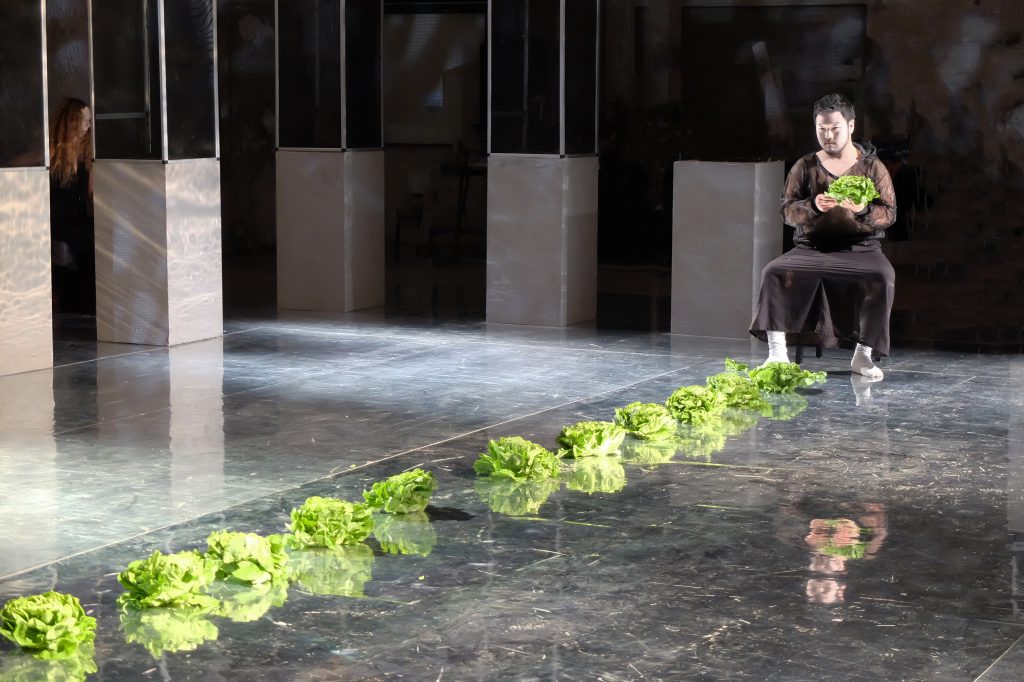
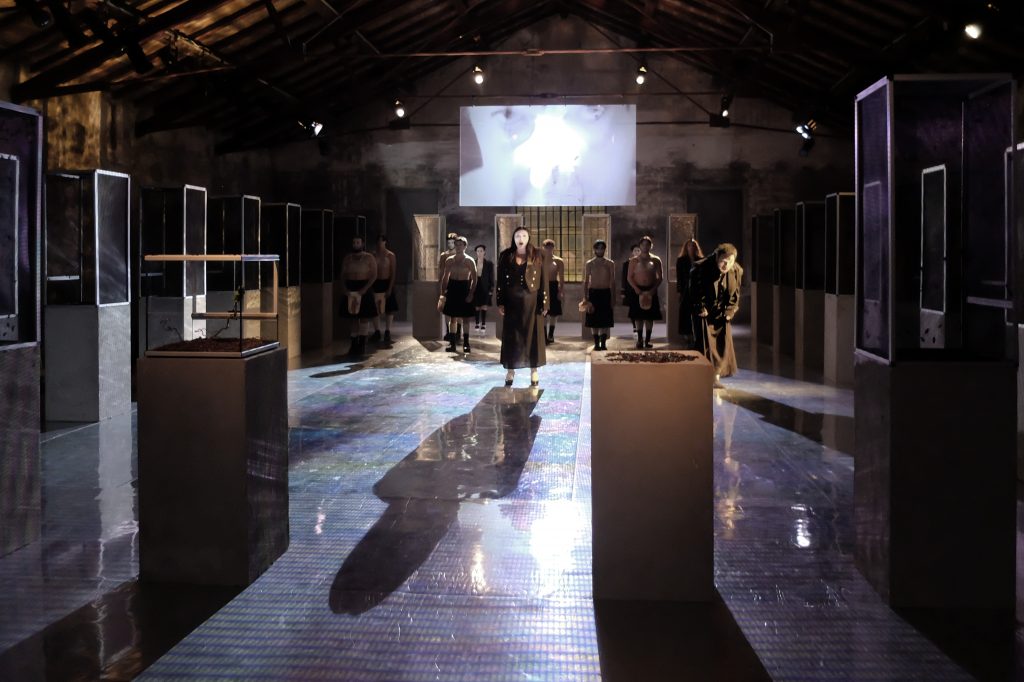
In the Macbeth there are various dramaturgical issues regarding the psychic/fantastic/dreamlike state of the protagonists. The faces of the REMS actors become the visual transfer (social, emotional) for the spectators of Macbeth and the question of madness and the visions of Lady Macbeth and her husband become living matter, violent act remembered and reworked, hallucination refocused in a dramaturgical and representational context of the work. a regret, a lyrical basso continuo, tragic, vero.
On inexorability, inconsolability, interpretative lines were sought for decision and irreparability of one's actions, linguistics of this new work by Lenz, through the indispensable impulses of chi, locked up for decades in prisons without even consolation (torture her) of guilt, reminds us without fiction that life is really a walking shadow and the actor is a poor idiot who struggles to tell us nothing.
The actor is not asked to reveal himself, but to give more power to the words of the text through interpretation, the rereading of one's own existential parable. Actors elsewhere in time and space, actress and singers artistic corpus within a fantastic work that re-elaborates Verdi's research in the truest and riskiest of directorial methods: sleepwalking, dream and prophecy, magic and singing, poetic word and truth of the “fact” e, In the end, melodrama and new musical writing.
And the context in which the work grew is truly a mental prison even before being a containment and rehabilitation structure from guilt.. The responsibility of opening the Shakespearean verse, albeit translated, in relation to the outside world it is already in itself an attempt at a dramatic escape from the nightmare of guilt: the actor then truly becomes the crystal image of his own past and present, the lines of Macbeth and the Lady, just as those of witches seem to come out, with unknown and only minimally correct technique, like knife blades that twirl, real and not fragments of a delirious dream like distant dialogue, from real to virtual, from place to place, from condition to condition, from past time to present time between the actor forced into his "castle" and the actress living her scene.
The three witches of the prophecy are shadows of the mind, presences of a suffering that narrows the gaze and projects it into the fantastic, eyes and words pulsating with blood and fears, messengers of truth that concern us. Warped gates and trees take the place of the castle, of the dense Birman forest advancing, hands that wash other hands to wash away the irreparability of the "fact".
The installation of the Verdi Macbeth it is made up of twenty-four terrariums inhabited by thousands of live crickets and insects whose chirping constitutes, together with Verdi's voices, the sound material of the stage work. The obsessive continuum of their singing progressively takes possession of the entire sound space, in a 'crescendo' symmetrical to the obsessions of Macbeth and Lady Macbeth. Nature enters the installation design as a terrifying principle that is both fantastic and real.
VERDI MACBETH
From Verdi and Shakespeare
Verdi Festival special commission 2018
Dramaturgy and imagoturgy | Francesco Pititto
Regia, installation, costumes | Maria Federica Masters
Musical reworkings and live electronics execution | Andrew Azzali
Singers | Roxana Herrera Diaz (soprano), Hyunwoo Cesare Kwon (baritone), Eugenio Maria Degiacomi (basso)
Interpreters | Sandra Soncini, Valentina Barbarini
Coro live | Ars Canto Youth Choir Giuseppe Verdi conducted by Eugenio Maria Degiacomi: Jacopo Jorge Antonaci | Sara Bertoli | Luca Cesare Devalier | Mattia Furlattini | Guido Larghi | John Pelosi | Alessandro Puglia
Coro in video | Choir of the Teatro Regio of Parma
choir master | Martino Faggiani
Other choirmaster | Massimo Fiocchi Malaspina
Sopranos | Damiana Avogadro | Maria Letizia Bazzolo | Federica Bersellini | Livia Campanella | Lorena Campari | Alessia Cavalca | Sumika Kanazawa | Alessandra Maniccia | Felicity Murphy | Eleonora Pirondi | Maria Chiara Pizzoli | Lorelay Solis
High | Olga Kulicheva| Ewa Lusnia | Simona Mastropasqua | Marianna Petrecca | Gloria Petrini | Maria Vittoria Spring | Donatella Riosa | Laura Rivolta | Deborah Salvagno
Tenor | Gianmarco Avellino | Lorenzo Baldini | Francesco Fontana | Giacomo Gandaglia | Marco Gaspari | Giovanni Gregnanin | Simone Lollobattista | Damiano Lombardo | Roberto Miani | Marco Angelo Müller | Dongmin Shin | Fabio Tamagnini
Baritone / Bassi | Daniele Cusari | Emanuele Dominioni | Maurizio Ferrarini | Enrico Gaudino | Matteo Mazzoli | Davide Ronzoni | Tiziano Rosati | Marcelo Schleier Sacco | Alfredo Stefanelli
Performer in video | Germano Baschieri, Mattia Sivieri, Ivan Fraschini, Daniel Welcome
Photo shooting | Fiorella Iacono
Treatment | Elena Sorbi
Organization | Ilaria Stocchi
Production secretary | Loredana Scianna
Press and communication office | Michele Pascarella
Technical care | Alice Scartapacchio, Lucia Manghi
Acoustic project | Beppe Pelliciari
Media video | Stephen Cacciani
Assistant | Marco Cavellini
Production | LENZ FOUNDATION
in collaboration with:
Teatro Regio – Verdi Festival
Ausl Parma Integrated Mental Health Department for Pathological Addictions and REMS
and with the support of:
MiBAC – Ministry for Cultural Heritage and Activities
Emilia Romagna region
Municipality of Parma
within the scope of
Parma 2020 Italian Capital of Culture
Diffused Energy Emilia-Romagna
European Year of Cultural Heritage 2018
XIV Contemporary Day organized by AMACI – Association of Italian Contemporary Art Museums
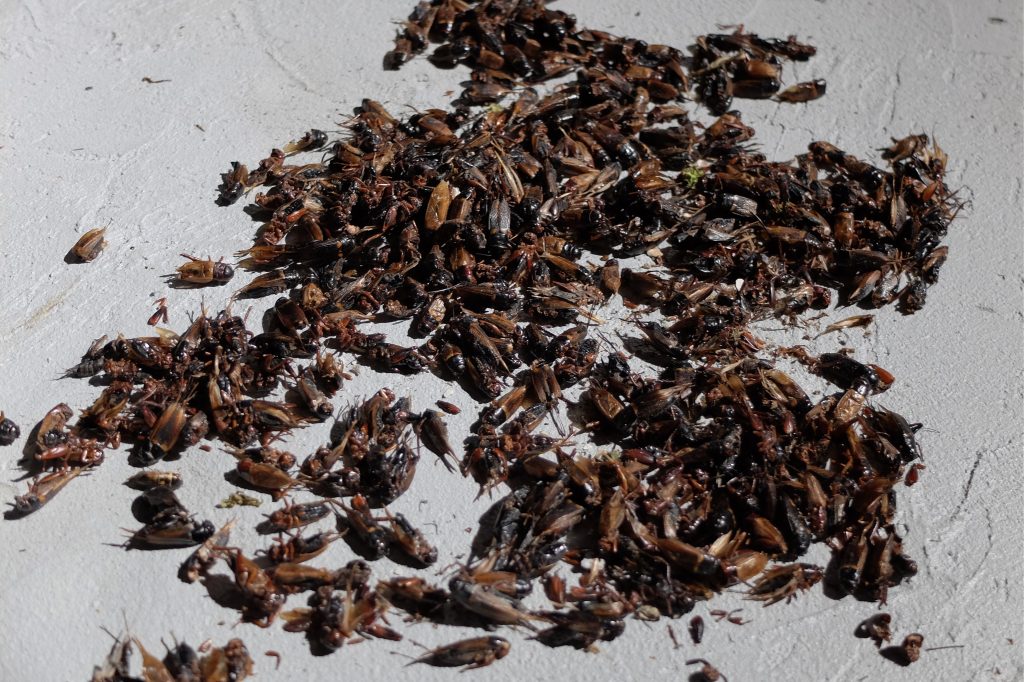
It cannot be ruled out that Lenz Foundation uses singing as royal road to cause acoustic reactions, olfactory, perceptive and tie them together into a unity. All the senses must contribute to representing the mysterious and unnatural story of Macbeth, of which the cry of the cricket is the most sinister symptom. The depiction of men dressed as women indicates, for example, the subversion of the most essential distinction, that is, the male-female couple. Or again, the smell of dead crickets can specify, for example, that this animal does not simply scream in pain: much more eloquently, dies of pain and, because of this, yell out.
Enrico Piergiacomi, philosopher, October 2018
[…] A dramatic plot whose expressive mixture was completed by the musical reworkings of Andrea Azzali, capable of mixing recorded fragments and live electronics interventions in a magma of changing timbral density, causing more or less large fragments of Verdi's work to emerge, isolated and reiterated cello sounds, obsessive sound sequences with a condensed metallic colour, all in a cohesive and meaningful narrative plasticity, capable of enclosing the entire representation in an ideal and compact sound envelope, a sort of acoustic cocoon where one can preserve – and observe from a certain distance – the eternal decomposition of evil and its larvae.
Alessandro Rigolli, Music Journal, 18 October 2018
The lucid vision of Francesco Pititto and Maria Federica Maestri exiles the psyche macbethian in the most complete moral solitude, let it gravitate around the awareness of one's own corrupt nature and wants that falls into the self-infliction of an imperishable and suffocating torment.
Daniele Rizzo, Persinsala, 16 October 2018
Superb Sandra Soncini, unforgettable Lady Macbeth in that sort of intimate and tribal tension at the same time, when, after repudiating, bare-breasted, your femininity, it moves every part of itself, curved, almost a dance of muscles and tendons with that «Hold on!» ending repeated several times. Magnificent!
Valeria Ottolenghi, Journal of Parma, 14 October 2018
Once again Lenz Fondazione has given life to a complex and sinuous work, where the abstraction, visionary, aesthetic research are reported, not without risks, to the concreteness of a sensitive experience (and sensorial), and to a theatrical and musical design of unquestionable value and balance.
Francesca Ferrari, Theaterpolis, 20 October 2018
In the end, Maestri and Pititto free the crickets, as everyone feared from the beginning: but they don't really do it, they do it by spreading their shadows around the Mayakovsky room, with a light effect. The drama conceived by the Imaginifico Pititto, In short, it becomes synesthesia and metaphor, in a dreamlike dimension that leaves no respite. Unmissable.
Camillo Bacchini, literary critic, 17 October 2018