






ROSA SHOP
[ Resistence / Holocaust ]
ROSA SHOP
Pink triangle
Dal 2015 Lenz Foundation has made permanent its historic dramaturgical research project around the themes of the Resistance and the Holocaust. Created with the scientific advice of the historical institute of resistance and contemporary history, it is configured as a multi -year performative study activities.
In continuity with the artistic programs launched in recent years, Lenz Fondazione intends to carry out a large project of contemporary performative creations, seminars, and days of public reflection, dedicated to the themes of resistance and the European tragedy during the Nazi-fascist dictatorships.
2016 KINDER [Children]
On the tragedy of the Jewish children of Parma victims of the Nazi extermination.
2017 ACTION T4
On the Nazi program of Euthanasia for the suppression of children born with malformations or disabled people.
2018 ROSA SHOP [Pink triangle]
On the deportation and extermination of homosexuals in the Nazi concentration camps.
During the German Nazi regime, numerous homosexual people were interned in concentration camps together with Jews, Rom, children and adults with disabilities, opponents of the regime, communist people. What distinguished homosexual people from other prisoners was, in the case of men, a pink triangle sewn onto the uniform at chest height; in the case of women, a black triangle. It is common to refer to the extermination of homosexuals in Nazi concentration camps as Homocaust. It is estimated that there were at least one homosexual person interned in the concentration camps 50.000.


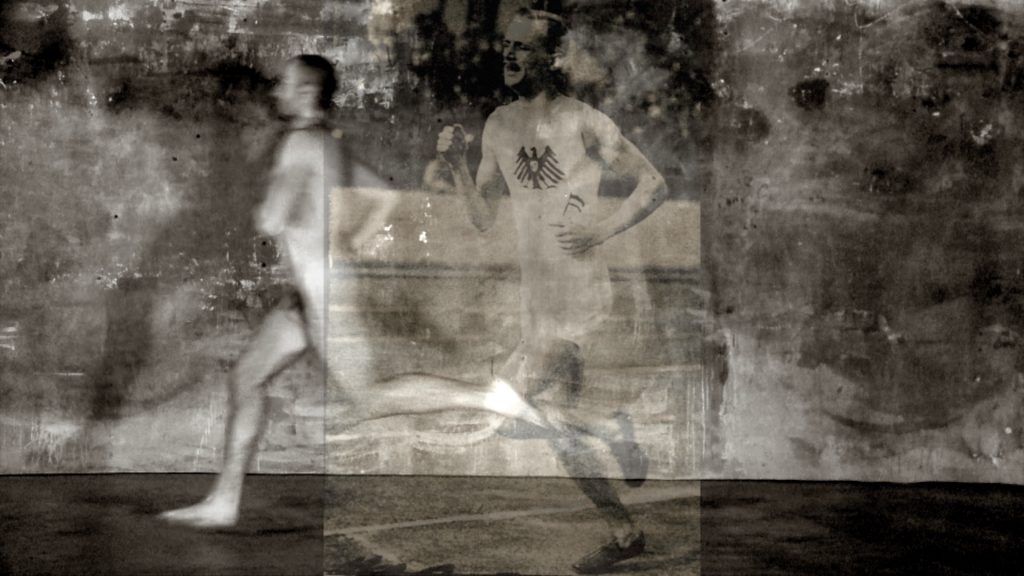
-
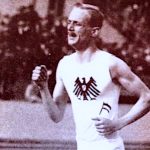
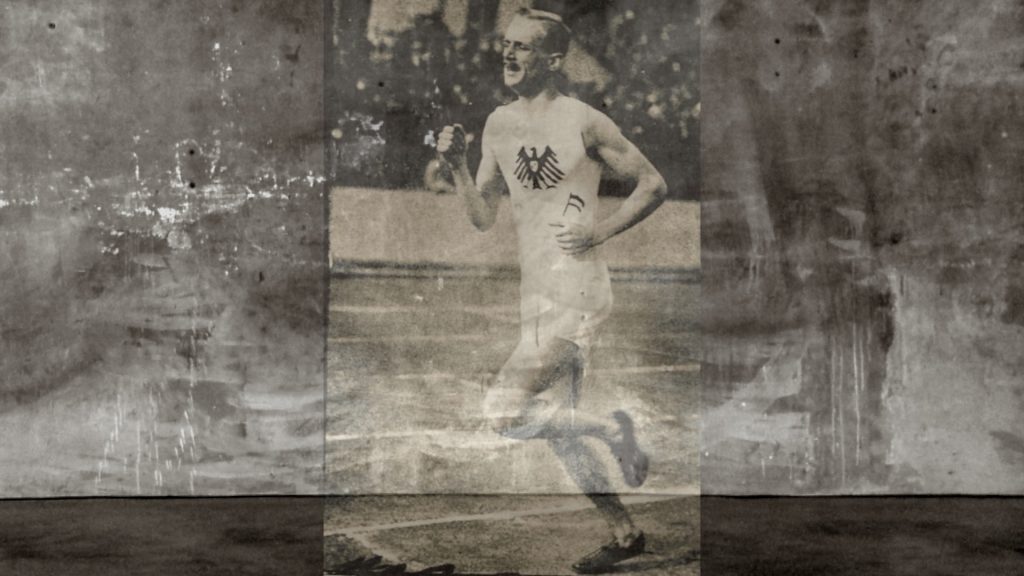
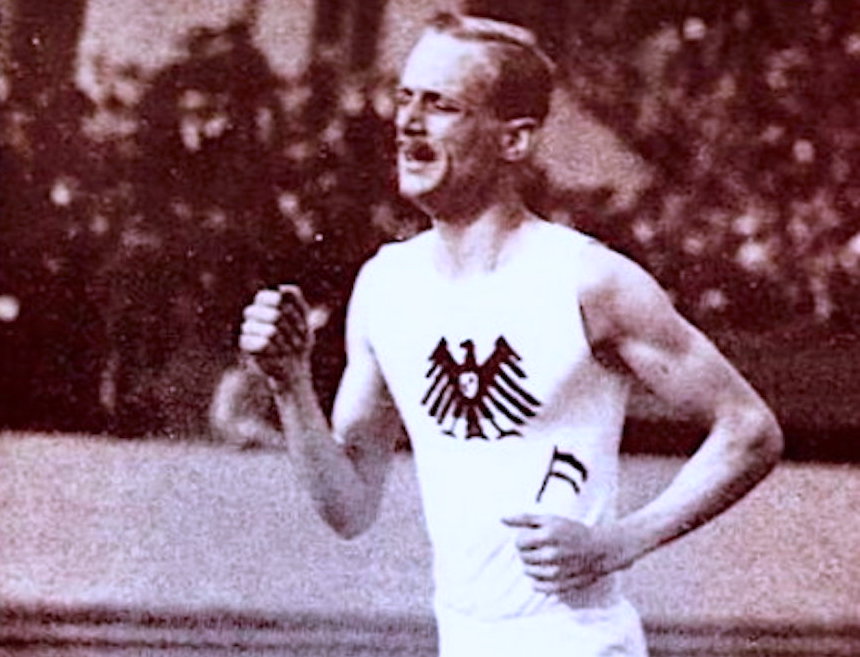
- Otto Peltzer
Already in 1934 Levinas wrote: «Hitler's philosophy is rudimentary. But the primordial powers that are consumed there make the miserable phraseology explode under the push of an elementary force. They arouse the secret nostalgia of the German soul. Much more than a contagion or madness, Hitlerism is a reawakening of elementary feelings.".
Instead of the free search for elsewhere, of a new rational world or a divine place for Western man and woman, Hitlerism has chained the truth to a community of blood, to an imaginary racial unity, which nails its members to an immobile condition.
The principle is biological identity: the I, in Hitlerism, it is thought of as coincident and identical to the biological body, essential bond of a community of blood, of biological bodies that identify and recognize themselves in an "us". Moment, Therefore, of glorification for some and damnation for others - primarily the Jews - who are also nailed to the biological identity attributed to them. Then all the others who don't belong, harm it, to the purity or growth of “us”. Biological identity, hereditary and somatic characteristics, therefore the body and the diversity between bodies become an element of domination of the destined race. The body of "us" takes on forms and identity characteristics.
Nazism does not conceive of the body as the body of the individual, but always referring to a collective entity, the Volk people understood in an ethnic-racial sense. It's the Volkskörper, the social body, the body of the nation Volksgemeinschaft, national community which must have good health and be fortified, hardened by fatigue and suffering, to demonstrate racial superiority, but also to regenerate the race itself.
“Your body doesn’t belong to you!” your body does not belong to you. Sport and physical activity is: Life struggle, fight for life.
Metaphor of the invincible soldier and personification of the perfect Aryan man, the sporting champion of the Reich attracts all the expectations of a regime that needs the athlete's body to exhibit proof of its biological superiority.
Except in cases where the athlete is Jewish, political enemy, gypsy or other and finally homosexual or, in the case of a female athlete, lesbian.
It's always the body, the relationship between bodies and belonging to other categories of bodies, that makes the difference. Even if the athlete is a champion.
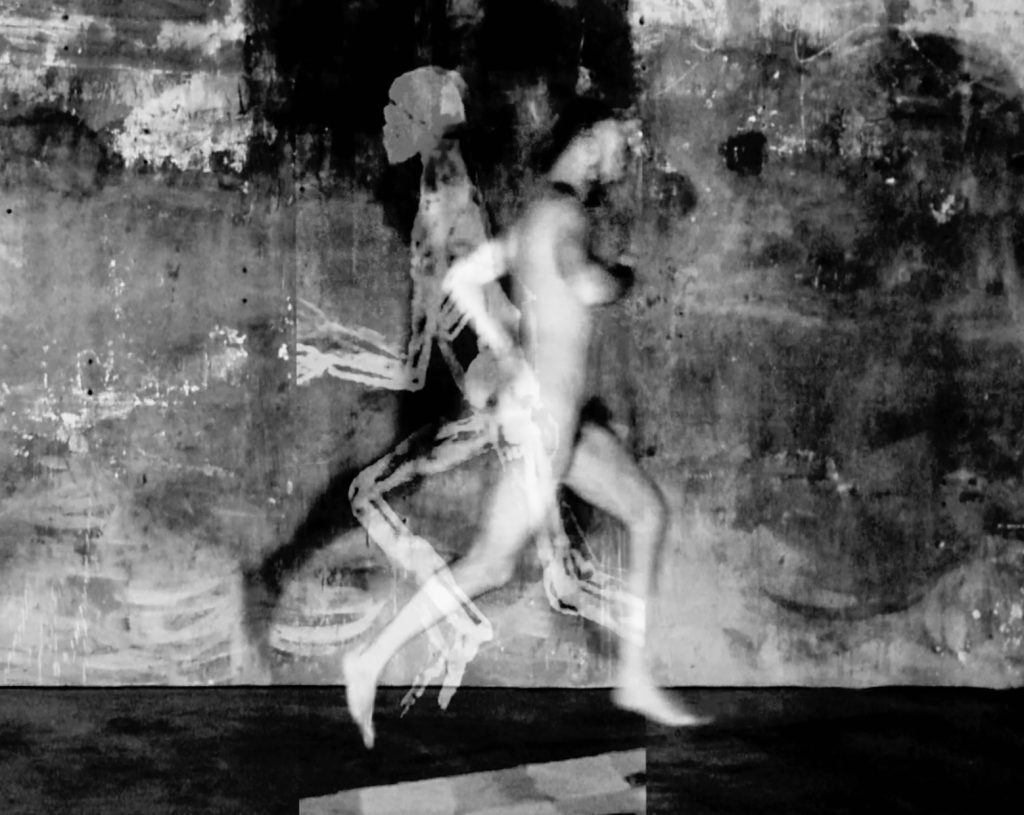
Among the thousands of tortured and persecuted bodies we have chosen one for all as a historical-dramaturgical refraction, Otto Peltzer, one of the greatest distance runners in history. Arrested, jailed several times, then Mauthausen until 5 May of 1945, when the Americans free him. But Otto is not rehabilitated even in post-Nazi Germany. Il “Sin” of homosexuality will haunt him. He will go to India to teach athletics and other sports to young people, returning to Germany only at the end.
And even today the finish line is not close and the race continues.
As in the lamp-dromy, the torchlight race, the athlete/man/woman continues to pass the flame that brings the new sacred fire. In the shortest time possible and always faster, to reach the goal of a new concept of relationship between men, of a new idea of community, of a new idea of freedom.
“The sky above your head, the earth under your feet,/next to nothing./I feel that someone from the side is watching us./I hear but I don't look, because I'm living,/running."
Francesco Pititto
Notes on the scenic device of Rosa Winkel
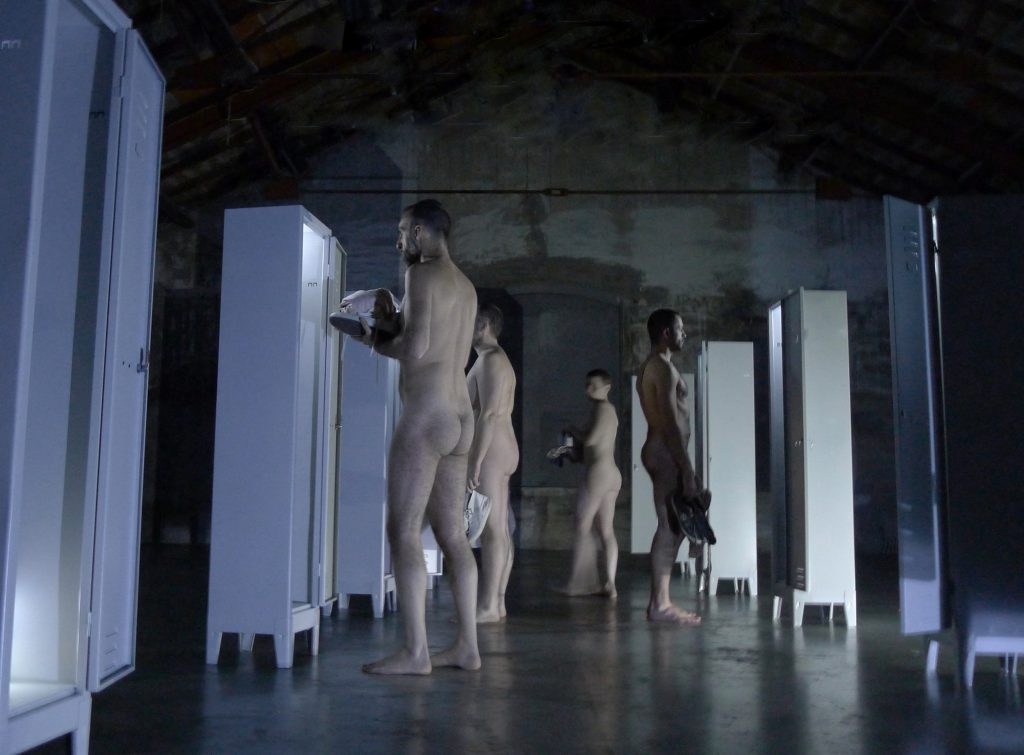
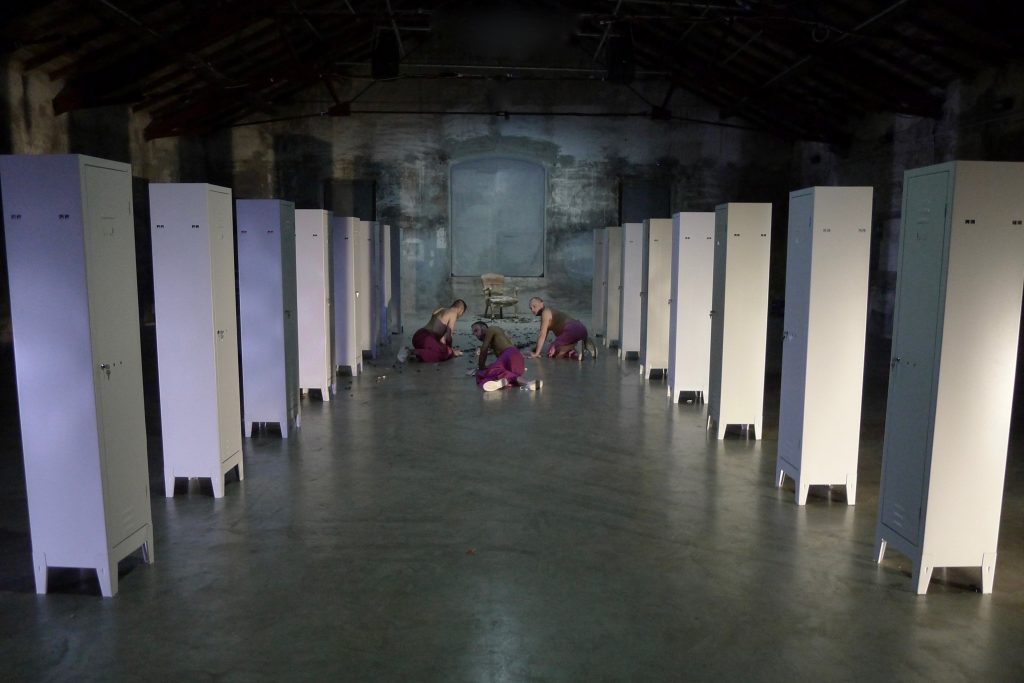
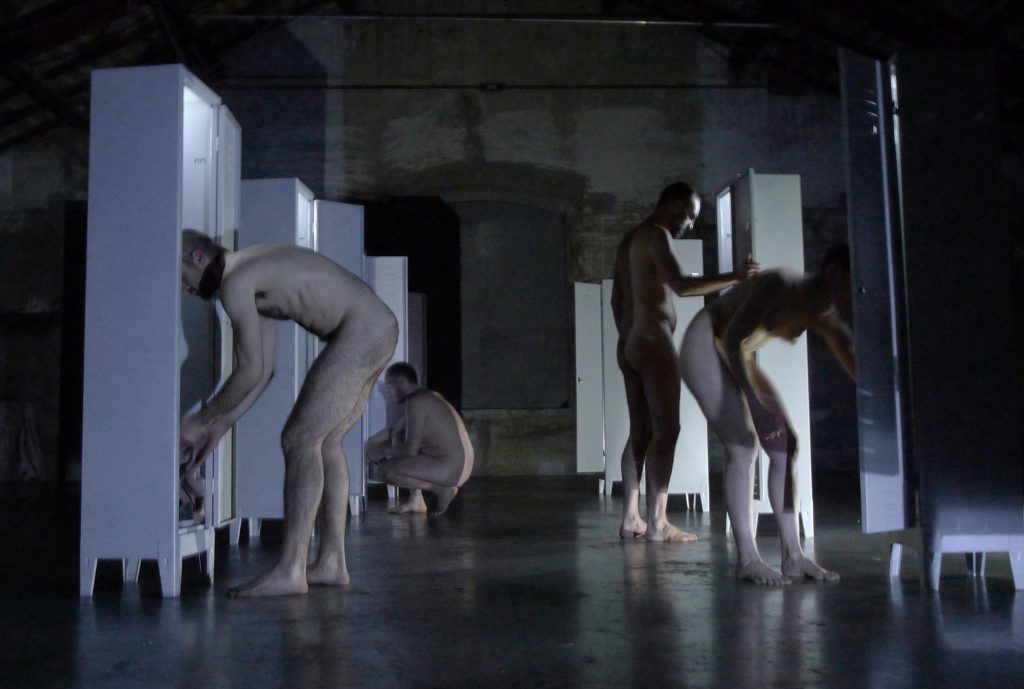
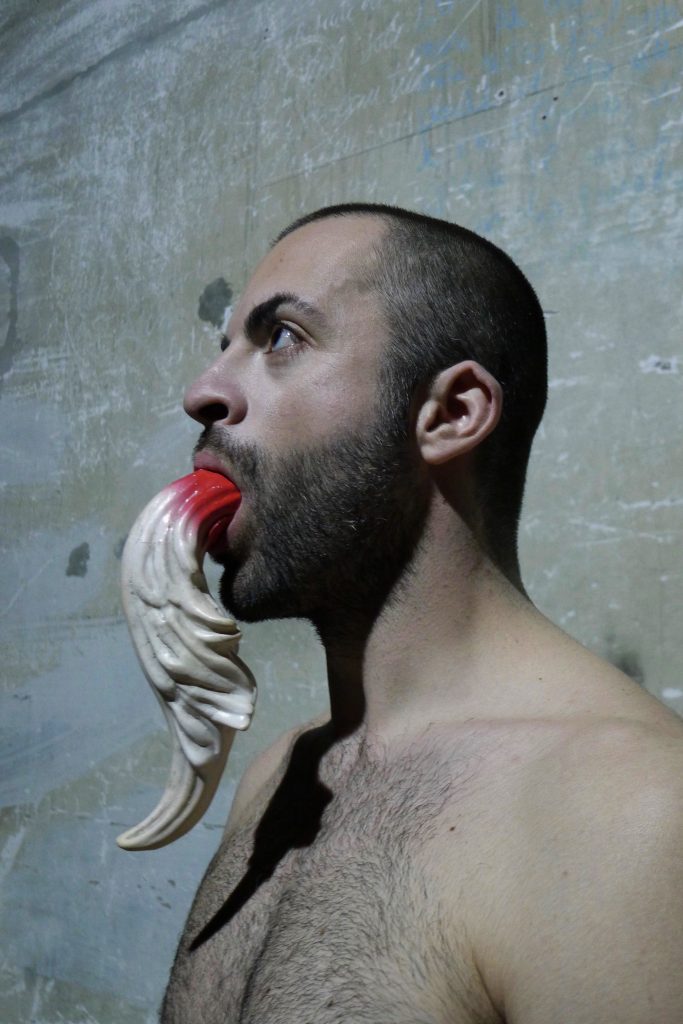
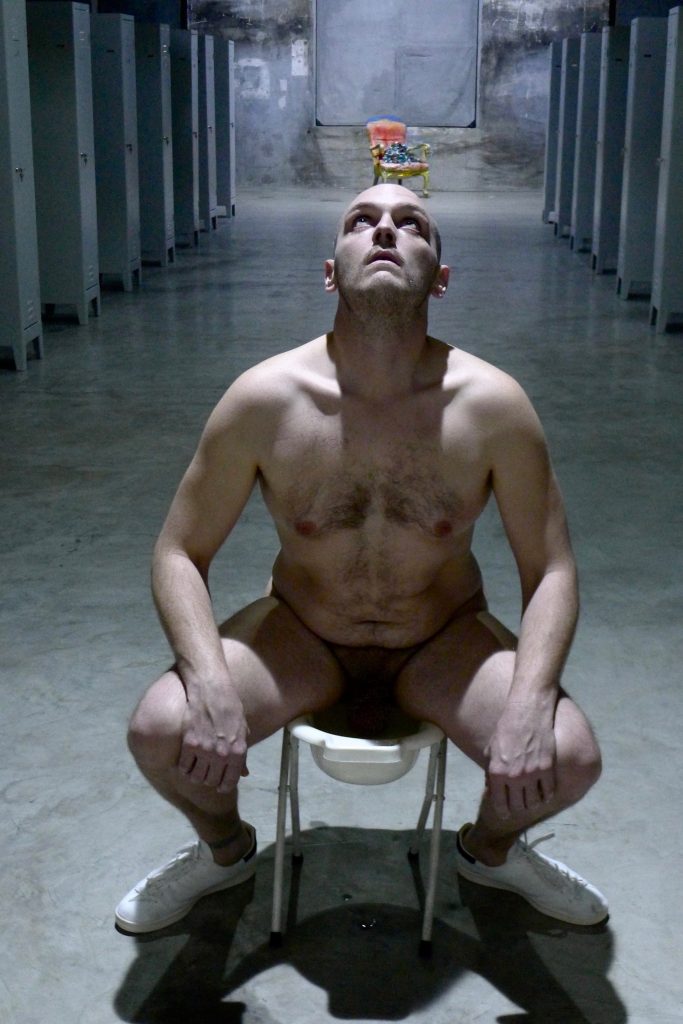
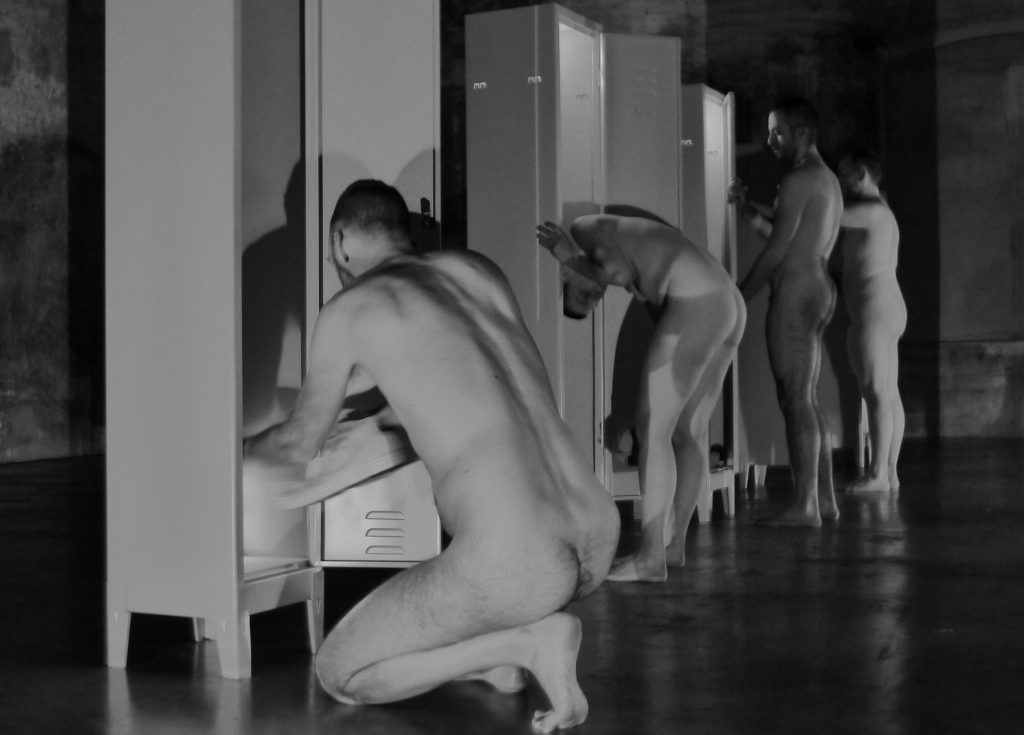
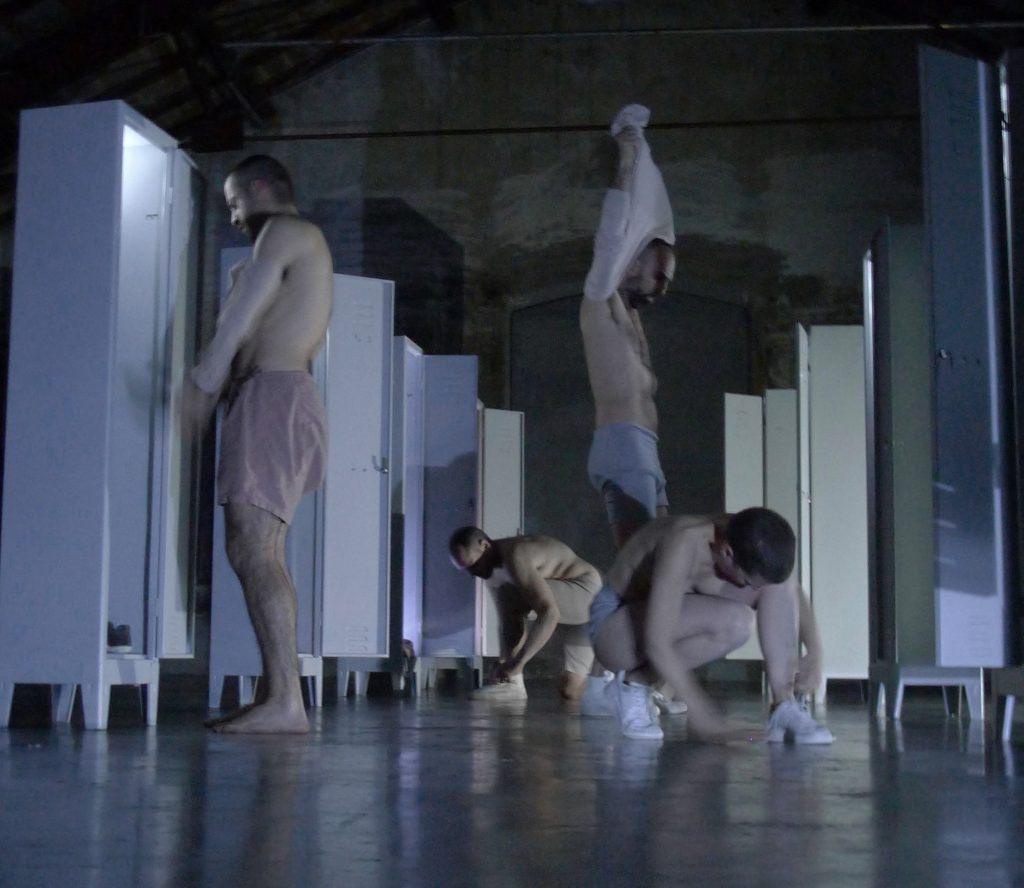
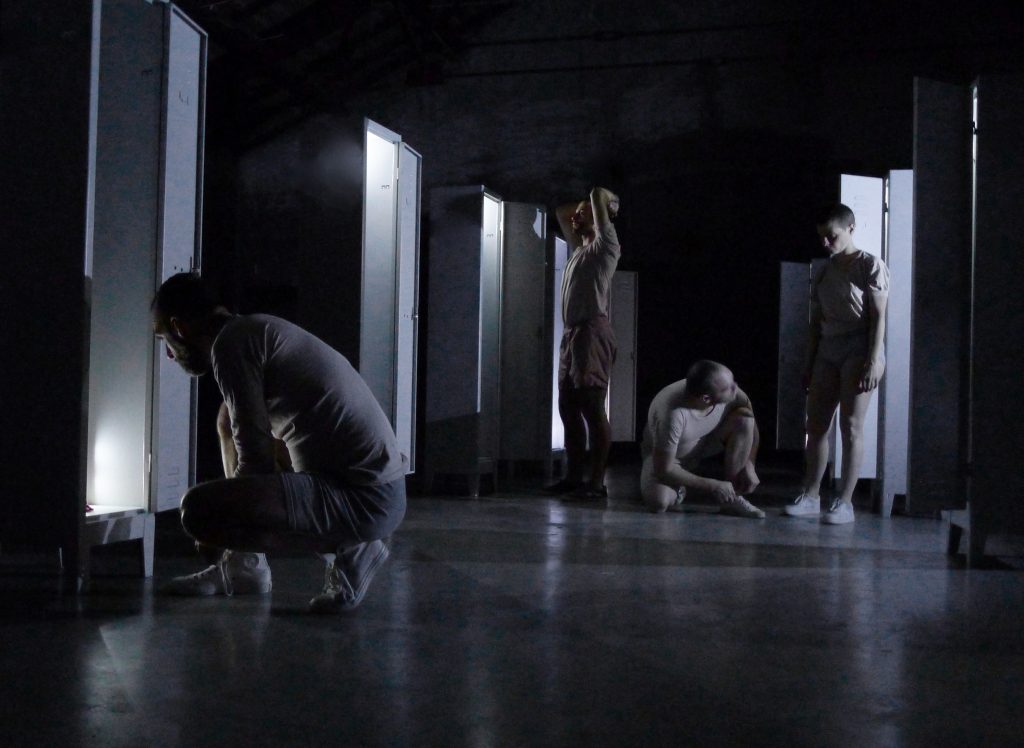
The space of Rosa Winkel it is rhythmically divided by variable modular sequences made up of sixteen metal cabinets. The plastic volume of the little one cupboard contains the double dimension inherent in undressing: the unmasking, the liberation from the external covering and at the same time the undressing, understood as a loss of identity, elimination of uniqueness and difference. The multiplication of the compartments installed in the scenic space determines the oscillation between one aspect and the other, allowing us to 'figure' the double dynamic on which the dramaturgy moves: the bodily fullness of the athlete's homosexual identity and the identity dryness of the inmate's body, deprived of any sexual signs, his absolute denial in the extermination camp. Just a leak, an endless race, to replace its affective and corporeal form.
The dramatic device bounces between the exaltation of physical feeling and its total subtraction carried out in the concentration camps through castration, hormonal experiments and clinical treatments. Spatial scans of metal containers, the opening and closing of these minimal archives of historical horror Norman the scenic alternation between epic and tragic fields.
Maria Federica Masters
[ Resistence / Holocaust ]
ROSA SHOP
Pink triangle
Original text and imagery | Francesco Pititto
Installation and direction | Maria Federica Masters
Interpreters | Valentina Barbarini, Adrian Engelbrecht, Roberto Riseri, David Rocchi
Musica | Andrew Azzali
Treatment | Elena Sorbi
Organization | Ilaria Stocchi
Press and communication office | Michele Pascarella
Technical care | Alice Scartapacchio
Media video | Stephen Cacciani
In collaboration with ISREC
with the patronage of Arcigay Italian LGBTI+ Association
Production Lenz Foundation
ROSA SHOP – full video
A show that at times is also charged with profound eroticism which goes hand in hand with the darkness of Thanatos and which, in the darkness illuminated by powerful headlights pointed at him as if during an interrogation, allows us to rediscover one of the least talked about sides of that collective delirium that lasted for years. more (…)
Matteo Bergamini, Exibart, 24 April 2018
Immersion is immediate. Sixteen metal lockers placed in the center in two long mirrored rows leave a corridor in between, e, around, a large space to allow us to move freely and observe, listen, we spectators also experience inside the lager scene and athletics field. more (…)
Giuseppe Distefano, Curtain, 30 April 2018
The three male performers, three athletes, before taking off their gymnastic costumes they walk around and occupy the room, also enjoyed in an itinerant way by the public, to outline ideal race routes, draw relational geometries, modular with short and sudden sprints, and with opening and closing cabinets (doors of memory and thought, containing objects, lights and microphones for secret words), the times, shape it, the dynamics and connective tissue of the overall composition, also supported by a sound and musical network of Wagnerian inspiration. more (…)
Francesca Ferrari, Theaterpolis, 5 maggio 2018
The scene with the regent on the throne is dazzling, Himmler, that throws, furiously frustrated, hundreds of toy soldiers on the chest of the athlete who, inexorable, approaches him.
Tommaso Chimenti, Hystrio, July-September 2018