






This Weak Force
This Weak Force
Atlas Project on Violence
HORIZON IN THE FULL SEA
we are surrounded by our own sight
Simone Weil guides us to outline the navigation map: after the shipwreck of history, still in the open sea, drifts of infantile sounds and moans, images of floating bodies, reflux of broken remains.
For this first view of our Atlas of Violence we start again from Hölderlin's inexhaustible and fundamental thought on the tragic, breathing in the tremors of the presence of evil in the Choruses of his Oedipus the Tyrant and holding his breath to sink into the Unknown of the painful verses of the second draft of Mnemosyne, famous lyric of his immense poetic production.
An archipelago in which to research, between mythical figures and contemporary signs, a first landing, a first fresco, a first review for our Atlas of Violence: the anguish and fear of the innocent is transmuted into a very human and sublime fulfillment of weakness; the 'violent thing' that agitates and shakes and destroys is opposed by a power without force, to the bloody demon of appearance the glittering cry of tenderness and pity.
As I count as equal and as nothing I who live
'As I count as equal and as nothing I who live' thus a verse by Hölderlin shows us the direction for a poetic score of disorientation and revelation: the meaning of our existence originates in reversal and loss, it is accomplished in the fall, it is reborn in the effort of the ascent.
Oedipus Rex by Sophocles, hence Hölderlin's Oedipus the Tyrant, it is one of the summits of the human spirit.
It is the tragedy of man who pushes his desire for knowledge into the darkness of fate, to discover the truth of human suffering, that questions every rule, every law, every power.
Hölderlin focuses his attention precisely on this: about the man who, driven by the anxiety of knowing the immeasurable, makes research its greatness, but also his downfall.
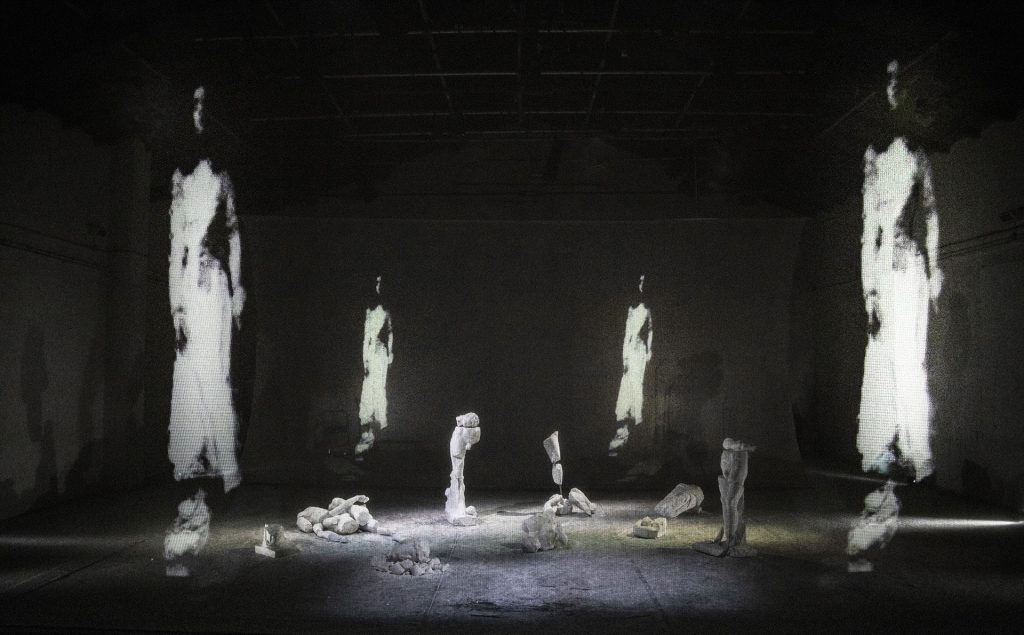
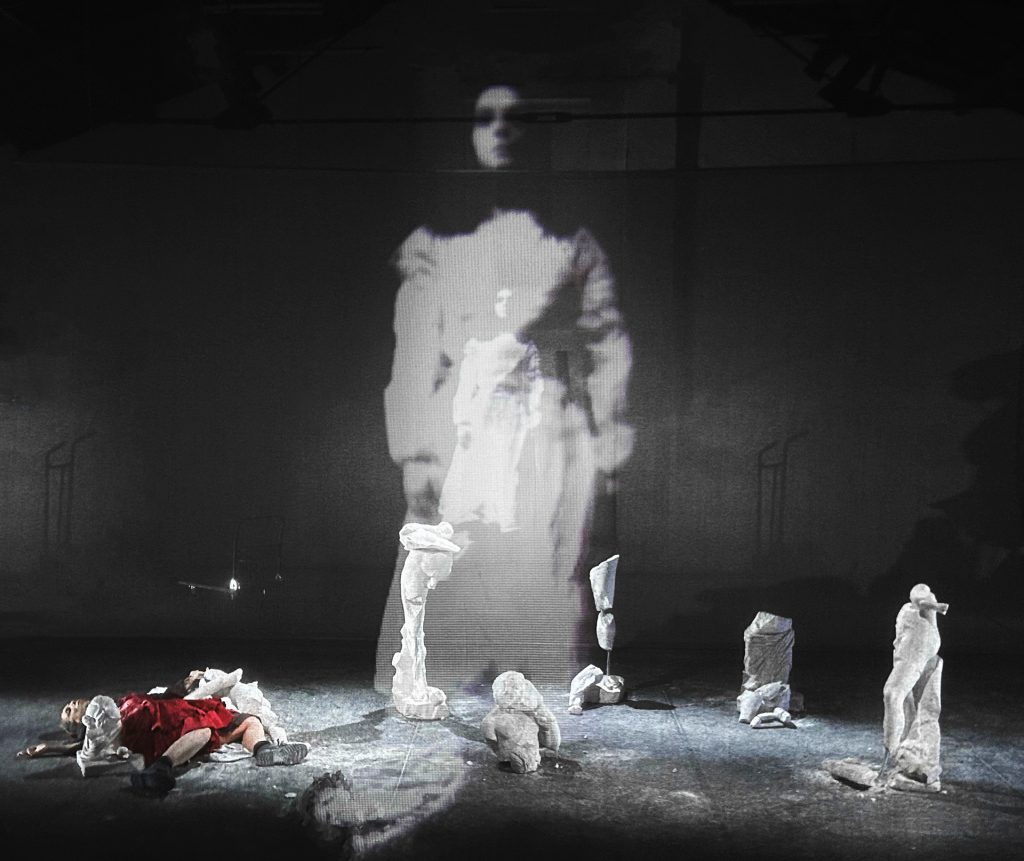
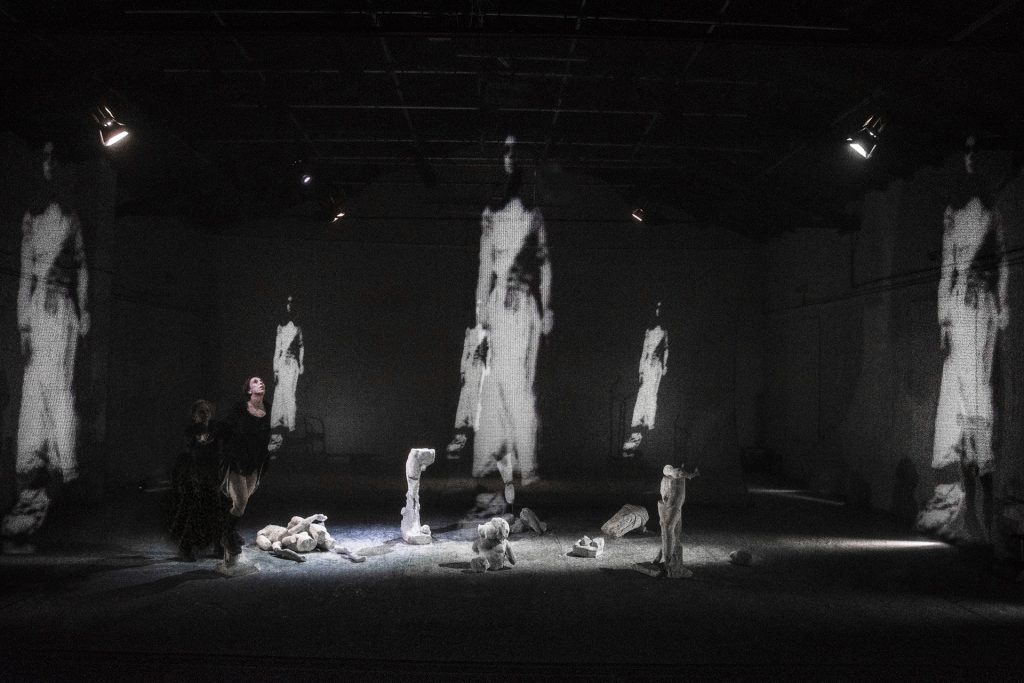
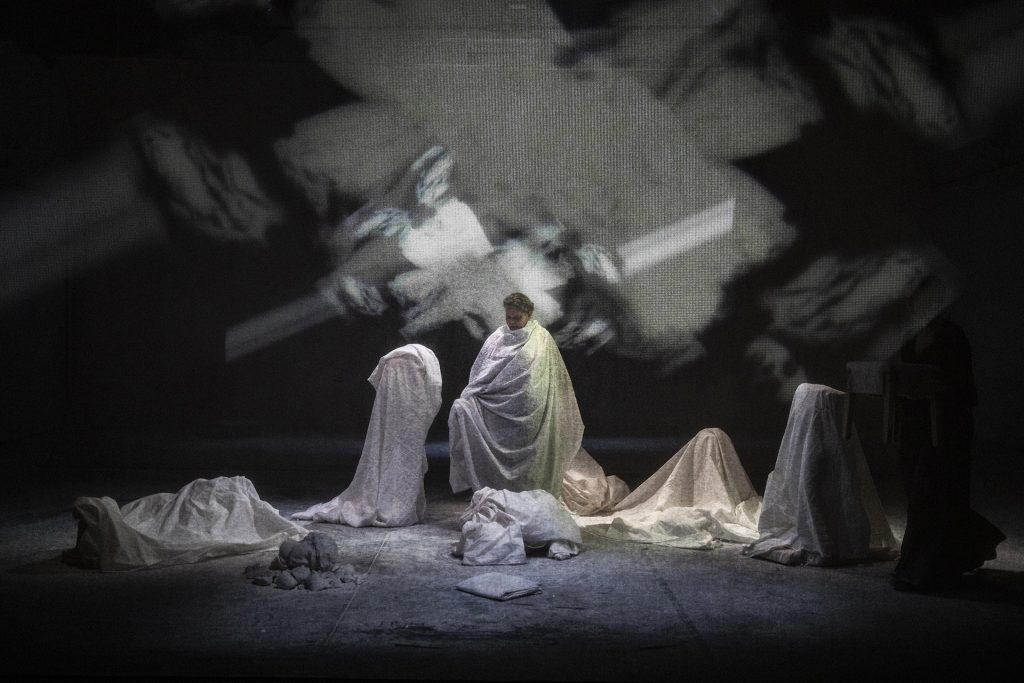
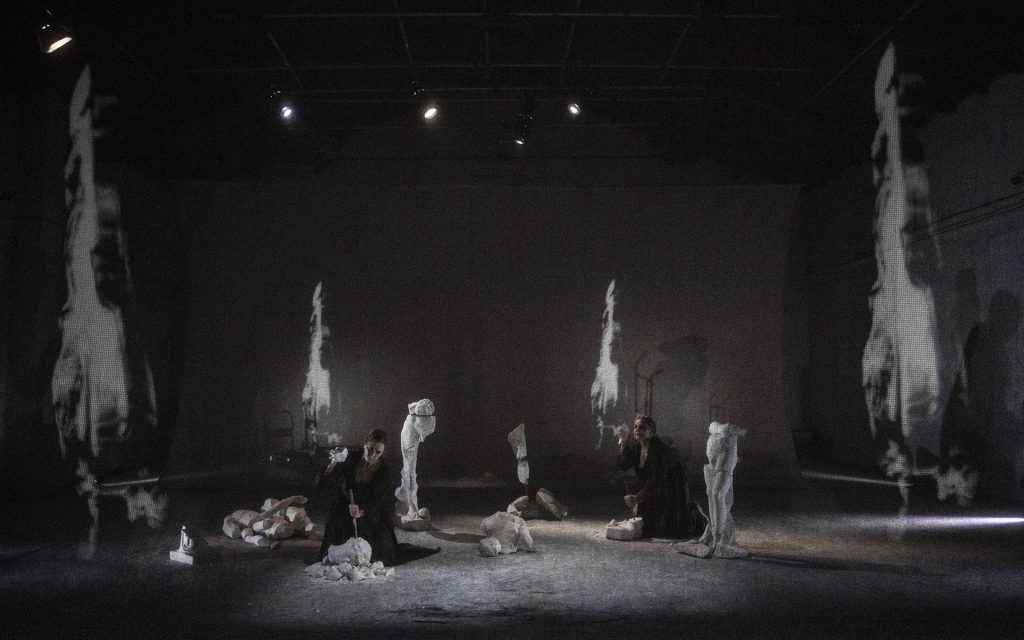
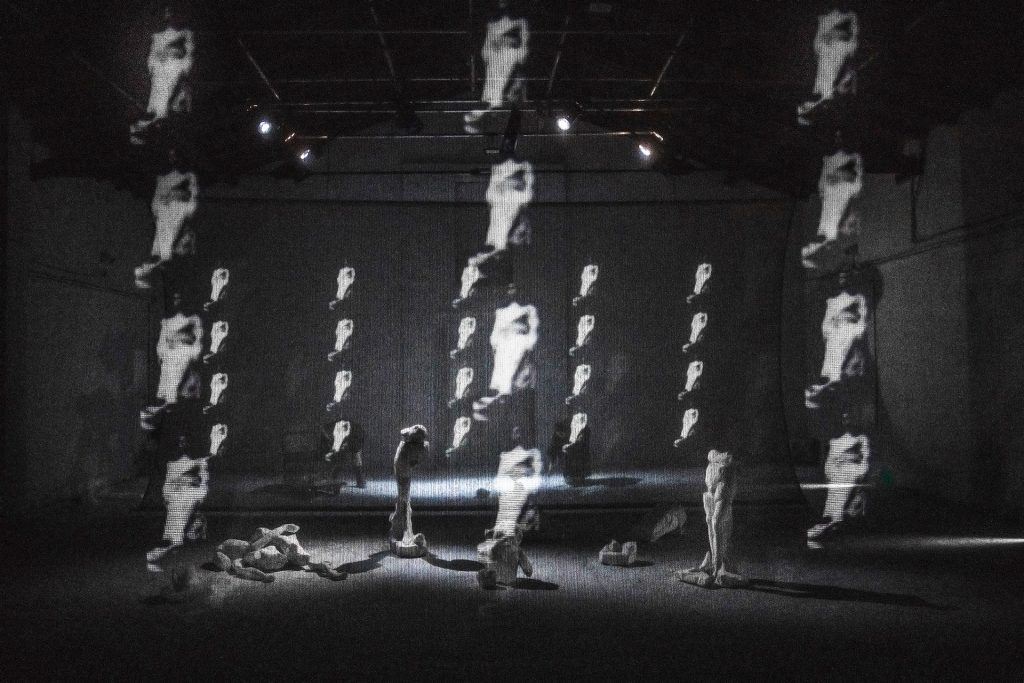
ATLAS ON VIOLENCE After the four-year project on the Holy Scriptures, What happens in the world and what they have delivered us in terms of writings and images-imagination-Immaginal, leads us to an analysis of violence, of the violent act, of the mythical hero and of the war. Atlas of Violence is the new multi-year project with anatomical work starting from the Iliad, The first great book of the West that poetically transcribes themes such as conflict, the abuse, violence, Empty and a series of performative rewrites connected with the epic of the Iliad. Truth and beauty, between divine figures and heroes in perennial struggle, they seem to mark temporal brackets where time does not seem to exist, or be infinite and immortal like the life of the quarrelsome and vindictive gods. Parenthesis where poetry rises above the ferocity of a war whose meaning has been lost, the ultimate goal of the dispute. To investigate the profound relationship between matter and spirit, between nature and human beings they come to our aid, as always, the thoughts and writings of Simone Weil and the thought-principle of 'Overcoming loss', fundamental outcome of Friedrich Hölderlin's reflection on the tragic, it becomes a tremendous and violent act in the painful exploration and definition of evil through tragedy Oedipus the Tyrant and the lyrics Mnemosyne. Every ethical-aesthetic reference to our present requires critical dramaturgical thought that draws the boundaries between epic thought, heroic figure and form, between strength and power on the field to be able to draw its true meaning: he who has strength also has power? Or the real power belongs to those who do not recognize strength and violence, After having undergone them, as inescapable? A theater that has its own agone in the contemporary can not be separated, poetry – terrible weapon of defense – it cannot be separated. HÖLDERLIN PROJECT To the poet, philosopher, German romantic playwright, crazy died after almost forty years lived locked up in his tin-tuba house, In recent years, the Lenz Foundation has dedicated a unique research path in Italy. Dal 1991 al 1994 Maria Federica Maestri and Francesco Pititto have in fact curated the mise-en-site of almost all of Hölderlin's works, specially portrayed for the scene: the three drafts of The Death of Empedocles, Oedipus the tyrant, AIACE, Oedipus in Colono, Antigone, Hölderlin-Foscolo, I was of the fourths. The first staging of Questa Weak Force, site-specific creation of the Choirs of Oedipus the Tyrant in the Archaeological Museum of the Pilotta monumental complex, dates back to 2017. THE MEANING OF TRAGEDIES The simplest way to understand the meaning of tragedies is to start from the paradox. Ora, in the tragic the sign is in itself insignificant, ineffective, while what is original emerges. The original can in fact properly appear only in its weakness: to the extent that the sign itself, as insignificant, = is set 0, then what is original can also be represented; the hidden foundation of all nature. This Weak Force and Oedipus the Tyrant and the Friedrich Hölderlin's Mnemosyne Valeria Ottolenghi – Journal of Parma «’This Weak Force re-edition’: an original and daring creativity.» One of the most cultured and refined research in Italy, but with a fundamental international conscience, the space is also perfect, in the San Leonardo district, born with other functions, between craftsmanship and industry, which opened up to artistic experiments without borders, this metamorphosis of use is a widespread need, especially in major metropolitan cities, in the United States as in Europe. With Lenz also in Parma.
Between the 2014 and the 2016 they concentrate their work on Hyperion by transcribing the short juvenile novel into three different scenic segments: Hyperion/Diotima, Hyperion #2, Hyperion.
The translations from Sophocles are the last work that Hölderlin saw printed.
The translation of Oedipus Rex, criticized and even ridiculed at the beginning of the nineteenth century, it later revealed itself to be a work of very high poetry, on which Benjamin wrote memorable pages, Heidegger and Brecht.
Friedrich Holderlin
Indeed, everything is original, each faculty being distributed equally and uniformly, it does not indeed appear in its original strength, but instead precisely in its weakness, so that the light of life and the phenomenon belong properly to the weakness of every totality.
If nature is properly represented in its weakest endowment, then the sign is = 0 when it is represented in its strongest quality.
Atlas Project on Violence
Dramaturgy, imagoturgy Francesco Pititto
Composition, installation, wrappers Maria Federica Masters
Musica Claudius Rocchetti, Johann Sebastian Bach
Interpreter Tiziana Chapel, Sandra Soncini
Technical care, luci Alice Scartapacchio
Production assistant Giulia Mangini
Project care Elena Sorbi
Organization Ilaria Stocchi
Communication, Press office Giovanna Pavesi
Diffusion, graphic care Alessandro Conti
Photographic documentation Elisa Morabito
Video documentation Black Lapine
Production Lenz Foundation