





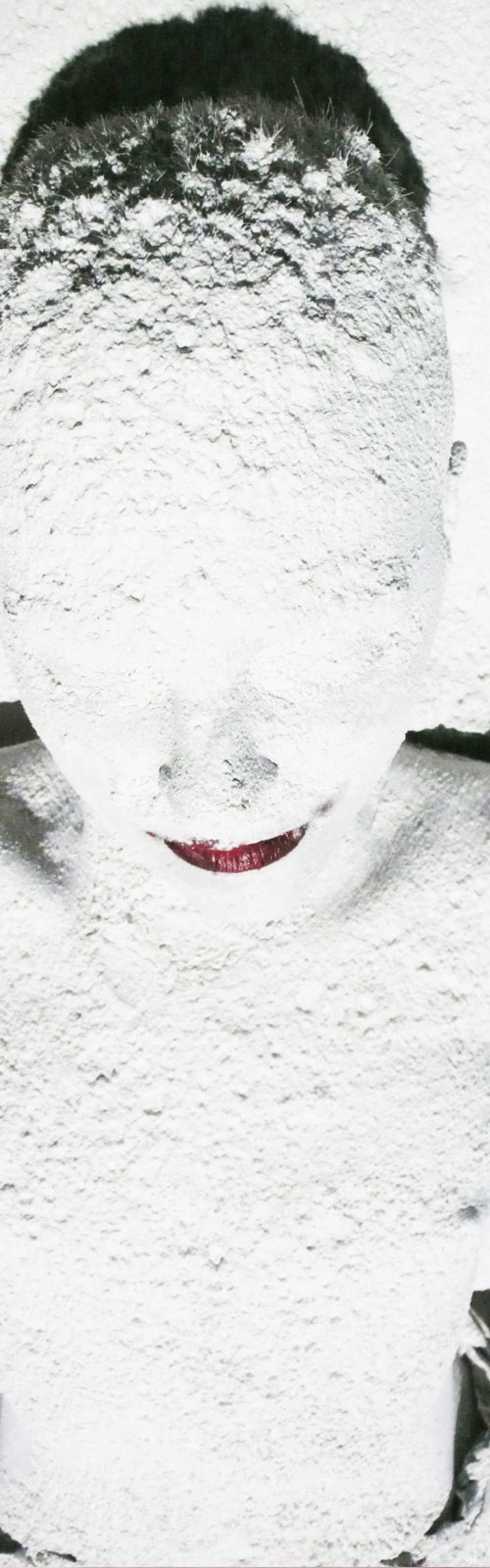
PURGATORY
Divine comedy
Performative installations | Sound | Environmental site-specific
Cultural and artistic enhancement < PARMA
Cruise of the Vecchio hospital in Parma < PURGATORY (2017) Nature Gods Theater Festival
North bridge of Parma < PARADISO (2017) Festival Value
Thermovalist < INFERNO (2018) unrealized
Dal empty al full, From exclusion to the real participation of the citizen in his cultural and urban heritage, New geography and recovery of sustainable beauty, bridge between bridges, aquatic thinking that flows in the trained stream under the bridge that connects nothing, Art/real action in the theater that aspires to the theater even before the last wall, before the "end of work".
In the year of recovery to the city of Stone Bridge – il Roman bridge o Theodoric Bridge which connects the two historical parts – propose a profound reflection on architecture, Community and Culture, through a dramaturgical investigation and performative installations site specific, It means ideally connecting two fundamental periods of the history of Parma.
Looking for the origin and mirroring it in the contemporary is always as a stimulus to feel part of a great tradition and a present that can be up to it. Monumental buildings crossed by monumental literary works, theatrical, musical in the most advanced artistic forms.
The great poetic monument of Dante it refracts the human and artistic condition of the sensitive actors of the Lenz Foundation theater in places of painful constraint, of the suspended theater, of illusion.
A contemporary space and a historic one. One full of functions and one empty of meaning, and precisely for this reason to be filled, temporarily, of luminous and dense presences as only the artistic experience of human action can build. Virtue versus Vice, a Divine Comedy with new circles, circles and rings full of bodies that give voice to the bursting chorus of possibilities, of opportunities, of the contemporary practicable.
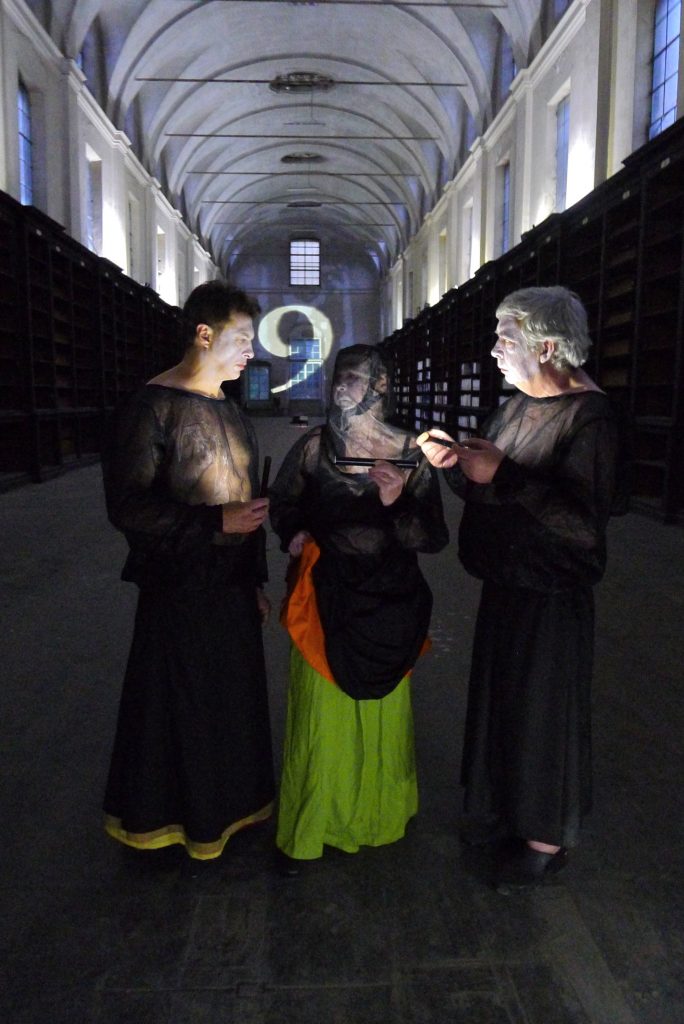
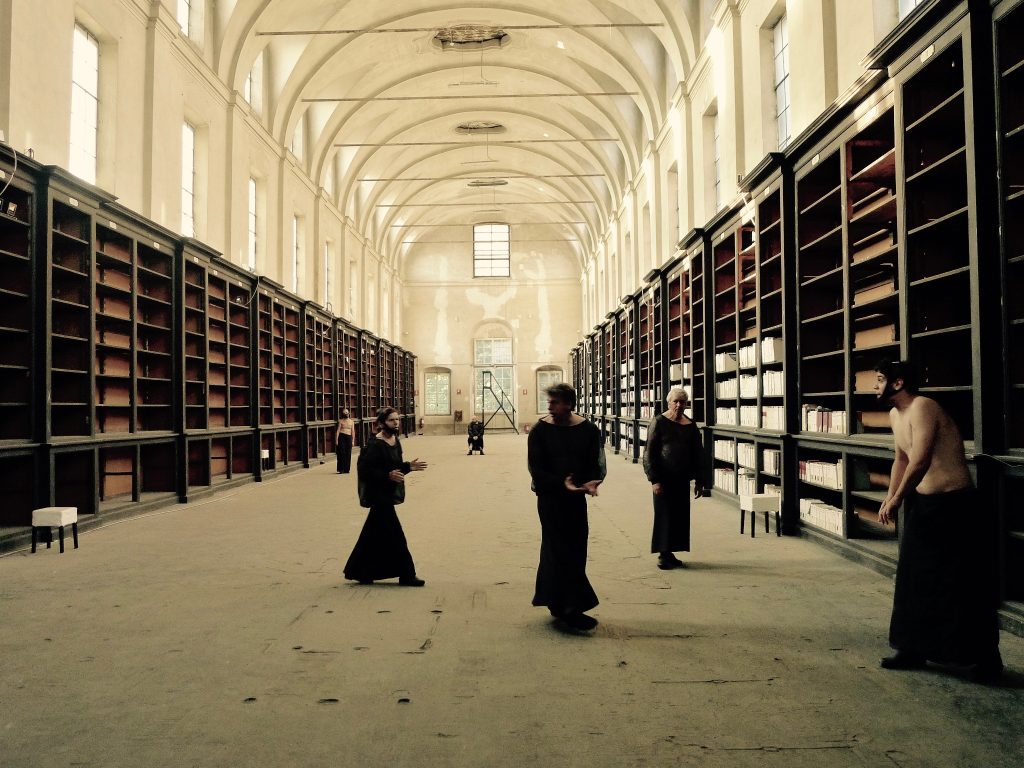

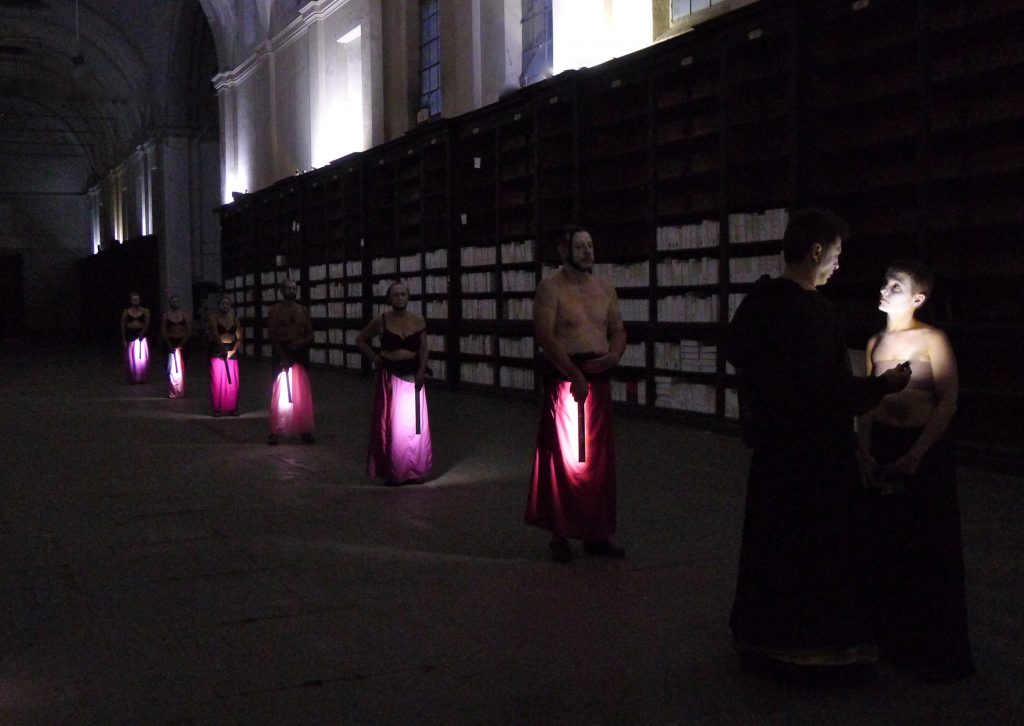
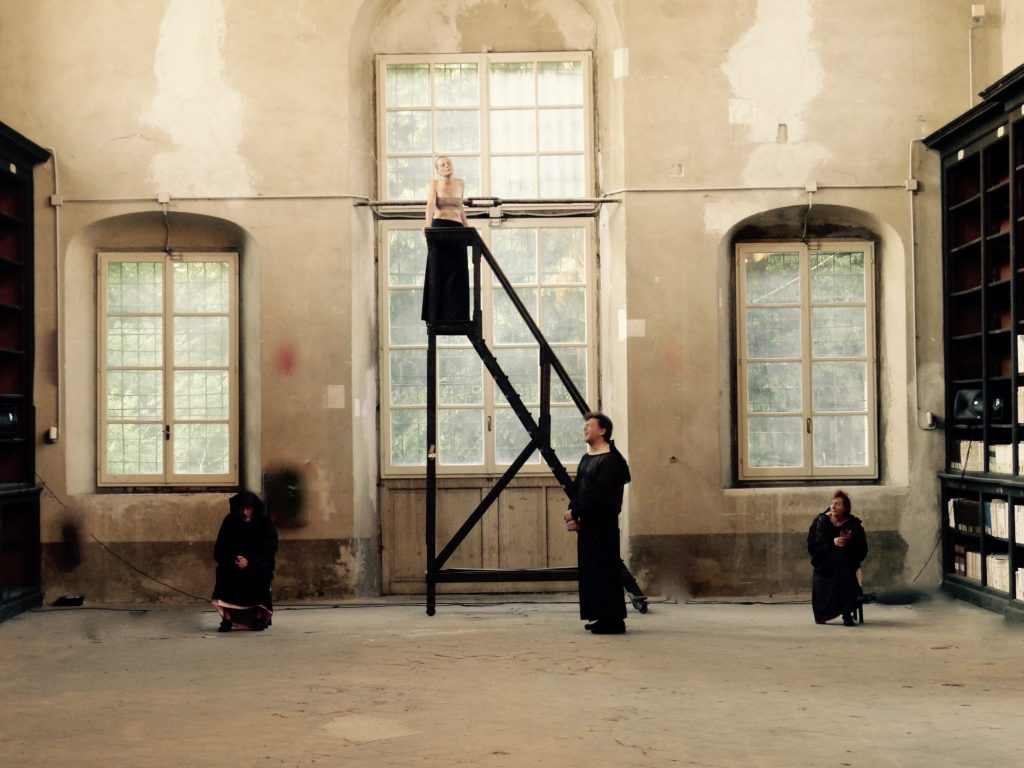

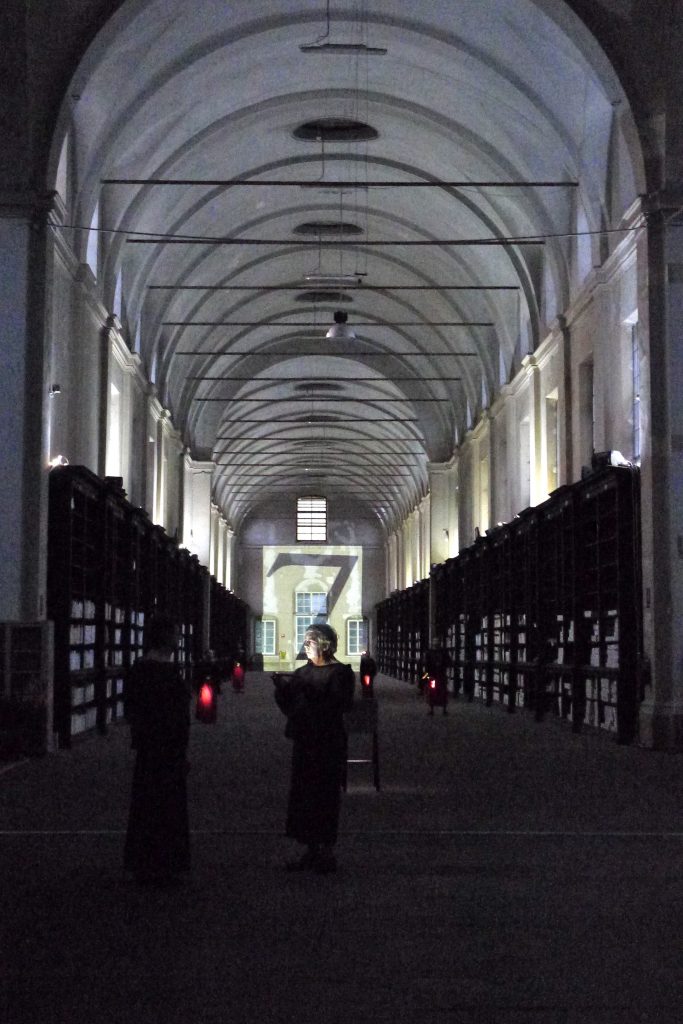
PURGATORY < OLD HOSPITAL OF PARMA
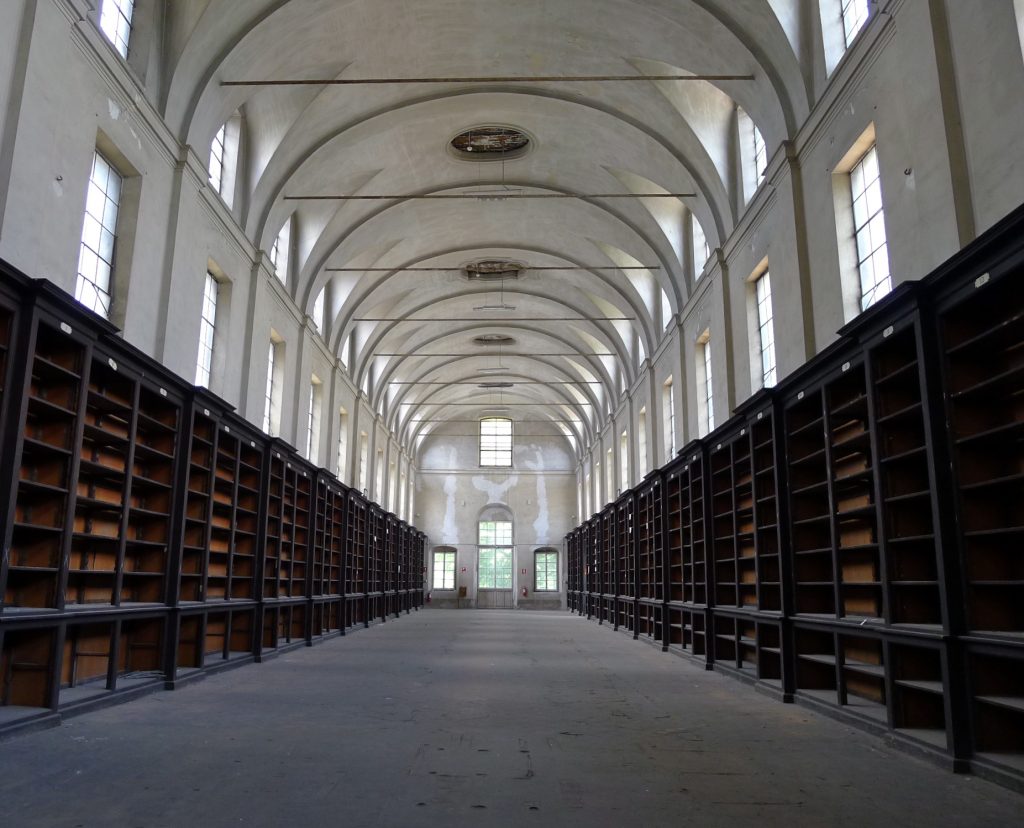
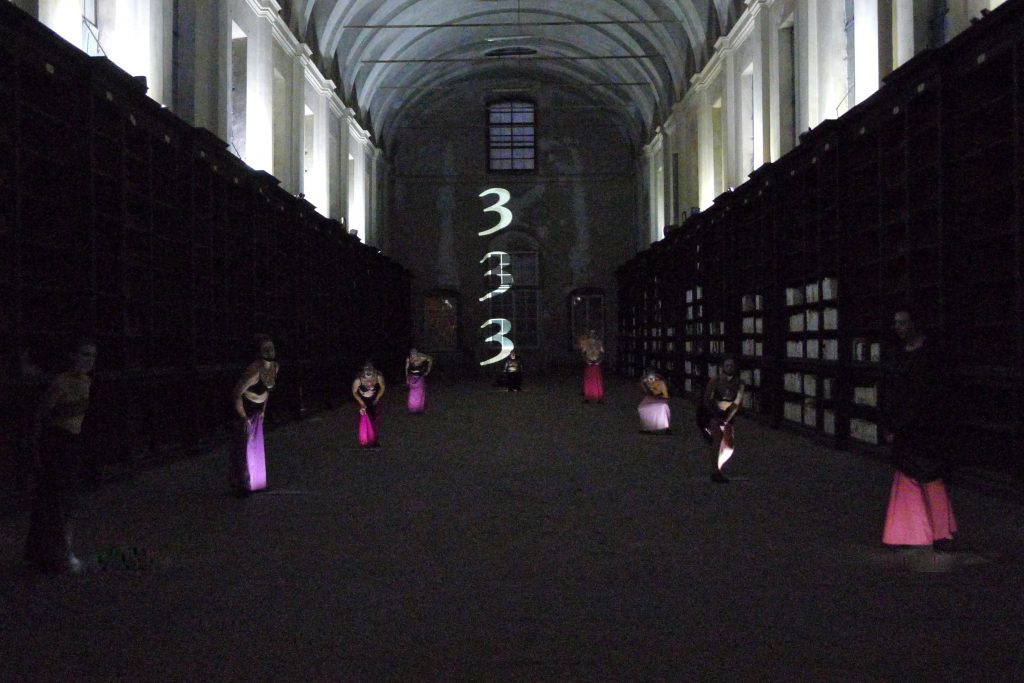
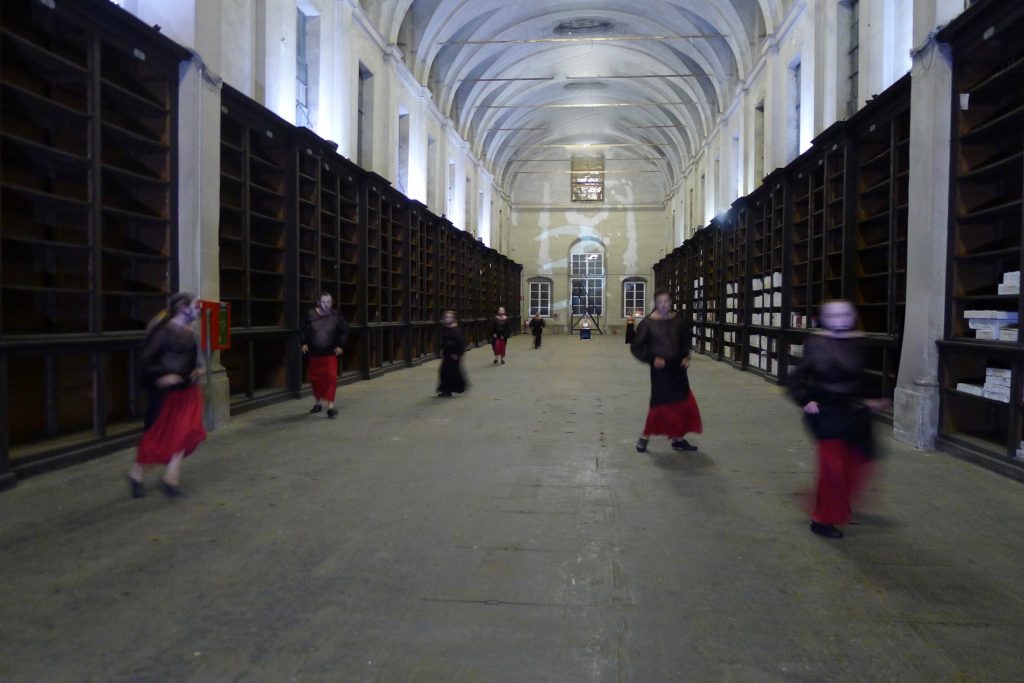
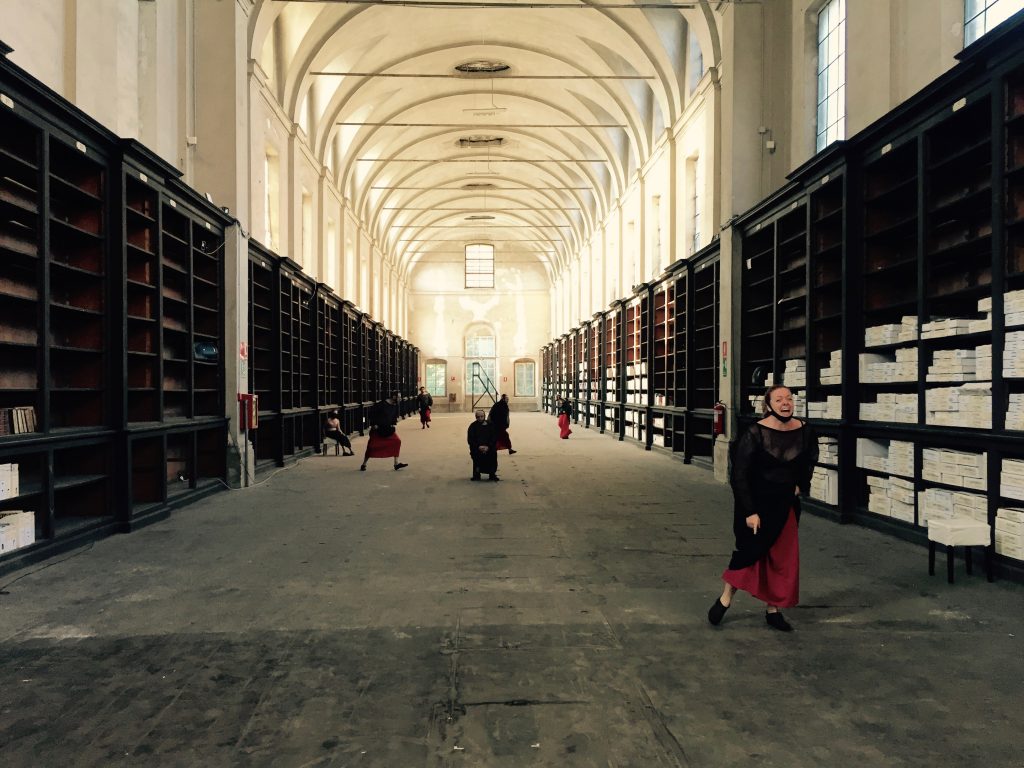
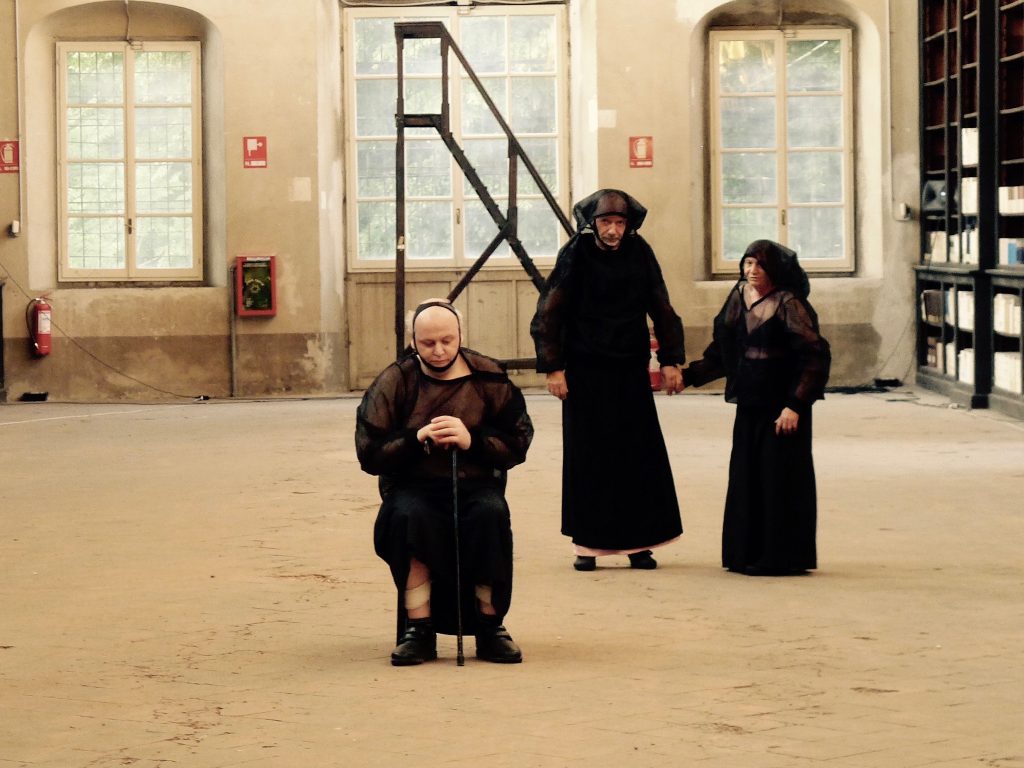
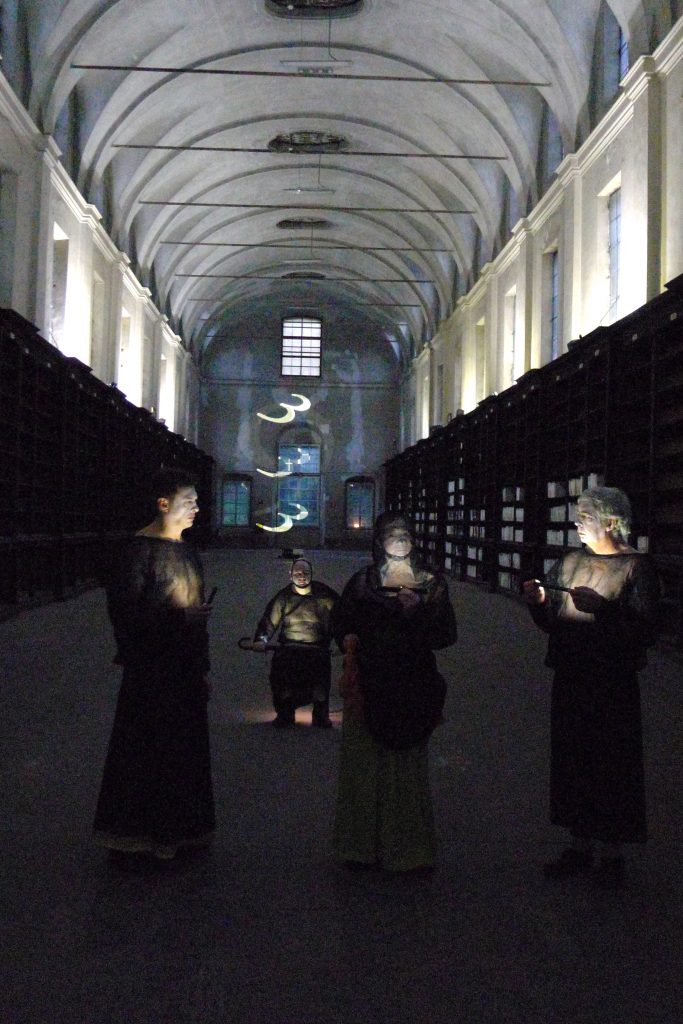
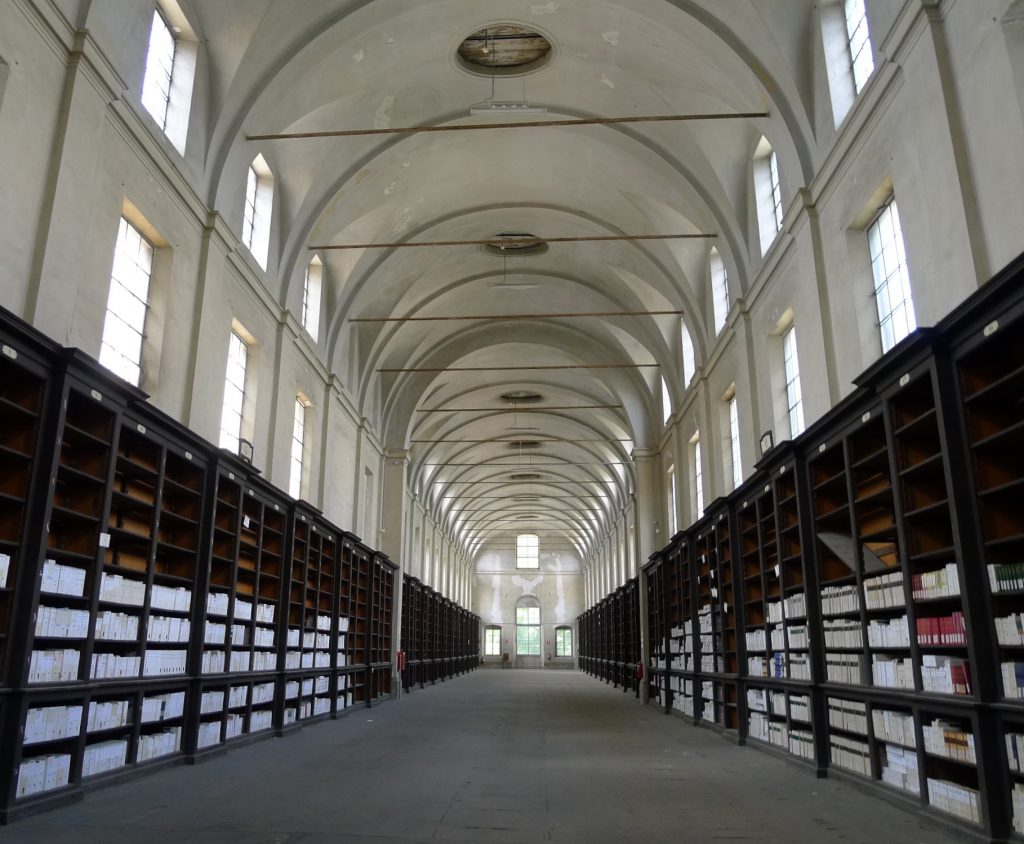
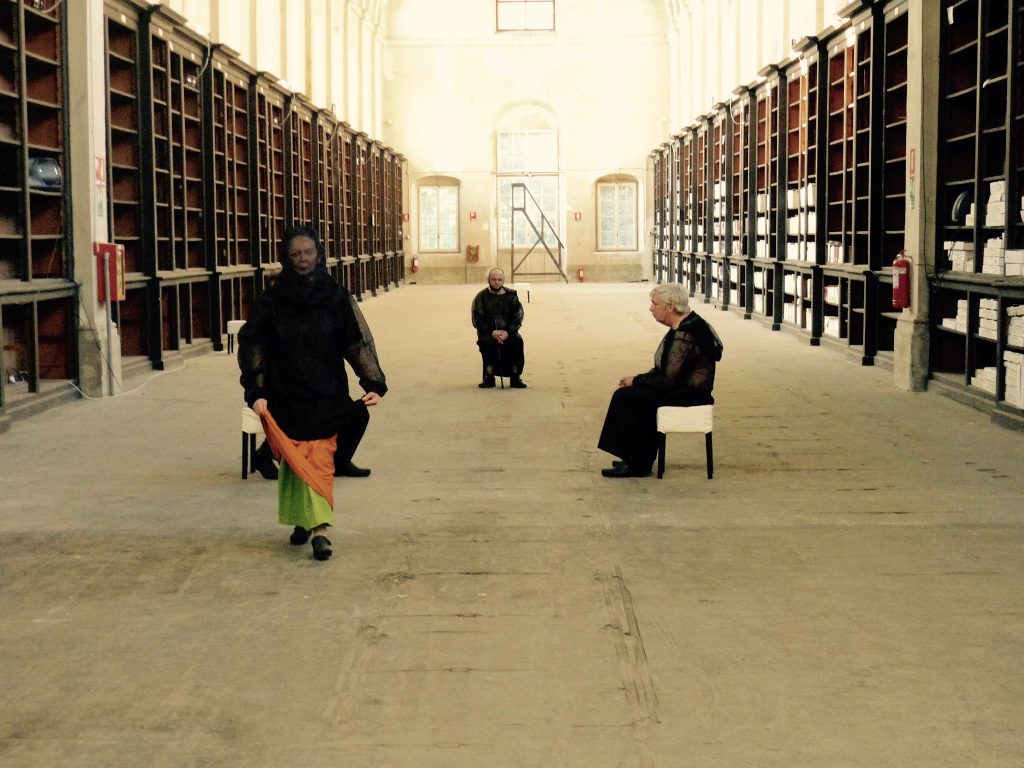
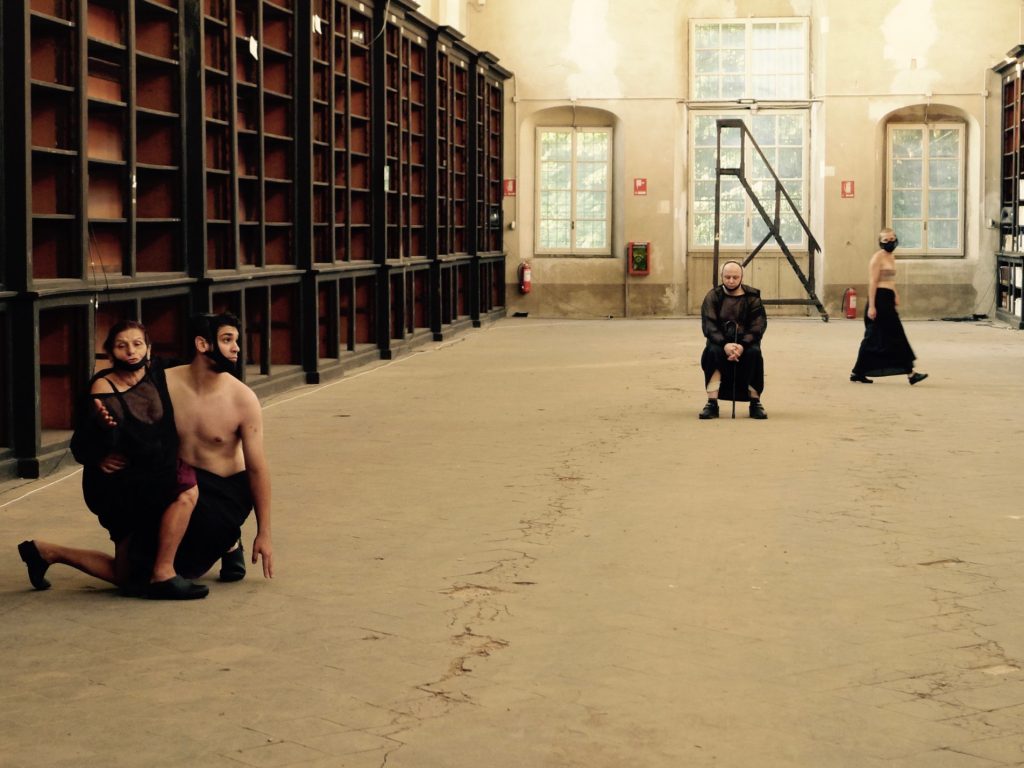
"The entire structure of the old hospital was organized around the large Greek cross -shaped cruise surmounted by a dome, on the inspiration of similar fifteenth -century structures »he explains Maria Federica Masters, installation manager site-specific, plastic elements, Costumes and direction «and it is precisely in this spatial extension in which asylum and cure have for centuries dignity to the name and the poor for centuries, That the popular physics of the dialectal actor will return to restore voice and sense to the spaces of the cruise today empty and private individuals ".
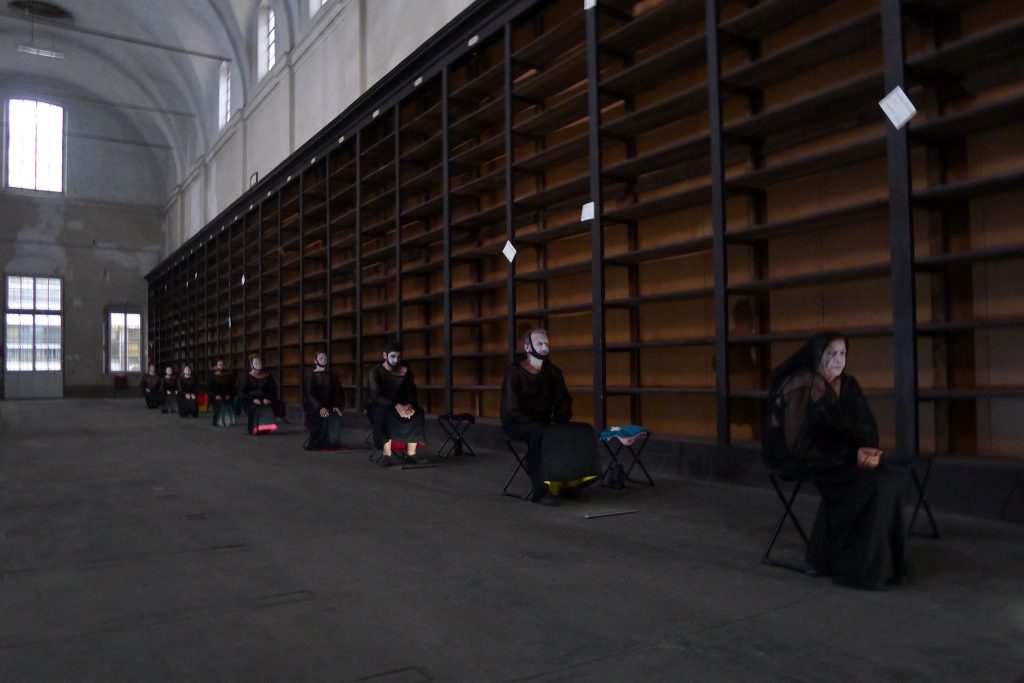
Adds Francesco Pititto, that of Purgatory Treatment dramaturgy and imagaturgy: «The penitents of this Purgatory/Hospital will regret fragments of their" middle "language from the great mouths of the imposing naves, From the audience/intersection without each furniture, cadences and popular rhythms will resonate, From the denuded gates of the ancient functions the dialect will be echoed with new Dante's sufferings. Many Daniel Arnaut Contemporary -the best of vulgar poets among the lustful twenty -sixth singing- Many troubadouries in search of the prayer that leads them to the top of the mountain, up to the earthly paradise. Halfway between the poetry of the infernal language -Violenta, tragic, damn- and the sublime power of the choral voice of the Sacred Paradisiac, The concrete language of life, Original and raw of the dialect gives us straight and pregnant the truth of the human condition, between vulgar satire and popular invention ".
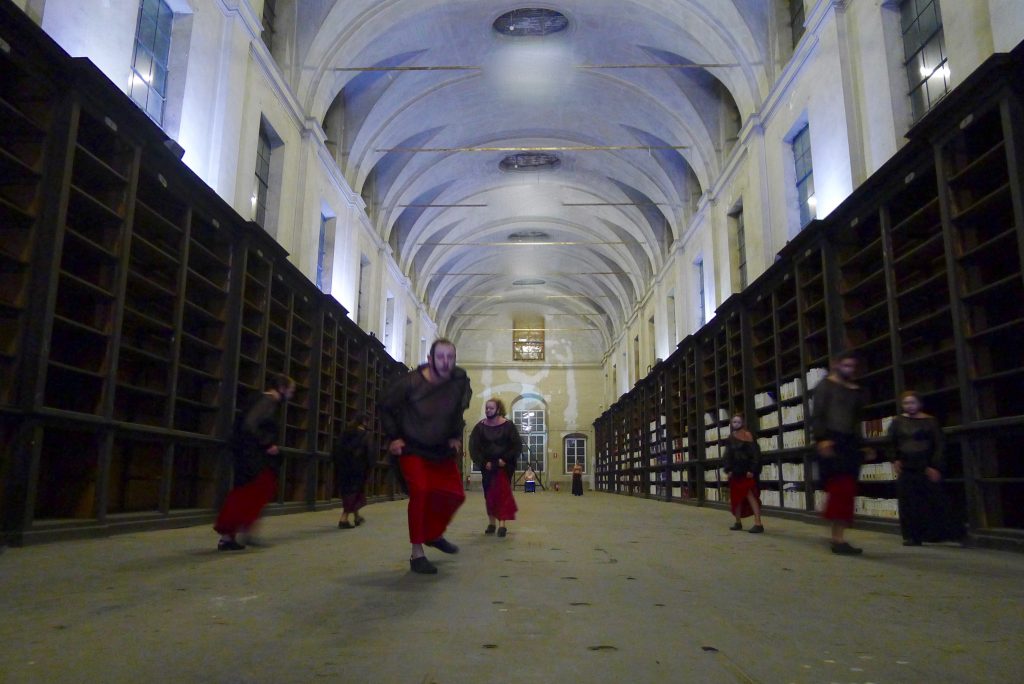
The multi-year project of dramaturgical and scenic rewriting of Dante Alighieri's Divine Comedy (Comedy) begins with the installation of the Cantica del Purgatorio in the’Old Hospital, one of the most important monumental complexes in Parma, as well as the symbolic building of the city's hospital history. Located in the Oltretorrente district, it was the city hospital from the 15th century until 1926. The entire structure is organized around the great Cruise in the shape of a Greek cross surmounted by a dome, inspired by similar fifteenth-century structures. The coverage of Cruise, eighteen meters high, it is vaulted and has oculi that open from above, which served to maintain an optimal microclimate and air exchanges. A corridor that ran along the western flank allowed goods and people to be moved from the main road to the service courtyards. At the crossroads of the naves under the dome, there was an altar where Mass was celebrated every morning, which could be followed to the end of each arm of the cross.
The inauguration of the new “Ospedale Maggiore” took place on 23 August 1926, and it was from that date that the complex of’Old Hospital ceased to serve health purposes, leaving a void in the middle of the Oltretorrente.
The Parma people of Oltretorrente had a strong attachment to their hospital, all beyond the water of the Parma stream – Old Parma – it formed one large family with it. The structure occupied a significant part of its area and provided bread and work to a substantial number of its inhabitants, all its nursing and labor staff were from Parma Vecchia.
The Hospice of the Exposed and the Hospital of the Misericordia – which they constituted the Old Hospital — they formed an organism equipped with everything necessary for a self-sufficient life. This large community had its own cellar, its own bakery and spice workshops. The orphans and the exposed lived in the hospital and served on site, as well as administrators, balie (the "nurses" who took care of breastfeeding the children) and other employees. The complex was equipped with everything needed for one's sustenance: the channel that crossed the entire organism, the Cinghio canal, it was granted for use to the hospital by the municipality, since the 13th century, to irrigate its lands and keep its mills running, the laundry (place where “bugada” was made, in parmesan, means laundry), the drying racks (typical of Parma homes), the large kitchens, the refectories, the pantry for food supplies; to the polar (the chicken coop), the woodshed for supplying wood.
The Ospizio degli Esposti used the eastern part on the road and next to the cloister, and was intended only for foundlings. With the term “exposed”, was indicated, the child abandoned at an early age or not recognized at birth. Under the porch, next to the entrance door of the Hospice of the Exposed was apparently located the wheel of the exposed. The Wheel or Rota degli Exhibiti was a revolving mechanism of cylindrical shape divided into two parts closed for protection by a door: one towards the inside and another towards the outside which, matching an opening in a wall, allowed to place, without being seen from the inside, those exposed, abandoned newborns. An inscription above the wheel: "THE WICKED AS THE FATHER BEGETS AND FORSAKES / WHAT PLACE DOES THESE NOTOS RECEIVE INFANTS”: Kindergarten and care the Pieta gives here to ill-conceived children, that the father, the cuckoo imitating, wicked abandons.
PURGATORY
Dramaturgy and imagoturgy | Francesco Pititto
Site specific installation, plastic elements, costumes, regia | Maria Federica Masters
Musica | sound installation | Andrew Azzali
In scena | Valentina Barbarini, Fabrizio Croci, Paolo Maccini, Frank Berzieri, Delfina Riviera
e
actors of the Parma dialect companies: Robert Beretta, Sonia Iemmi, Ylenia Pessina, Mirella Pongolini, James Rastelli, Cesare Quintavalla, Silvia Reverberi, Valeria Spocci
Treatment | Elena Sorbi
Organization | Ilaria Stocchi
Press office | Michele Pascarella
Media video | Stephen Cacciani
Technical care | Alice Scartapacchio, Andrea Bonaccini
Stage assistant | Marco Cavellini
Production | Lenz Foundation
Purgatory is created with the patronage of the Municipality of Parma and in collaboration with the Coordination of the city's Dialect Companies
We thank them for their collaboration: Royal Theater of Parma, Civic Library and State Archives of Parma
with the support of: MiBACT – Municipality of Parma, Emilia Romagna region, DAISM-Ausl
We are talking about an artistic-political dialogue (polis both specifically in Parma and in the general city-society) which has no equals in the Italian panorama. Lenz's ability to refract the sacred in the profane remains once again indisputable (more).
Giulio Sleep, Paper Street, 1 July 2017
Purgatory it is an authentic historical ecosystem, as well as scenic, in which, recovering with infinite respect the dignity of the work of which it is the voice and body, every single word and every act performed refracts Lenz's awareness of continually rethinking the space of art as a necessarily preparatory condition for every artistic experience (more).
Daniele Rizzo, Persinsala, 7 July 2017
Each site-specific installation creation by Lenz, always performative-musical, it is a human and aesthetic experience, a physical and mental journey that is difficult to forget, such is the power of meaning, the impelling dramaturgical research that moves him, and the physical work that underlies the creative process then activated with the decisive involvement of the spectator-traveller, restoring the dimension of reciprocity (more).
Giuseppe Distefano, Artribute, 19 July 2017
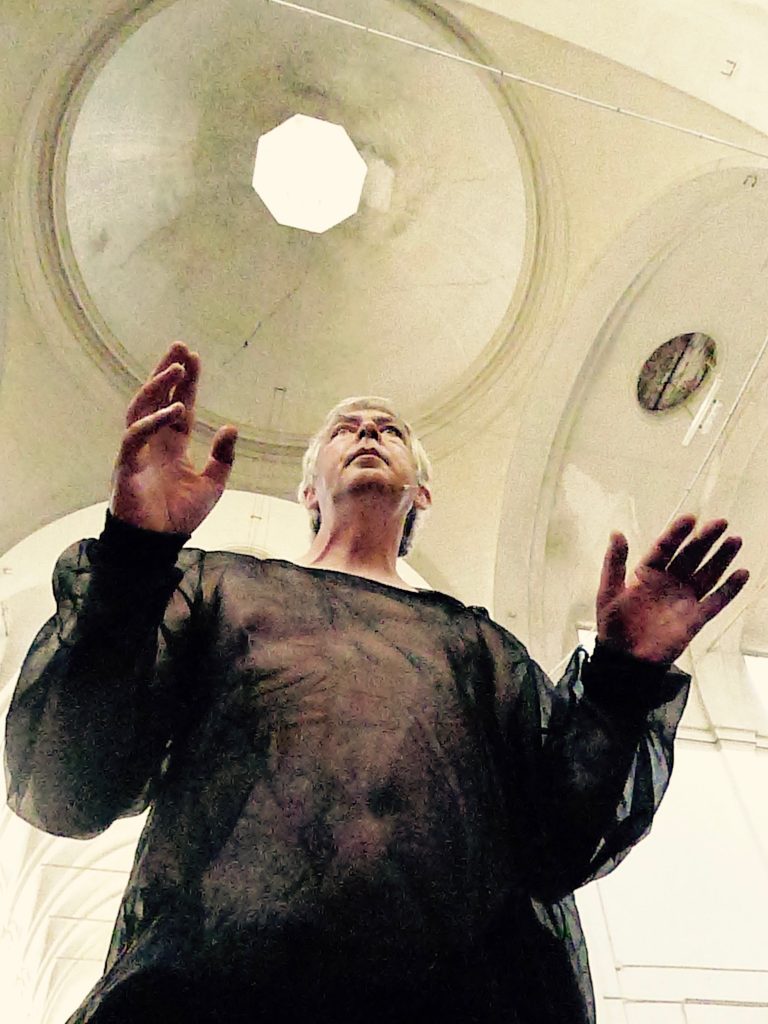
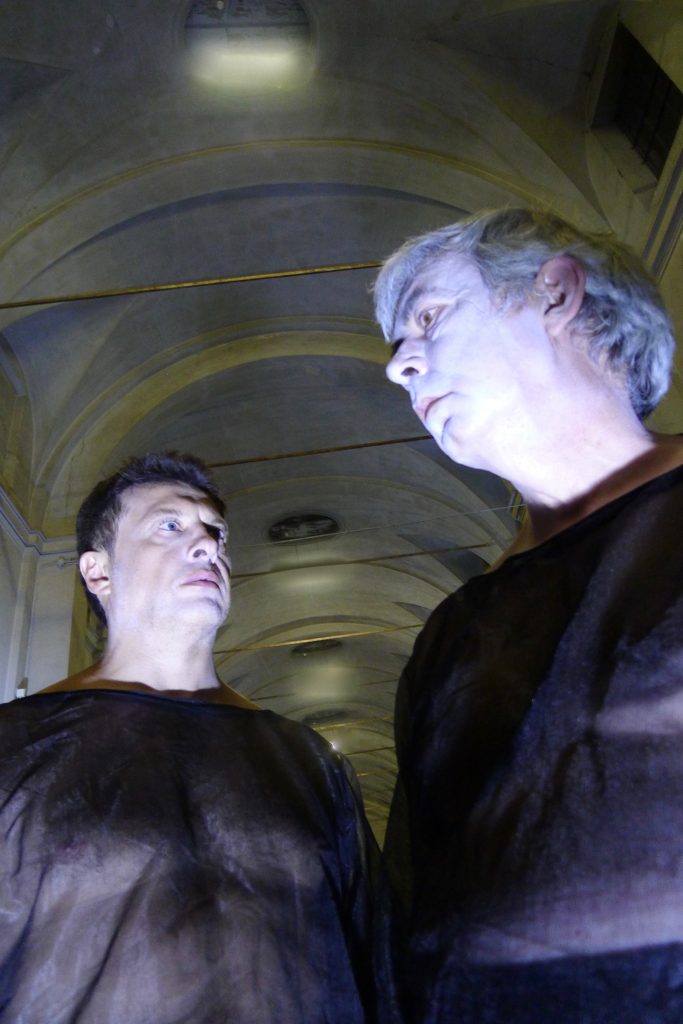
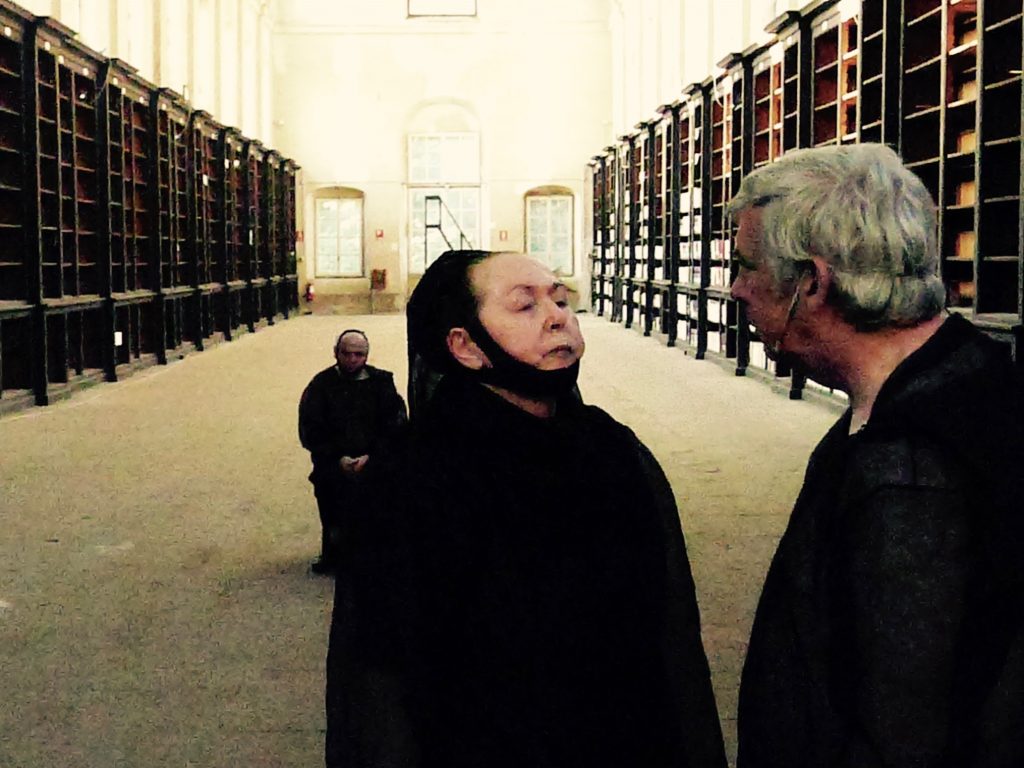
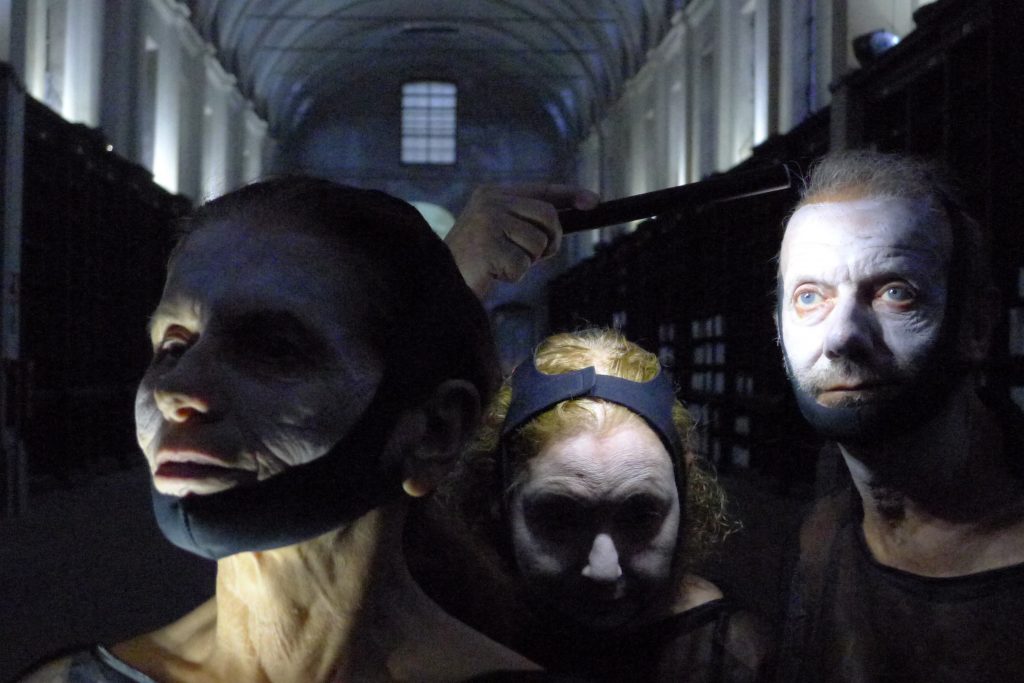
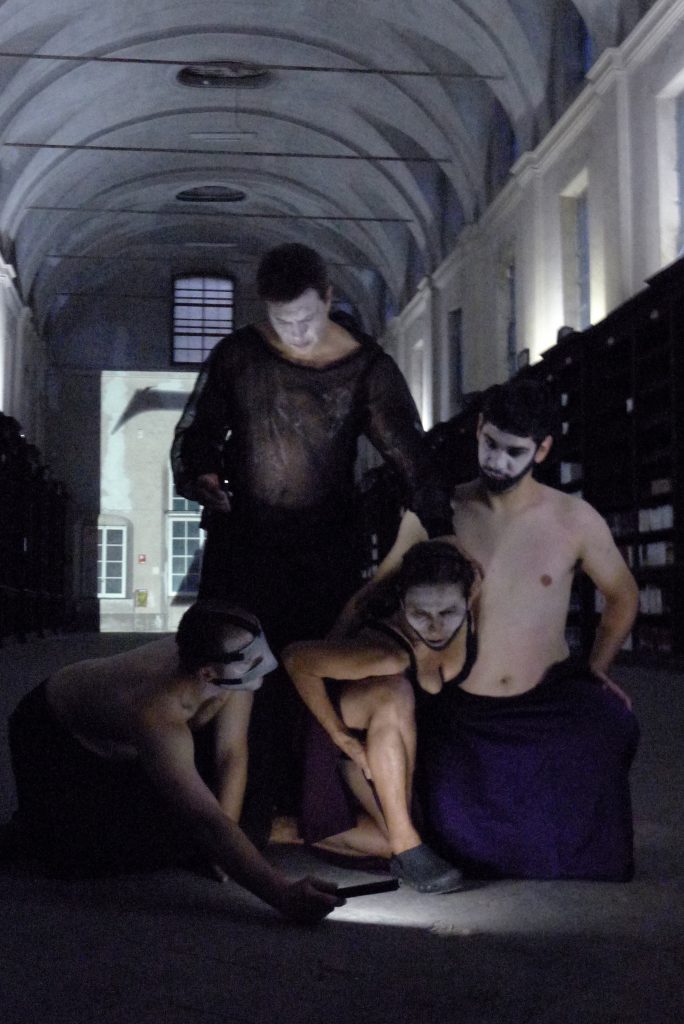
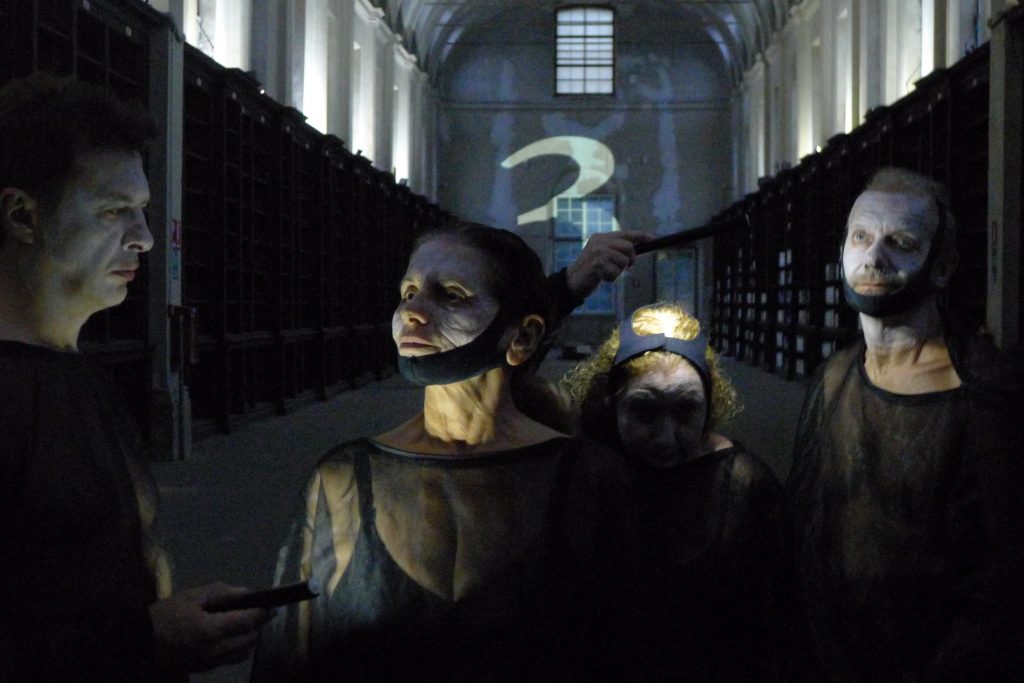
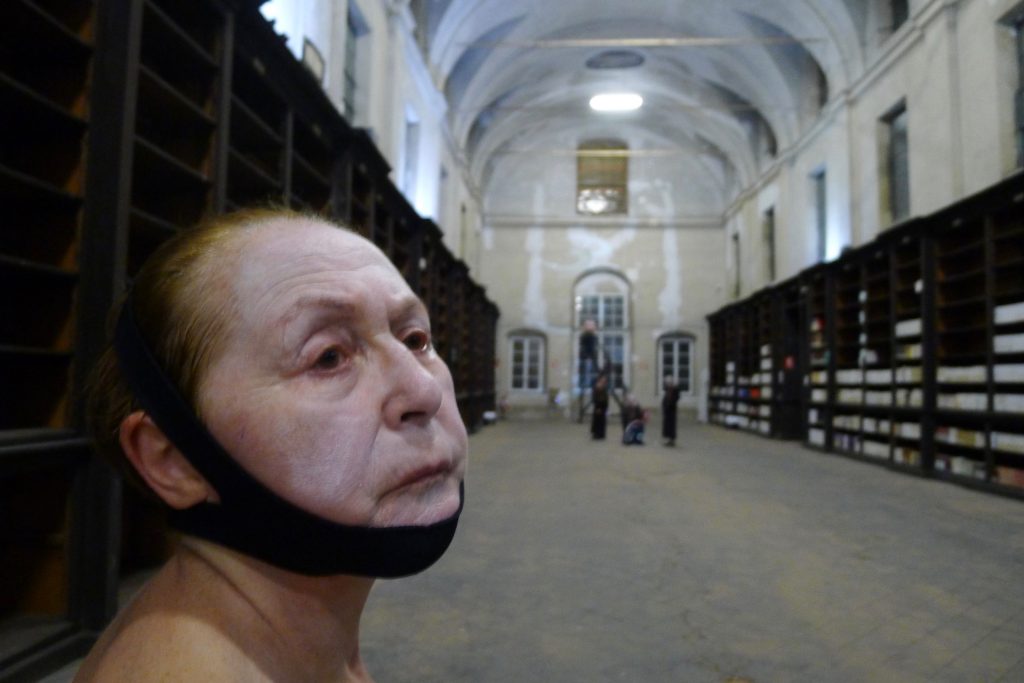
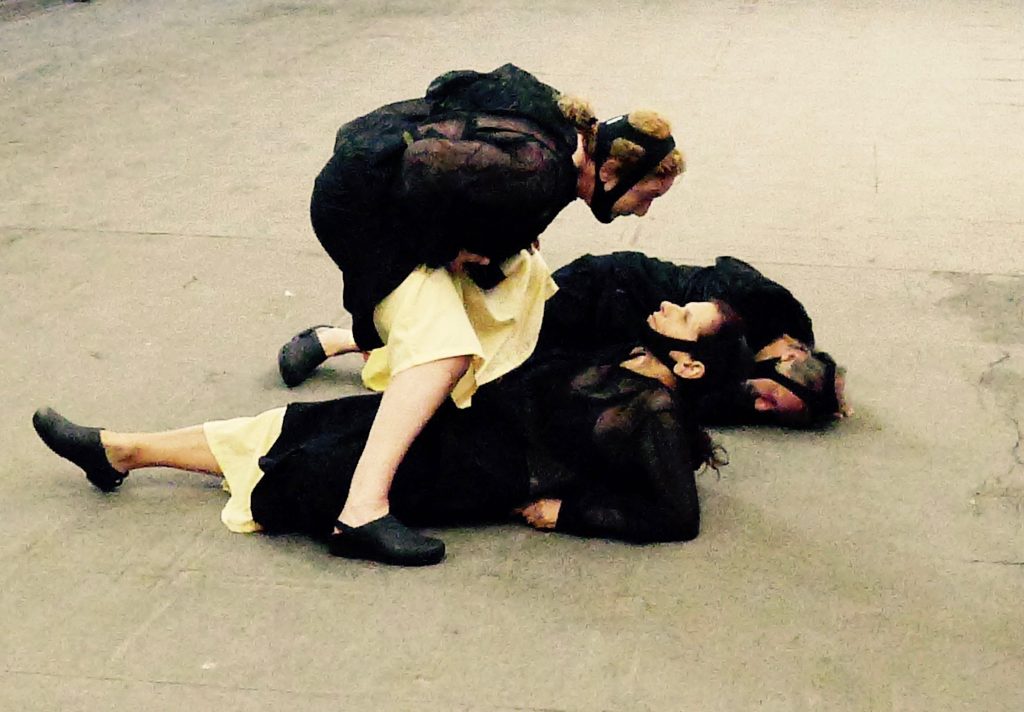
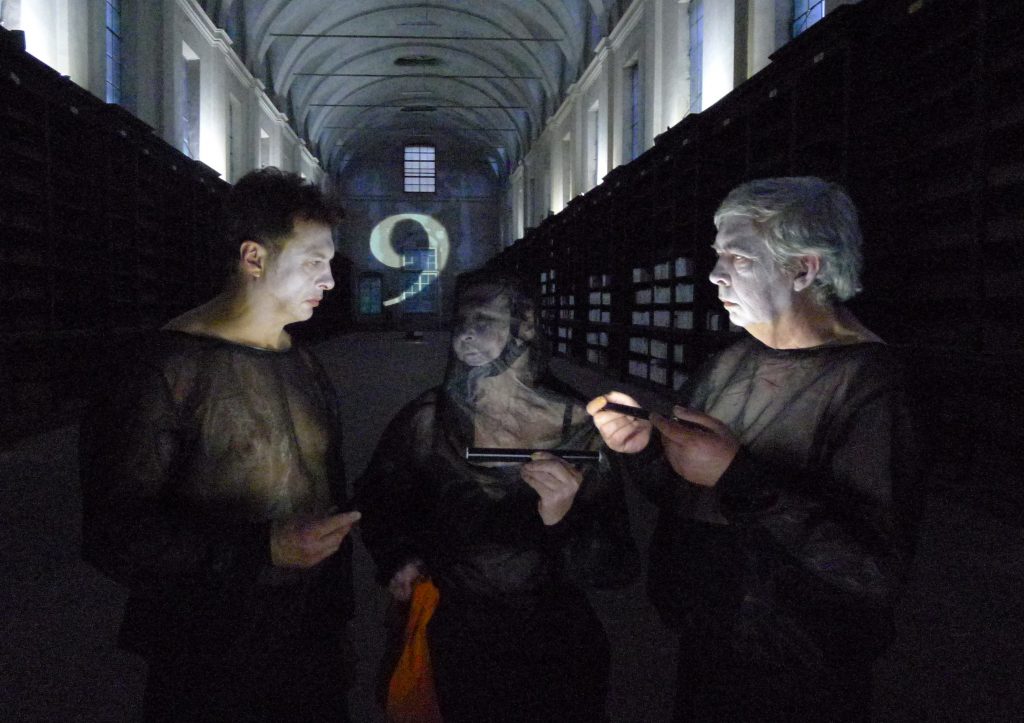
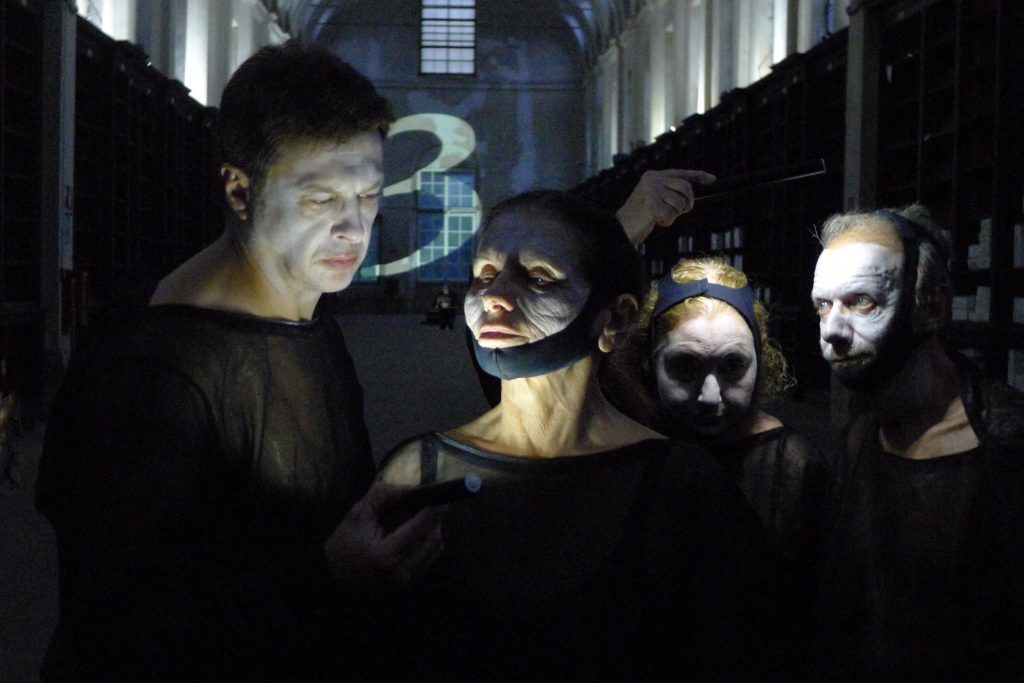
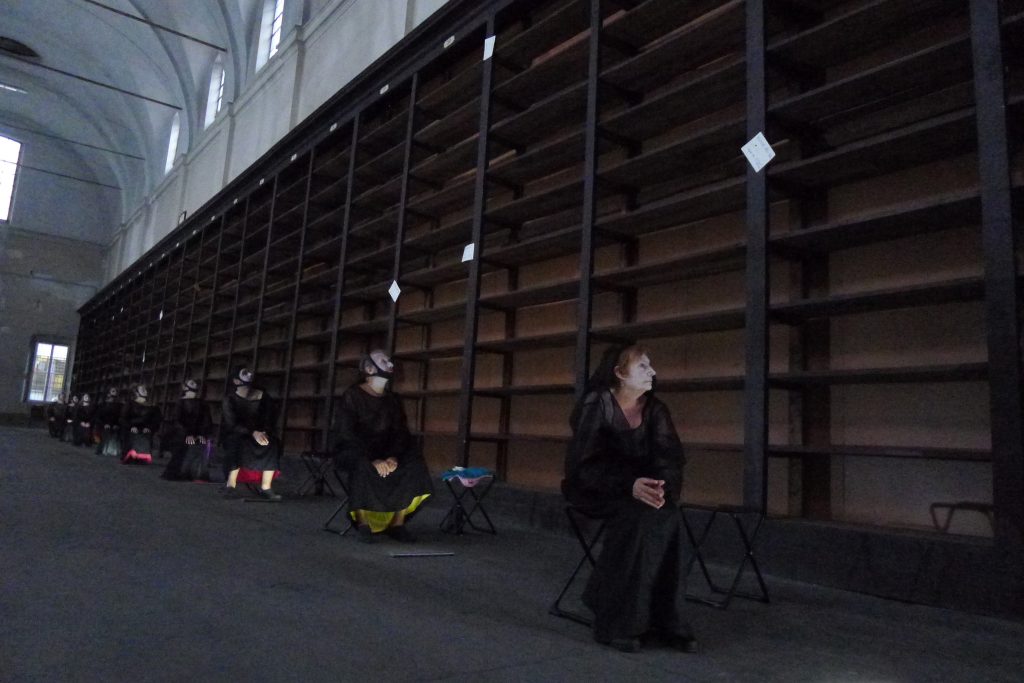
With Lenz, the aesthetic dialogues between the languages of theater always acquire new fascinations for forms and meanings: here are the roots with popular reality, in what had been a health resort, of assistance to the sick in the heart of the city, to bounce in the vast space that had then housed the state archive. Memory. And the interpreters, which move mostly with hand-modifying lights, along with those dark bands around the head, the facial features, become the souls who, in dialect, they still remember and experience the moods that agitated them in life, anger for example, but also hunger and sexual desire.
Valeria Ottolenghi, Journal of Parma, 22 June 2017
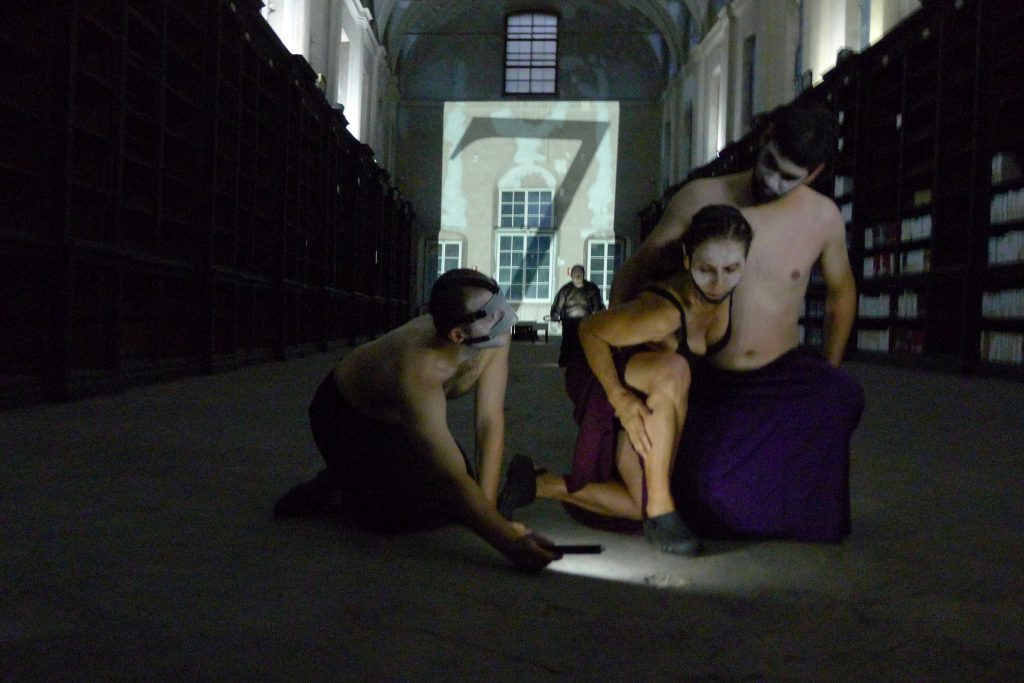
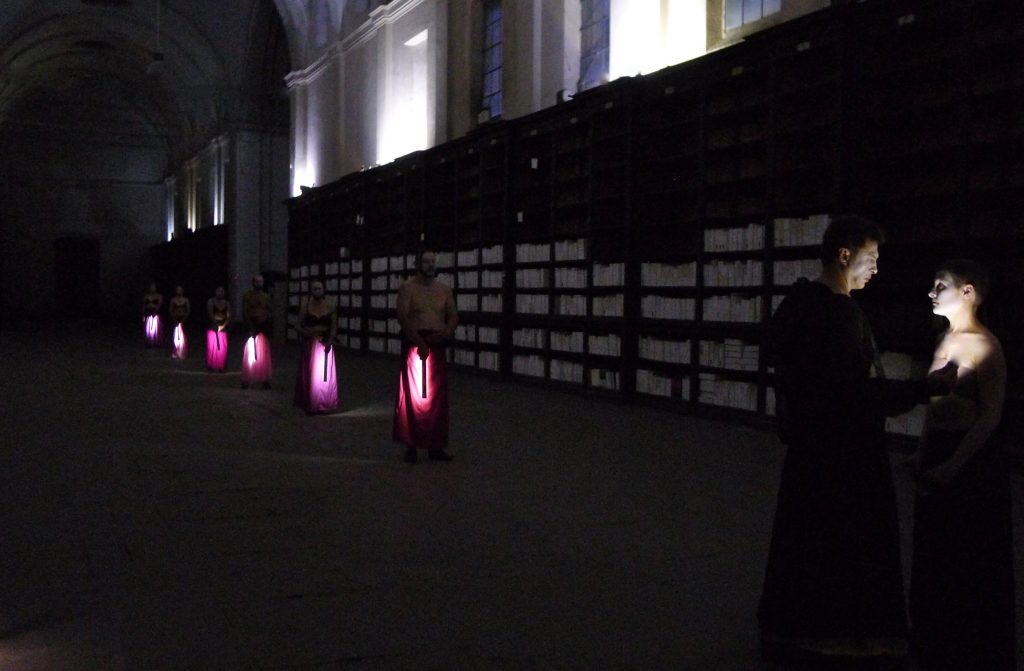
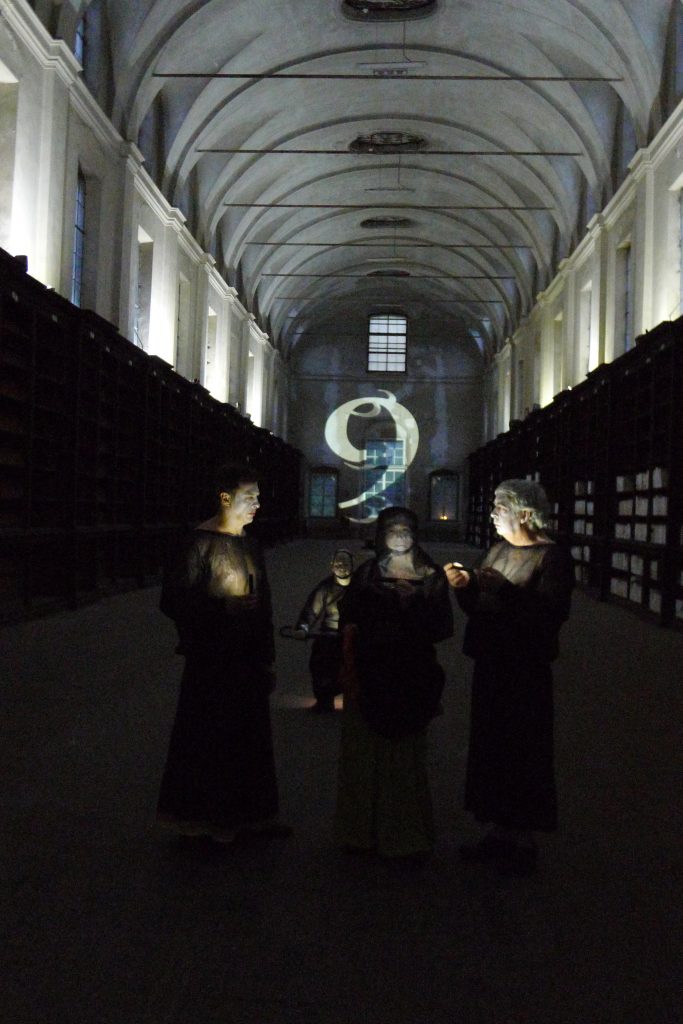
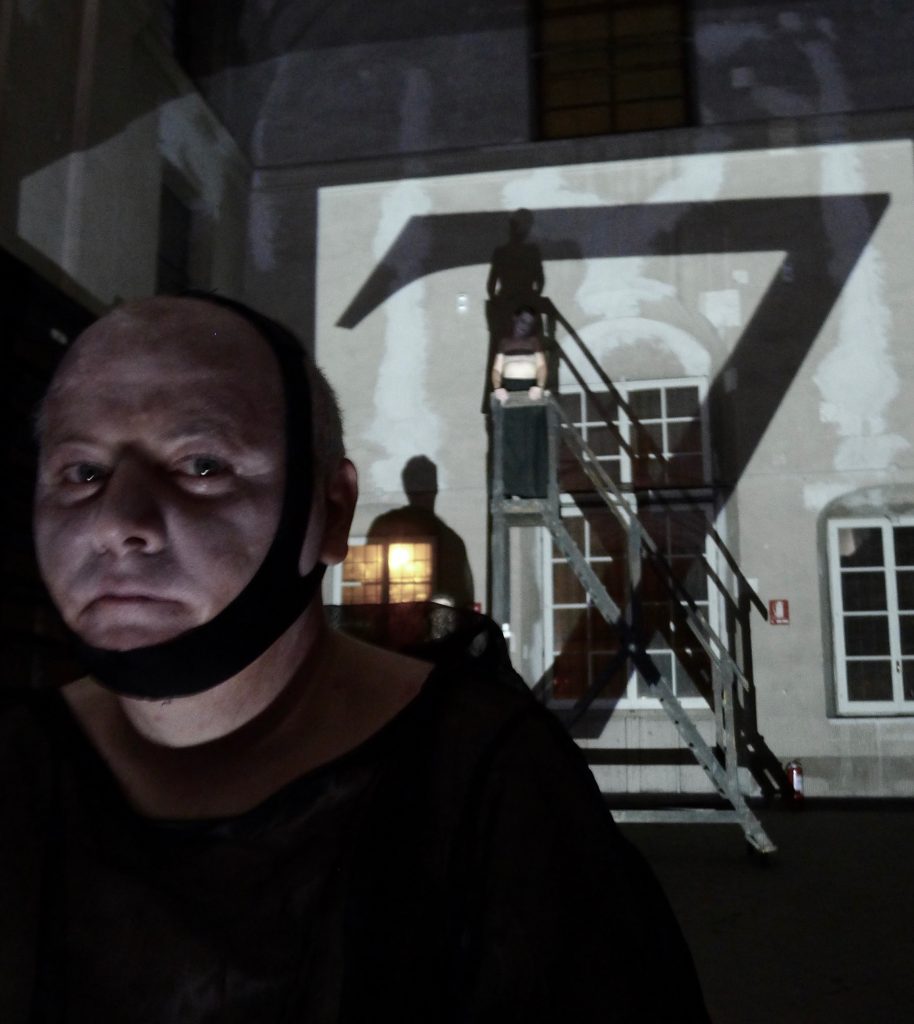
The building is that of the former Old Hospital – State Archives. Monumental fifteenth-century Greek cross structure, surmounted by a dome with very high vaults, reread as Purgatory through the lens of Dante's cantica. And the reason for this choice is immediately clear, since the functions of a hospital or archive ultimately imply waiting, aimed at the hope of recovery in a case (e, in Purgatory, of eternal life), or fulfilled in an ideal of conservation in the other; However, even the atmosphere that pervades this place recalls a purgatorial climate, underlined by the lighting, which keeps that vastness in continuous dim light, only broken by the punctual blades of cold light of LED lamps brandished by the actors in order to highlight faces and bodies from time to time with a different plastic relief; or by the flashing of that stick set with LEDs which Cato (Franck Berzieri), guardian of Purgatory, he holds himself together as he strides decisively down the nave with a limping walk of extraordinary power (more).
Franco Acquaviva, Curtain, 11 July 2017
Purgatory of Lenz Foundation is a limbo of dust and deserted wooden shelves, tall 18 meters, up to the ceiling of the Ospedale Vecchio in Parma. Ossuaries of forgotten books and stories, removed, lost, from which the souls of the dead seem to come begging for attention. They confess their sins, why I'm here, they say them to explain the pain and the hope of salvation, maybe they would even make them again, if they went back (more).
Matteo Brighenti, PAC – paneacquaculture, 6 July 2017
They scream, imprecan, those figures are agitated, desperate shadows wandering in desolation and darkness, illuminated only by faint hand lights that transfigure the faces and the path of proxemics, emblems of a human condition that is recomposed outside of time, in a philosophical and metaphysical non-place of the mind and soul, ideally bringing us back to the profound meaning, universal of the literary work on which the work is based (more).
Francesca Ferrari, Theaterpolis, 1 July 2017
Enter the first arm of the Cruise, being enveloped by the smell of dust and the emptiness that reigns in the enormous bookcases, lead your gaze up to the white vaults of the central dome, it puts us back in our position as men, small, among the thousands who over time have crossed this place of welcome and suffering […] Time here has become space more than ever, infinite, eternal, marked by our pause and by Dante's stripping of as many petticoats as his sins, in a dim light illuminated only by agile bars of LED lights that move from hand to hand and from voice to voice to illuminate the dusty faces of the actors (more).
Tania Bedogni, PAC – paneacquaculture, 9 July 2017
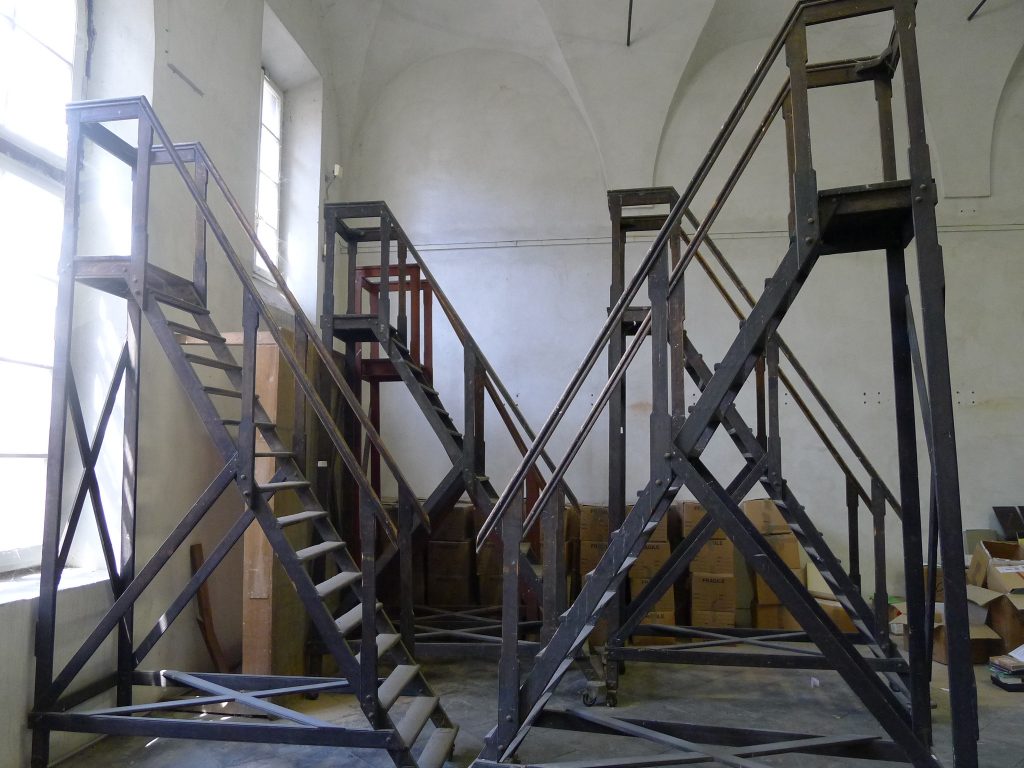
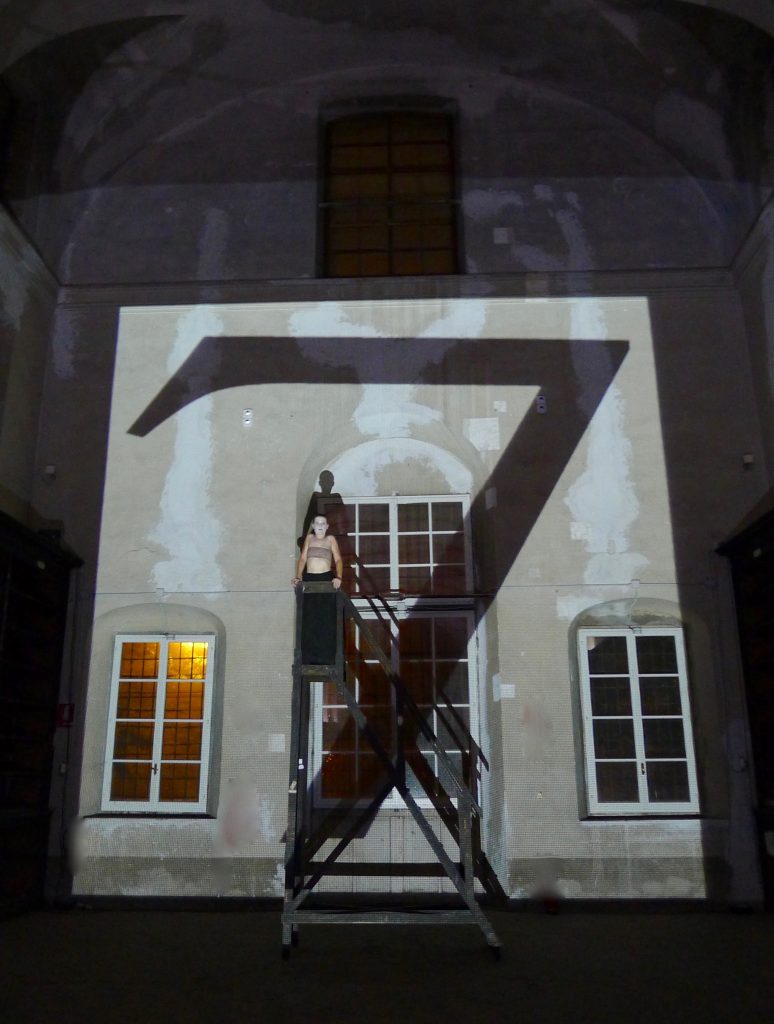
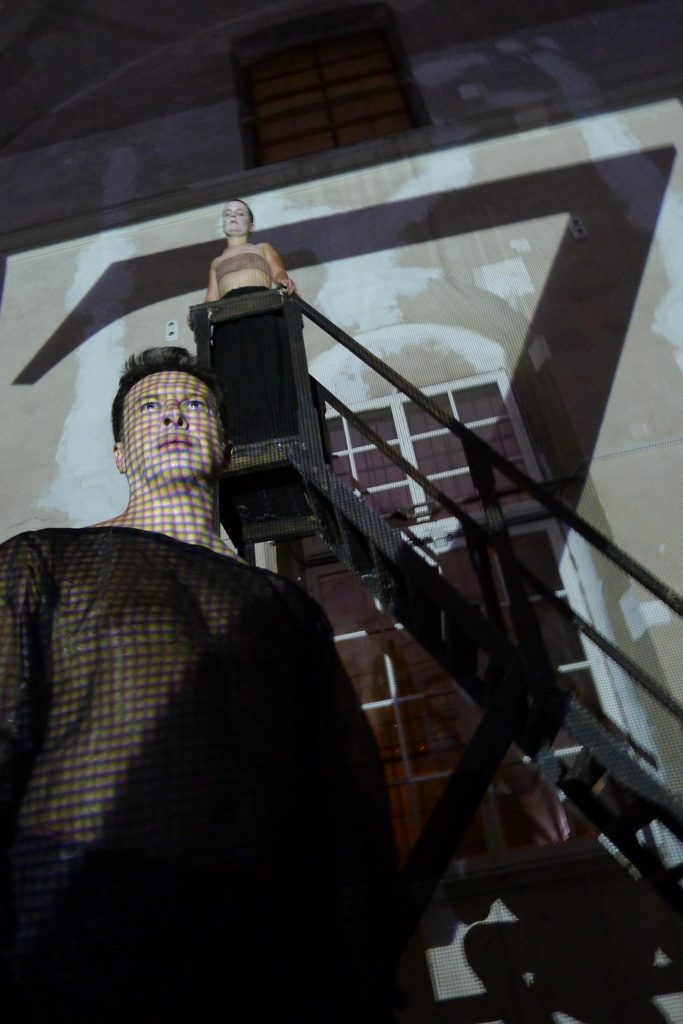
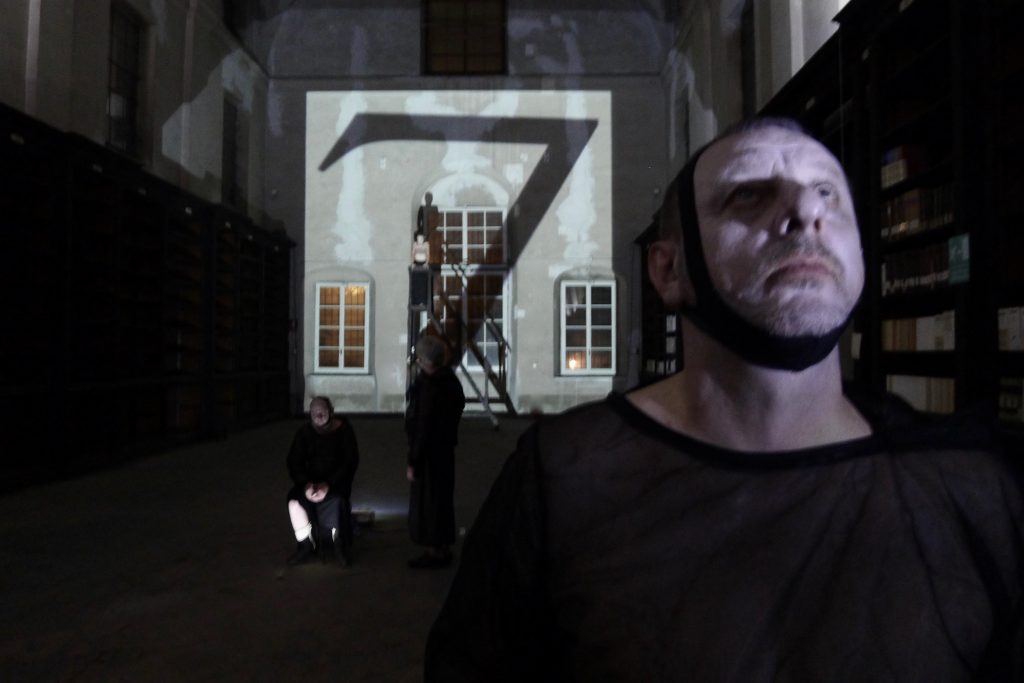
One of the high and spectacular iron stairs of the archive built on wheels will become the staircase that leads to Paradise, on which Beatrice awaits Dante. Right here, in the contrast between the small human size and the large numbers projected on the back wall of the nave and with the 18 meters high above our heads, we stop before the last atonement. As, before leaving the Cruise, we experience for the last time the power arising from the relationship with space, true strong point of this work by Lenz. Tiny in a void that takes on an almost divine aura, let's retrace the trail traced by our steps and our gazes (more).
Francesca Serrazanetti, Stratagems, 15 July 2017
In this middle ground we are involved in a liturgy of meaning. Tenaciously faithful to his poetics of artistic investigation, Lenz appropriates architectural voids, regenerating them into an immersive experience, engulfing participants in a multiplicity of languages and expressive transitions. An experience that turns into real civic action, allowing citizens to reconnect with their cultural and urban heritage through the tangibility of theatrical action (more).
Andrea Alfieri, Krapp's Last Post, 8 July 2017