






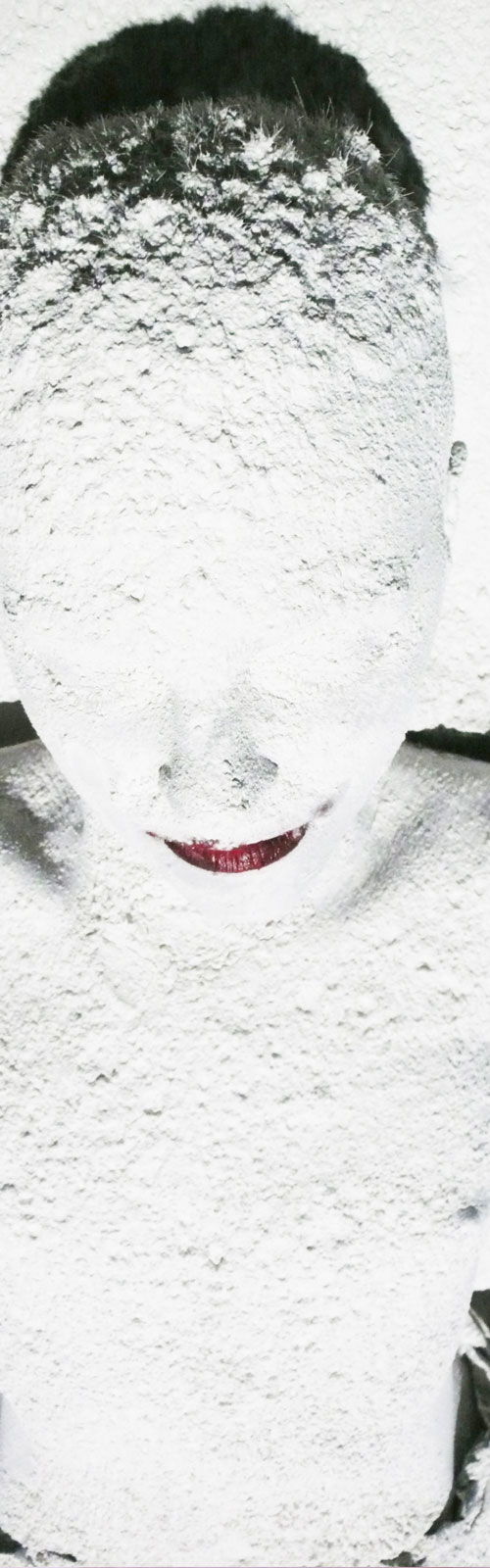
THUMB
Last work of the tetralogy dedicated by Lenz Refractions to the fairy tales of the Brothers Grimm, Pollicino leads to an atomic vision of the play. The scenic field is immeasurable in the lower part, in nanospheric space, in bacterial dramaturgy, a genetic engineering laboratory in which the vibrio manifests itself as the hero of mud and sewage.
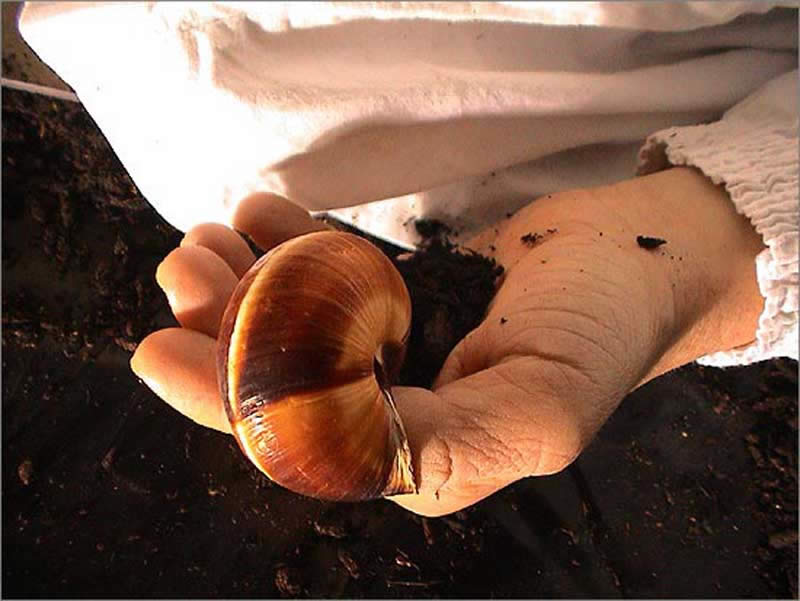
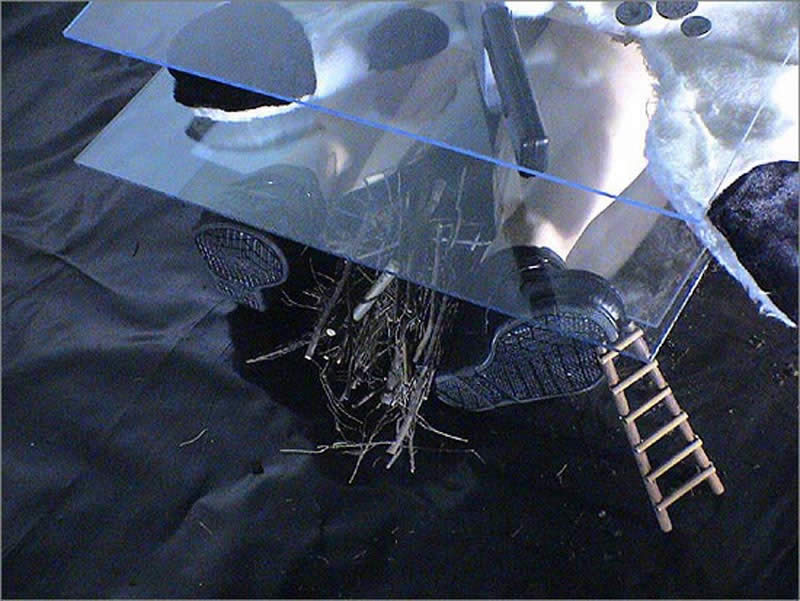
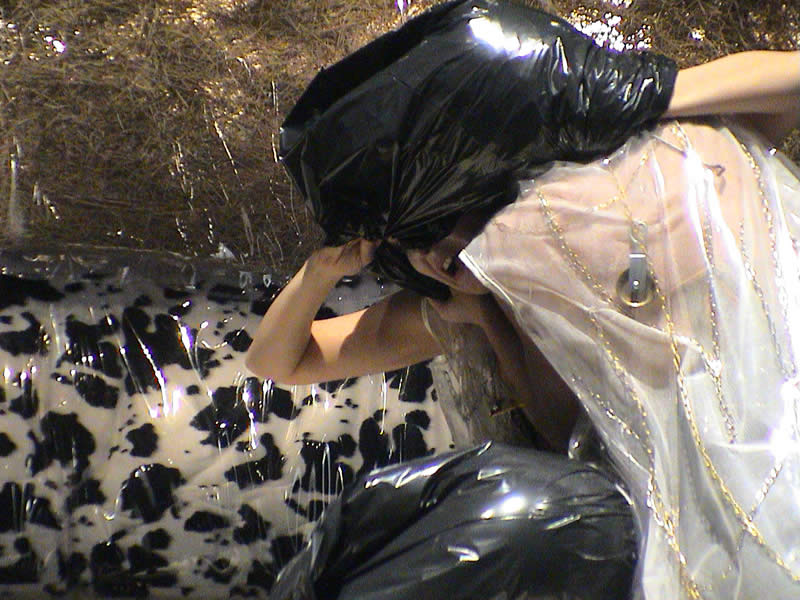
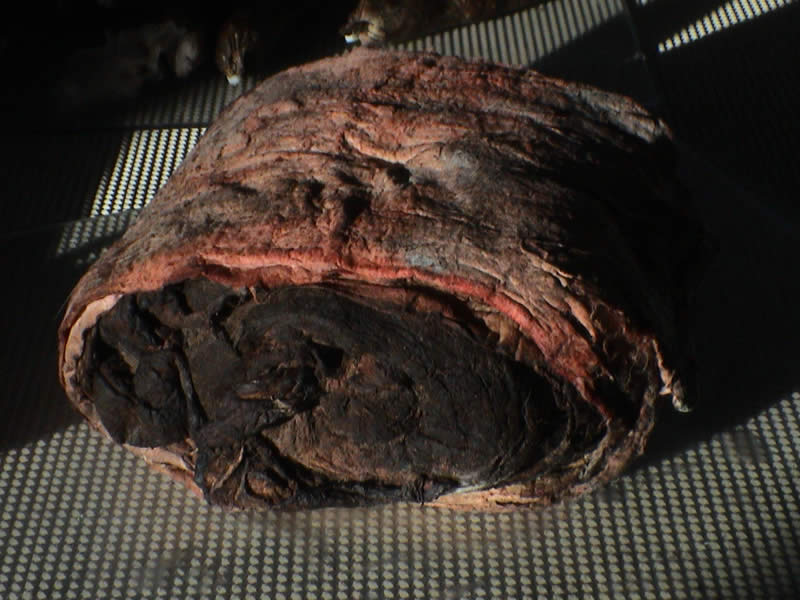
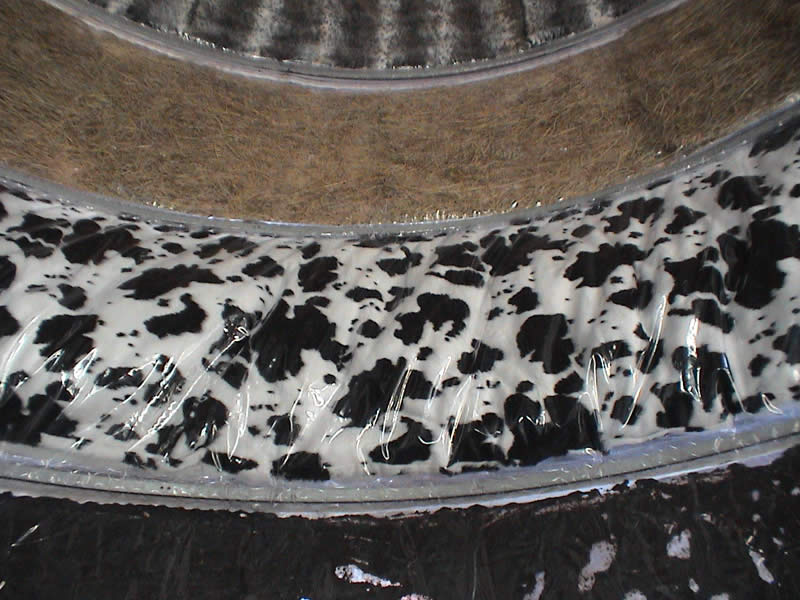
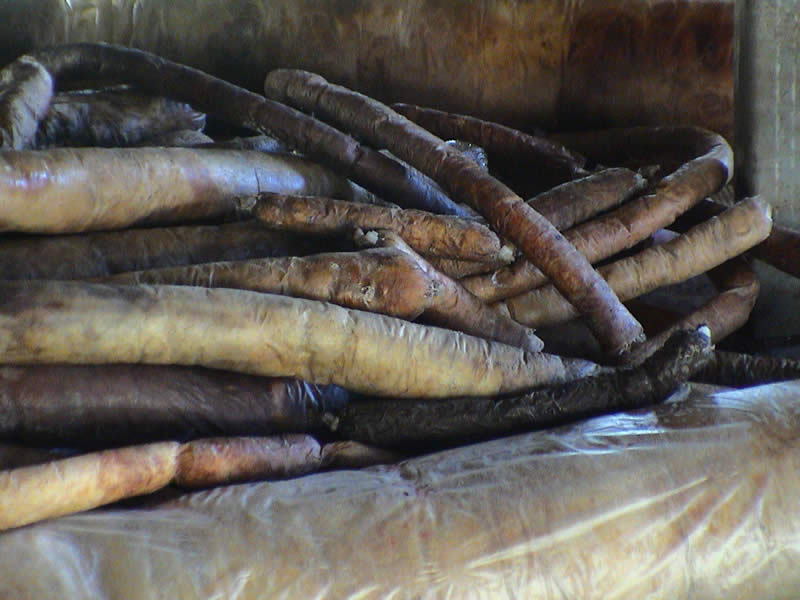
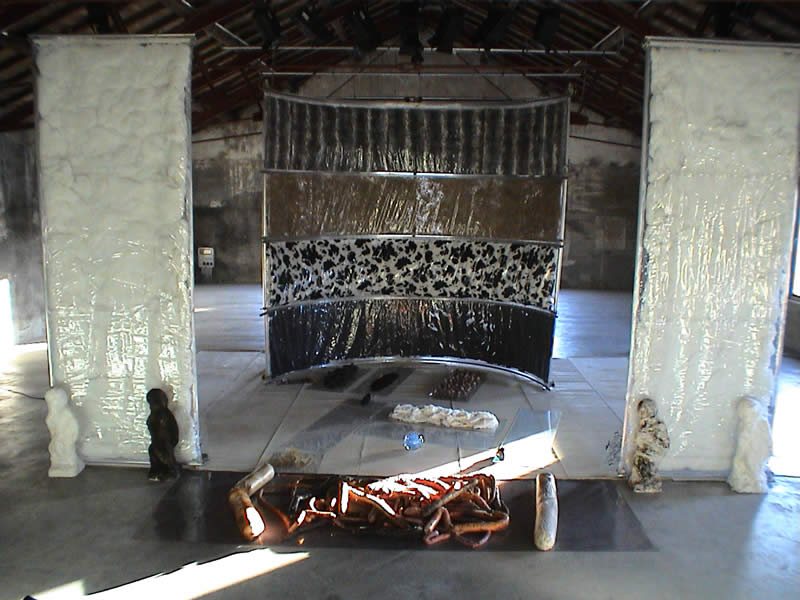
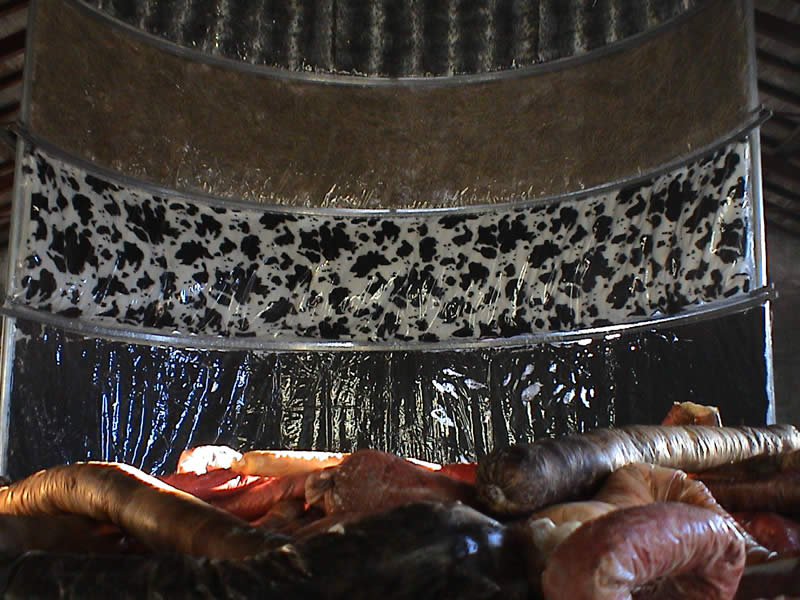
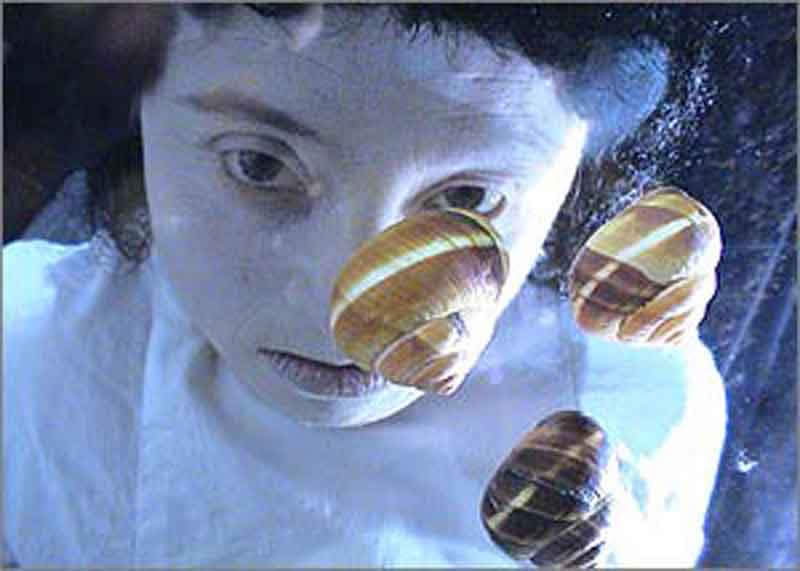
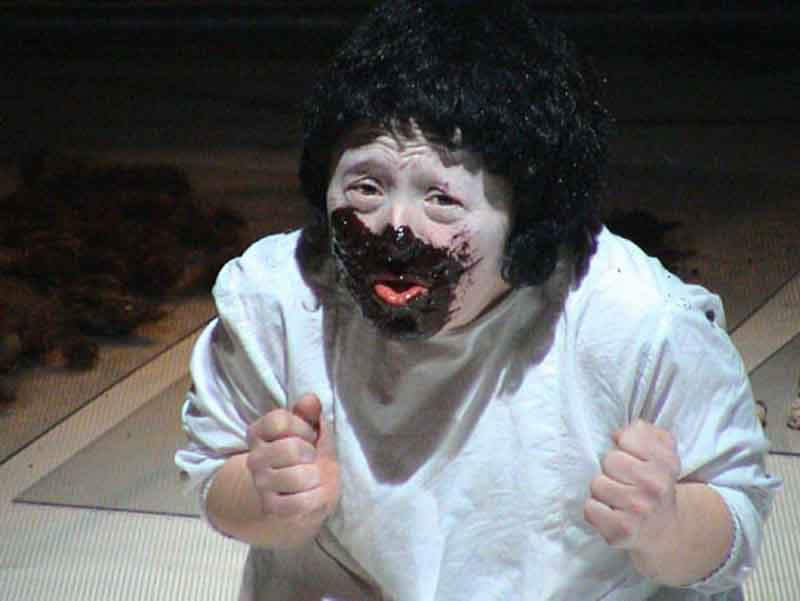
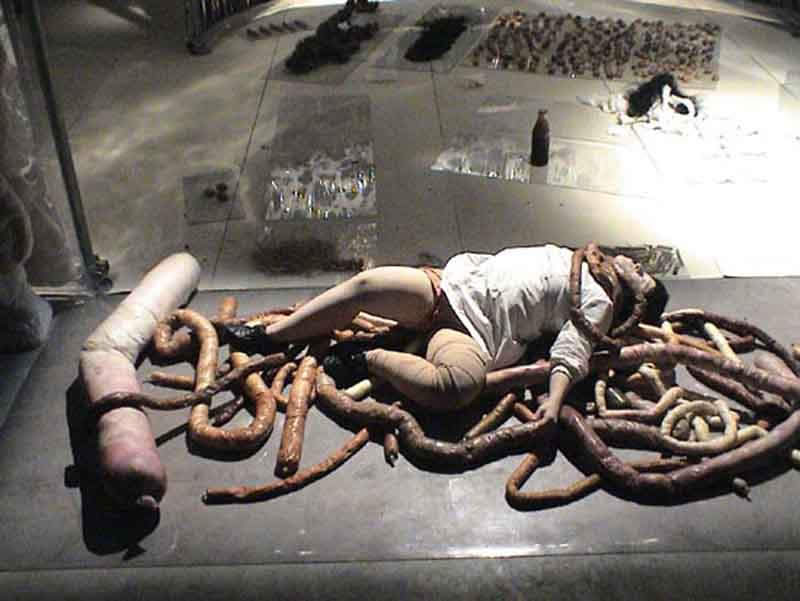
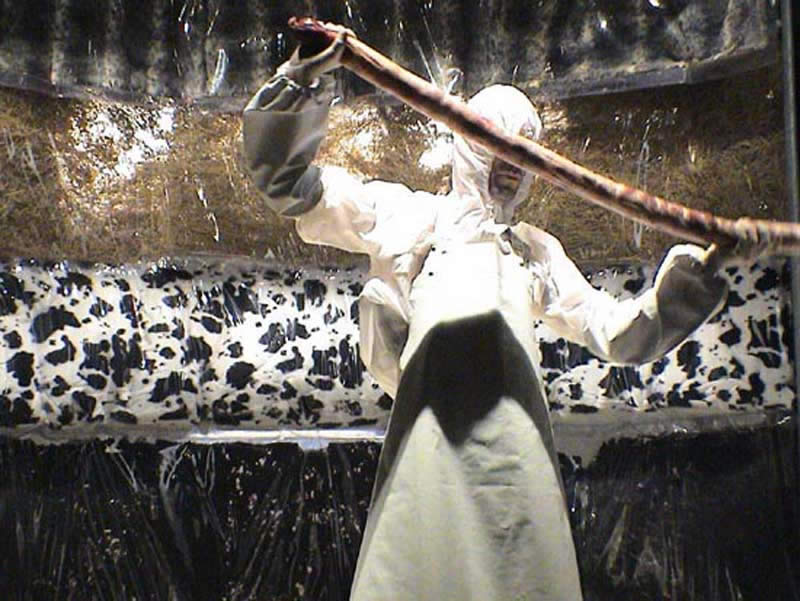
Intestinal vicissitudes, gastric journeys, defecation, quarterings, devourings make up the plastic dramaturgy of the tragedy of the minimal child. Little brother of Oedipus and Philoctetes, Tom Thumb is the tragic measure of Glory. The tiny one does not idle but proceeds on the fearful path of trials, the most daring. Imperfect birth prophecy, the victorious body of life under glass resists nourishing adventure and abandonment. Psychic of gallops and immobile physics the hero measured by the similar to zero, not given up on himself, responds to the call of his bedfellow destiny: snoozed, crippled, attached, invaded, allupato, pissed off, Caesared, passed away, he rises redeemed and freed from the programmed exercise.
THUMB
from Daumesdick by the Brothers Grimm
translation | playwriting || Francesco Pititto
regia || Maria Federica Masters
scene | costumes | visual elements || Maria Federica Masters
musica || Adrian Engelbrecht
electronic processing || Andrew Azzali
interpreters || Elisa Orlandini | Sandra Soncini | Barbara Voghera
production || Lenz Refractions
first || Lenz Theatre, Parma, maggio 2004
duration || 60 minutes
The show was presented at the Danae Festival, Milano, all Festival All.05 from Vigo, Vigo (Spain).
THUMB
Luciana Rogozinski
If there is a only "Western" wound that the world of the Fairy Tale as a microcosm of Law cannot heal and which therefore leaves the Fairy Tale itself open, endlessly gutted and disemboweled, at the mercy of its own opposite: Lenz's investigation into the Grimm's rugged "earthly paradises" comes to an end, in the recent installation of the POLLICINO, with a question that takes shape precisely in the attitude with which the characters take leave of visibility in the final picture of the entire work.
On the floor at the scene, as a utopia of the domestic idyll, the checkered tablecloth of innocent and reconciled everyday life is unfolded, but the figures that, in the name of the Father and the Mother (therefore of History and Nature) they preside over the meal ritual which seals the eternal return of the Identical, they have always and forever been the inexorable executors of the Sentence and the "fall into the abyss" that is announced in the future coincides with the very eternity of the massacre as the "normality" of the day.
It's in the ending that, with the gigantic shears and meat slicer raised high like Judgment trumpets, the paternal and maternal instance, from one doorpost to another of the space, they open the scene to the Future, in the service of baroque angels who part the curtains on the Secret. It lies, finally obscene, to the center, in the subsequent historical afterlife, and so exposed, tristanico ed inane, comes revealing the backstory of the outing as the “Last Supper”, which never ends because the Victim is always renewed.
As in other dramatic parables of LENZ, even in the heroic model proposed by POLLICINO the possibility of resurrection appears ambiguous, infinite-instead-the eternity of the threat. The resurrection is all the more at stake here as a discourse on "alternative" time., as in the original fairy-tale model Tom Thumb, which many times disappears and reappears between chthonic or visceral darkness and open sky or agricultural light or domestic lamp, he is the bearer and lookout and herald of the solar myth that wanders through spiral labyrinths ( a kernel, one ear, an intestine ) and which between sleep and wakefulness is activated in the homunculus' will to victory, as a cunning directed against Death. But wandering in the Underworld without ransom is a frequent condition in the Modern World; in this case every exit from the labyrinth turns out to be apparent: either the Minotaur defeated in the depths reappears in the world of presumed salvation in multiplied copies or it incorporates itself like a chrysalis in the victor himself who rises to the surface and is still unaware and is preparing to spread contagion, instead of light, in the world.
In the interpretation of LENZ, the irredeemable Hell coincides with the prophecy of the putting to death of the Illusion: the Son of Hermaphroditus che, so long invoked by the Desire of generations, lay in the sleep of the revolutionary incunabulum, from trial to trial he rose in vain. He slipped out of hiding in vain, in vain he soiled himself with the background of the world, in vain has it reopened its face "to the fresh air" after labyrinths of degradation: the ending brings it back, enigmatic prey already marked, in the passive position of the origin, in sleep.
The threatening reappropriation of the child by the parents is the defeat of the opus in alchemical terms . The New will be devoured by the Old, as your own hostage: this is announced by the angels of Judgment, the parents in fact, than in the last scene, while displaying the instruments of Execution, they speak alongside the central action as figures of the Chorus, spokespersons of the tragic irony on the already condemned Future: the legitimate monopoly of the Truth, according to this scene, it is in the hands of those who destine the Illusion to death.
The first sacrilege therefore that the LENZ operation carries out towards the fairy-tale scheme which, as a normative ritual at the end of each story, would impose the recomposition of the violated social balance is precisely the dragging of the fairy tale onto the stage, an act which in itself denies it the return to a "peaceful" framework: sometimes it's drama, Indeed, as there is a crime.
But it is also sacrilegious, in this POLLICINO, the deviation of the Fairy Tale from the Always Equal conservative who normally makes it speak. In the LENZ scenic operation, in fact, the fairy tale is "interpretation", therefore prospective discussion on History. Figuratively, this formal intention is expressed in the semantic use of "fifths", where what must be glimpsed in the scenic horizons following the close-up proves necessary for the enigmatic production of the Secret: To be, in secondary spaces, the materials of the hideout lie, of defecation, of darkening devouring, of the obligatory meal, as scenic segments of the ironic montage of Disenchantment; there it lies, at the beginning and end of the story, Tom Thumb, as fetus and corpse. Thus often displacing itself on the ground in further space, in visual concretion the meaning of LENZ's POLLICINO is therefore assimilated to Anamorphosis as a cryptic/critical language on the true nature of History, which reveals itself only to the fullest extent of the inquiring gaze. Anamorphosis as a melancholic formal paradox: the perspective wisdom that must shed rational light on the images extends over them like a shadow.
But there is a luminous and numinous element, in the POLLICINO scene, which crosses any perspective projection and contrasts with it- absolutely - as an "apparition". It is the physical body in which Tom Thumb incarnates: the abnormal one of the Down-actress Barbara Voghera, so often at the center of LENZ's directorial choices, hermaphrodite bearer of dramatic antithetical identities, from Hamlet, polarly, to Little Red Riding Hood. God in life, Theatrical theater toy, Christian body: no representative car, no fictitious character to find respite in it, you are movement, it can remove the very symbolism of Destiny from this physiognomy and this "other" body: even before embodying any dramaturgical story, they are the Meaning. That Meaning plays something other than itself is a marvelous fact par excellence, therefore intrinsically “theatrical”: every moment of the presence on stage of this body sacralized by its natural mark is therefore a document of meta-theatre. It is no coincidence that so often in LENZ operations and also in POLLICINO it is subjected to martyrdom or obscene exposure: the whole problematic of the Sacred converges in the Monstrum and the fact that this assumes, in the acting discipline, a potentially infinite series of masks, makes its historical and organic existence a living allegory, that paradox of the Dionysian mysteries whereby the actor must remain untouchable and untouched in the exact circumscription of his own aura, or he will be killed.
“KYRIE ELEISON”: to which sacrifice are the liturgical notes of the POLLICINO musical collection dedicated? They introduce the experience of the molecular hero, traverser of animalistic intestines, of dung and sewage, of abandoned shells and fescues, in the sphere of the Sublime: death is certain, redemption is uncertain. The entire world of toys is brought together by the scenography ,from customs, from the masks, from artificial and organic scenic materials stigmatized by the need for the "fairytale" essence: schematic bearers therefore not of reality but of amazement. Yet the world-child is not the victim here, neither is the actual sacrifice under the Oedipal seal nor is the dialectic of Guilt consummated between the unattainable height of the "tower of the Father" and the obsessive and implacable nourishment of the Mother.
Despite the original fairy tale, LENZ's POLLICINO is rather both the Odradeck and the "innate to Guilt" of the Kafkaesque horizon; but Odradeck saves herself by hiding from visibility in her parents' house, Pollicino is lost here today precisely because, in front of the institution, becomes "visible". This is also the destiny of the Image that becomes concrete, in the theatre? It is a metaphor for this aesthetic doubt, throughout its journey, the CHICKEN.
At the very center of this metaphor shines, in the Desire that maintains the dramatic instance, the Monster playing himself.