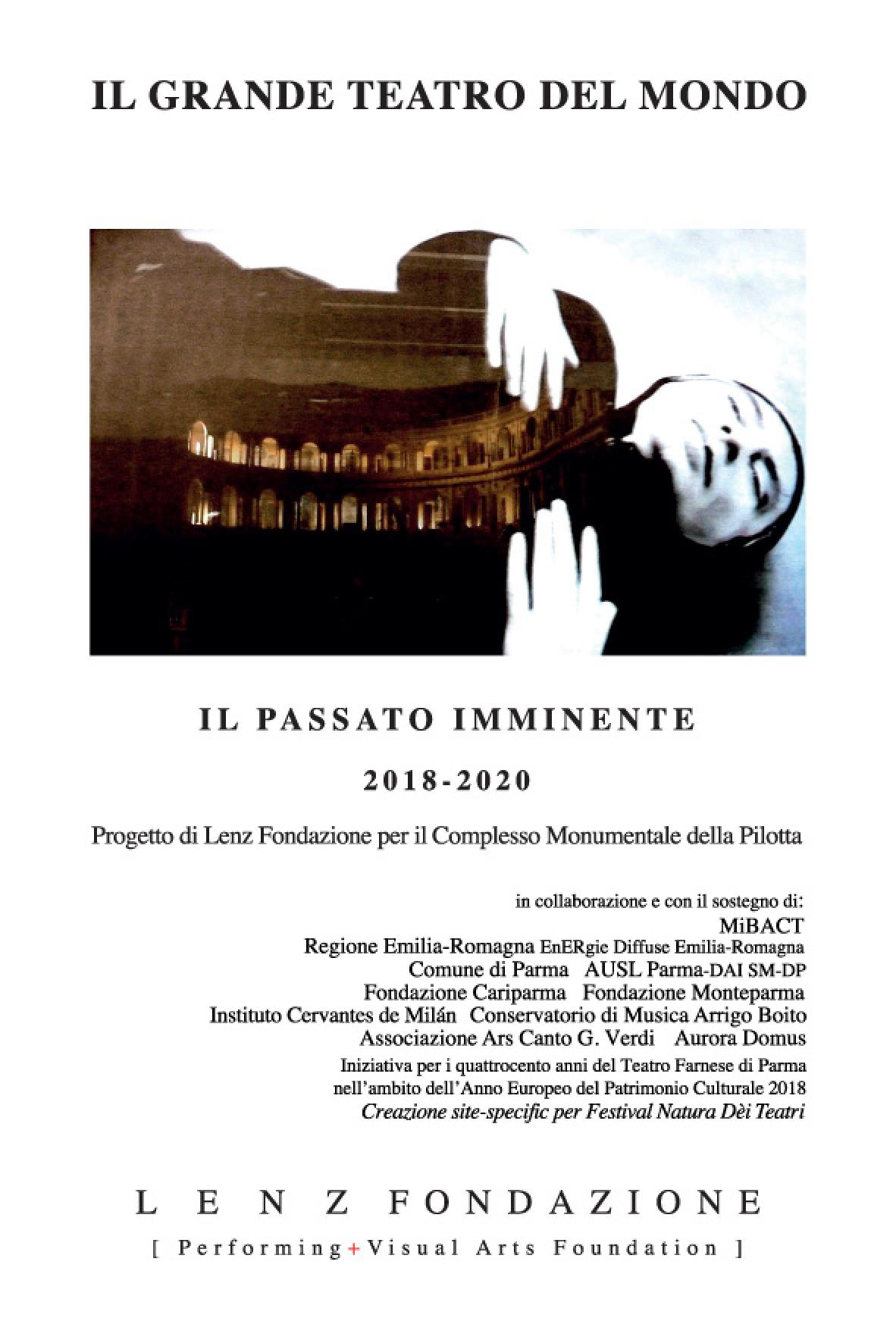






THE GREAT THEATER IN THE WORLD
THE IMMINENT PAST | THE GREAT THEATER IN THE WORLD
Three-year project 2018-2020
Triptych on the works of Calderón de la Barca
Installation project created in the monumental spaces of the Pilotta Complex in Parma divided over three years:
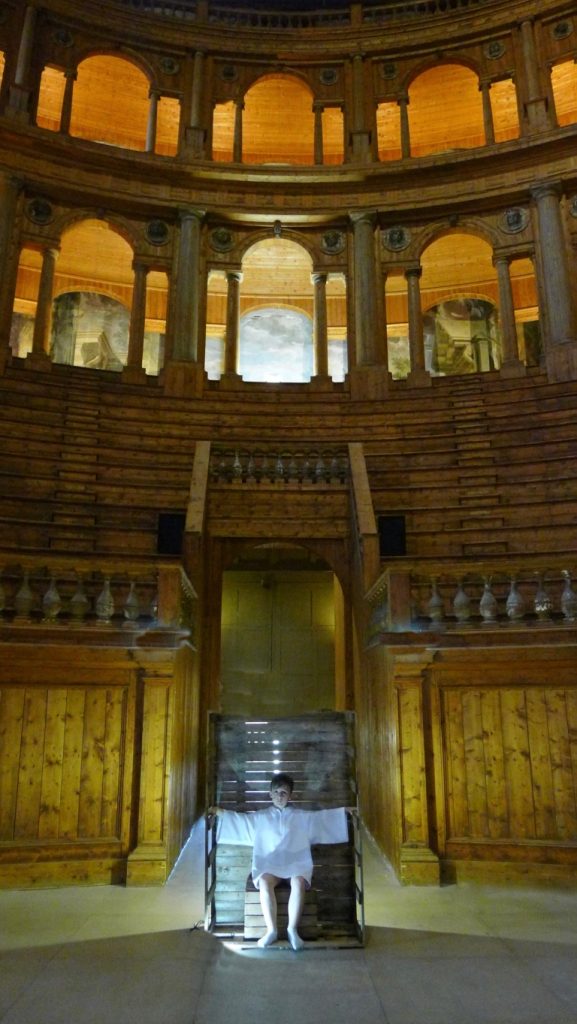
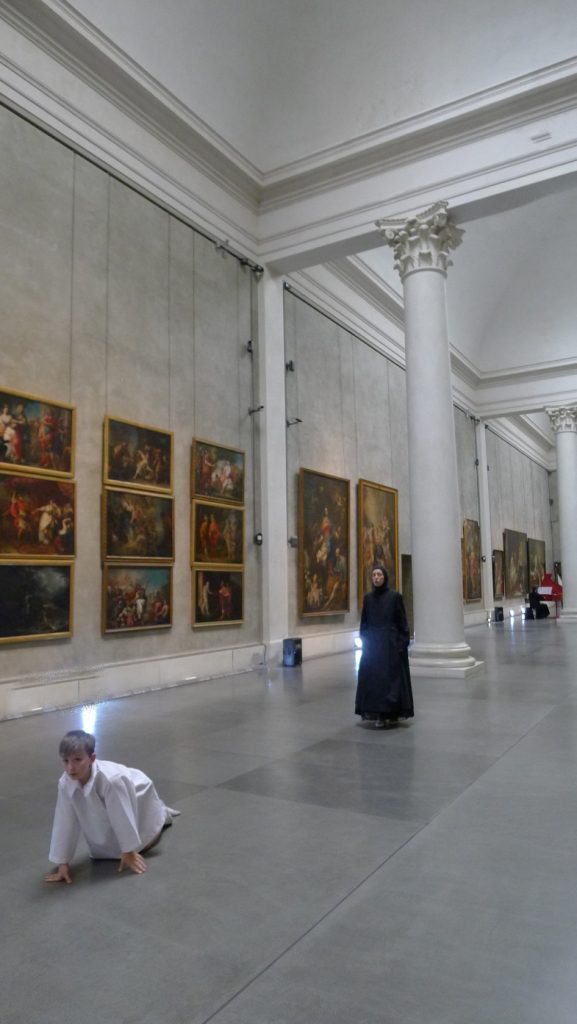
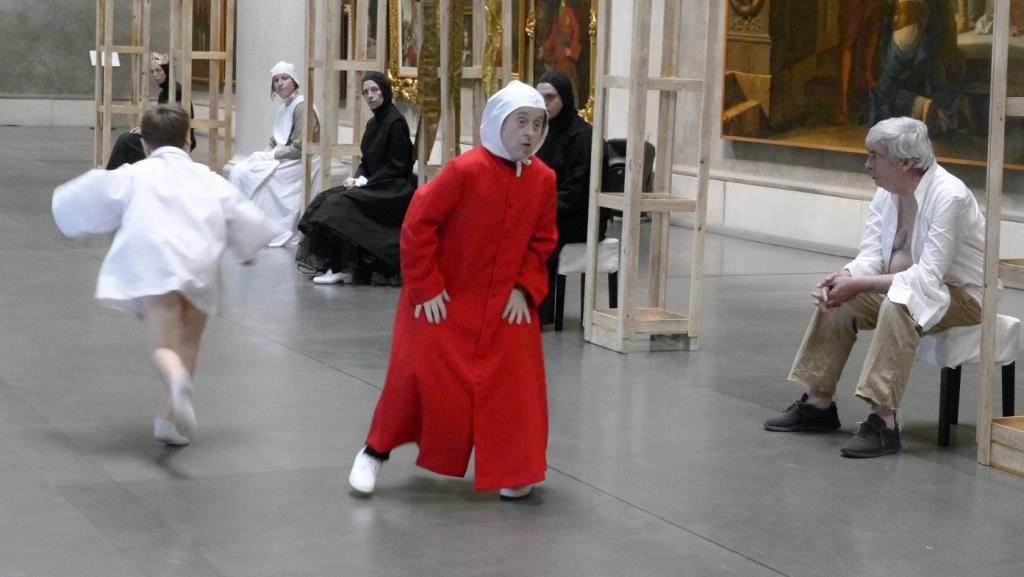
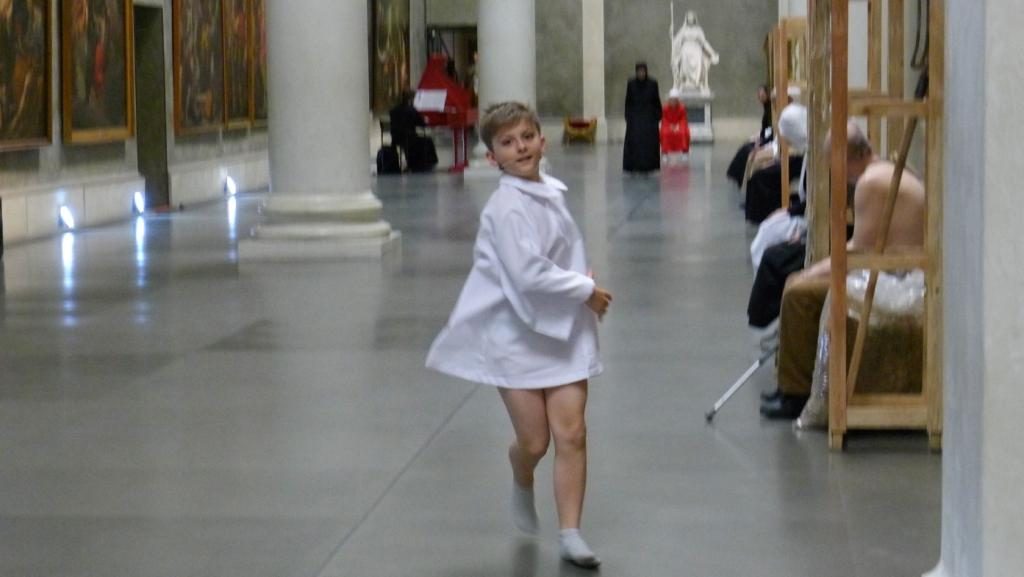
2018 THE GREAT THEATER IN THE WORLD
Auto sacramental
2019 LIFE IS DREAM
Auto sacramental
2020 LIFE IS DREAM
Theological-philosophical drama
Project for Parma Capital of Culture 2020
The philosophical-theological baroque drama perfectly represents the thematic question that headlines the entire project: the imminent past. The Farnesian monument between the historical period and the contemporary, the dramaturgy that isolates life and dreams in the same space-time (and viceversa) and the relationship between urban space, collective fruition and active memory configure a hypothetical framework of synthesis and project for the capital of the future. The perception of individual time through multiple artistic forms (installation in space, video projected images, live performance, baroque musical dramaturgy, modern and contemporary) favors that common time – together with the common space, the city – necessary to outline community identity and new perspectives.
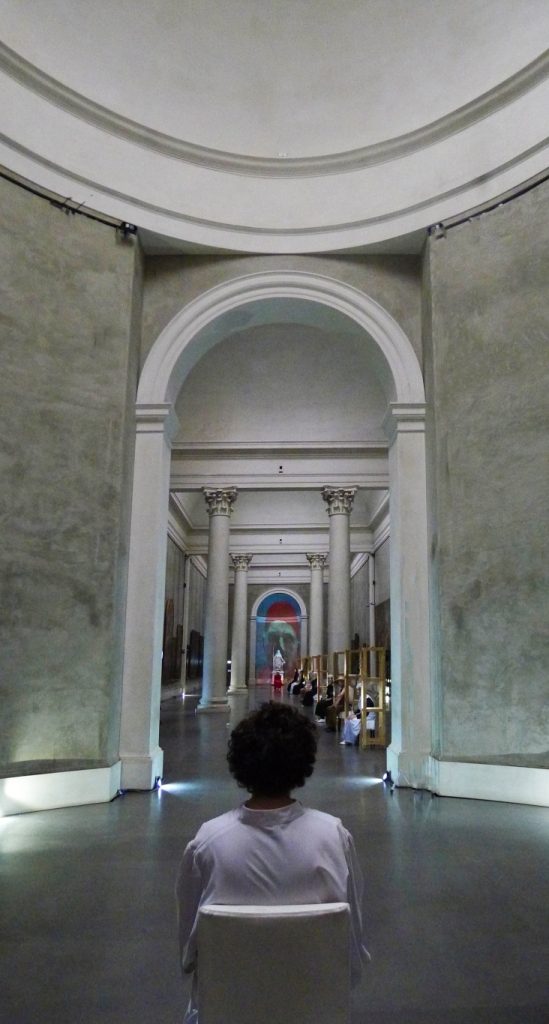
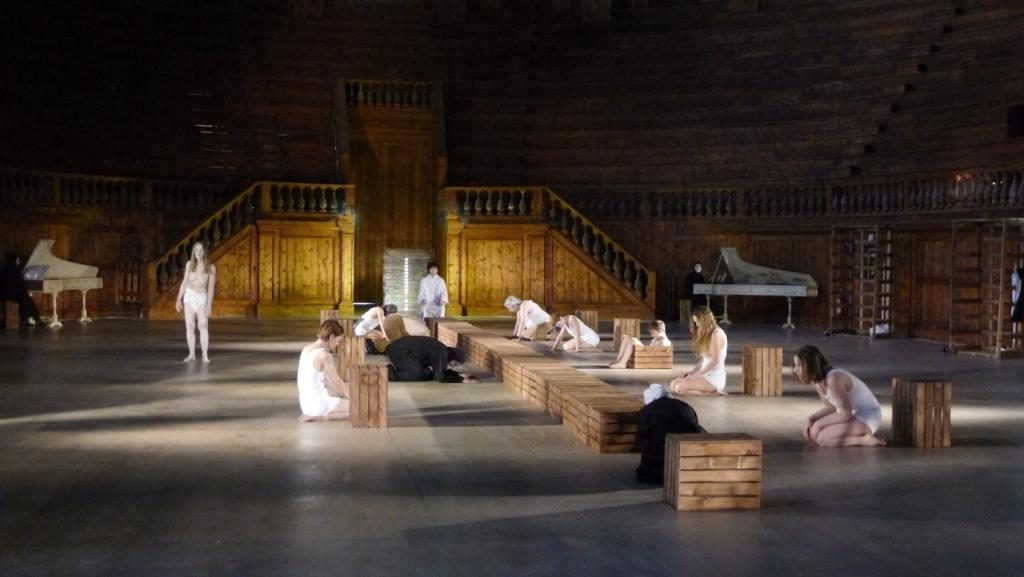
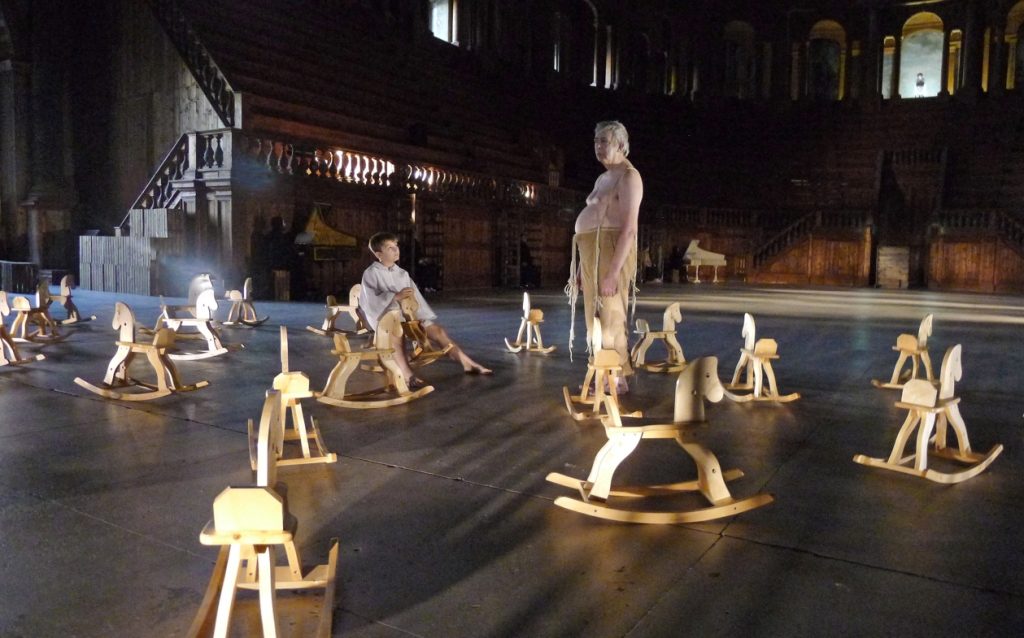
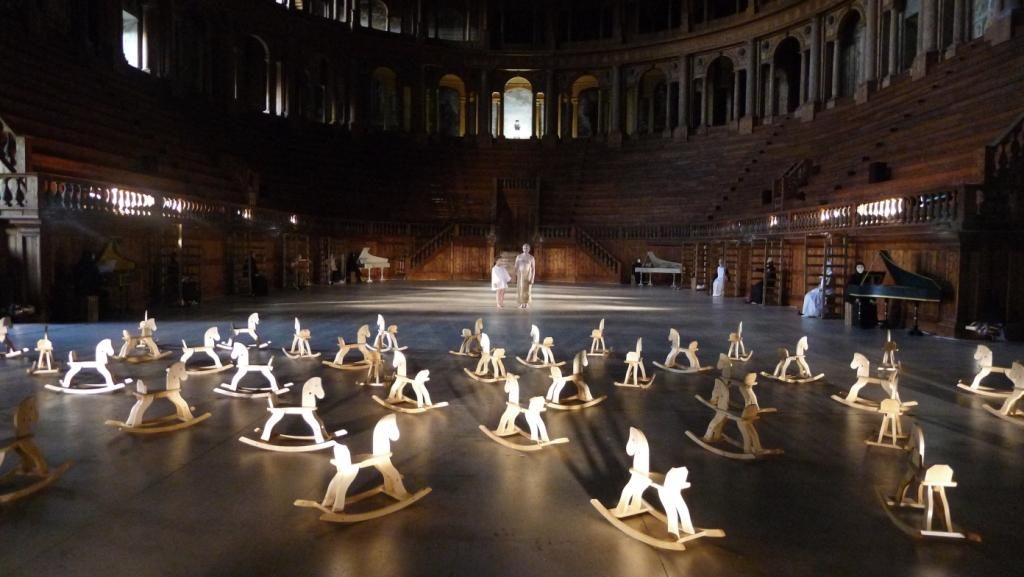
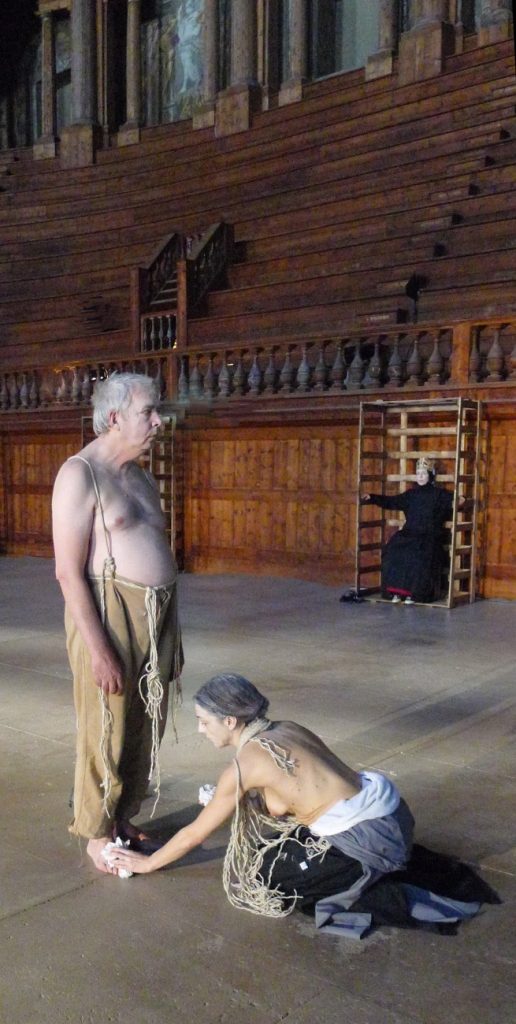
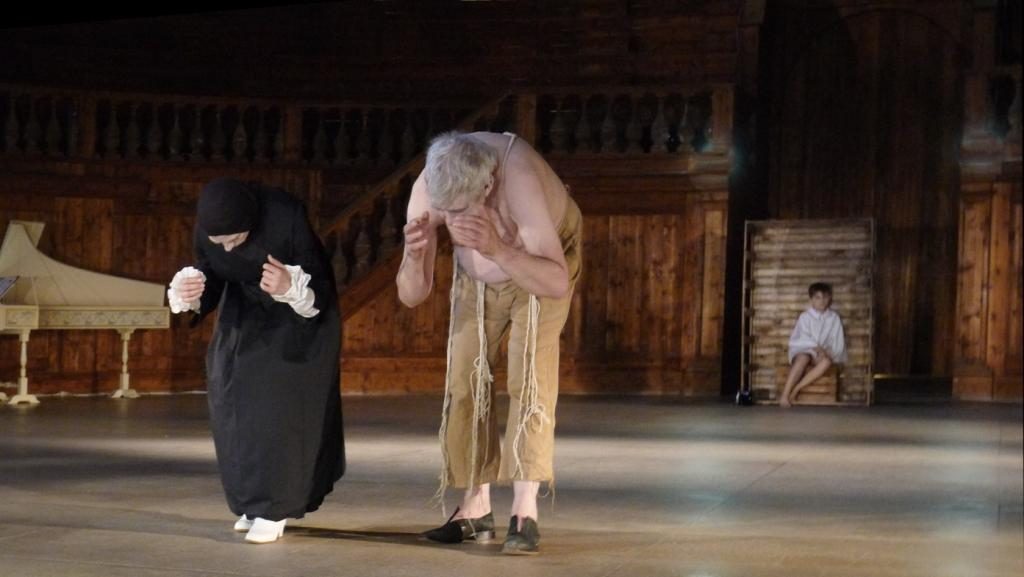
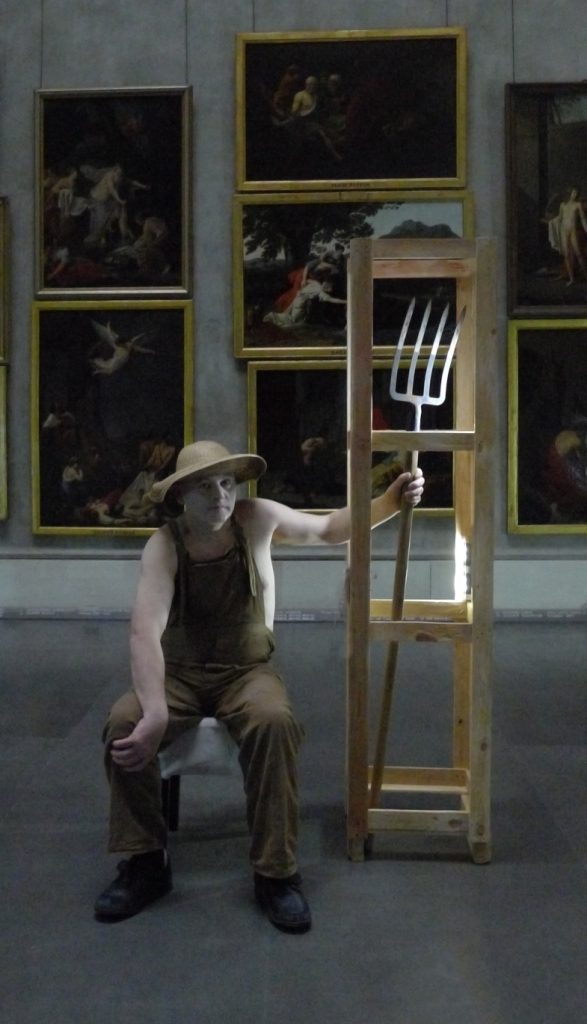
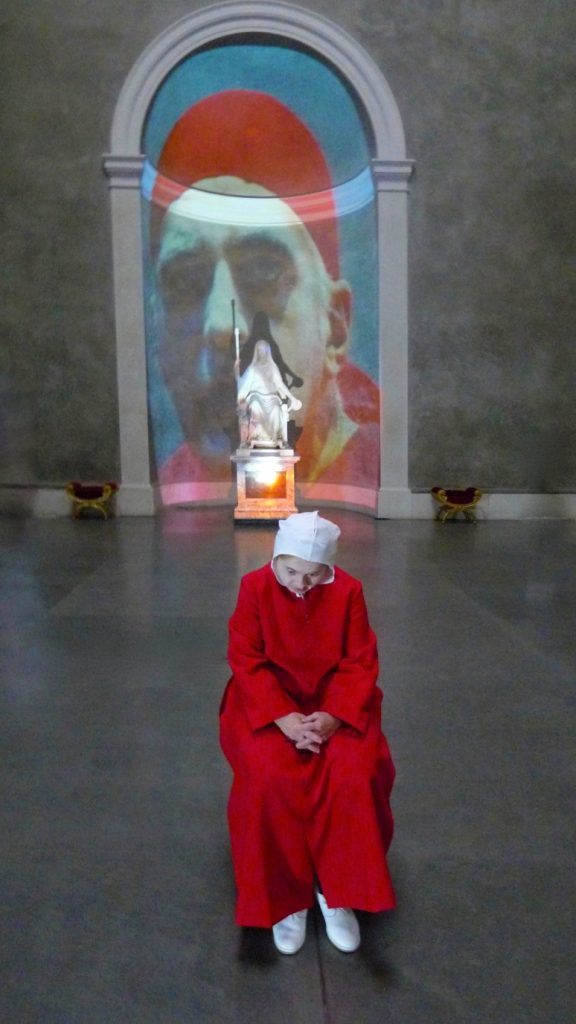
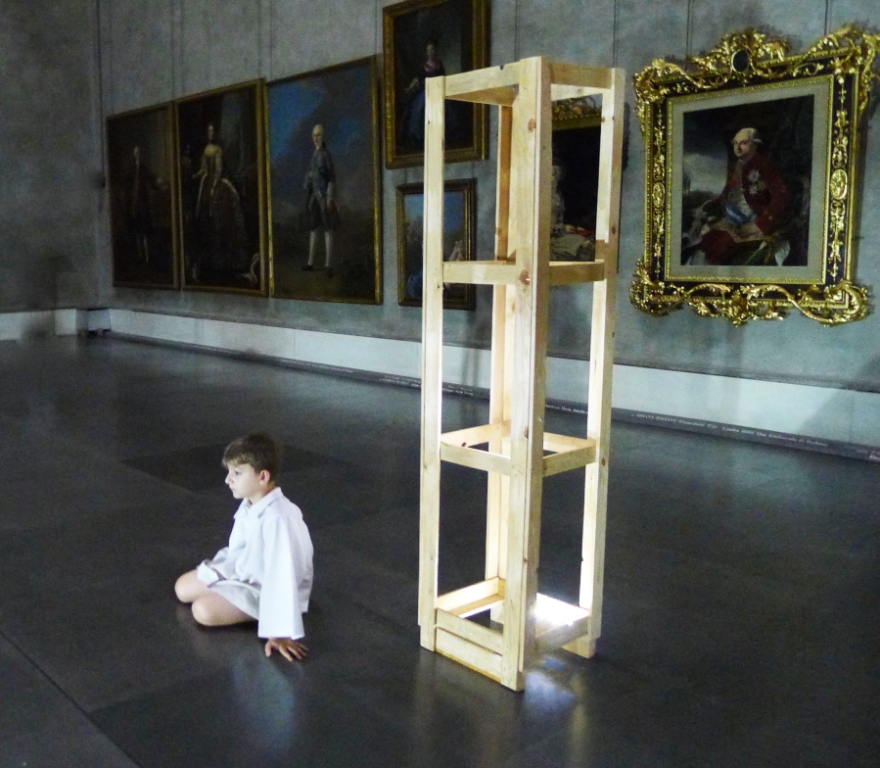
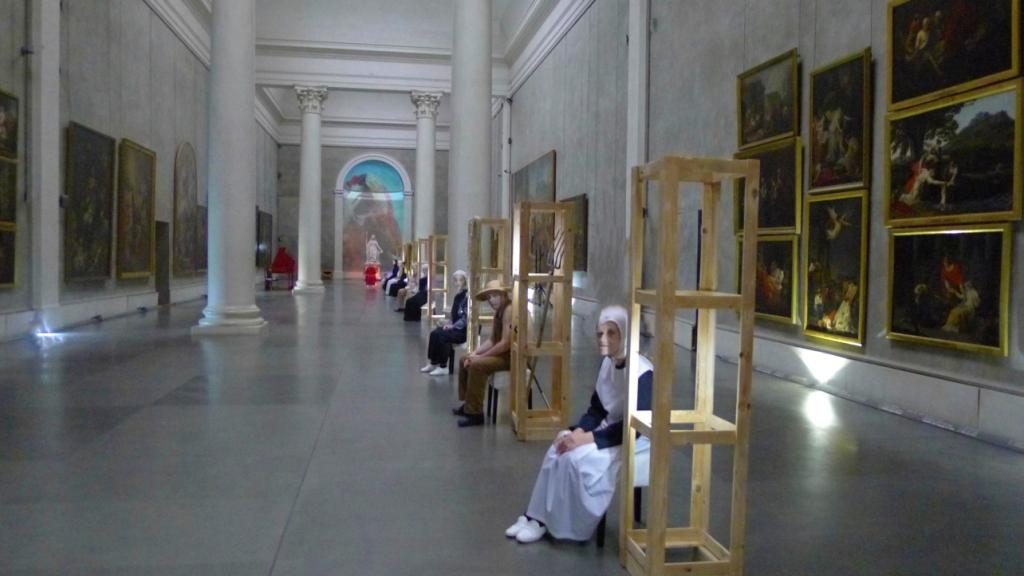
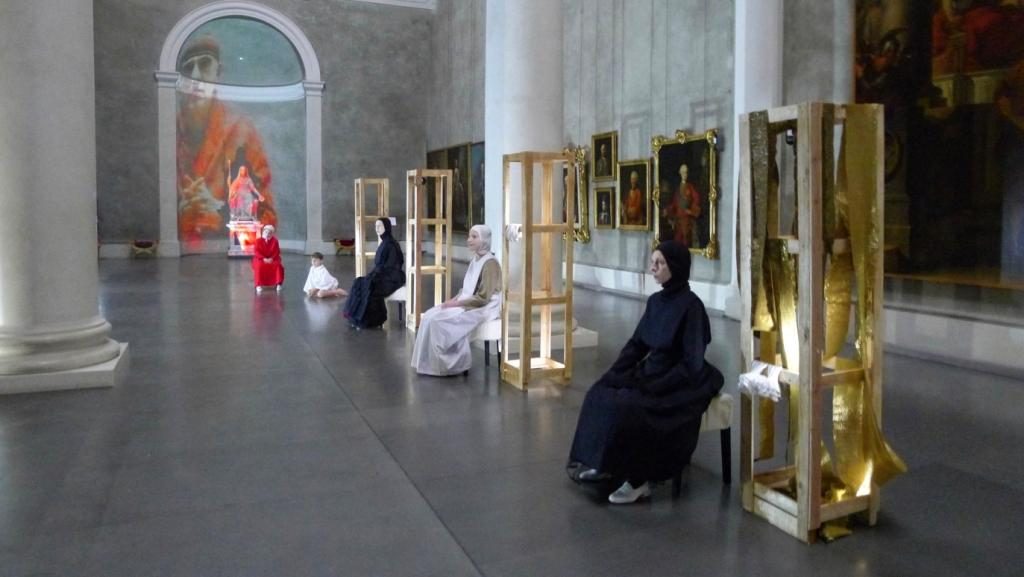
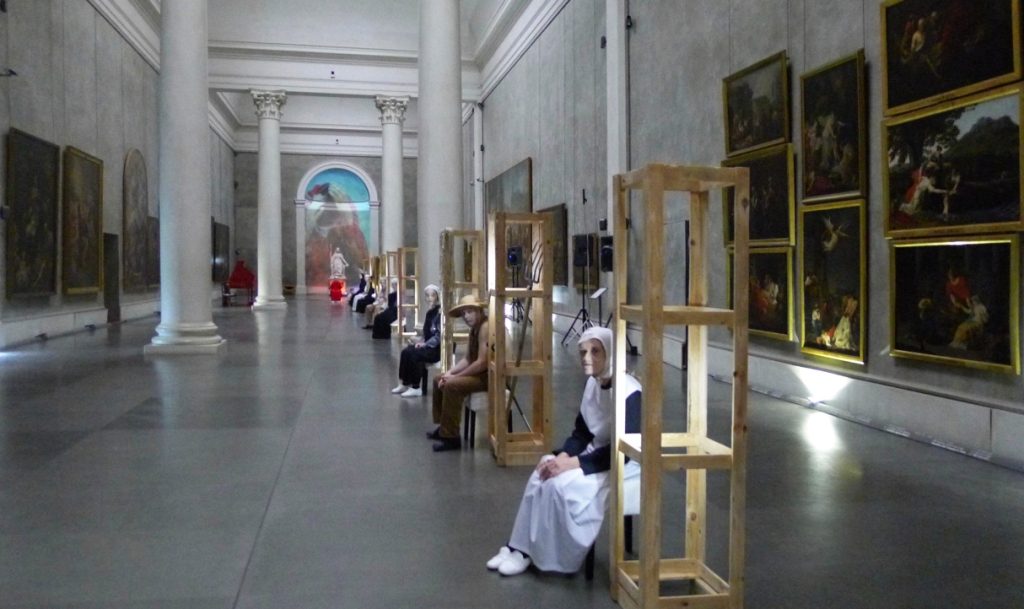
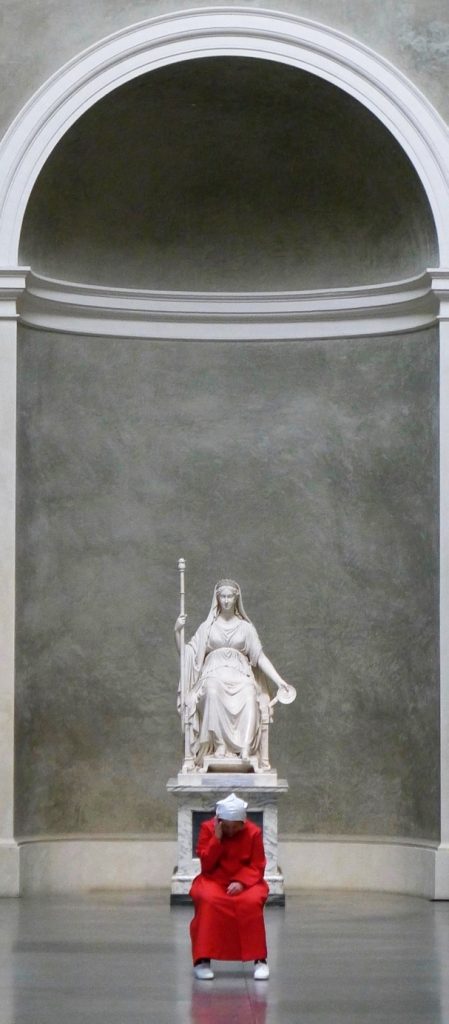
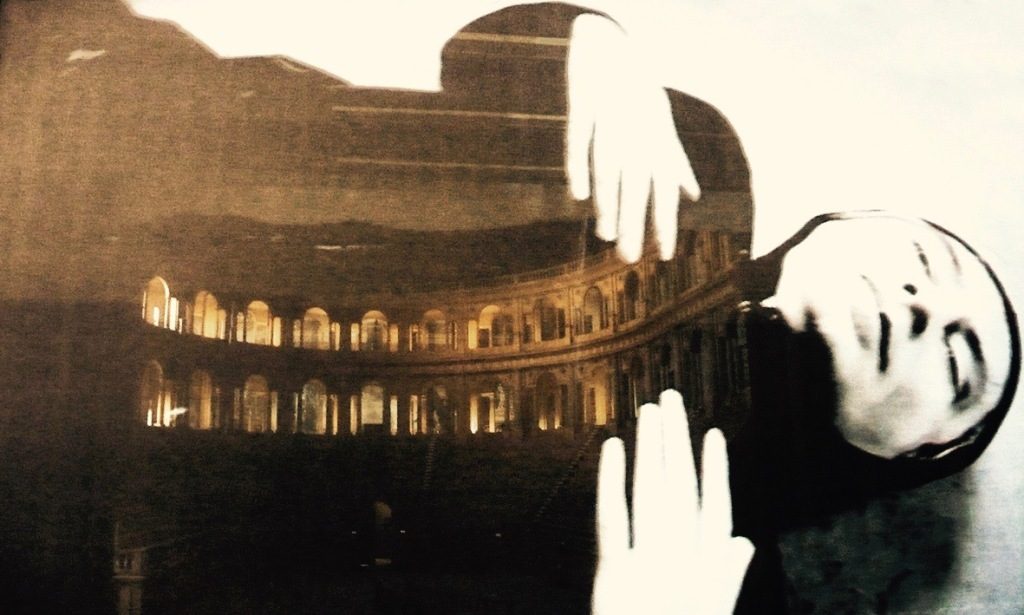
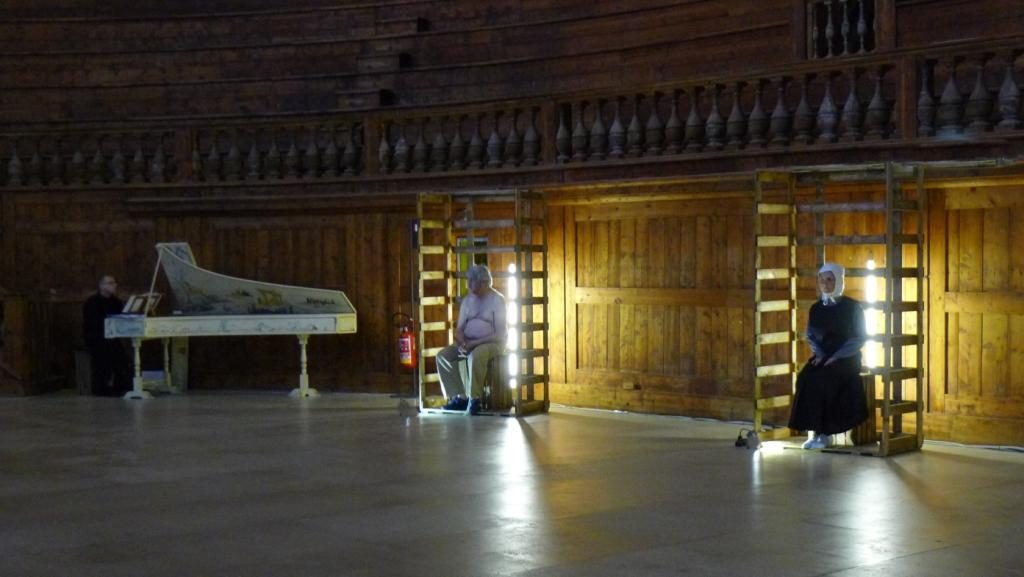
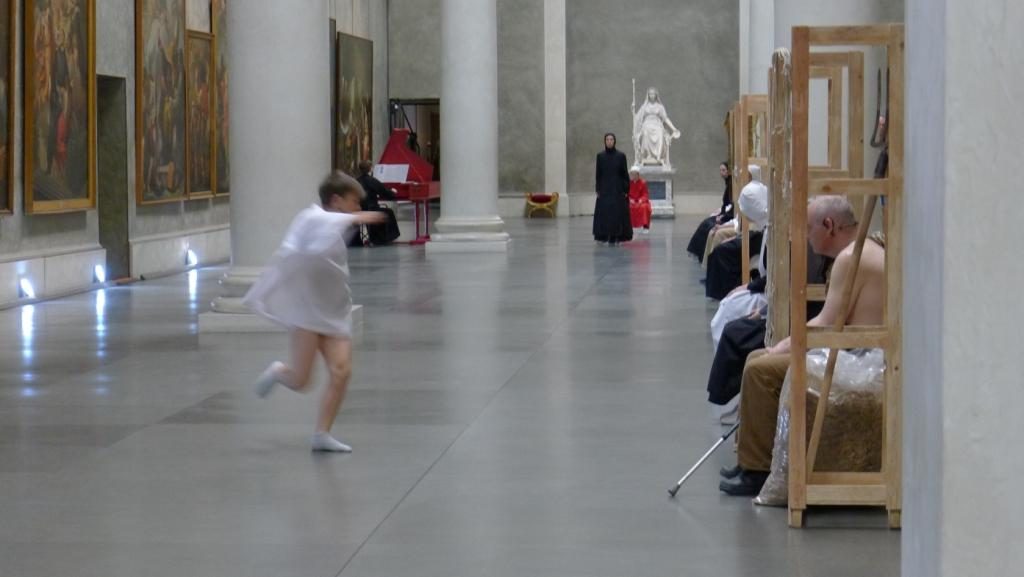
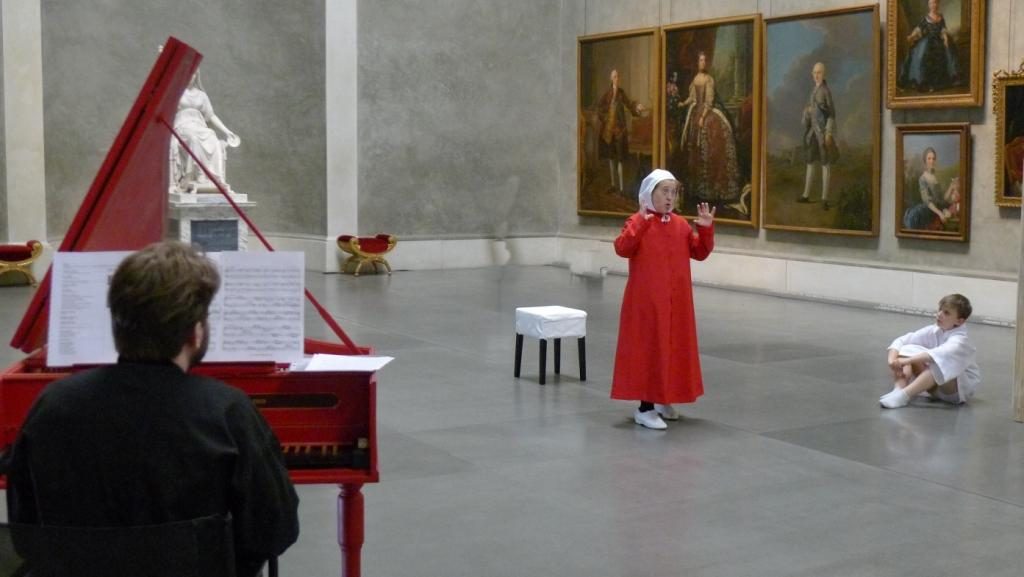
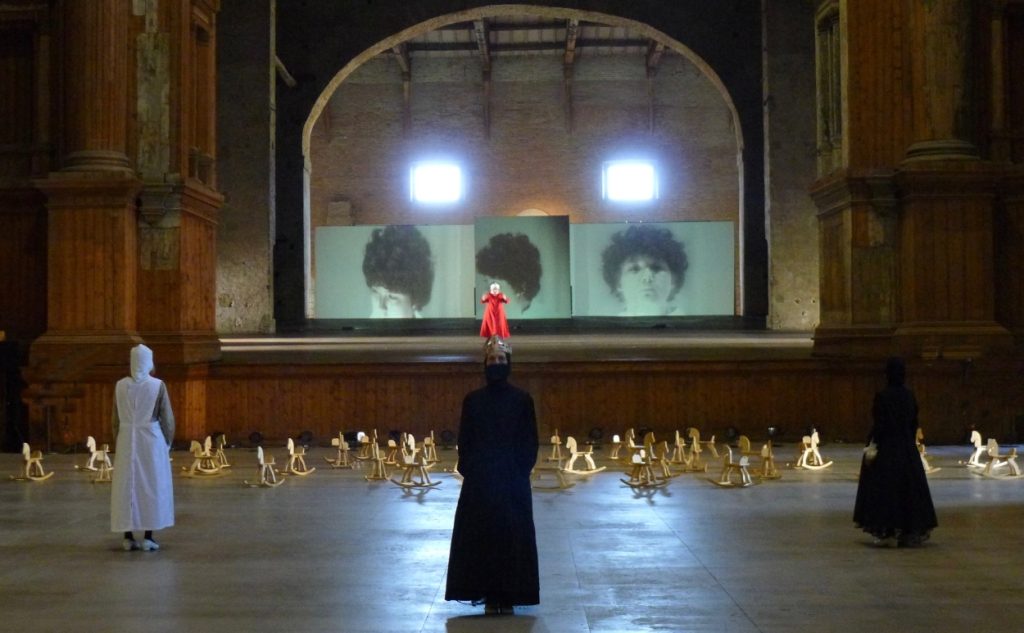
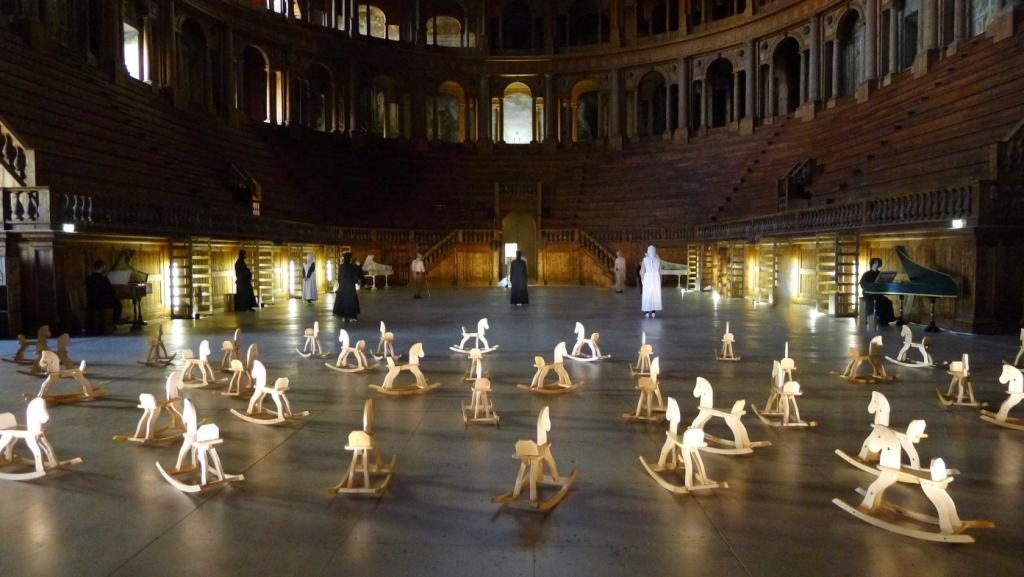
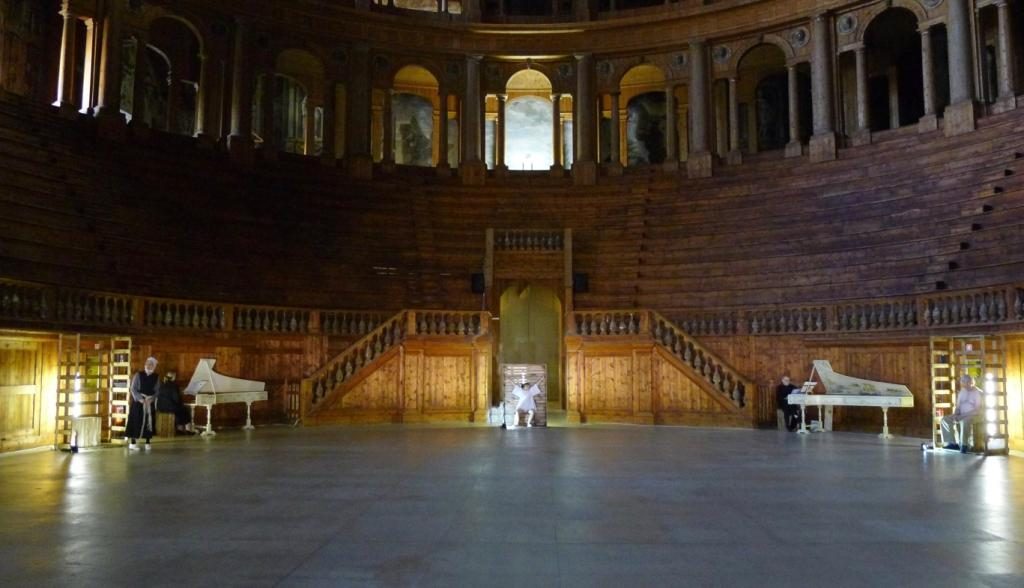
Scrive Jean Luc Nancy: “The art called contemporary is not simply that which can be dated to today. It is called contemporary because it does not inherit any form or reference. It cannot be the art of the sacred nor that of glory, nor that of a presumed nature or destiny of peoples. It only inherits the enigma brought by this word - ART - which was invented at the moment in which all the figures of a possible "representation" began to disappear. It is contemporary with its own wandering and with the always uncertain and trembling birth of forms that would be typical of a failed encounter of all the properties received".
We think that contemporary time is necessarily discontinuous, the contemporary artist adds, divide, removes, replaces one's time, he “feels” it deep inside, puts it in relation to other times, sinks into the past and tends towards the future. “In the contemporary world everything has yet to happen. And together it has already happened" as Marco Belpoliti acutely reflects. And what happens is the present, our present.
If then modern physics – especially quantum – tends to exclude the existence of Time, and tells us that the moment that comes is not the same as the moment that precedes it, and that there is no linearity but only concentric movement of atoms moving in space, and that the sensation is only subjective and only determined by movement then our research has some foundation.
The continuous refraction in classical work, be it literary or poetic or visual, therefore it becomes, for us linguistic practice, constant in aesthetic research, in the metamorphosis of forms and signs, in the repetition of history; wandering and uncertain investigation, Paul Celan would have written as a stutterer.
Like the Time of the infinitely large and the infinitely small.
The Great Theater of the World, to be carried out in collaboration with the Pilotta Monumental Complex, and the staging of The life is dream by Pedro Calderón de La Barca, first in the form of a contemporary auto sacramental and then in the staging of the drama in all the spaces of the complex, constitute our three-year proposal.
The philosophical-theological baroque drama perfectly represents the thematic question that headlines the entire project: the imminent past. The Farnesian monument between the historical period and the contemporary, the dramaturgy that isolates life and dreams in the same space-time (and viceversa) and the relationship between urban space, collective fruition and active memory configure a hypothetical framework of synthesis and project for the capital of the future. The perception of individual time through multiple artistic forms (installation in space, video projected images, live performance, baroque musical dramaturgy, modern and contemporary) favors that common time – together with the common space, the city – necessary to outline community identity and new perspectives.
The Pilotta Monumental Complex can represent that common space that hosts the different times of collective and individual history, as an inclusive hub for the different souls of the Polis . They will be able to actively participate in the project, through practical workshops, students of the Toschi artistic high school and other schools in the city, of the Arrigo Boito Conservatory and the various choirs, of the University (the University of Parma is a supporting member of the Lenz Foundation), of the students of the Cinema District as documentarians of the entire experience. Each construction phase will make use of advanced technological systems that will document the work in progress, particularly for site-specific, The most advanced video and sound representation techniques will be used.
THE GREAT THEATER IN THE WORLD
Video installation + performance
da Calderón de la Barca
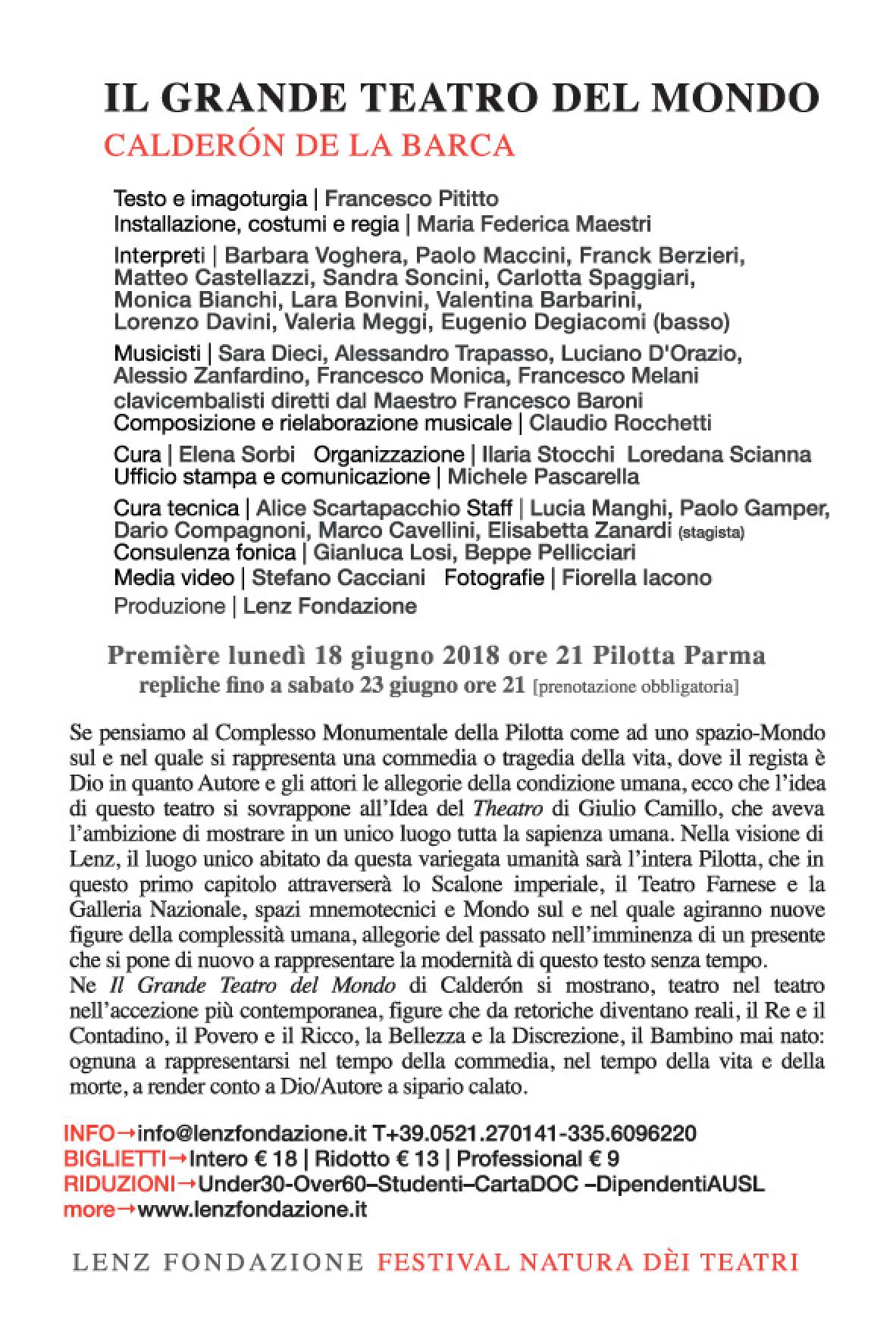
Text and imagery | Francesco Pititto
Installation, costumes and direction | Maria Federica Masters
Interpreters | Barbara Voghera, Paolo Maccini, Franck Berzieri, Carlotta Spaggiari, Valeria Meggi, Matthew Castellazzi, Sandra Soncini, Lara Bonvini, Valentina Barbarini, Lorenzo Davini, Monica Bianchi and Eugenio Degiacomi (basso)
Musicians | Sarah Ten, Alessandro Trapasso, Luciano D'Orazio, Alessio Zanfardino, Francesco Monica and Francesco Melani, harpsichordists directed by Maestro Francesco Baroni
Electronic musical composition and re-elaboration | Claudius Rocchetti
Treatment | Elena Sorbi
Organization | Ilaria Stocchi
Press and communication office | Michele Pascarella
Technical care | Alice Scartapacchio
Media video | Stephen Cacciani
The Great Theater of the World is a scenic project by the Lenz Foundation created in collaboration with the Pilotta Monumental Complex, with the support of AUSL Parma – DAI SM-DP, of the Instituto Cervantes de Milán and with the contribution of MiBACT Ministry of Cultural Heritage and Activities and Tourism, Emilia Romagna region, Municipality of Parma, Cariparma Foundation, Monteparma Foundation. Artistic partners: Arrigo Boito Conservatory of Music of Parma and Ars Canto G Association. Green Children's Choir and Youth Choir. Technical partners: AuroraDomus Social Cooperative O.N.L.U.S, Koppel A.W.. The project is an integral part of EnERgie Diffuse Emilia-Romagna, a heritage of cultures and humanity 1618-2018 Four hundred years of the Farnese Theater in Parma, events awarded the European Year of Cultural Heritage label 2018.
THE GREAT THEATER IN THE WORLD – teaser
THE GREAT THEATER IN THE WORLD – full video
It arouses a whirlwind of emotions. Physics, mental, spiritual. And of visions, which open the gaze and solicit resonances of memories and words, of places and stories, of past and present. Between dizziness of light and shadow, touches the heart and mind. It envelops us and involves us, spatially and internally, like a big hug that contains everyone and everything.
Giuseppe Distefano, Artribute, 2 July 2018
Once again Lenz animates the hidden and unconfessed of the place and makes it the main source of light […] For Pititto and Maestri the Farnesian monument is the dramaturgy that encloses life and dreams in the same space-time, between historical period and contemporaneity, individual enjoyment and collective memory. An encyclopedic embrace of differences, of the possibilities of the human being. With eyes closed wide open.
Matteo Brighenti, Double zero, 28 June 2018
It is a show that is at times moving and at times funny in its paradoxes and the replication of age-old patterns, in the irony of fate, in the roulette of roles […] And it's truly thrilling to be able to enter these spaces outside of opening hours, glimpse paintings “burned” by the headlights that illuminate the actors' positions and discover very strong shadows, watching characters so convincing that they seem to have materialized out of these oils on canvas after almost 400 years.
Matteo Bergamini, Exibart, 25 June 2018
A vision capable of drying up the baroque charms of the literary place from which it originates, as of the physical place where it took new shape, to give us an alienated dramaturgical evocation in whose interstices, between variegated and reiterating visual projections, the sharp interventions of the sound compositions and electronic reworkings of Claudio Rocchetti flashed, with the alienating counterpoint of the various harpsichords scattered throughout the stage space.
Alessandro Rigolli, Music Journal, 26 June 2018
Lenz, while preferring aesthetic research, is characterized by a rigorous political connotation, etymologically speaking, which abandons the spectacularization of theater for tours and large audiences to reactivate the history of abandoned places, of outcast humanity, of the neglected tradition, without however waving the flag of urban regeneration, of social theater or the updating of the classics.
Giulio Sleep, Paper Street, 14 July 2018
Pititto and Maestri propose the distortion of a metatheater as a gravitational space in which individuals are structured as elementary particles, whose motion is constant, casual and necessarily led to the meeting/clash, and whose narrative is not flat and continuous, ma formed from the interaction and only exclusively through it.
Daniele Rizzo, Persinsala, 29 June 2018
A directorial-dramaturgical practice that manages to create a synthesis of disturbing beauty, as oriented by the alchemistic instinct of “a union of opposites”, in a release of occult energies, latent […] This work by Calderón-Pititto is a theatrical thought of sacred and simple solemnity, which regulates the entrance of the actors on stage with the opening of two doors: the cradle and the grave.
Franco Acquaviva, Curtain, 2 July 2018
Calderón de la Barca makes the dream dimension a path of moral purification. Pititto and Maestri use it to propose a thought similar to that which Polonius formulates observing Hamlet's "madness": There is method in the madness that is our existence.
Enrico Piergiacomi, Theater and Criticism, 16 July 2018
An event of extreme expressive refinement on an ideational and implementation level, three main stages, "stations" of knowledge as in a sacred representation […] superb multiplication of theater within theatre.
Valeria Ottolenghi, The Gazzetta di Parma, 21 June 2018