






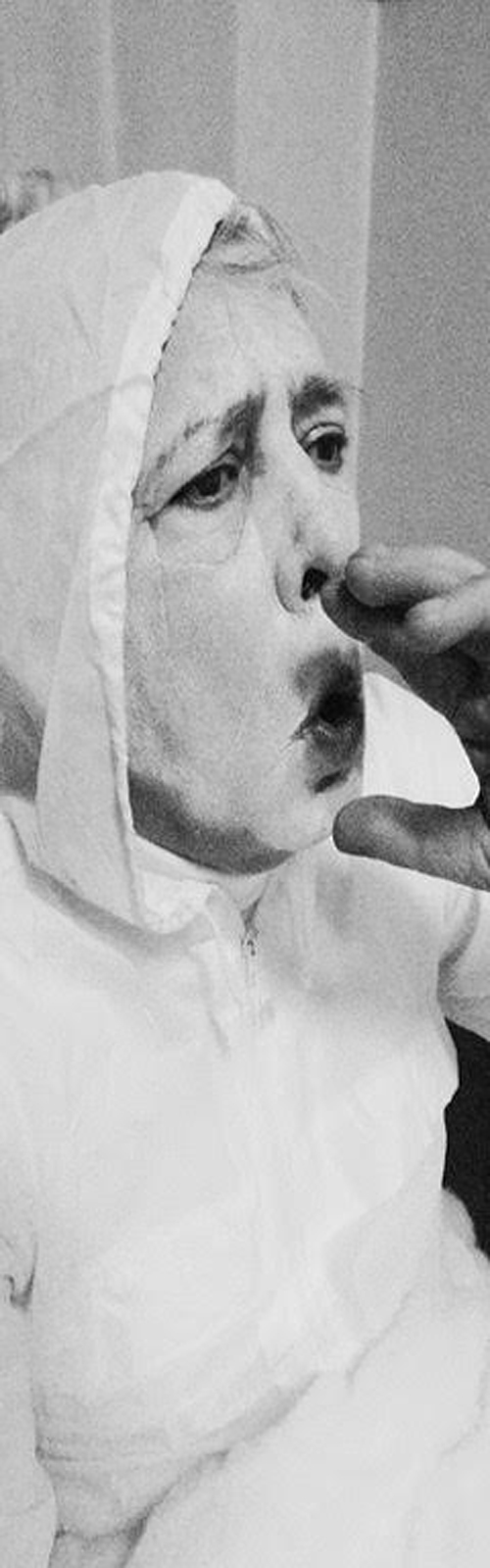
THE FURIOUS (2)
THE FURIOUS (2)
#5 The Illusion #6 Madness #7 Death #8 The Moon
at Valera Cremation Temple (PR)
Biennial project onFURIOUS ORLANDO by Ludovico Ariosto – 500th anniversary (1516-2016)
After the first four episodes of The Furious (1) – The escape e The Island of Alcina set at the Guatelli Museum e The Man e The Palace at the former Rasori Pavilion of the Parma Hospital – Orlando's endless search for love and jealousy, between paintings and shots in a labyrinthine chessboard, between a museum of peasant memory and a department of illness and healing, continues and concludes with the last four chapters – The Illusion, Madness, Death, The Moon.
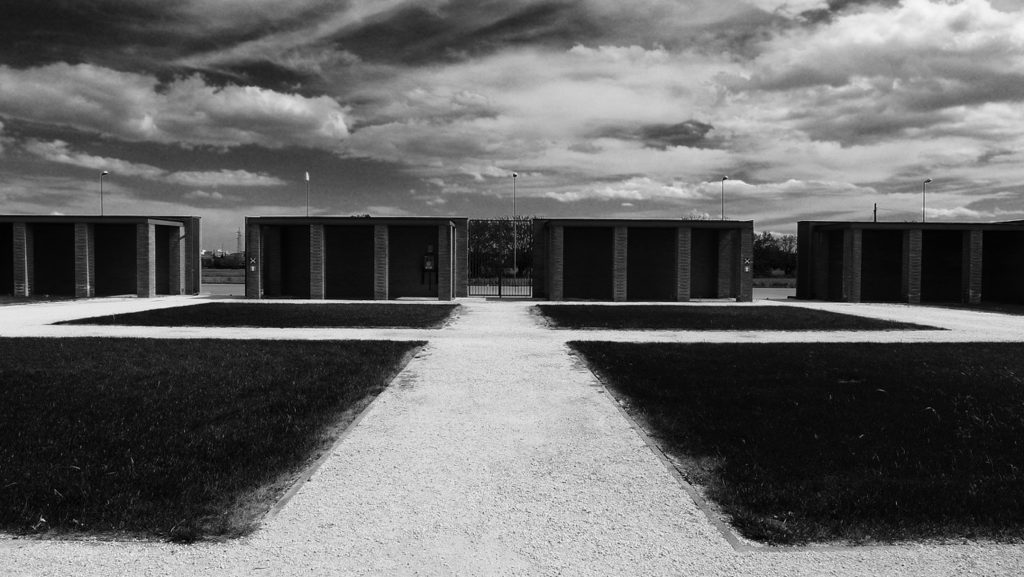
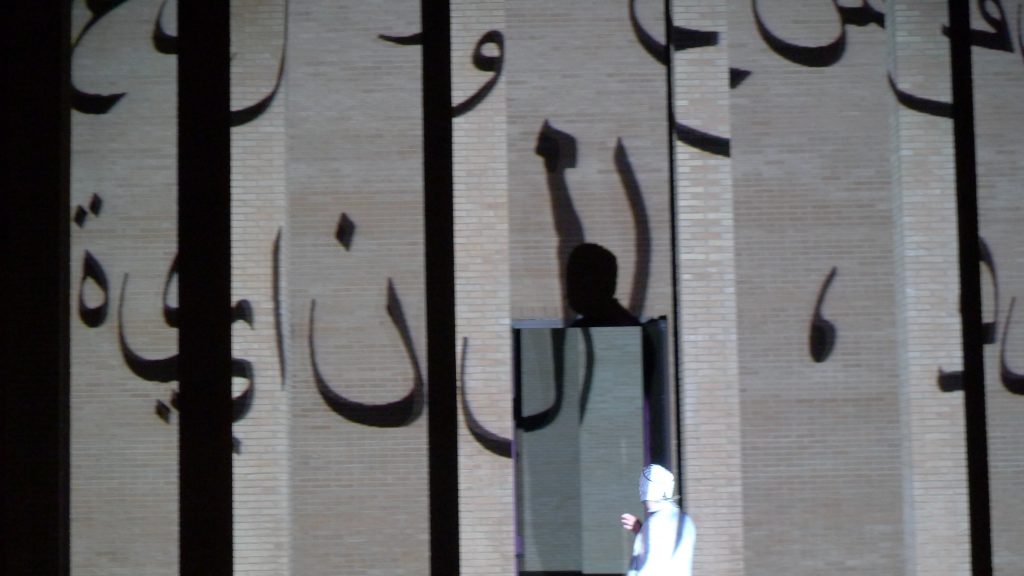
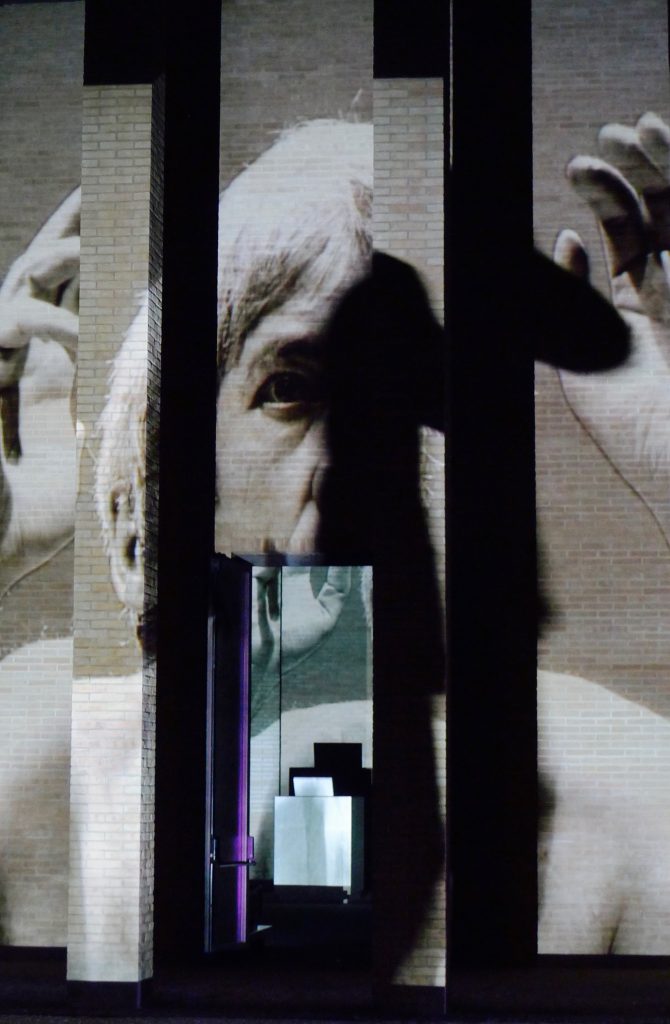
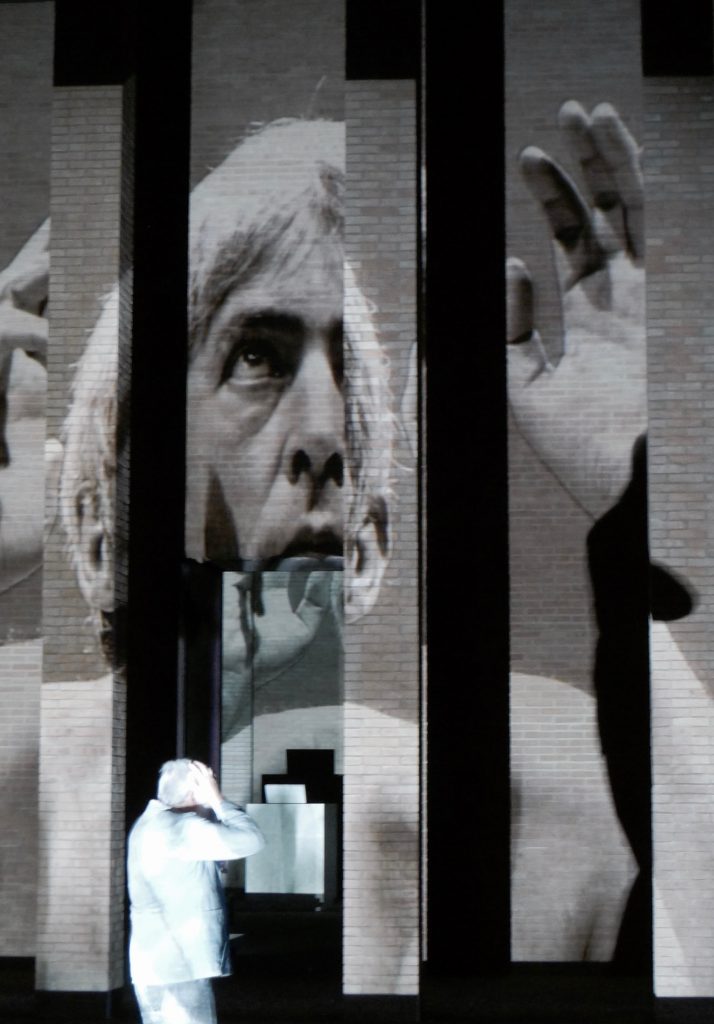
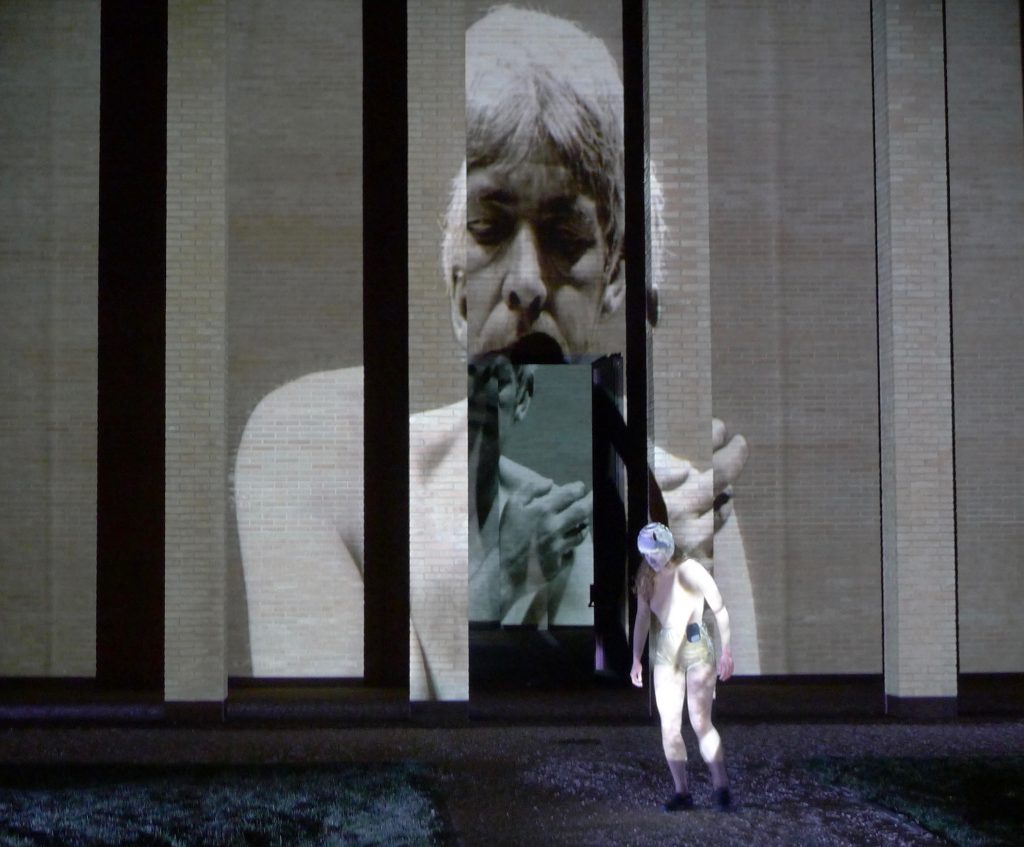
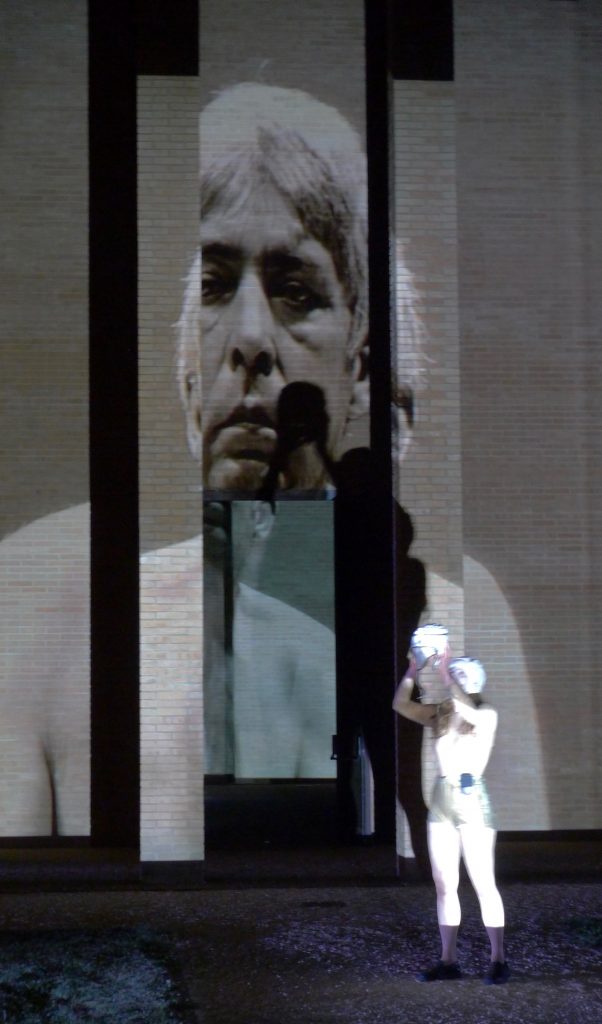
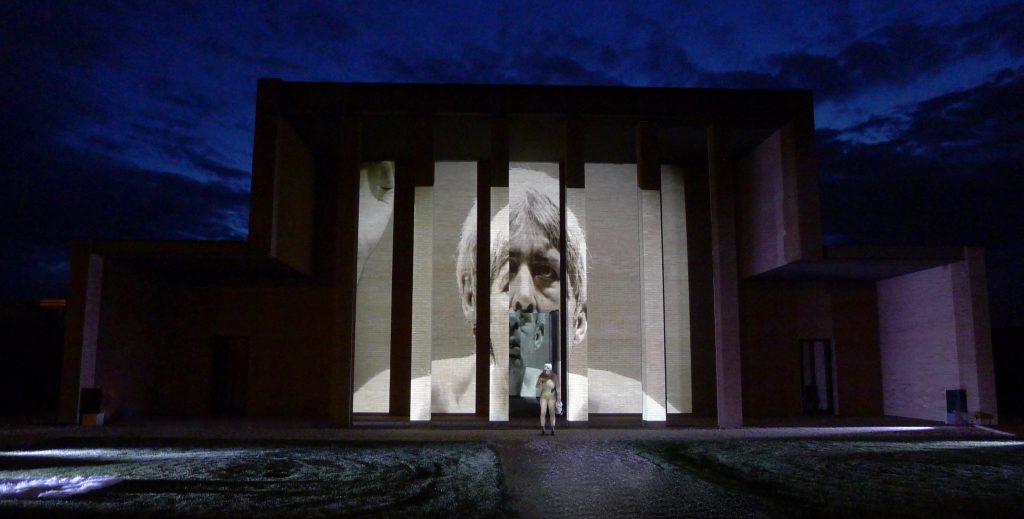
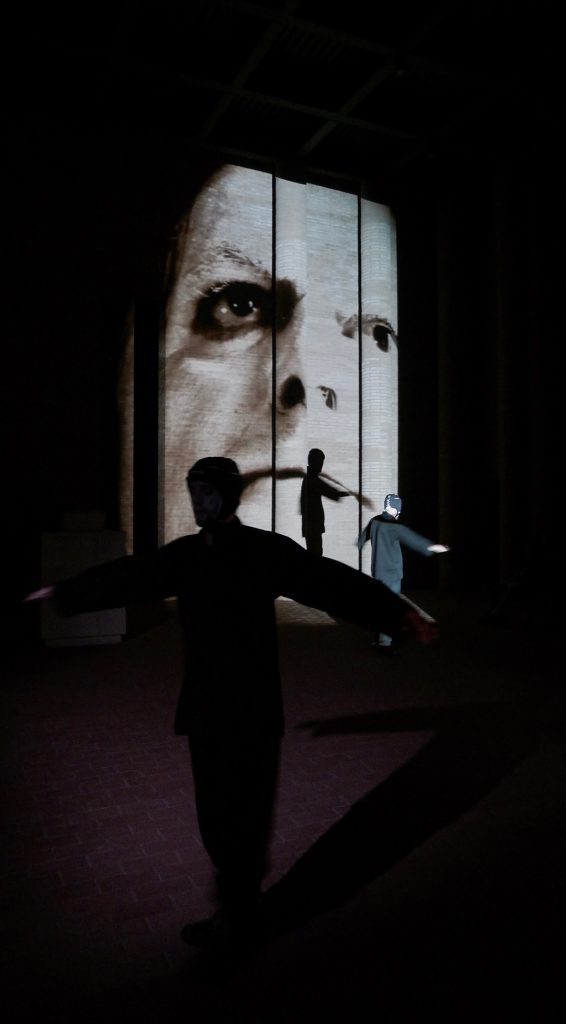
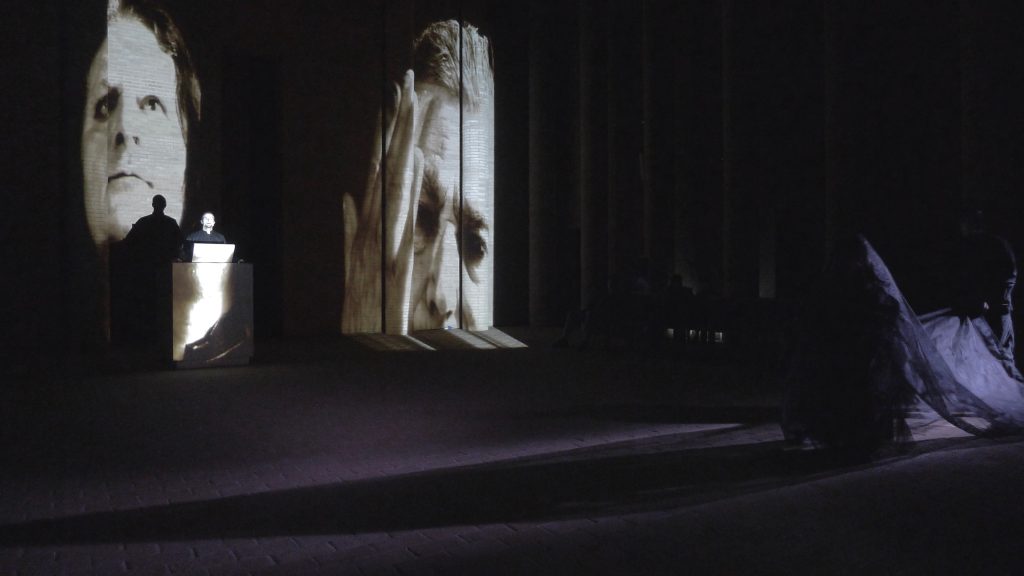
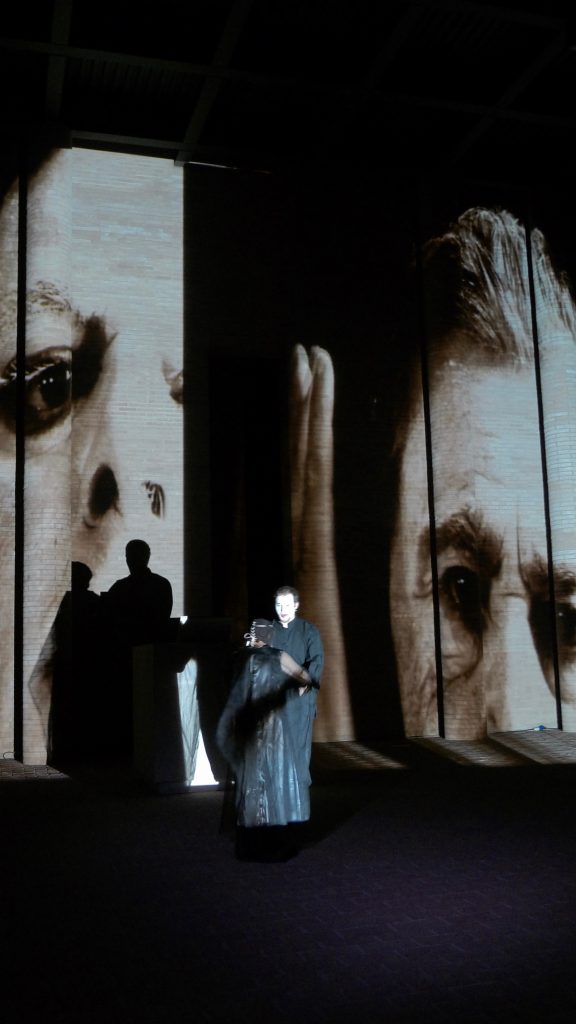
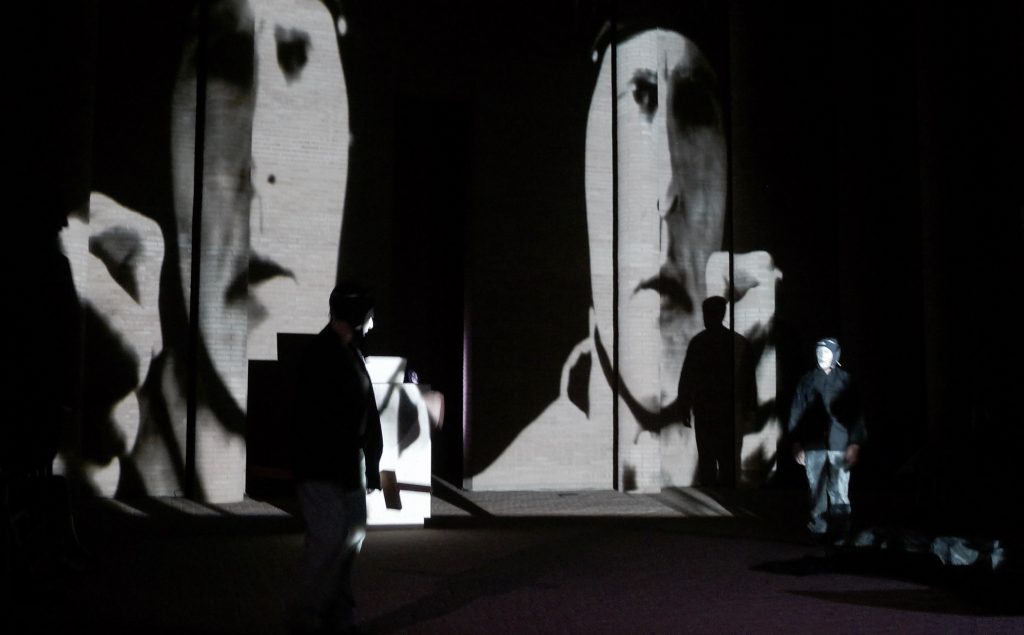
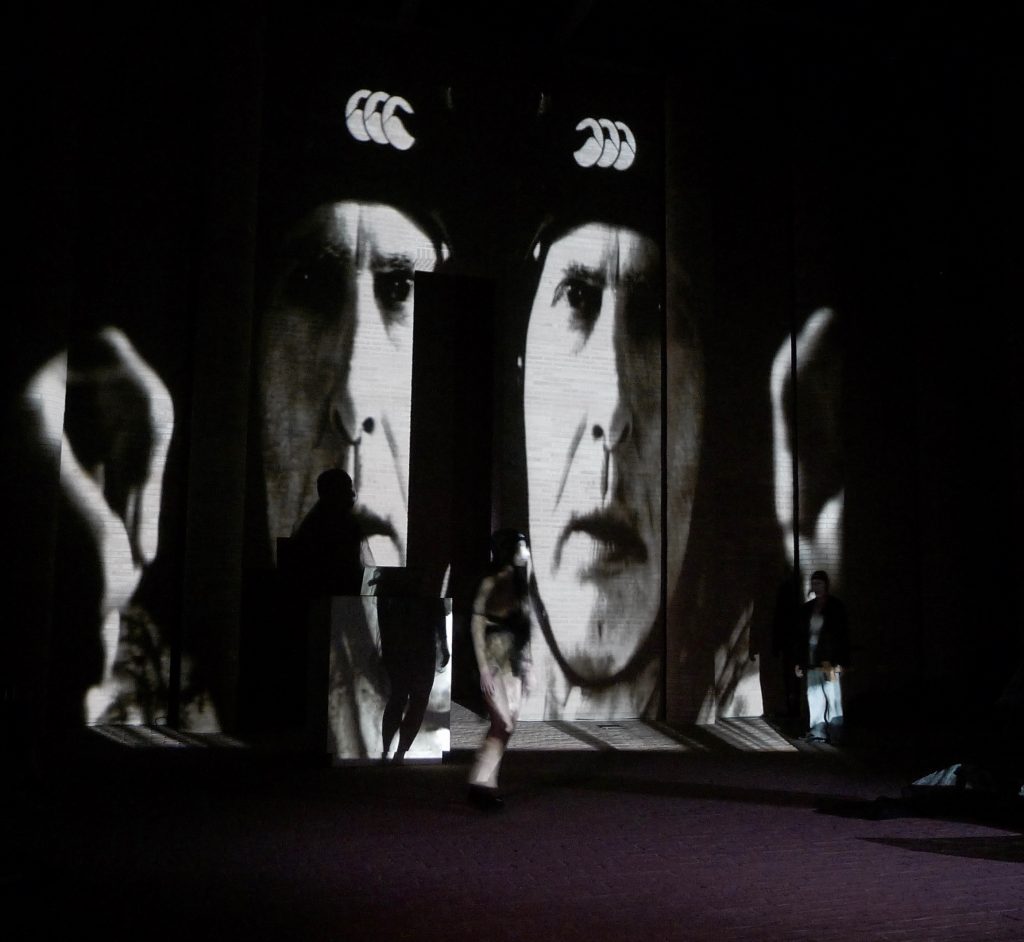
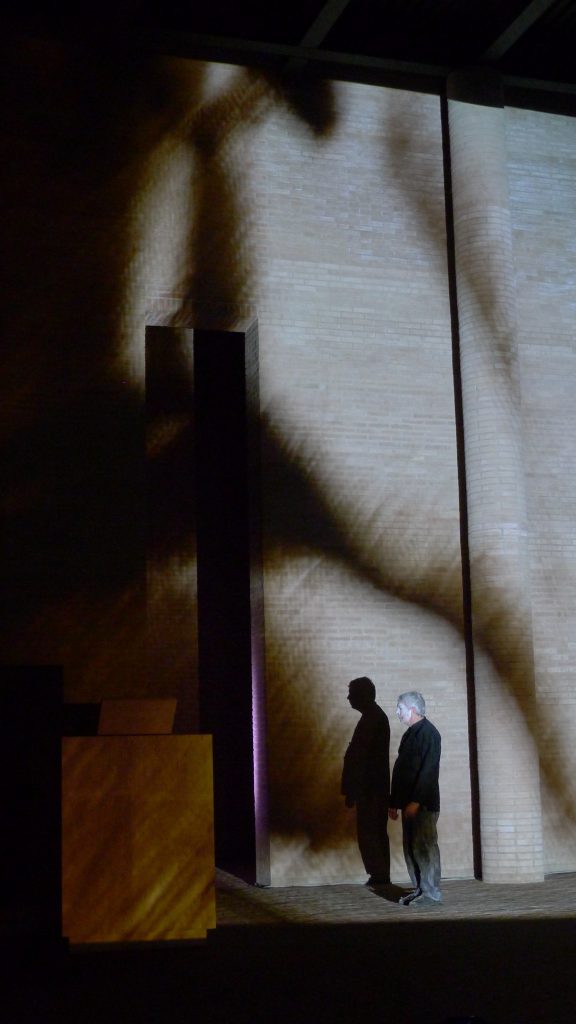
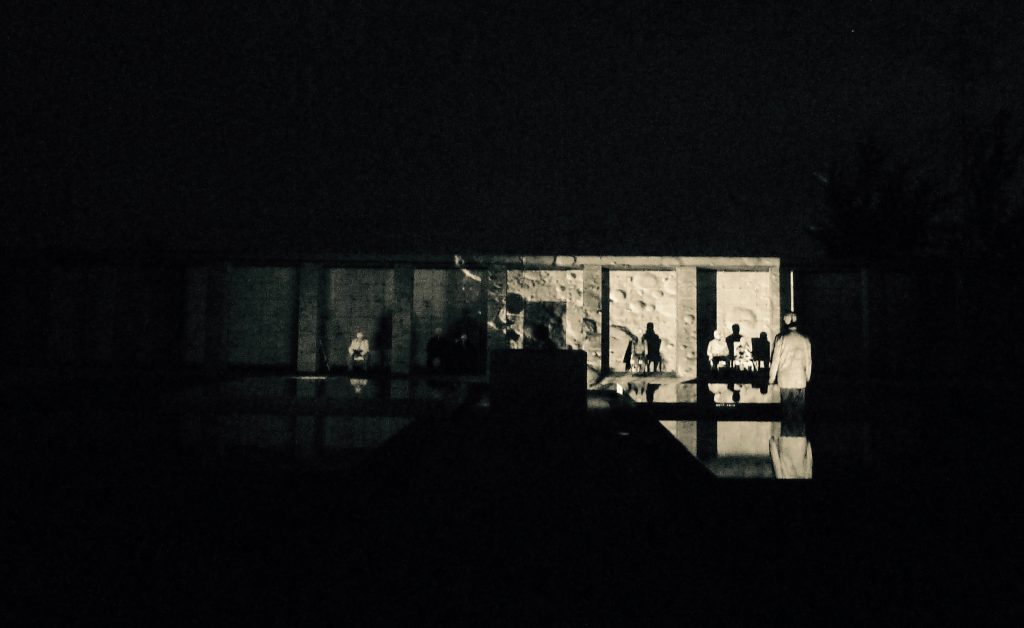
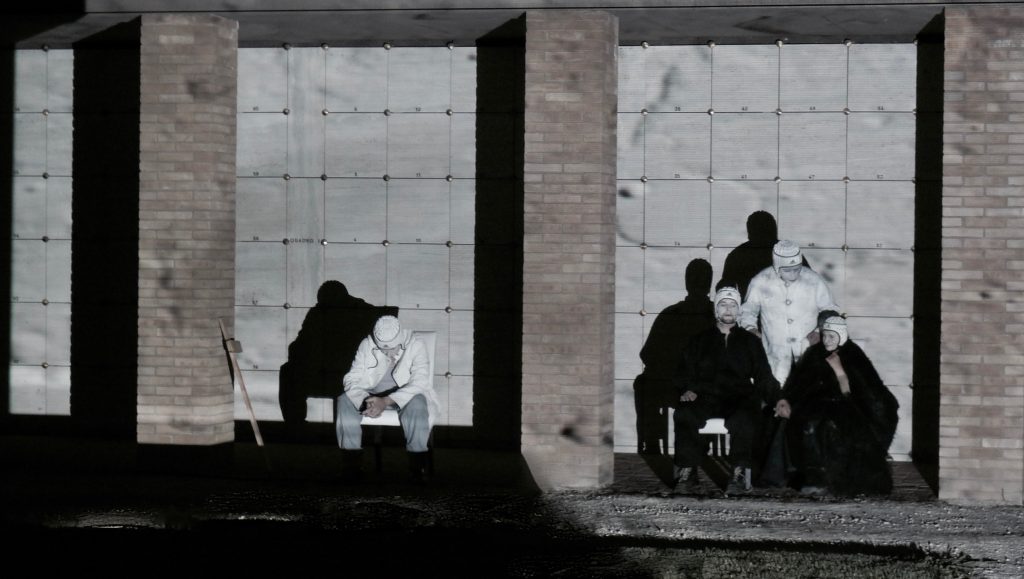
The new installation takes place in a building that includes all four themes: the imposing Cremation Temple of Valera (Parma), with interiors and exteriors for the grandest madness, the most important step, a new Atlas palace of illusion proclaimed and then revealed, that is, real life, where paladins and women on the run do not recognize each other except in their mutual passing, in the incessant “search without ever finding“, with eyes on the Moon looking at each other on Earth struggling in vain.
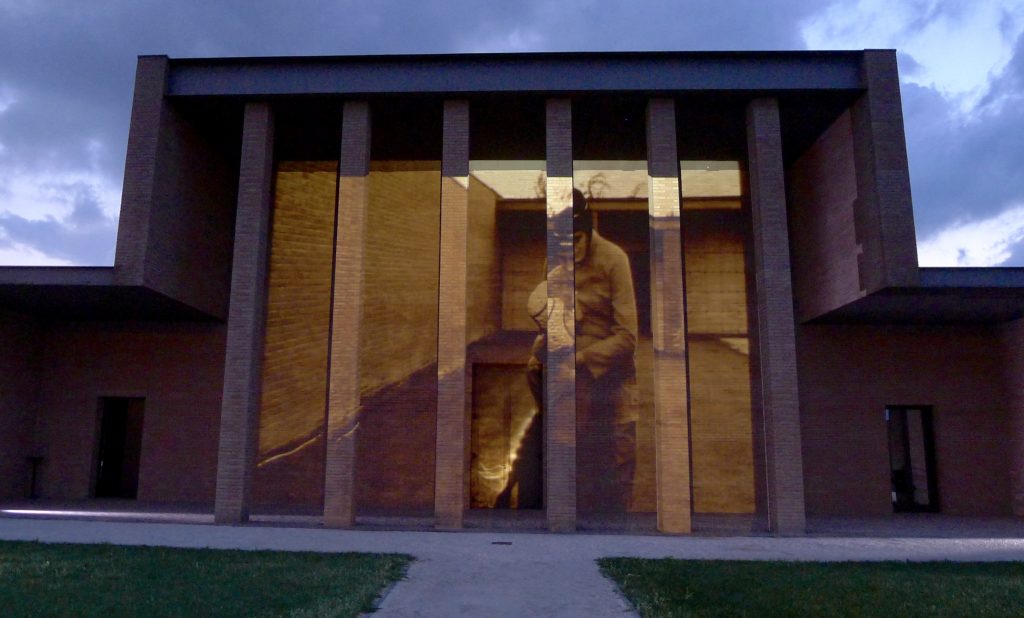
Welcomed by the monumental colonnade of the facade, the audience passes through the solemn and austere farewell room together with the actors, to arrive through the 'inevitable passage’ from the engine room of the crematorium to the lunar field of the common cinerary where Orlando's journey will end.
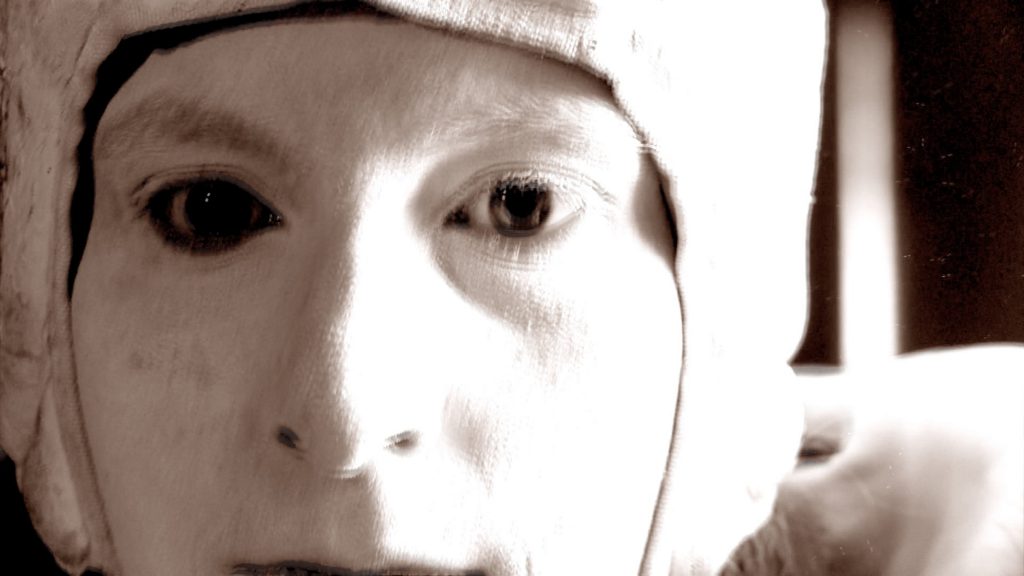
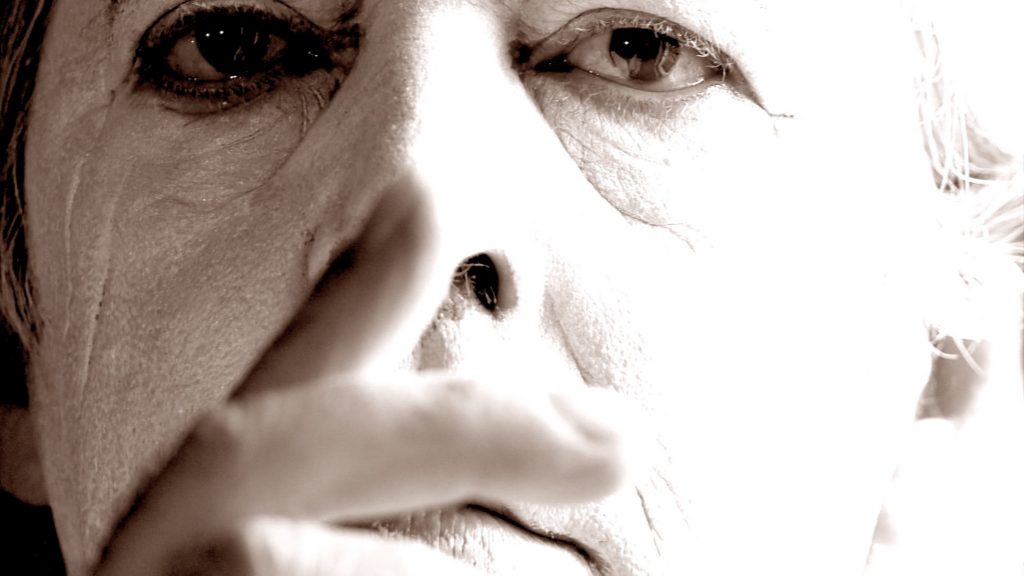
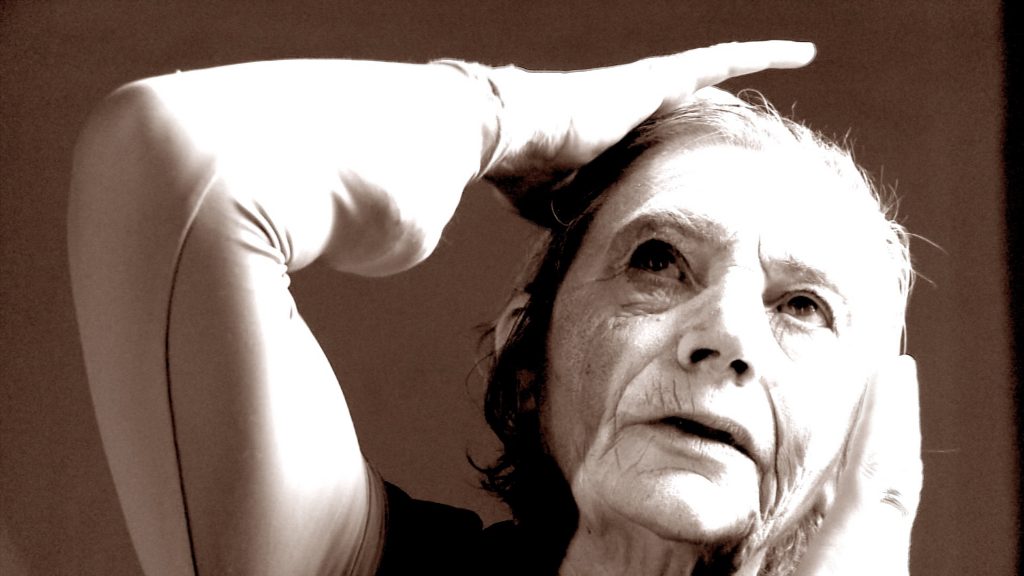
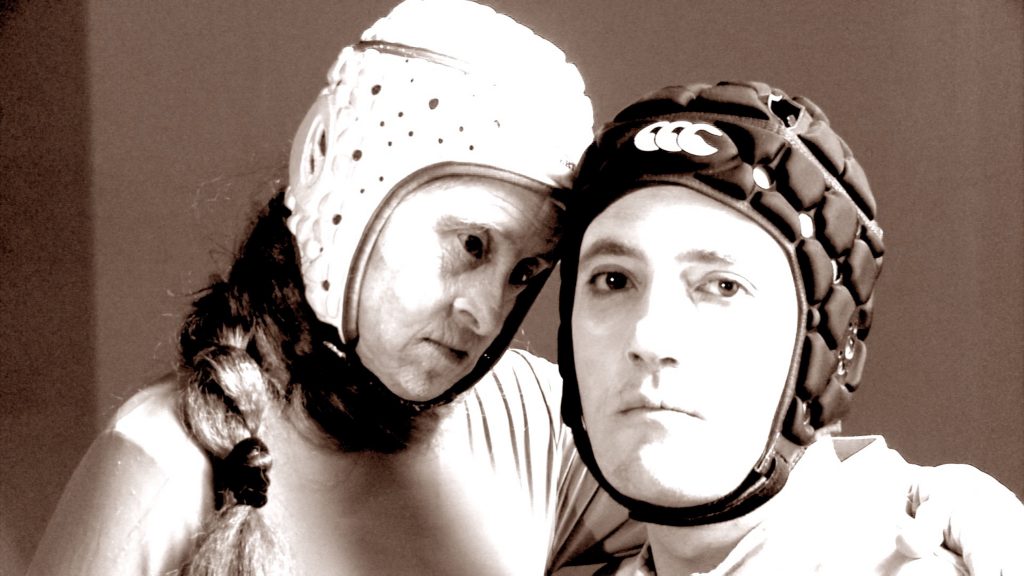


THE FURIOUS (2)
#5 The Illusion #6 Madness #7 Death #8 The Moon
A 500 years after Orlando Furioso, the poem of modernity and the human condition continues to produce invention and language as a renewed chanson Contemporary; an incessant movement, not epic storytelling, but of wild representation of a fairy tale that never ends.
“Modern neuroscience claims that serotonin, oxytocin and dopamine, neurotransmitters released by the brain, I am able to decode feelings. They show us, for example, that falling in love contains obsessive-compulsive disorder also from a biochemical point of view: Serotonin levels are similarly reduced in lovers and obsessives. The neural roots of jealousy, Instead, they are located in the area of the brain called the ventromedial prefrontal cortex, which is located approximately just above the forehead. In this region we process emotions and reflect on ourselves and others. Here we deal with the thoughts and feelings of the one we love and foresee scenarios about his or her possible loss, like an irreparable catastrophe”.
Five hundred years after Orlando's Madness, neuroscience provides us with scientific data on falling in love and jealousy, again in dialogue with art, particularly with theatre: the compulsion of jealousy is named “Othello syndrome” da Shakespeare. It is undeniable that love and jealousy are the fundamental dramatic nuclei of Ariosto's poem, the war is just a pretext and there is no one around Paris anymore. They're all in the woods or on the moon, in different places of the psyche chasing each other and fighting, until a magical building, whose internal passages resemble a brain, that attracted, fascinated, everyone inside. And that's where the synapse begins to dance.
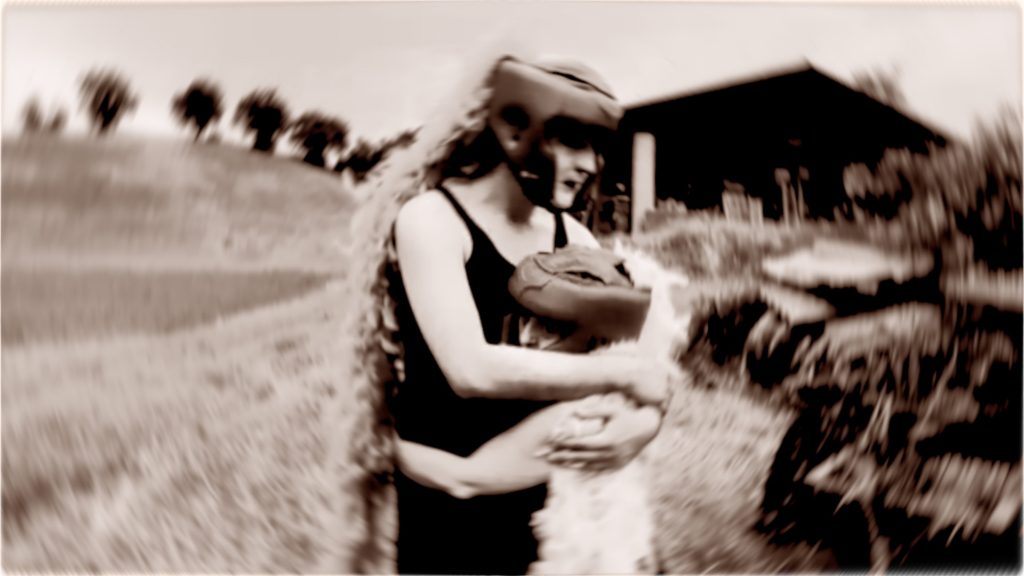
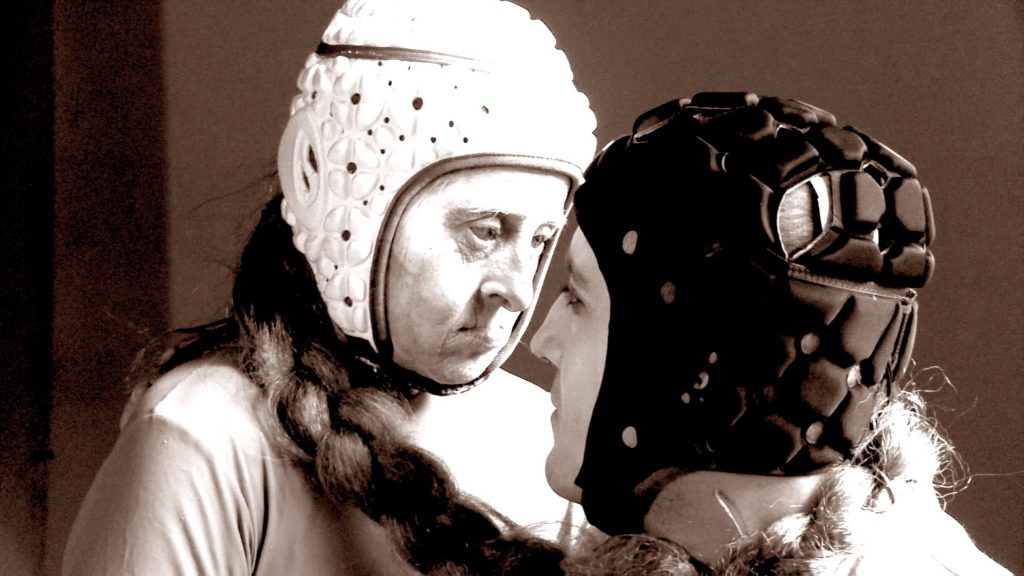
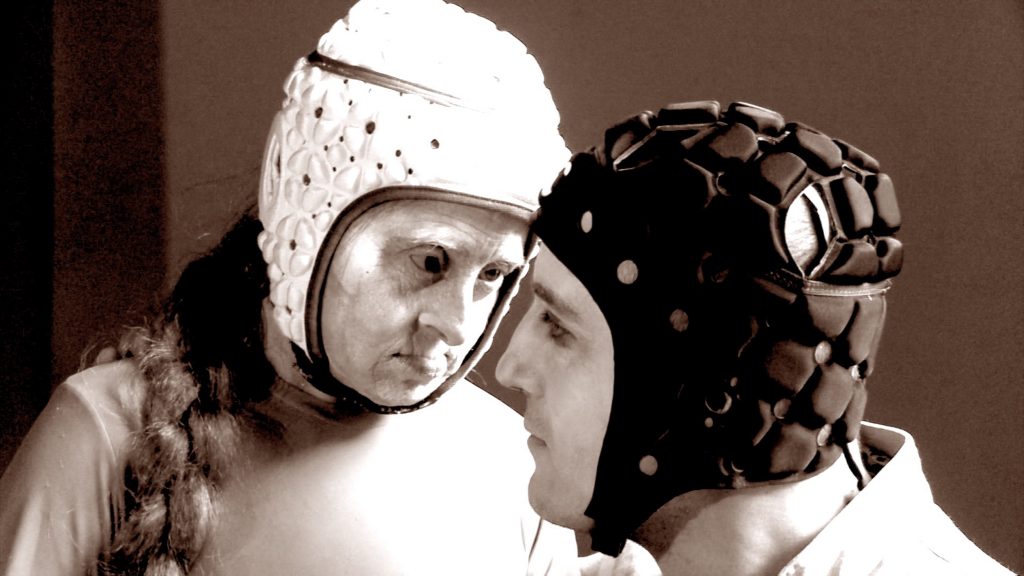
The actors armed with everyday life, armored and at the same time sensitive to the past and the present, the chivalrous heroes are already imprinted in the body and mind, wizards and sorceresses themselves, girls fleeing without direction and without stopping activate transmitters of invention and essential gesture, and the great work becomes a timeless fresco.
THE FURIOUS (2) #5 The Illusion #6 Madness #7 Death #8 The Moon
fromOrlando Furioso by Ludovico Ariosto
Dramaturgy | imagoturgy | film scenes | Francesco Pititto
Installation | plastic elements | regia | Maria Federica Masters
Musica | Andrew Azzali
Performer | Walter Bastiani, Franck Berzieri, Marco Cavellini, Massimiliano Cavezzi, Charles Right, Paolo Maccini, Delfina Riviera, Carlotta Spaggiari, Barbara Voghera
Technical direction | Alice Scartapacchio
Technical team | Lucia Manghi | Stefano Glielmi | Yannick De Sousa Mendes | Marco Cavellini
Assistant Director | Roberto Riseri
Treatment | Elena Sorbi
Organization | Ilaria Stocchi
Communication | Valeria Borelli
Press office | Michele Pascarella
Production | Lenz Foundation
Project carried out with the support of DAISM-DP Integrated Mental Health Department for Pathological Addictions AUSL of Parma
In collaboration with So.Crem Società per la Cremazione | Ser-Cim Cemetery Services
Valera Cremation Temple (Parma)
16-17-18 June hours 21.30
23-24-25 June hours 21.30
Valera Cremation Temple (Parma)
2006-2009
Architectural project: Paolo Zermani.
Collaborators: Roberto Panara, Eugenio Tessoni.
Structural design: Paola Tanzi.
The new cremation temple of Parma is located north of the ancient Valera Cemetery, between this and the recently built ring road, about a kilometer west of the city. On one side the city and the Via Emilia, on the other the countryside and the town of Valera, they mark the references of a landscape historically characterized by the centurial order of Roman colonization and by the fundamental early medieval road network: a civilization still legible in filigree or on the surface in the discoveries of the Roman Domus, in the layout of roads and farms, in the Romanesque architecture of the churches of Vicofertile, S. Pancratius, S. Croce. The Temple emerges within the enclosure, visible from afar and to those traveling along the ring road, as a large base element, preceded by two covered spaces at the ends, similar to the south and north, towards Valera and towards Parma. Which fragment cut, hosts and suspends the rite of passage over time, making it a single great urban symbol, almost altar, in which the city celebrates, incessantly, the memory of himself through the memory of his dead. The relationship between the two enclosures, ancient and designed, and that between them, the countryside and the town of Valera, constitutes the first theme addressed by the project. The new fence, an enclosure made of architectural space because it was conceived as a porticoed wall and inhabited by the cellars that house the powders, contains, in an uninterrupted path, the relationship between life and death, fixing its interpretation in the sense of an ideal continuity of life. In the form of a large rectangle whose position is next to the existing cemetery, the portico, which can be accessed from the parking area on the narrowest side, according to the current use of the existing cemetery, it embraces the moments of the journey by establishing a precise hierarchy, whose architectural medium is the actual Temple, placed at the center of the two dimensions. The latter scores, also spatially, the times of the ritual, between outside and inside, dividing, in a processional route, the reception area for the deceased and his family, located near the entrance, from that of the Garden of sprinkling the ashes, located after the farewell and cremation spaces, characterized by two similar facades to the north and south, almost two sections that allow you to create as many open and covered spaces. The plan of the building is marked by two large squares, connected to each other through a smaller square. The first square consists of the large Farewell Hall, illuminated by a central light source and occupied only by the columns on the walls and the ambo reserved for prayer. A high door located on the back wall constitutes the transition passage for the body towards the second square, smaller in size, zenithally illuminated light chamber, completely empty. The body thus disappears into the light. The third square is made up of the actual crematorium, in which the body is burned. All the service areas are created on the sides. The crossing, with its internal rituality, marks the spatial hierarchy of the different moments, moreover continuously recomposed by the portico of the enclosure, which will be completed over the years with the additions to the Cemetery and will envelop in an infinite path.
From the site www.zermaniassociati.it
The Guatelli Museum, the Rasori pavilion of the hospital, where we performed the first episodes of Furioso, and now the Temple of Valera – but we could also say Lenz Teatro – they are not just material places, historical and architectural but they are, especially human places, of human living and thinking.
Lenz, a Parma arriva Nd’t #21: in the Blind Spot a living museum, Alessandro Trentadue, Repubblica.it, 10 June 2016
But also reflections on the most important topic of the human question, death: and then more amazement, anguish, but also a strange and sweet familiarity with what we would never want to experience and a beauty that is difficult to define.
Furious, Lenz lets silence speak, MariaCristina Maggi, Journal of Parma, 18 June 2016
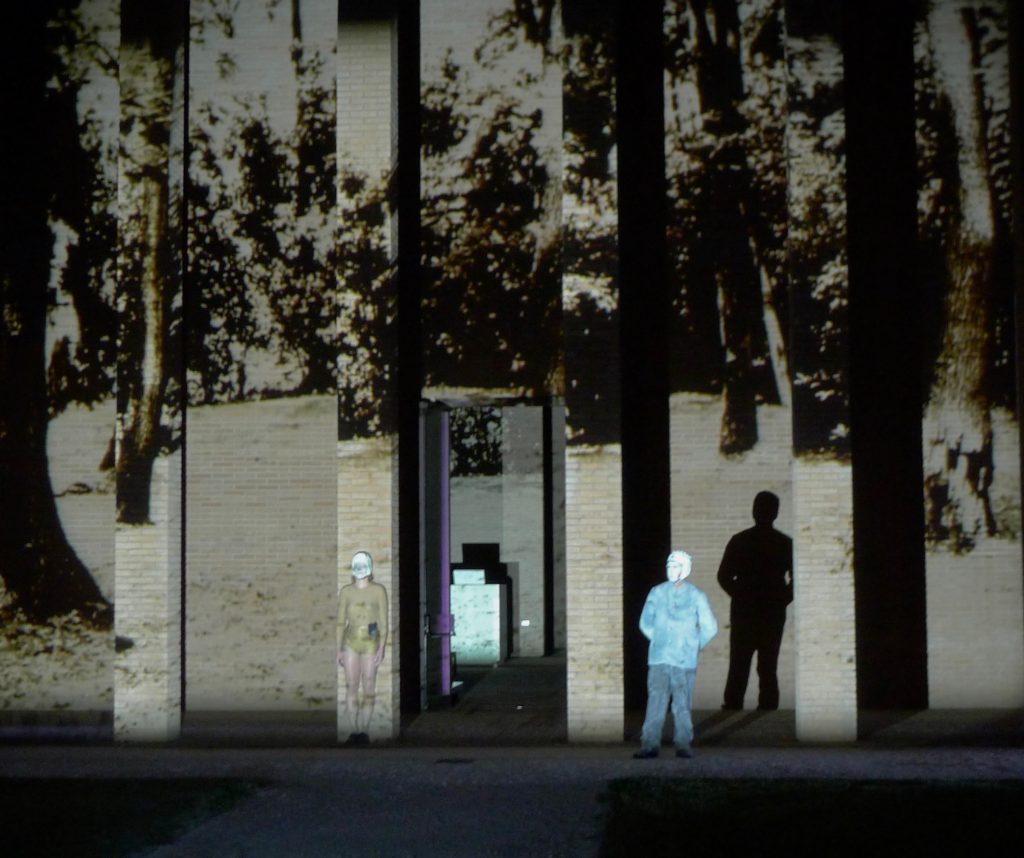
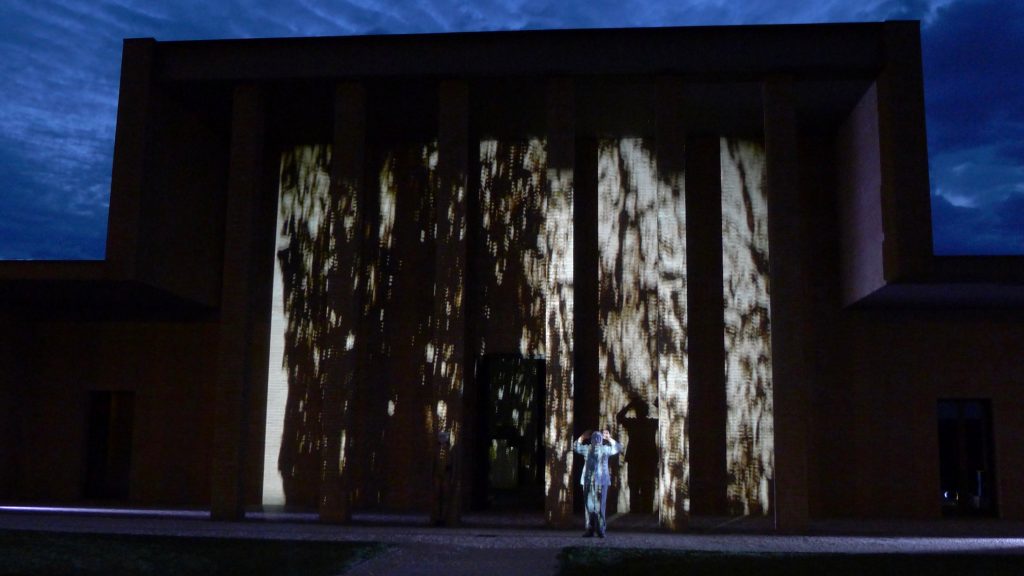
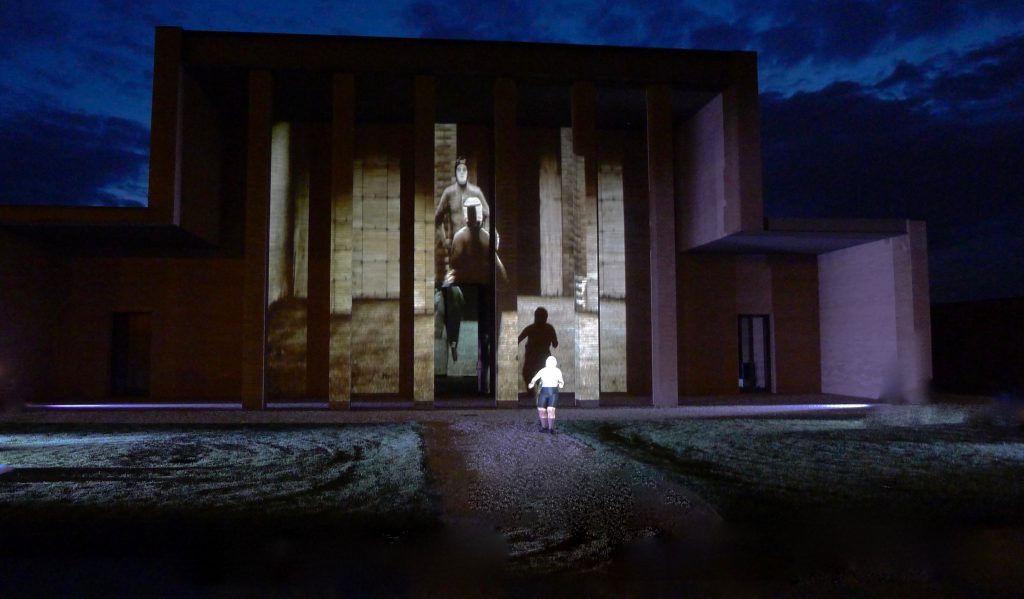
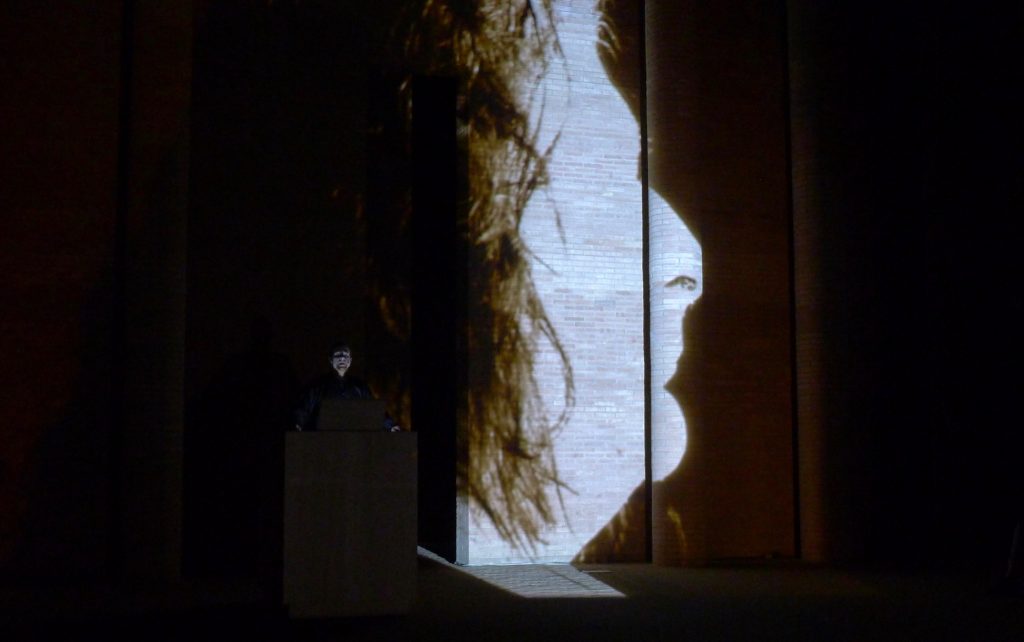
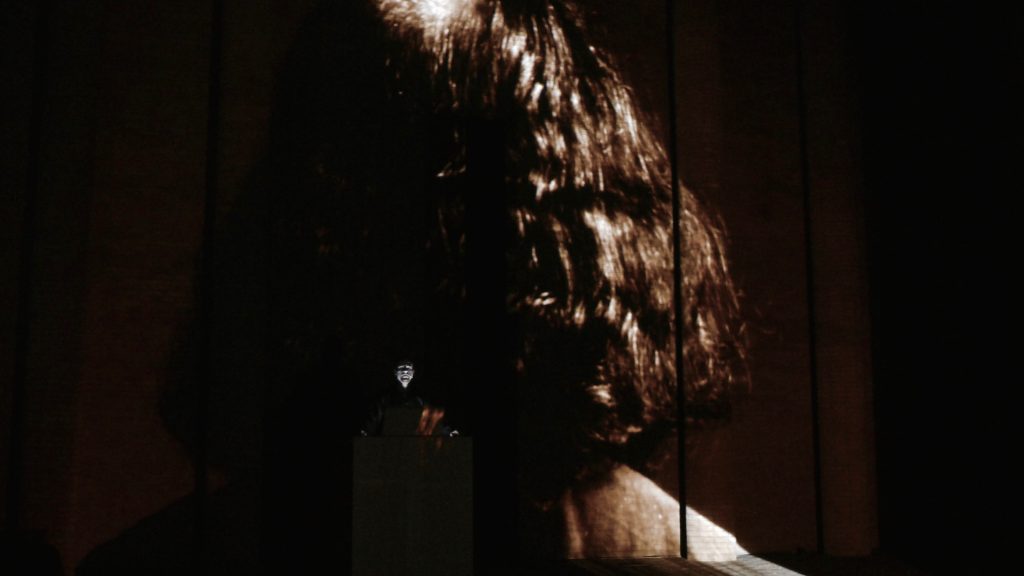
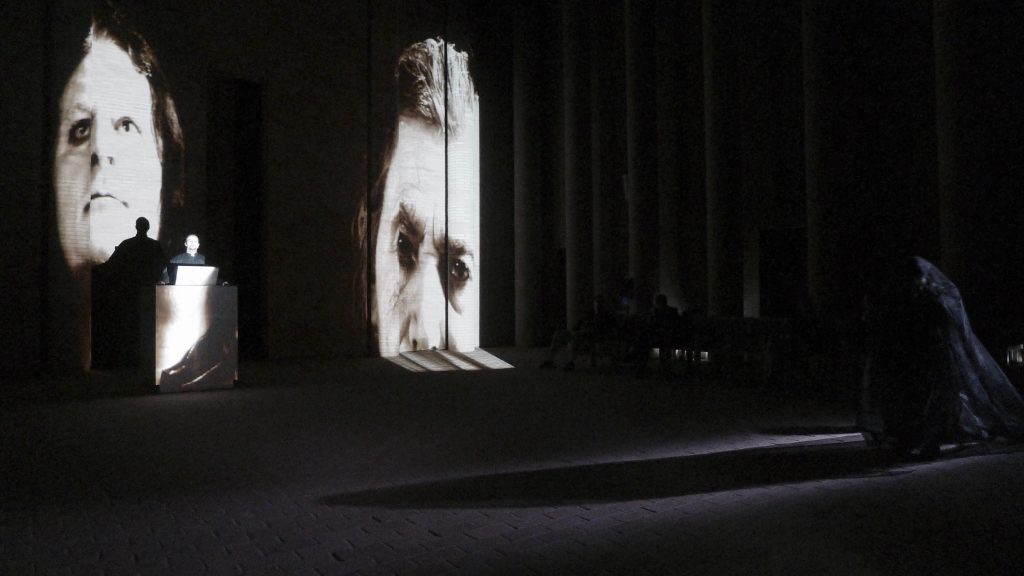
More cryptic than ever, this show by Lenz must be seen for several reasons: the place, truly incomparable and perfect for this dramaturgy, the acting so crude and anti-theatrical that it enhances the text, the staging with projections and lights that make the Temple of Cremation even more spooky.
Lenz Foundation: The Furious (2), Corrado Beldì, Zero.eu, 21 June 2016
The reactions of the people who participate are different. Emotion, amazement, shock. The attempt at one last contact, with the hand, on containers of unknown bodies. A limit on which to open a reflection: on how much research theater can – or should – push yourself to arouse an emotion, a reaction.
Parma, in the crematorium theatre: contemporary research or provocation?, Alessandro Trentadue, Repubblica.it, 30 June 2016
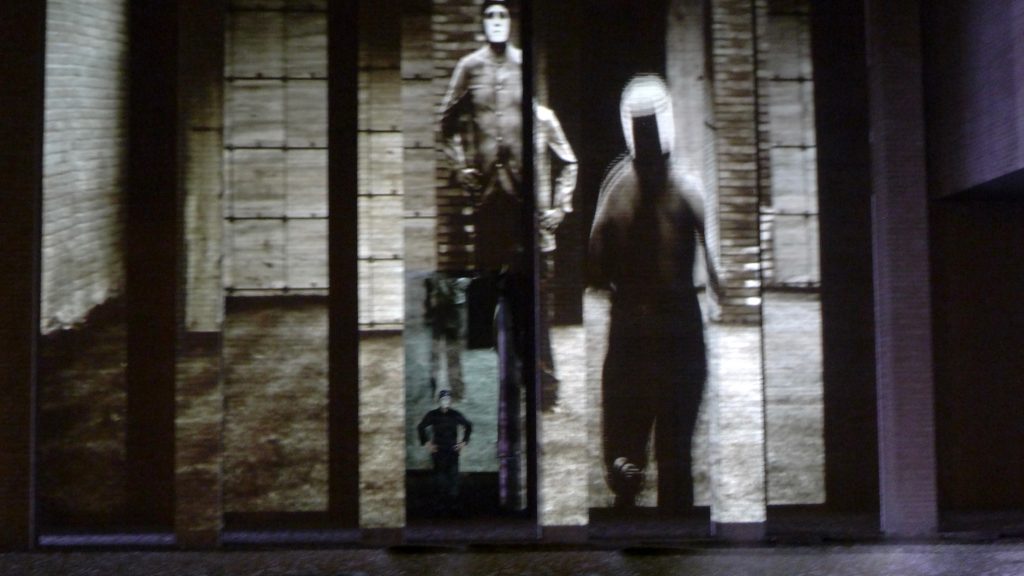
Pititto's dramaturgy allows itself to be swallowed up by his imagoturgy, a grandiloquent yet trembling visual fabric, made of silent but significant video sequences, almost a super-plot that monitors the evolution of characters and moods – Once again – not of actors and characters, but of the spectators.
Lenz, between the Furioso and Macbeth. Sensitive spectators, Sergio Lo Gatto, Theater and Criticism, 2 July 2016
No scandal or vilification in making it a setting for the first time, because death is theater in itself, like life. The Furious (2) it was accomplished with pain and sweetness and we remain uncertain and suspended: beauty then serves to deceive, love does not give happiness. The darkness that engulfs us is real and that only the lights of the tombs illuminate. Life is but a walking shadow.
Searching without ever finding: Lenz Foundation and the new Furioso, Matteo Brighenti, PAC – Bread Water Cultures, 7 July 2016