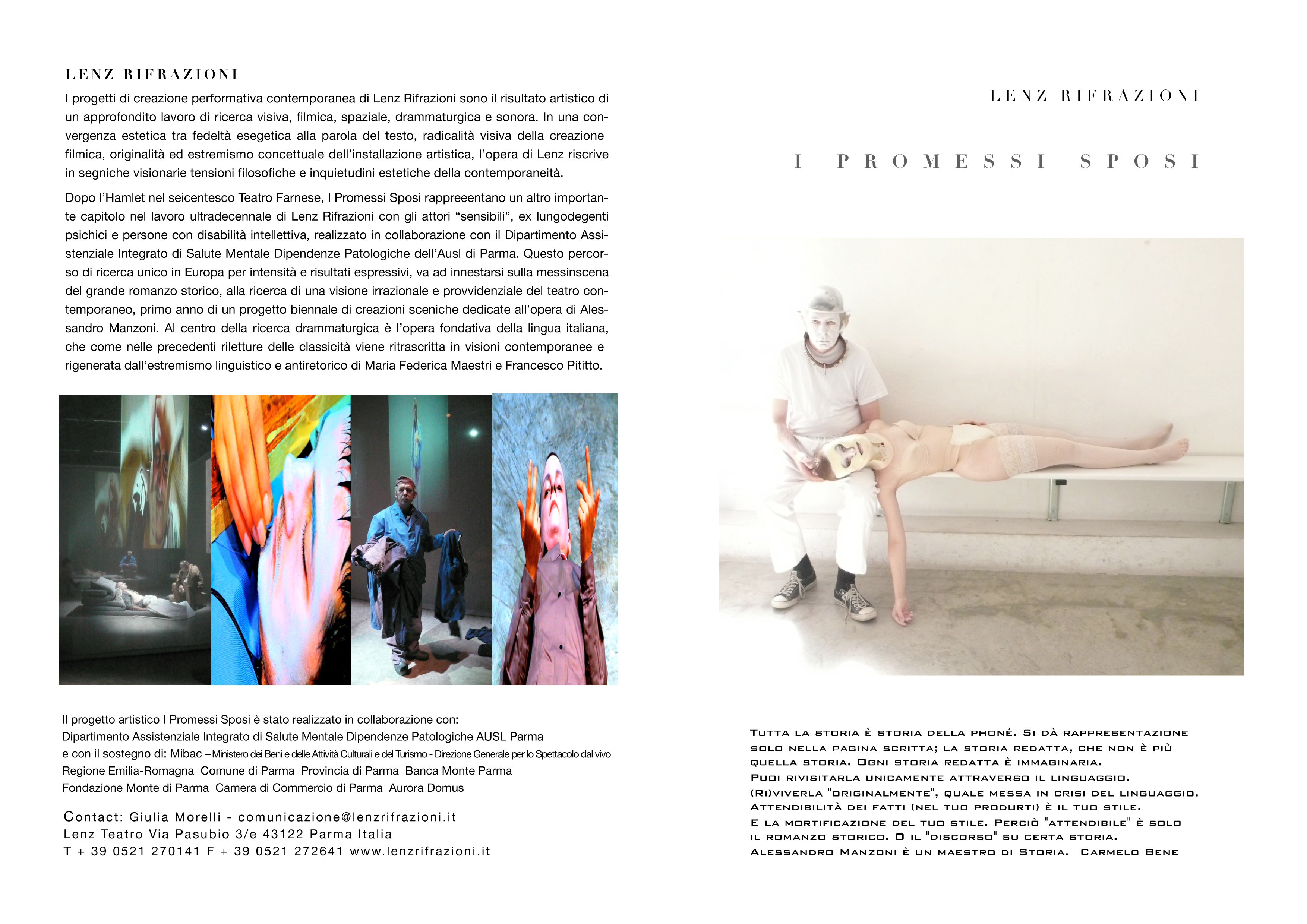






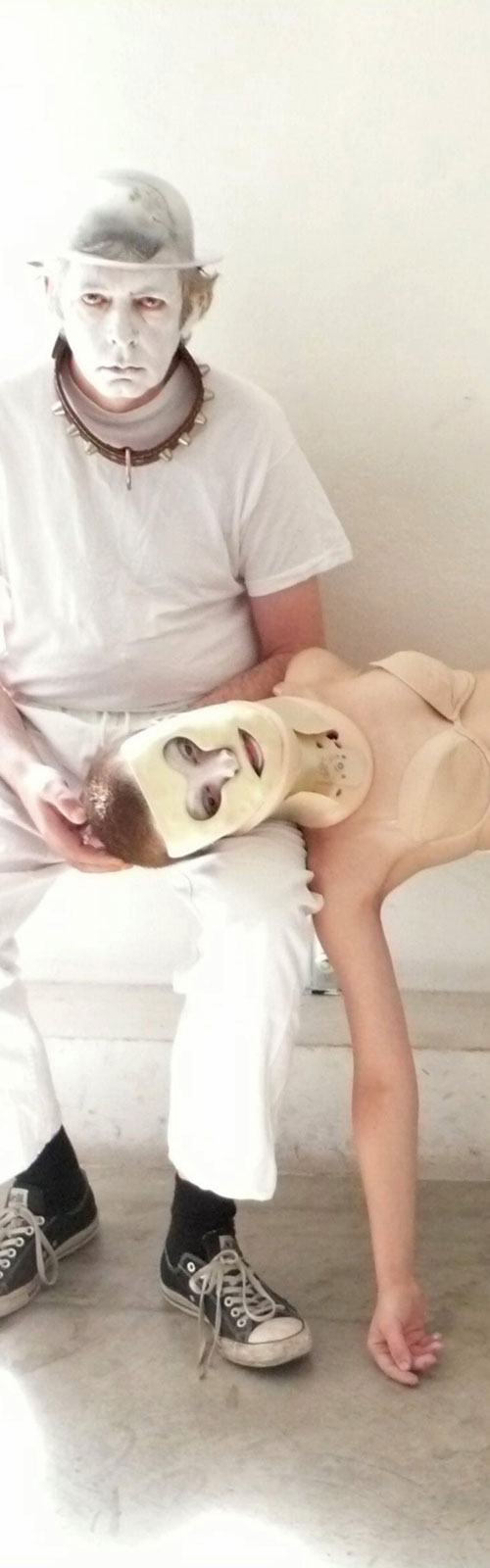
THE BETWEEN
After Hamlet in the most beautiful theater in the world, the Farnese Theatre, another important chapter in Lenz's decades-long work Refractions with "sensitive" actors, former long-term mental patients and people with intellectual disabilities. This research path is unique in Europe for its intensity and expressive results, it is grafted onto the staging of Manzoni's great historical novel, The Betrothed, in search of an irrational and providential vision of contemporary theatre, start of a two-year project of scenic creations dedicated to the work of Alessandro Manzoni. The founding work of the Italian language is therefore at the center of dramaturgical research, which, as in previous rereadings of classicism, is retranscribed in contemporary visions and regenerated by the linguistic and anti-rhetorical extremism of Maria Federica Maestri and Francesco Pititto.
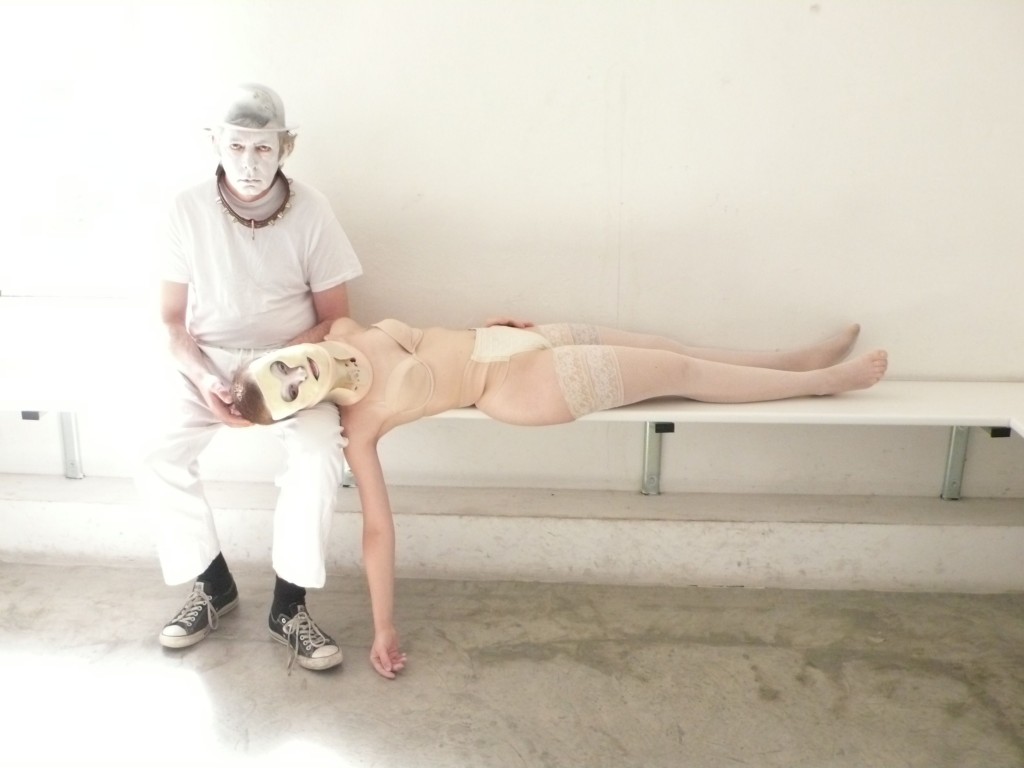
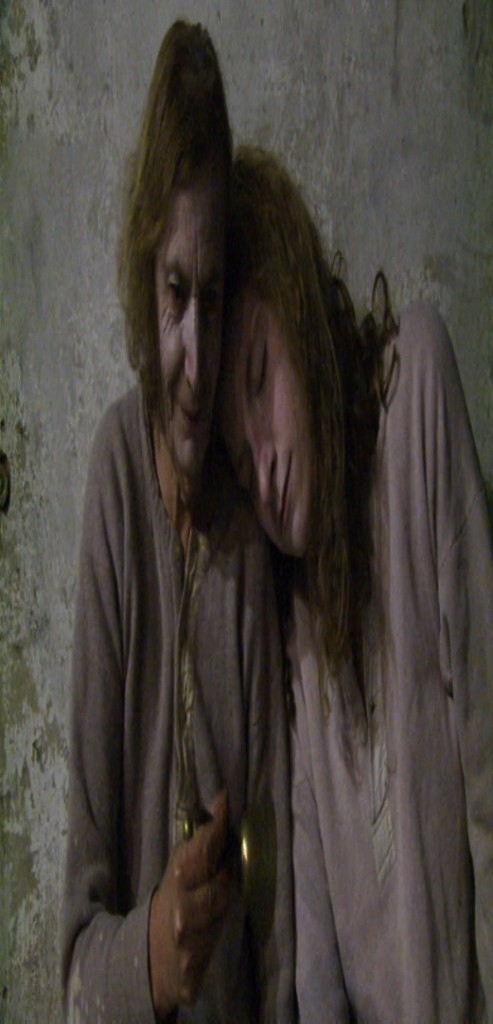

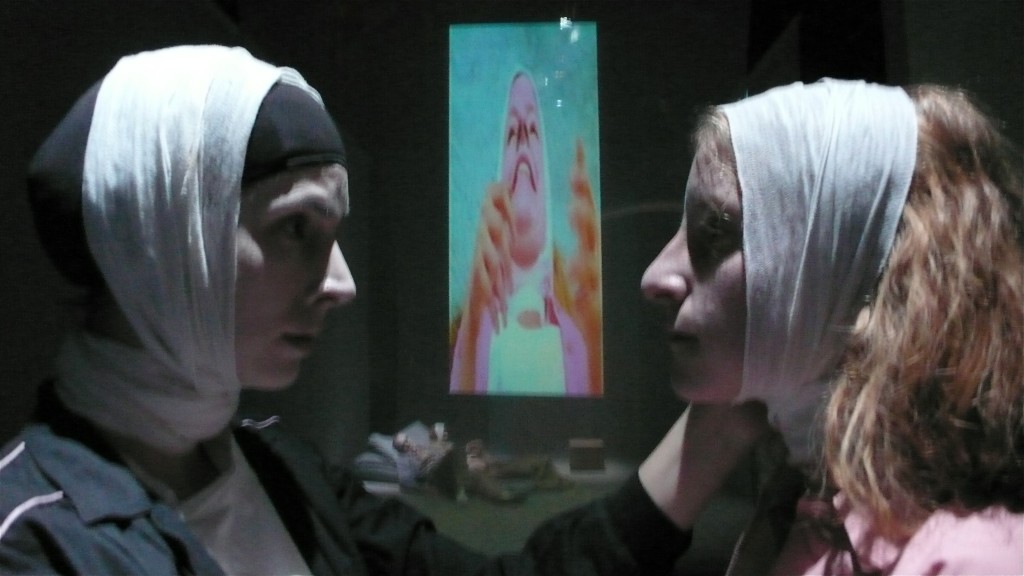
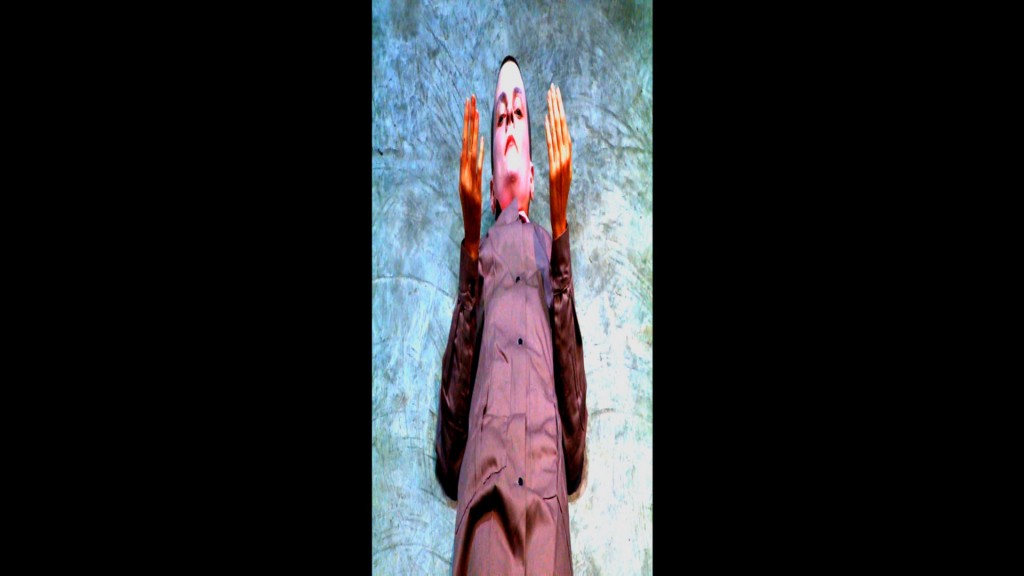
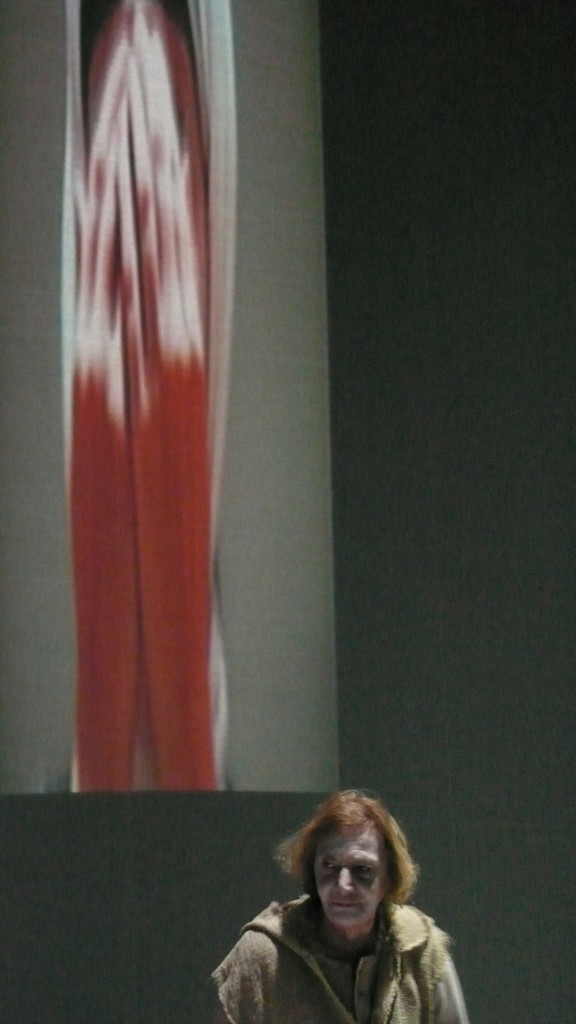
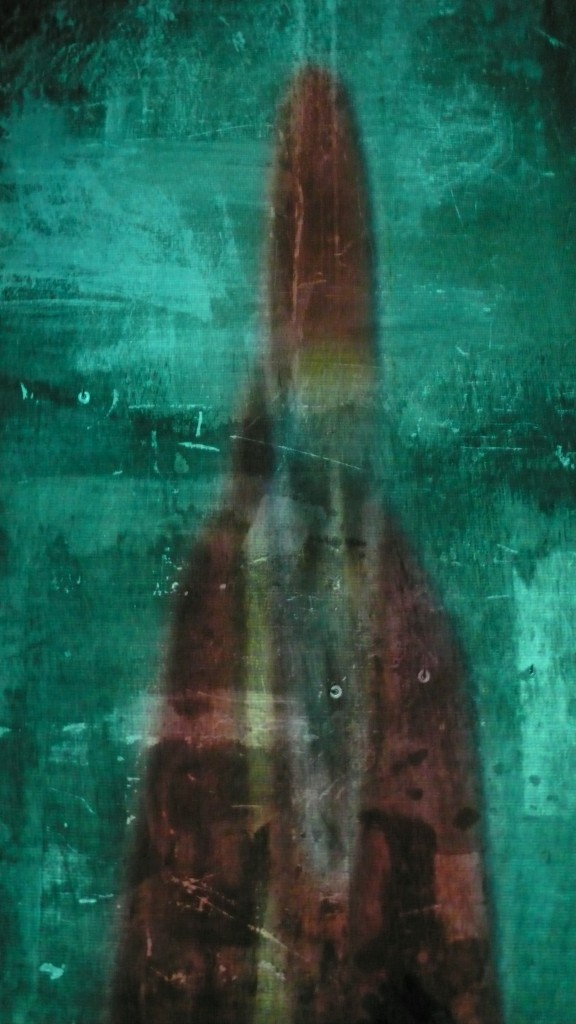


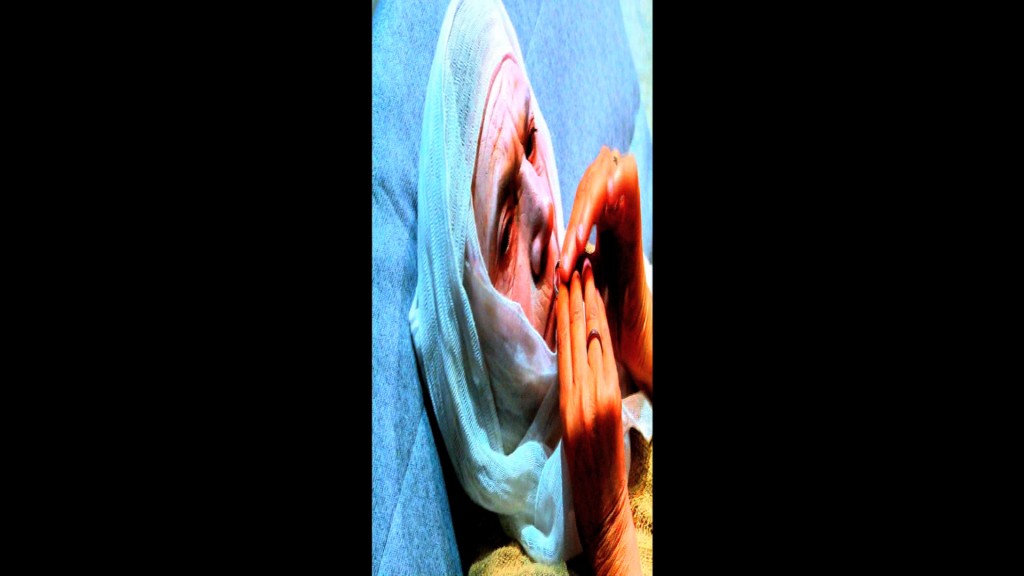
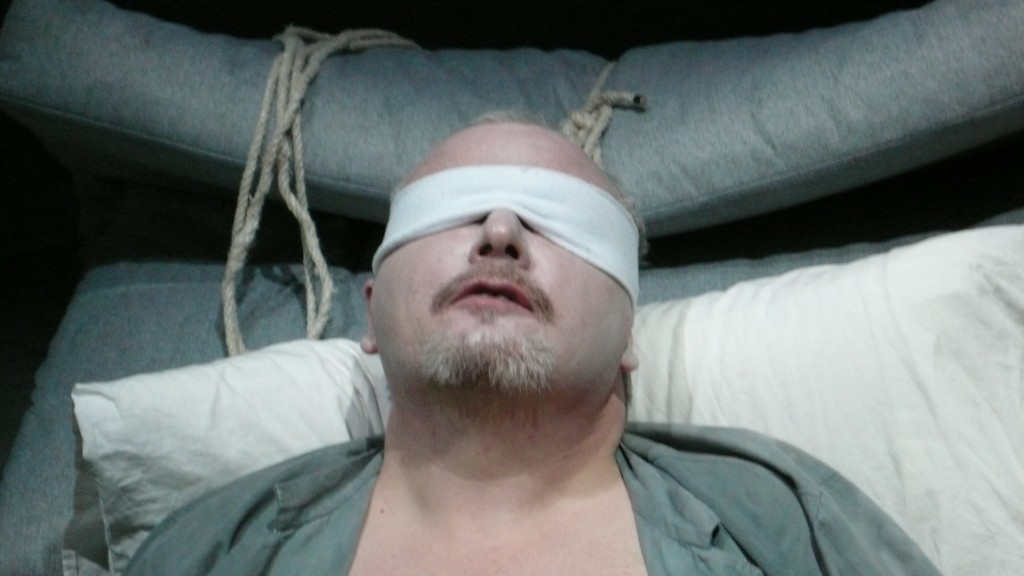
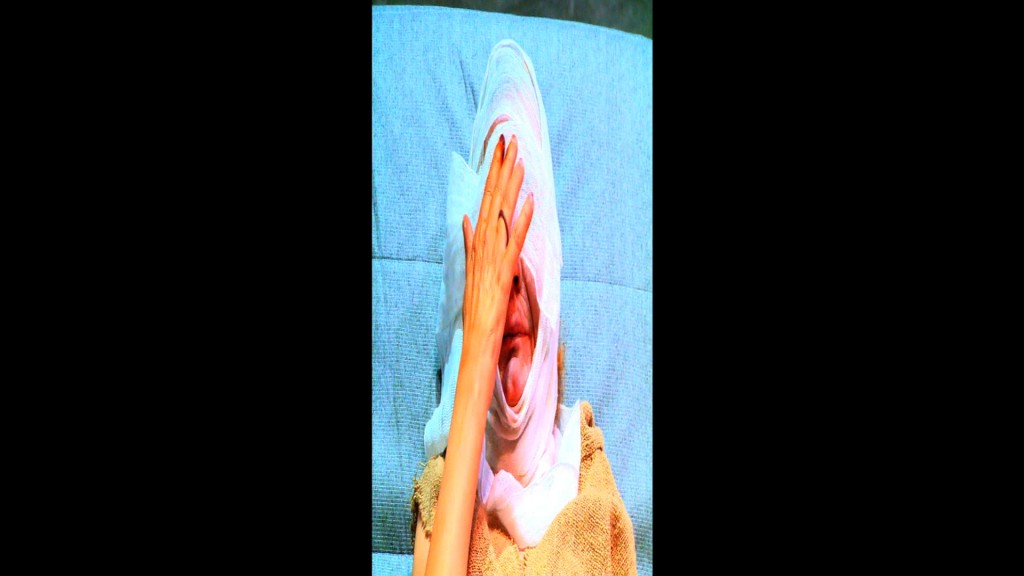
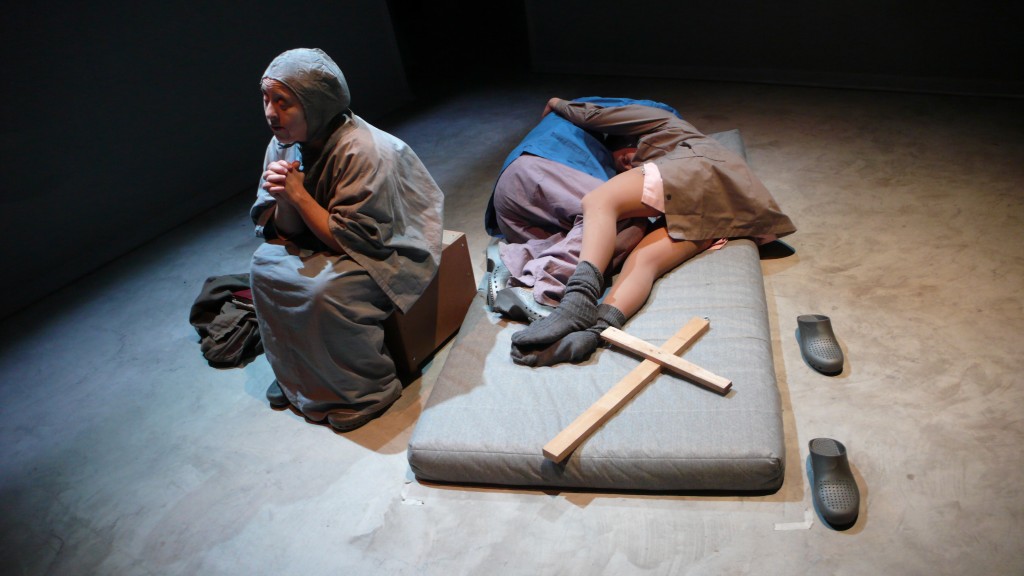
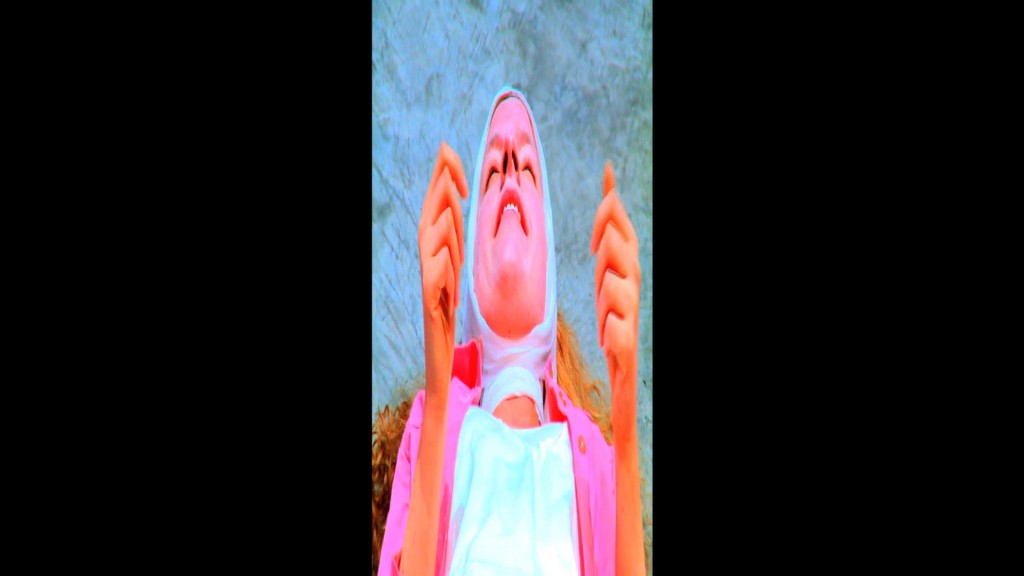
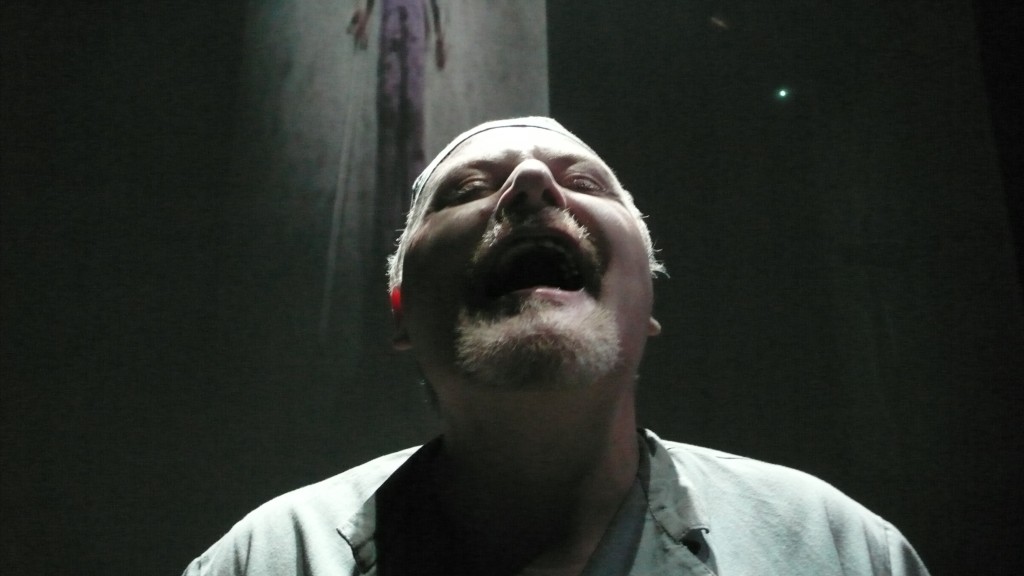
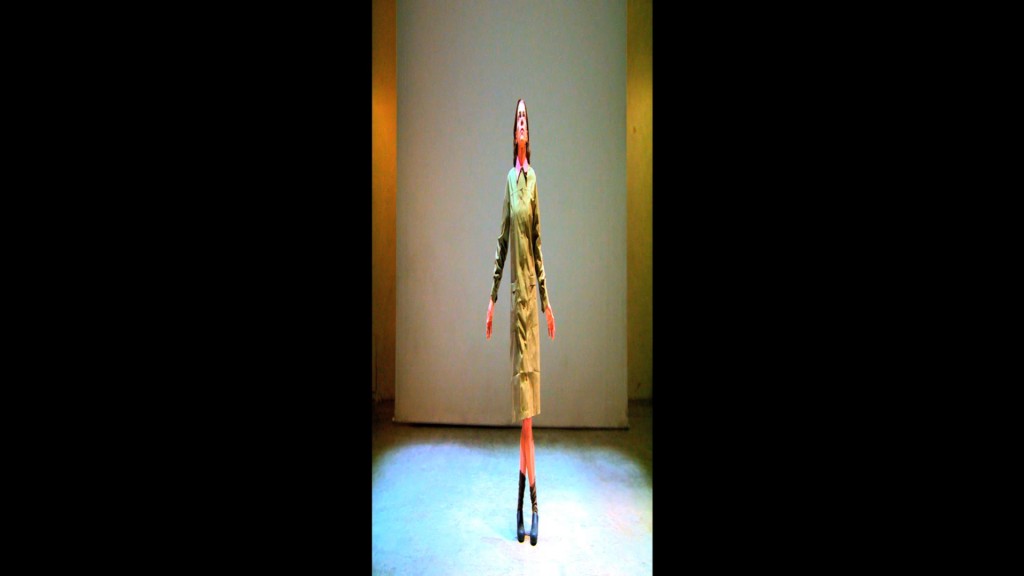
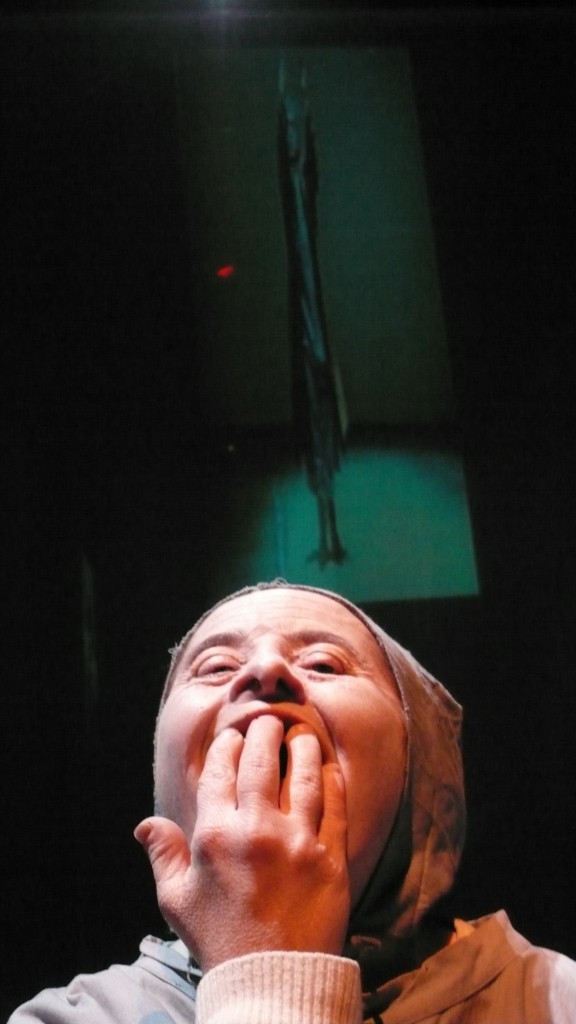
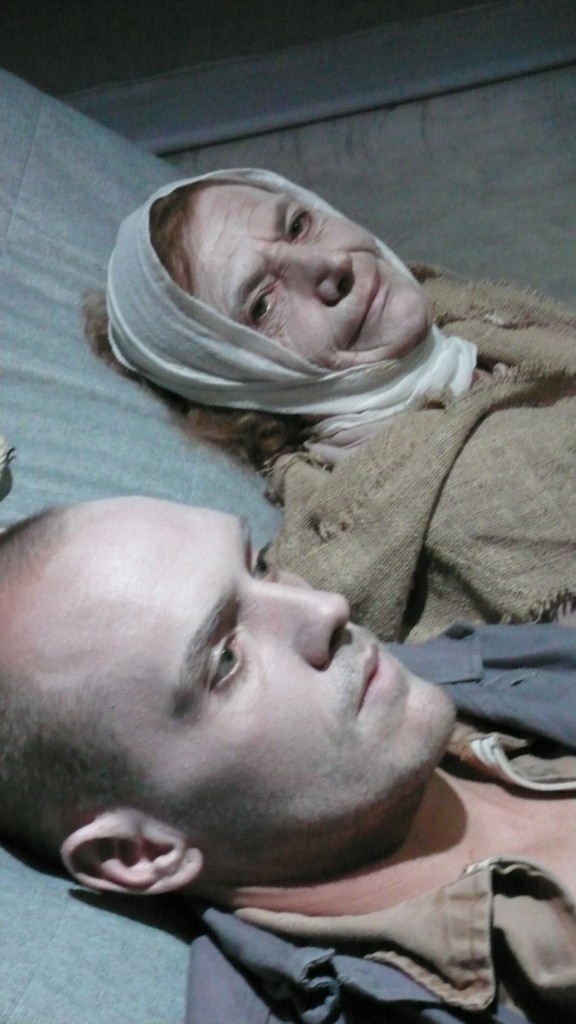
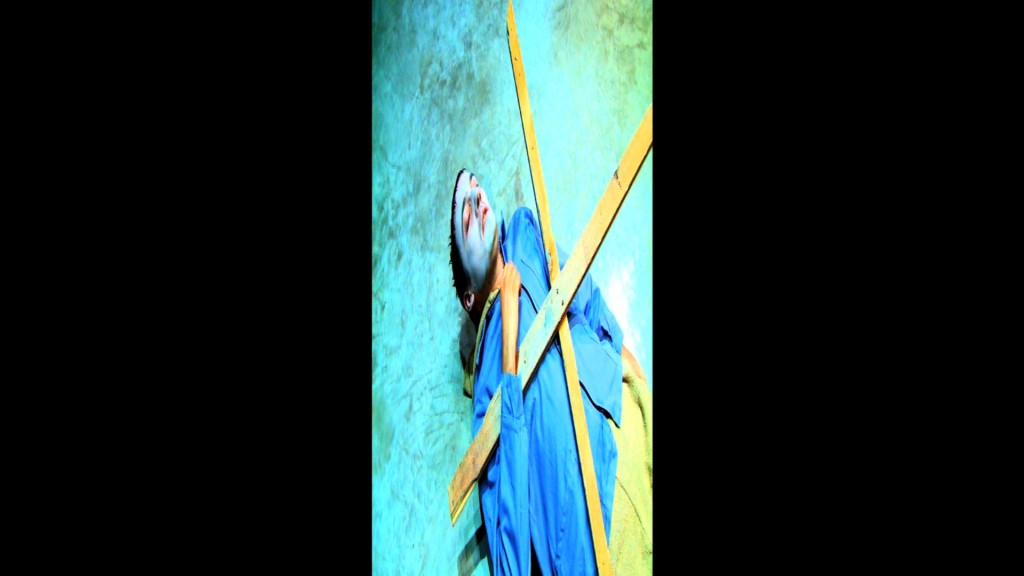
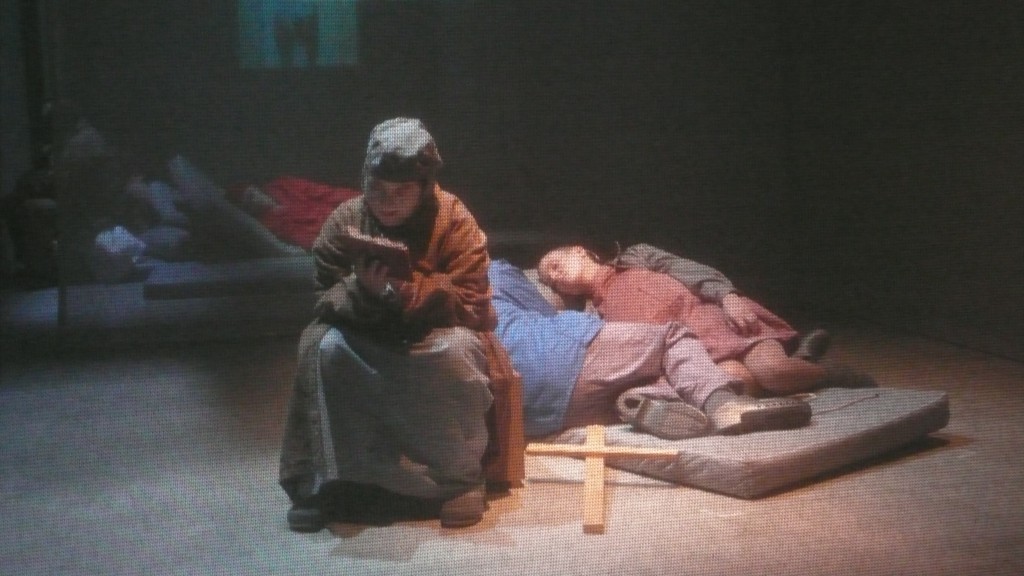
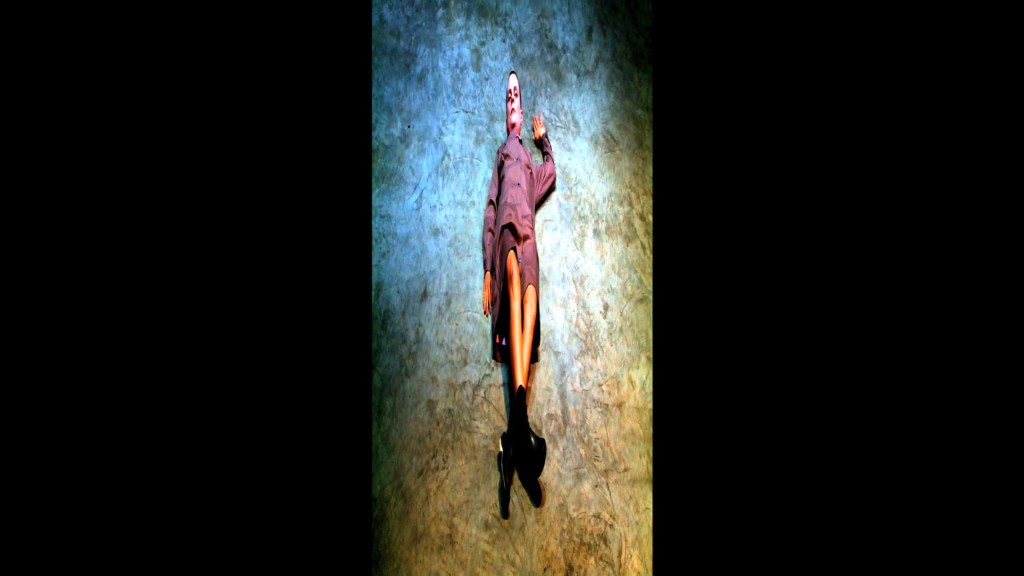
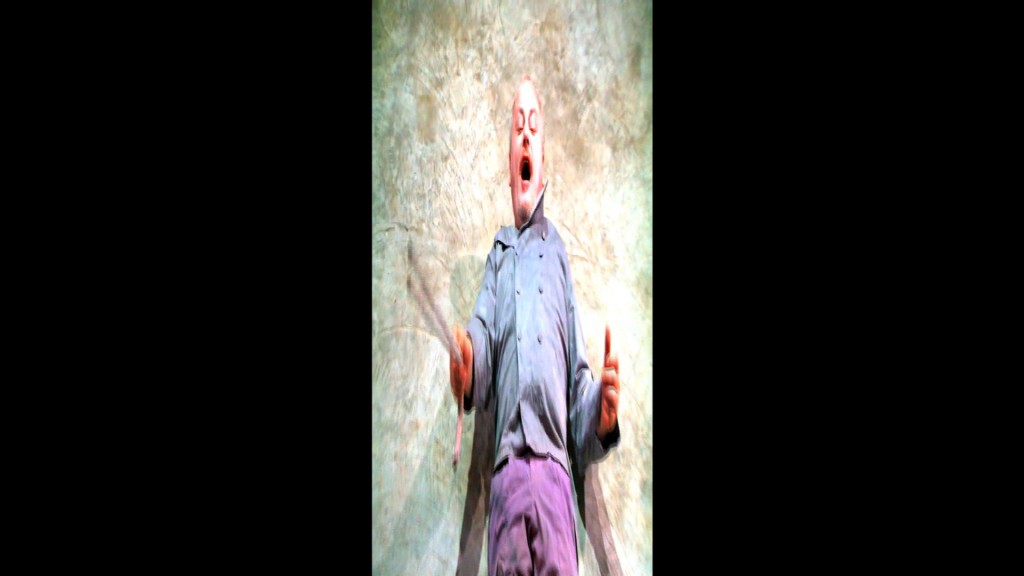
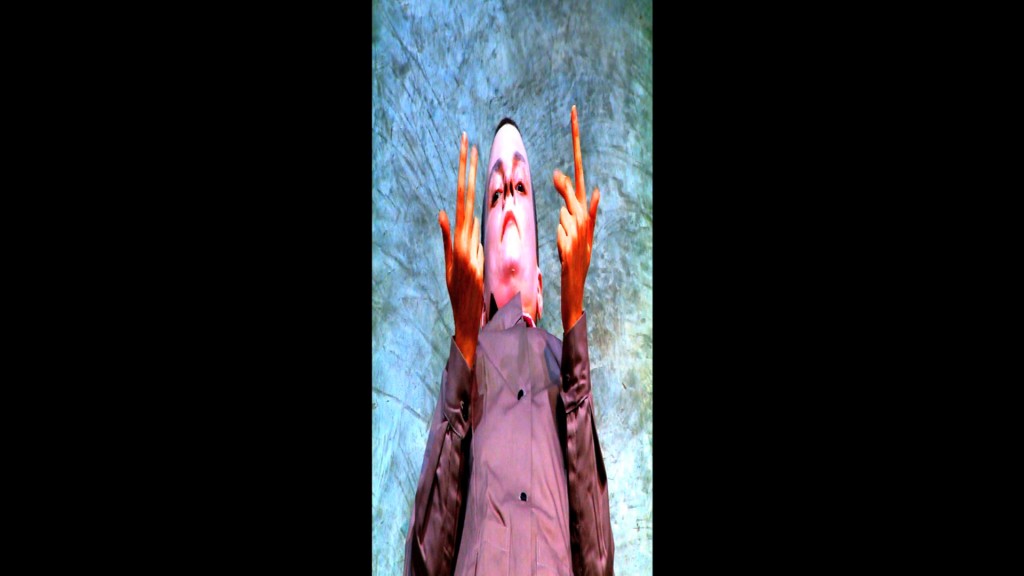
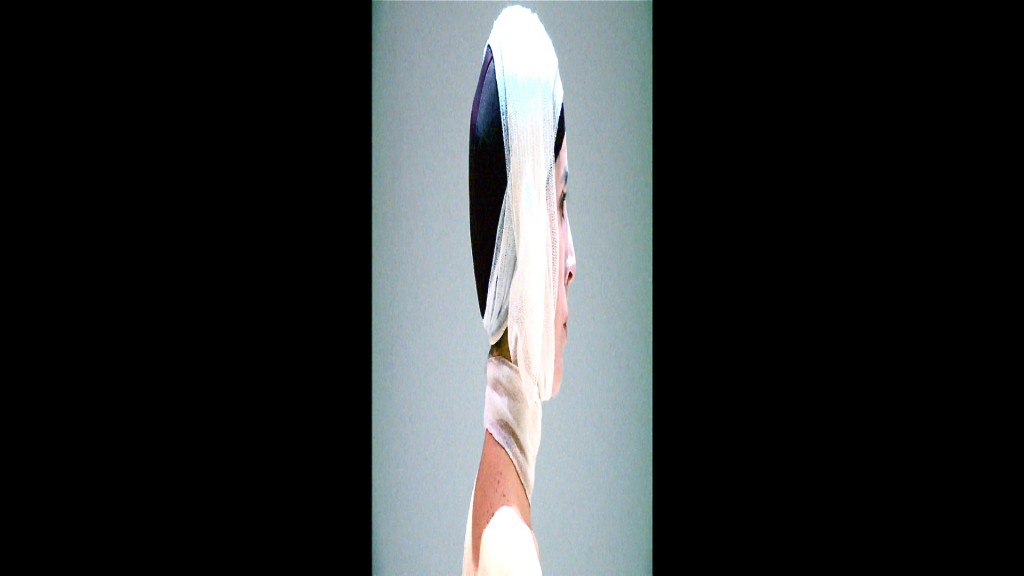
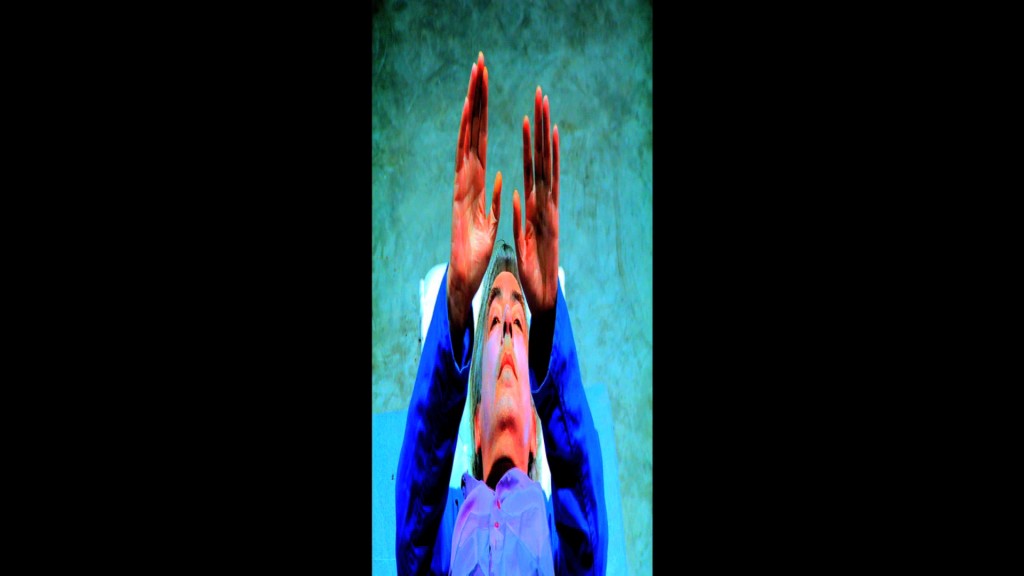
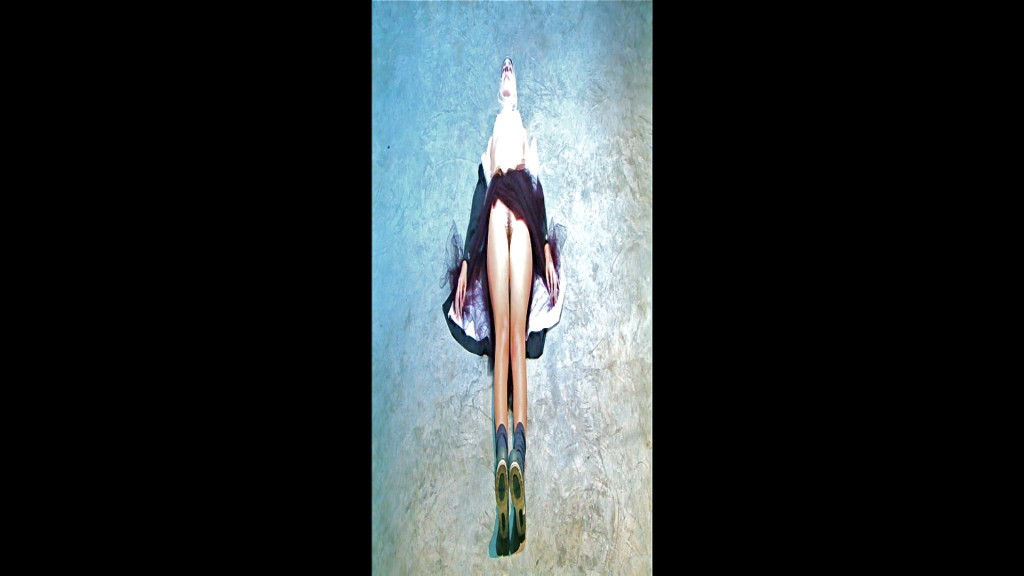
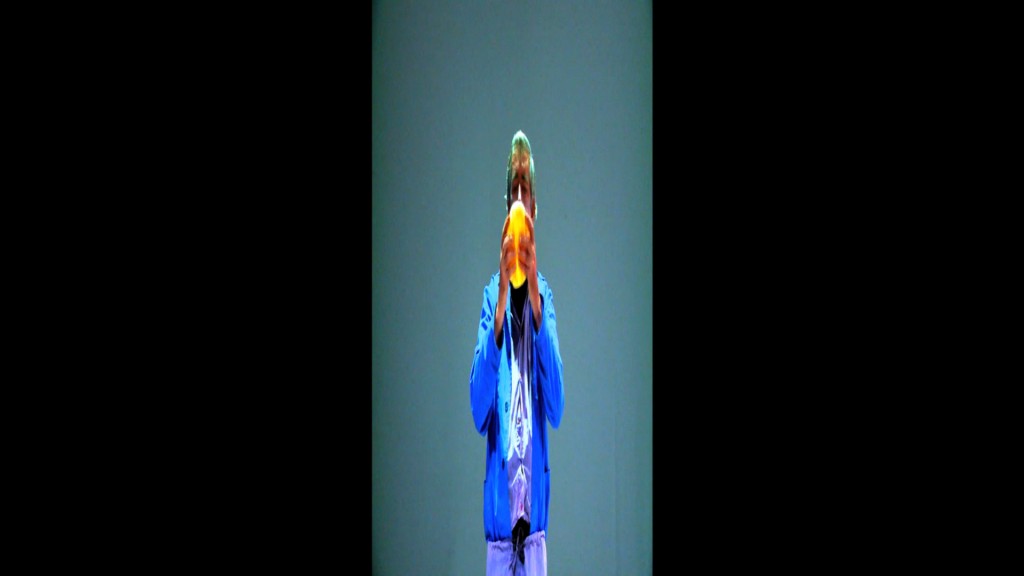
Alessandro Manzoni wrote: «Historia can truly be defined as an illustrious war against time». Infinite stories make up Historia, infinite stories that fight against the condemnation of forgetfulness, of private oblivion. The reconstruction of these stories means restoring dignity to these citizens without citizenship. After Hamlet, our Hamlets split into different Manzonian figures with the same Shakespearean anxieties and doubts: “Me here or me not here …”. Manzoni's majestic work is thus rebuilt on stage by the new protagonists of the enterprise. Manzoni always writes: “Between the first thought of a terrible undertaking and its execution (said a barbarian not without talent) the interval is a dream, full of ghosts and fears" and so it is in the reality/fiction of our Betrothed, devoid of an already outlined mysterious plan and divine providence.
Undoubtedly considered the masterpiece of Italian literature, the novel was broken down into twenty-four performative and visual paintings installed in the industrial spaces of the Lenz Teatro in Parma. There are many issues that characterize the lives of the actors of these Promessi Sposi, some have already been cut during these twelve years of common artistic practice and many are still closely intertwined between each one's history and the present which draws its energy from a repeated passion for redemption and reincarnation. The taking possession of Manzoni's characters by these "magnificent humble" becomes a simultaneous bread revolt and a rebellion against oblivion, a beneficial plague that forces the disease of equality and the mercy of the tragic actor, of intransigent morality like Verdi's man. Melodrama and novel are intertwined in the reconstructions of lives truly lived, Manzoni's and Verdi's characters overlap and merge between lost and reconstructed identities on a personal plot that finds common paths, identical epiphanies and equal sufferings in a single great fresco of truth and representation.
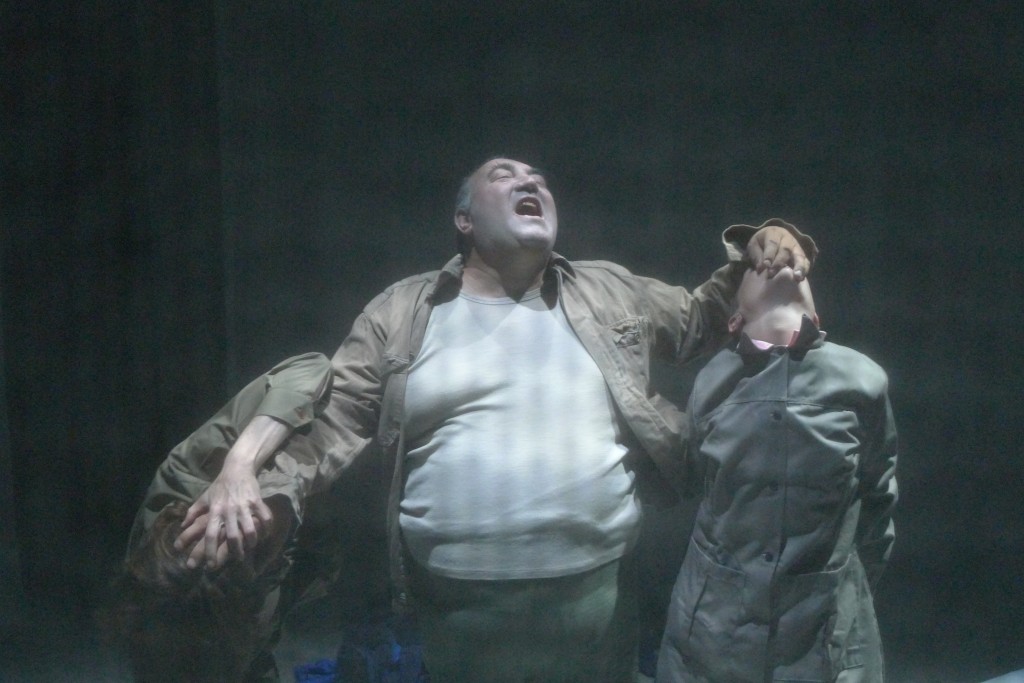
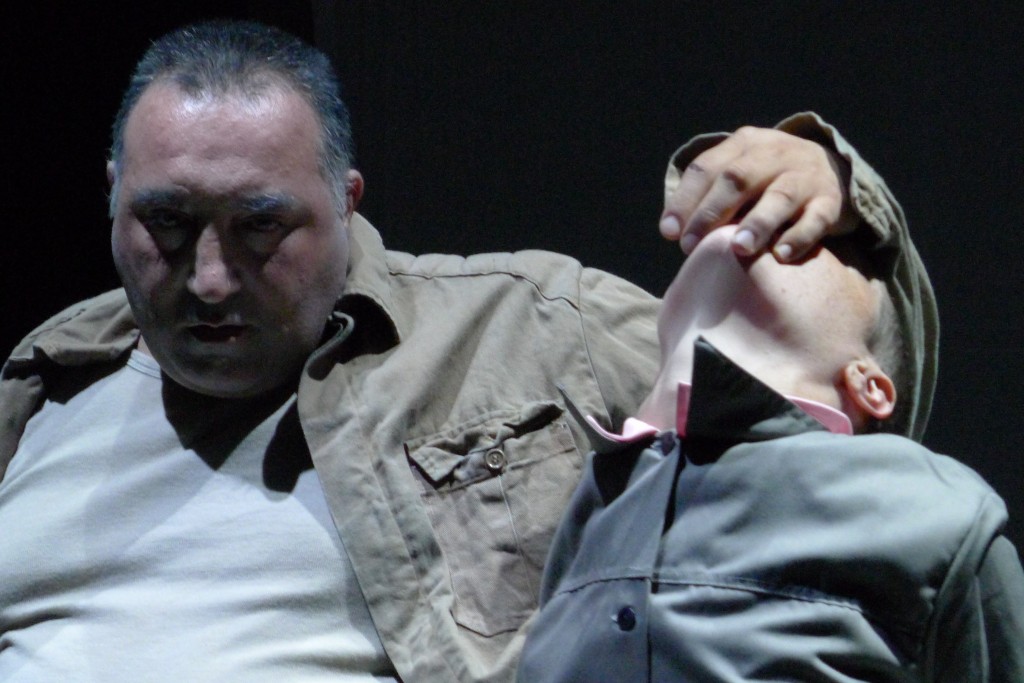
The recited text is a composition of original fragments, off-the-cuff dissertations, re-elaborations filtered by different memories, substrates of life episodes actually experienced or imagined, polyphonic concert of metaphysical and metapsychological dialogues but continually returning and exiting again in the main lane of the original textual reference. The multiplication of characters – two Lucias, three nuns from Monza (little girl-old woman) – the schizophrenic fusion with timbric alteration in a single actor of the Unnamed and Cardinal Borromeo, the arbitrary attachment of Don Rodrigo's death taken from "Fermo e Lucia", the choreographic tremor of Don Abbondio and his questioning of physical love, they are some of the most significant metalinguistic passages granted by a dramaturgy as free as a Shakespearean blank verse. The spectator's vision is also free and wandering, invited to stop in front of the development of the main action but with ample opportunity to change one's point of view, linger or precede the sequence in progress, the physical and virtual scene being permanently active without interruptions or intervals. Live all that is happening here and now, all ten actors inhabit the scene simultaneously in the “Land of Bright Rooms”.
Andrea Azzali's musical research is based on Giuseppe Verdi's “Requiem”.. The working method was developed on two different procedures that lead to a single result: the re-dramatization of the “Requiem” within the dramaturgy of “I Promessi Sposi”. In particular, the song “Lacrymosa” generates two different textures, the original sound is fragmented and captured in a space-time micro structure superimposed on other micro structures which together generate a dense sound magma. The second method, more traditional, leads to a rewriting of the original score in its first twelve bars re-assembled in a new element that refers to a memory-oblivion of the original structure. The continuous reference runs hand in hand with the development of the theatrical sequences that outline the new narrative/sign writing on the double track character-sensitive actor.
IMAGE AESTHETICS FOR THE BETROTHED OF LENZ
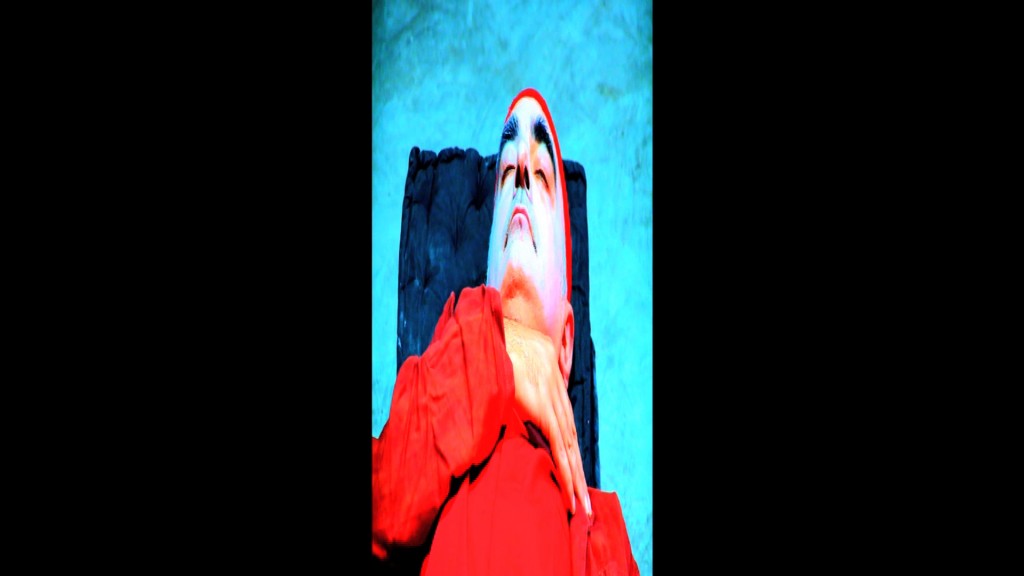
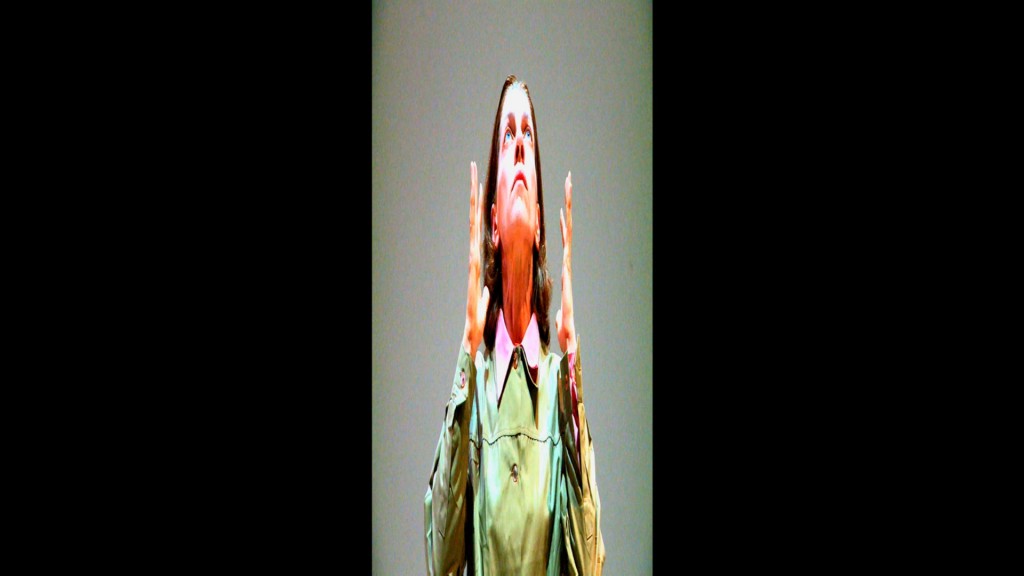
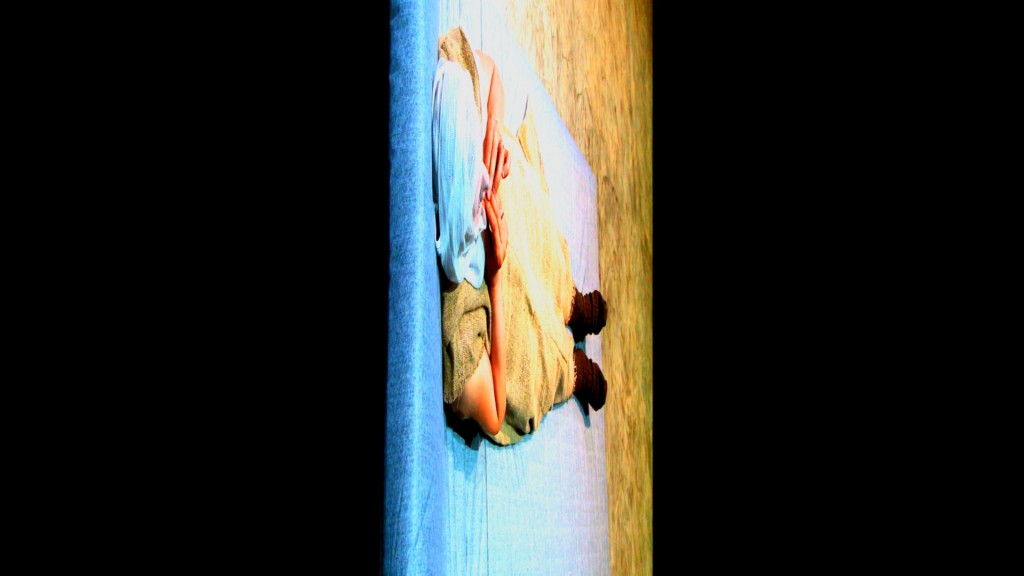
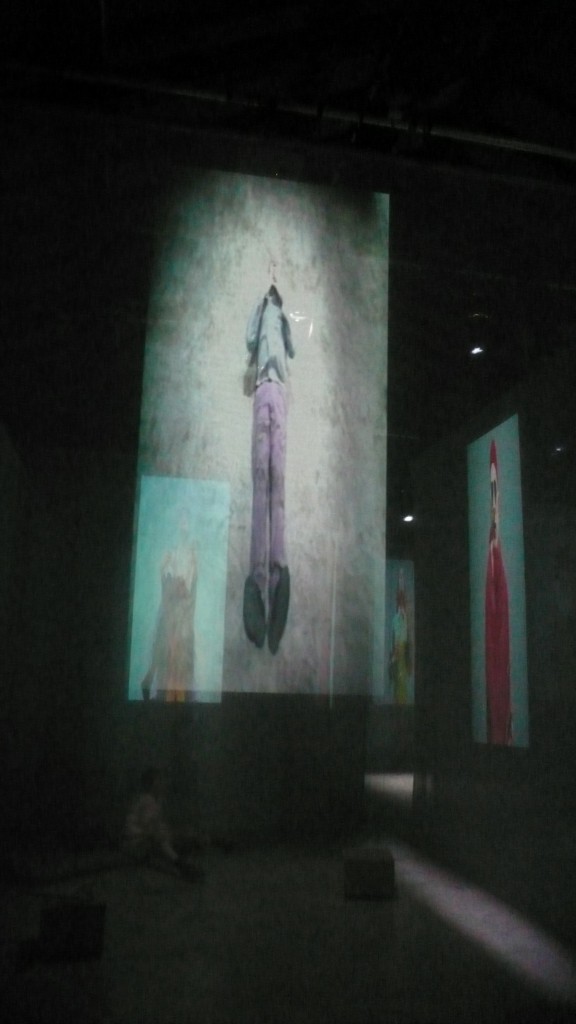
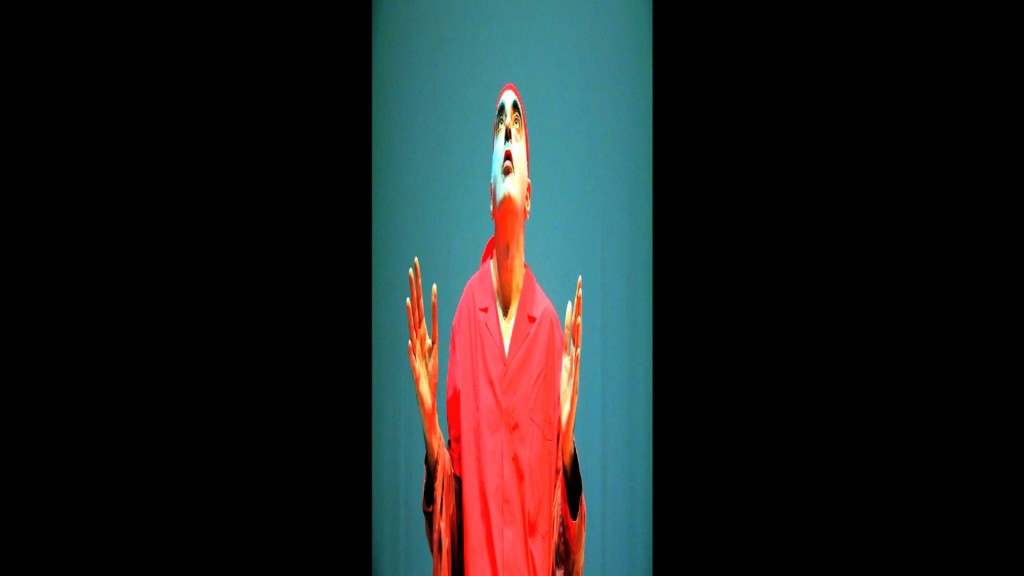
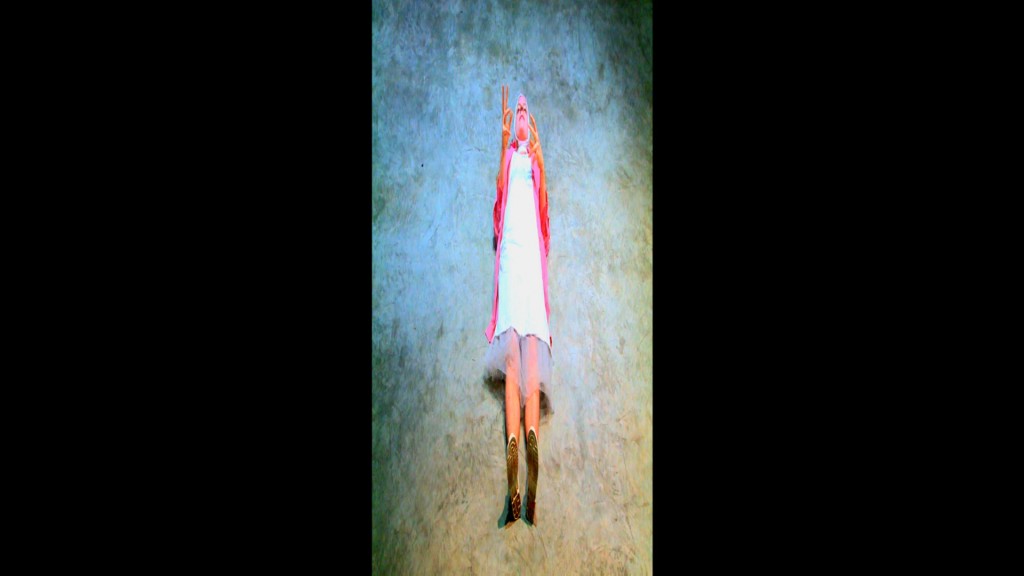
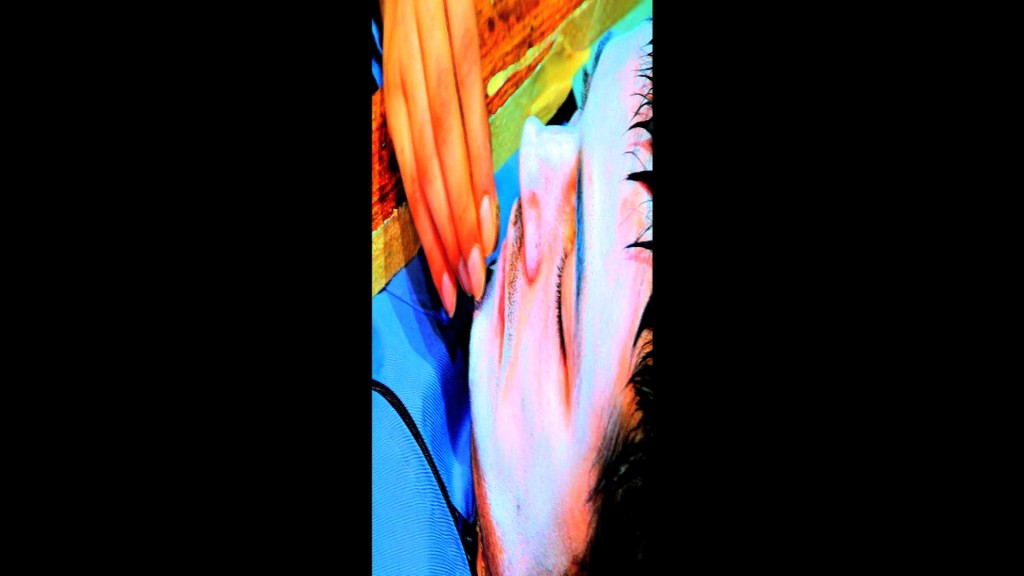
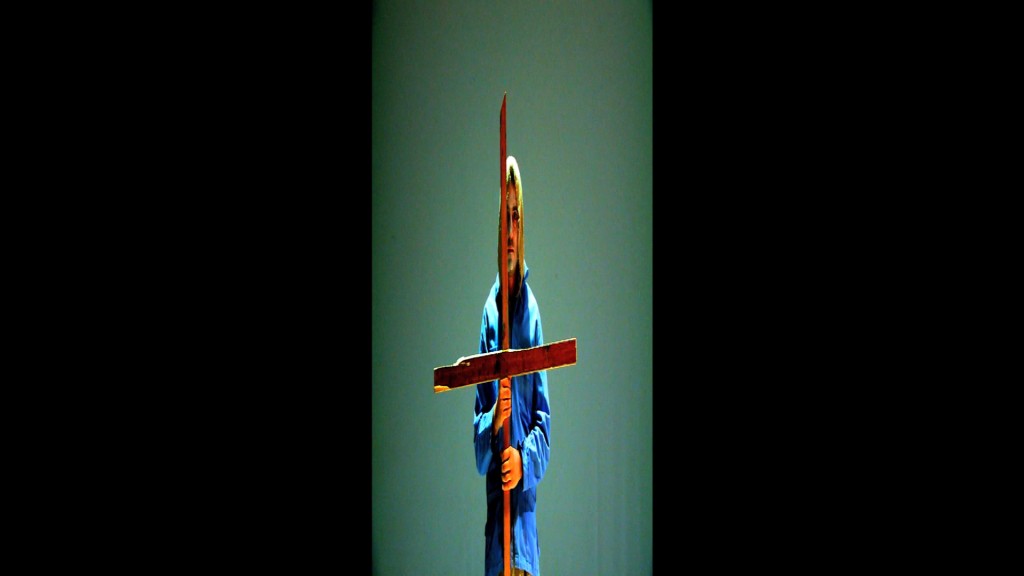
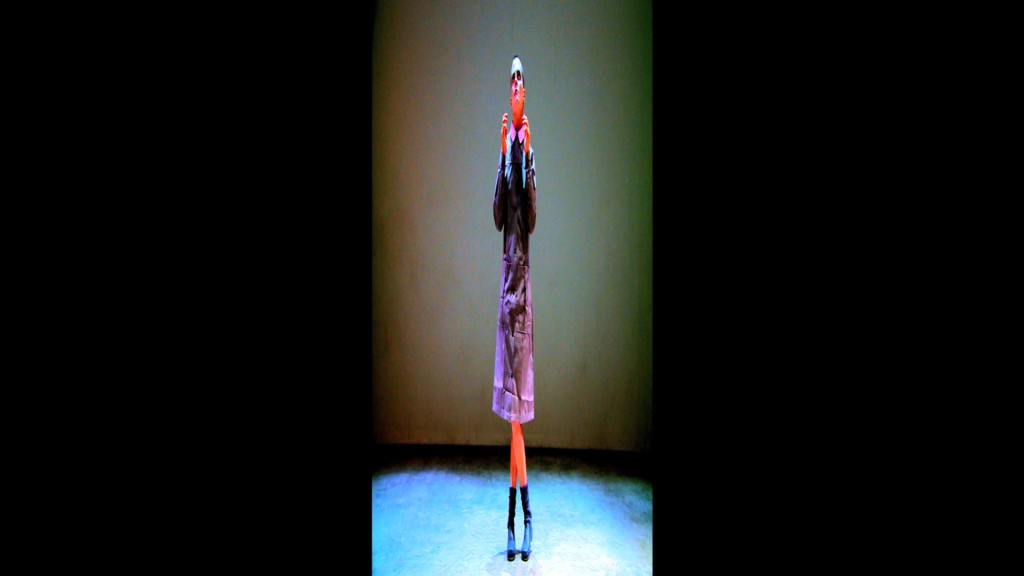
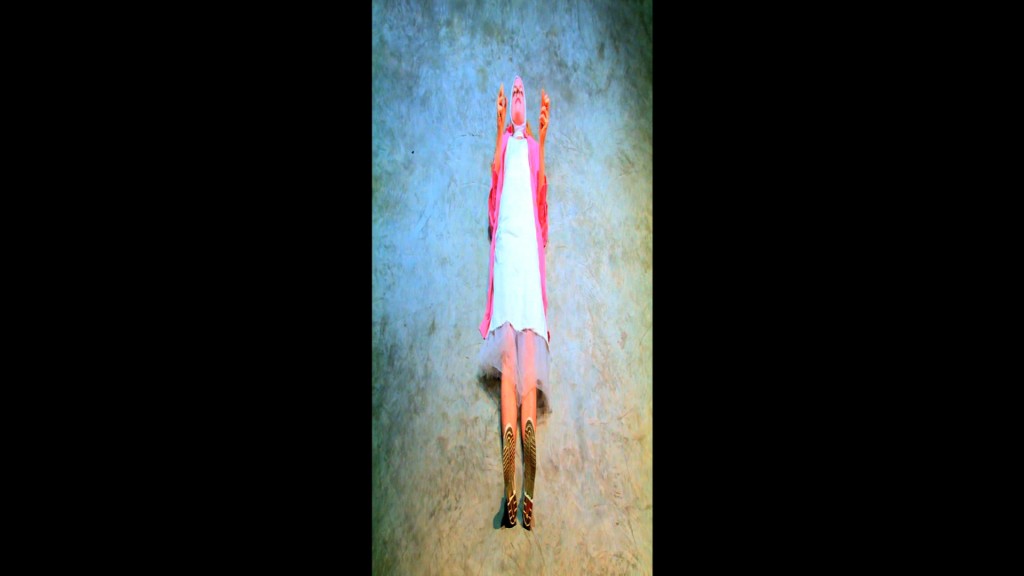
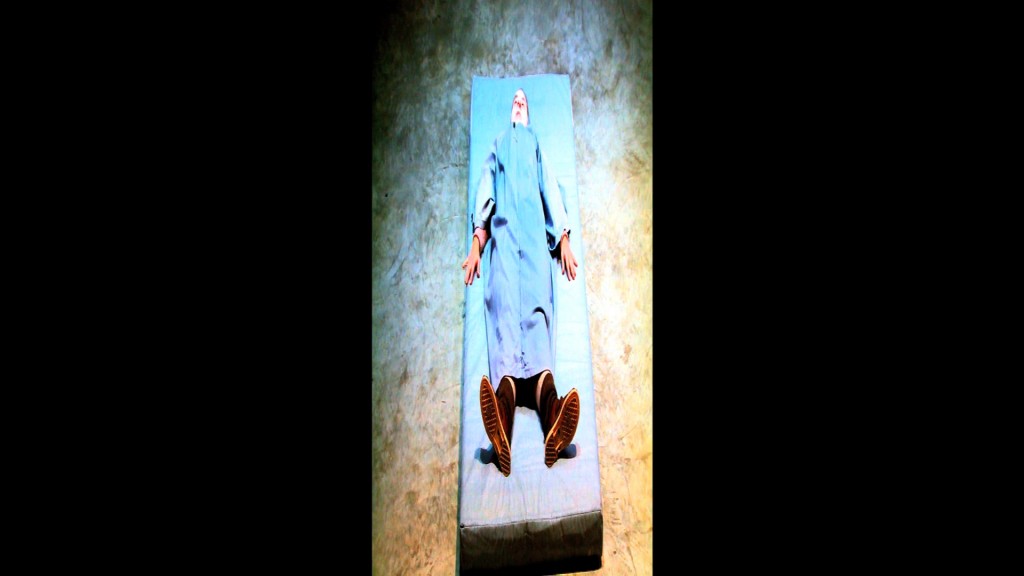
Bodies in vitro, self-propelled, smiling like newborns in wombs forced by history, from the Historia of their little big stories, of each one, of the spouses promised from the first cry, noises and sounds of near futures full of fatigue, of fear, of redemption. Shiny bodies, squeezed into narrow spaces by the frames, from the borders, vertical walls of black anxiety, of anguish, of defeat. Elongated bodies, bottom up, figures “similarly different” to those of Doménikos Theotokópoulos, Giacometti, Modigliani, simple and sacred at the same time. Like the windows of large basilicas they pulsate chromatically in every room, glassy rocks from the volcanoes of Io.
Test tubes, vertical ampoules, natural habitats for already living fetuses, protagonists each of physiological monologues, physical, scientific, psychiatric. The margin around, in the shade, the emotions, the reactions, the feelings, imitations, memories and memories, fairy tales and true stories, fictions and truths faded by time, wrinkles, grooves of life, Nicotine tattoos exposed in the epiphany of the bodies. Farewell to the mountains, everyone's farewell to their usual home, to the landscape painted on the eyes, safe space shelters, comforting, simple and benign.
Imprinted images, the farewell and then the way opens to the remaining life, to the passing of time, to twisted thinking, to the blurry picture, to space without mental and rational space, without reason.
This wedding shouldn't happen, without me, the merciful conjunction between the rebirth of the simple and its tremendous complexity will be accomplished. Bodies move, they turn, they float in the image frame, the dark space on the right and left presses them to the center but offers them protection from opening up to the unknown. It is up to the sensibilis actor who generated them, beyond the virtual, bring them back to life, to the suspended and limited time of theatrical existence.
Alessandro Manzoni and Giuseppe Verdi
REQUIEM OF PASSION
Il 22 maggio 1873, at eighty-eight, Alessandro Manzoni dies in Milan. Verdi does not attend the funeral 29 May but on the same day he wrote to Clara Maffei: “I wasn't present at the funeral, but few will have been more sad and moved this morning than I was, albeit far away. Now it's all over! And with Him the purest ends, the holiest, the highest of our glories. I read many newspapers. Nobody talks about it as they should. Many words but not deeply felt. However, there is no shortage of bites. Even to Him! … Oh the ugly race that we are!” A few days later he offers to “set a death Mass to music”. Dedicated to Manzoni, it is the requiem for all men who have believed, hoped, fought, the requiem for an ideal that reality seems to reject or forget. A meditation on death in which the theme often addressed in theatrical fiction becomes universal.
In the rest of death the last character of the tragedy emerges: “Verdi's Man, with his uncompromising morality, with his aspirations betrayed, conquered and yet superior to the world.”
Like a great fresco of the ideals of a lifetime, Verdi re-proposes his unshakable vision of the world. Death, as Mila writes, it had always been present in his works: «E’ a kind of tool of the dramatic trade, an inevitable natural event that, eat necessary deus ex machina, comes to cut the knots and resolve the intricate situations into which all men have gotten themselves as a result of their passions."
Creation | Maria Federica Masters, Francesco Pititto
Imagoturgy | Francesco Pititto
Regia | installation | costumes |Maria Federica Masters
Interpreters | Valentina Barbarini, Frank Berzieri, Monica Bianchi, John Carnival,
Charles Right, Paolo Maccini, Andrea Orlandini, Roberto Riseri, Delfina Riviera,
Vincent Salemi, Elena Sorbi, Carlotta Spaggiari, Barbara Voghera
Musica | Andrew Azzali
Scientific direction | Rocco Caccavari
Rehabilitation project manager | Paolo Pediri
Training project manager | Elena Sorbi
Luci | Gianluca Bergamini | Nicolò Fornasini
Assistant director | Alice Scartapacchio
Critical observatory | Violetta Fulchiati
Production | Lenz Foundation
The I Promessi Sposi project was created with the support of:
Integrated mental health assistance department – AUSL pathological addictions of Parma
Manzoni's Promessi Sposi, according to Lenz Refractions
by Giuseppe Di Stefano, Ilsole24 ore.com, 28 November 2013
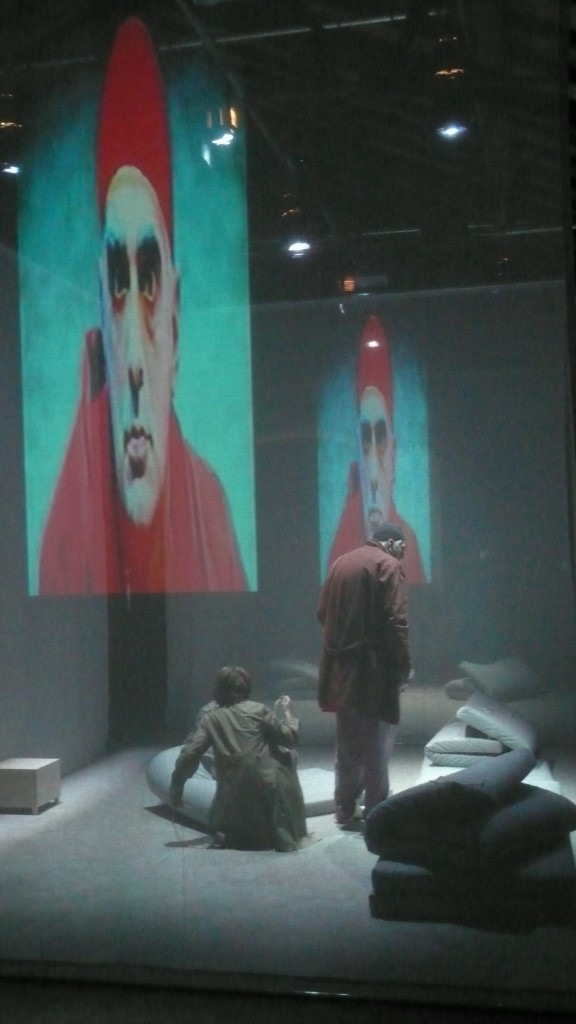
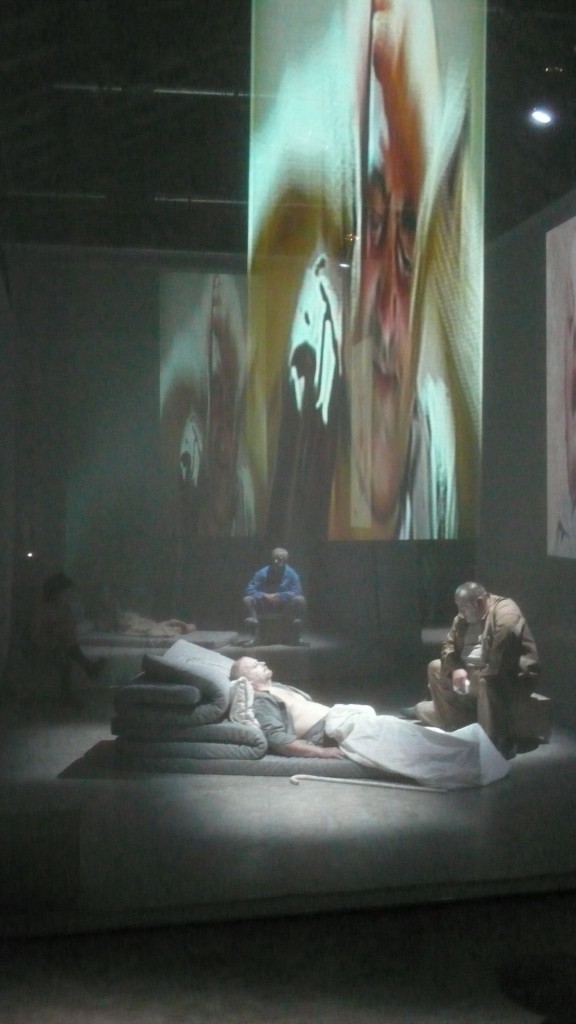
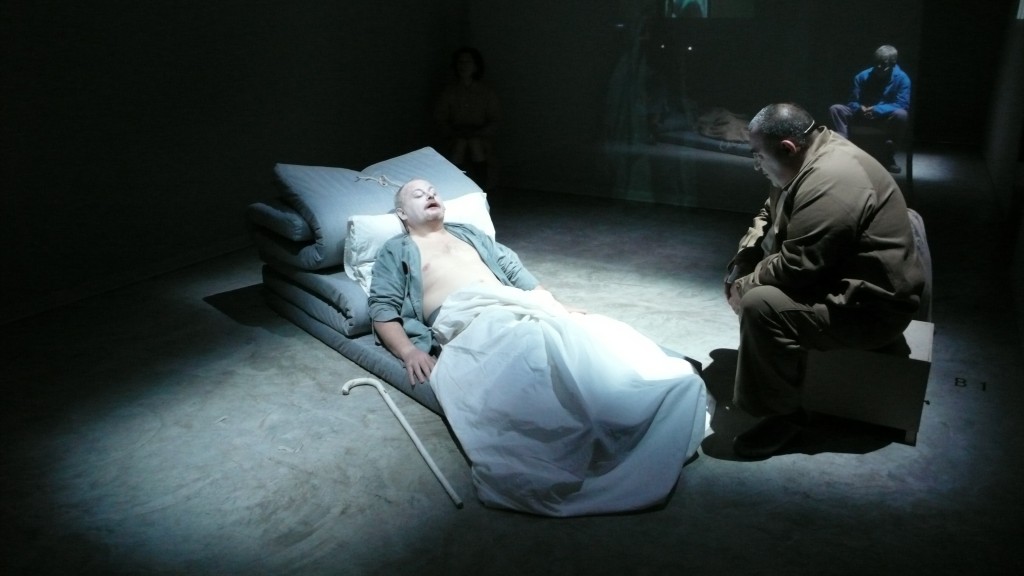
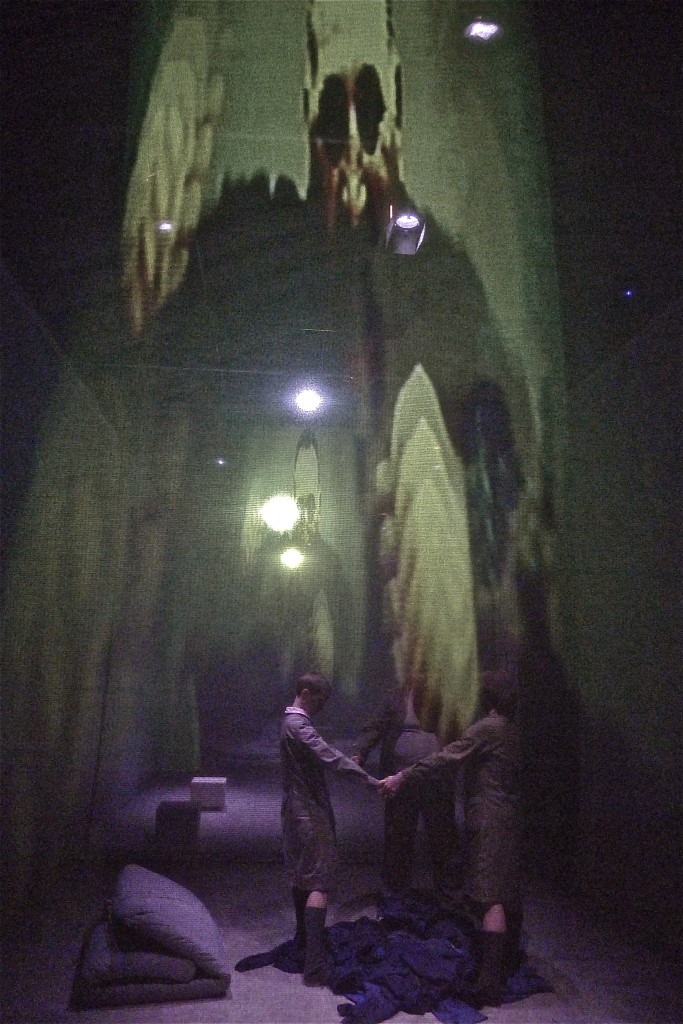
In this reworking by Lenz, of extraordinary and exciting synthesis, Manzoni's events are physical traces of souls that move within a habitat of rooms with scattered mattresses that become beds, lazaretto, pedestal. […] In the contemporary theater panorama Lenz Refrazioni, with their scenic-installation grammar, rigorous artistic practice, the exclusive aesthetic language, the radical expressive sense, they represent a unique team, for which the word “research” continues to be the driving force of their vision. Da Shakespeare a Goethe, da Ovidio a Kleist, each new dramaturgical elaboration is an authentic journey into a vision of the world. And of man. […] [Characters]] they have the physicality, fragile and powerful at the same time, of a group of actors “sensitive”. They are former long-term mental patients and people with intellectual disabilities […]. They act without filters, between truth and representation, adhering to their experiences and their emotions, controlled by recited words, “this”, which act as a grill, simultaneously creating a distance and identification with the characters of the story. History of humble, of the last, of excluded, of simple ones. As they are. And to them, creative subjects, they belong, of the text, scattered fragments of a plot of phrases and words born from a personal experience, of moods or filtered by memory: dissertations that always fall within the narrative writing of the novel but that happen hic et nunc. […] In the huge room that welcomes us, the scenographic vision is dazzling. A bright installation in the shape of a square building, divided by tall gray curtains that create a series of rooms interconnected by large cracks in the corners, opened on the walls and on the path from one space to another. […] And the scenography comes alive with pictorial references through projections on the veils which are windows inside which live elongated bodies reminiscent of Giacometti's sculptures, the figures of Modigliani, or El Greco. But the whole staging lives on figurative art: a system that breathes with the magma of sound dramatized by Andrea Azzali starting from the musical reworking of “Requiem” by Verdi. All the concepts of Manzoni's work – oppression, weakness, cowardice, submission, justice and injustice, suffering, atonement, hope – they find, inside this texture, a strong emphasis.
Renzo and Lucia challenge the disease at the theater
di Fulvius Fulvi, The Future, 24 November 2013
Disturbing, strips away, excites him “total spectacle” which is performed every evening in the Majakovsky room of the Lenz Theatre. […] Protagonists, ten former long-term psychiatric patients, people with mental disorders, hypersensitive actors who know how to extract deep disturbances and fears from their souls to lend them to Manzoni's characters. Which, Like this, they come back to life, arousing new amazement. Even the language of the Great Lombard here becomes multiple and impure following the forms of desperation: strangled screams, moans, dialects mix with the poignant and powerful notes of the Lacrimosa from Verdi's Requiem Mass. But the word is never overwhelmed. […] There is no stage in the large room of the former box factory in via Pasubio transformed into an inevitably contemporary theatrical venue: spectators and actors move on the same plane, chasing each other's gazes in ever-changing perspectives, separated only by transparent canvas bulkheads that divide, like windows of a medieval basilica, the enormous central space in 6 rooms where they happen, in the most disarming originality, the famous events of the novel. […] Twenty-four dramaturgical situations reinforced by video- images where the characters are shown in their solitary and raw madness. […] Schizophrenics, autistic, psychotics, down: everyone has their own story of suffering, his desires for tenderness, inhibitions, the ambiguities, and an unexpressed internal revolt. Voice changes, mood changes, sudden silences, bodies that vibrate or curl up like fetuses: everything is shown to the public, without the intent of causing morbidity but to bring him closer to the Mystery that reveals itself through the limits of the human.
How sensitive Renzo and Lucia are
by Alessandra Bernocco, EuropaQuotidiano.it, 23 November 2013
[…] set in six communicating 'cages', symmetrically arranged, with tulle walls that obscure the view and invite modesty. Each returns a fragment of life torn from the flow of human experience, a snapshot, a meeting, a short dialogue that timidly takes place between characters we know well, surprised in their friability. […] Everything is there in The Betrothed, la nostalgia, hope, the desire, detachment, courage and fearlessness, the coherence and rigor of the humble and the arrogance of the strong, and borrowing the adventures of these little heroes who look a little like us is a delve into the soul and the mechanisms that regulate our relationships with others.
The cyberpunk Betrothed by Lenz Rifraczioni
by Andrea Alfieri, Krapp's Last Post, 6 December 2013
A condensation of metaphysical places fading towards a reference to the lazaretto, or to the cellars of the creative soul. […] Renzo and Lucia couldn't have asked for anything better: see their troubled story materialize, stripped of Manzonian romanticism and scrutinized in its most intimate torments, in his anguish and his nightmares, to give concrete value back to their intricate experience. […] But the dramaturgical composition is not limited to the original fragments of the novel, immerses himself in a flow of identities and dissertations of real or even just imagined life, conveying the actors into the landscapes of literary events, to make them take possession of the psychological essence of the protagonists of the authentic text, and rebuild them in a fusion of common paths. […] We therefore find ourselves in a sensorial cosmos fragmented by a musical research based on Verdi's Requiem, re-assembled within the dramaturgy and intertwined in a sound magma that dialogues with scattered and hallucinated voices, which run through these tunnels installed in the concrete of the former industrial spaces of the Lenz theatre, where the disturbances and fears are deposited that these "magnificent humble" wrest from their psyche to offer them to Manzoni's characters.
Providence in Lenz's Betrothed
by Alessandro Trentadue, Parma.blogautore.repubblica.it, 22 November 2013
The providence in Lenz's The Betrothed is different. A providence that not even Manzoni would have conceived, tiny but revolutionary. Which transforms human atrocity into a miracle. […] In an audiovisual hospital, network in which everyone gives in to the most irrepressible human curiosity. To the temptation to cross the forbidden wall. […] they return free will to the public. To rediscover yourself, against all forces, children of reality shows. Of meanness and lust, of delicate embraces whispered incest. Cowardly fetishisms. Among Dostoevskian echoes mixed with Verdi's Requiem.
The providence that elevates sensitive actors, le star in Hamlet, to a level that an able-bodied actor can never reach. The latter overpowering the former. The last most last of Manzoni's own flesh.
The Betrothed of the Lenz Theatre: a crazy requiem for Manzoni
by Diego Monfredini, Piacenza, 22 November 2013
What is striking every time is the Lenz theater's ability to restore monumentality, the epic caliber of a text, […]
The betrothed are re-edited in a singular staging of "communicating vessels", the scenic space is in fact regularly divided into a series of cubes, real habitats that literally turn on and off to bring the episodes to life. The spectator's visit is free and peripatetic, with ample opportunity to choose your own point of view on each moment of the story, while all ten actors simultaneously populate the “light rooms”.
Melodrama and novel blend together thanks to the electronic score mixed by Andrea Azzali who reworks Verdi's Messa da Requiem in an original way. The suggestion is once again cinematic in flavor because the reinterpretation of the drama involves the omnipresence on stage of audiovisual installations that complete, and they increase the recitation of the paintings to the point of paroxysm.
Clear rooms and bright emotions
by Valeria Ottolenghi, Journal of Parma, 18 November 2013
[…] The story of Renzo and Lucia and the other characters, in particular by those “sensitive” actors who have suffered bans, they got sick, who know separate life, loneliness. The jokes then take on new dimensions, shades of sincere suffering […] And the costumes are just evocative, as for a Marat-Sade […] each wall with movable images, elongated, as in Gothic stained glass windows, with music, the voices that flow everywhere enveloping performers and spectators together, who move freely in the corridor/perimeter around a cube with very light walls: therefore the public's point of view changes with even contemporary actions, but with a dominant narrative thread, which is precisely that of Manzoni's 'The Betrothed'.
Manzoni 'enlightened' by sensitive actors
by Christian Donelli, ParmaToday, 17 November 2013
A unique song that smacks of tragedy, in the characters and in the description of the historical context. The philological reconstruction of the text is done with precision and the contemporary additions make the picture more tragic, representative and unique. If the Unnamed appears on video, reading what seems like a philosophical and psychological litany on the human soul, the sensitive actors give the theatrical and narrative discourse on stage a sense of transience and tragedy.
The foundation of the new language according to Manzoni: the contact between the actors' courtly Italian and the 'natural' language’ of sensitive actors. A rereading that is contextualized in the contemporary: if the farewell to the mountains becomes a farewell to the scenes and the images are those of the window of the Mayakovsky Hall from which, until a few years ago, you could see the Parma Cathedral, then the connection with space is evident. The characters of this contemporary work dialogue in a single text, modulated by the presence of close-ups in video, perhaps a memory of a finished and artificial world, perhaps some television images from the last decade. “
If The Betrothed illuminates the present
by Laura Bevione, Hystrio 1.2014
Manzoni, our contemporary? How many students would laugh at such a hypothesis. Yet if you delve into it The Betrothed abandoning idiosyncrasies and boring scholastic notions, we can recognize unsuspected illuminations and reflections on the state of humanity in the twenty-first century. An itinerary that Francesco Pititto and Federica Maestri completed accompanied, as well as by the historic performers of Lenz, by a large group of "sensitive" actors, i.e. former long-term mental patients and people with intellectual disabilities.
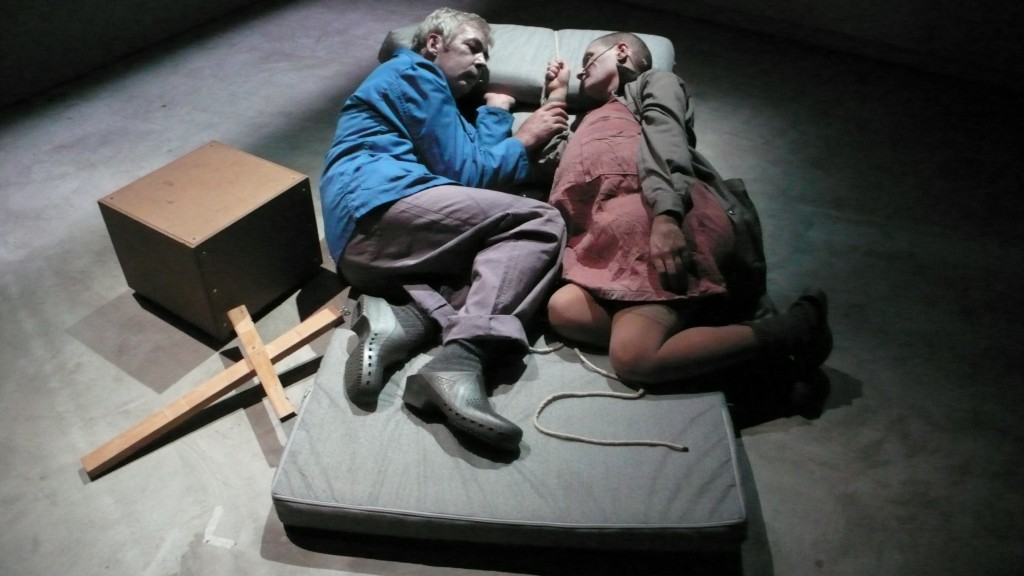
A heterogeneous community, so, but compact in questioning a work and its author, in a sort of pressing way brainstorming collective that allows us to recognize unprecedented but clear parallels between the attack on the bakeries in Milan and the take to the streets of today's excessively laid-off workers; the farewell to their native places and the threatened eviction from a living and pulsating theatrical space; the candid love between Renzo and Lucia and the legitimate desire of many couples to live together. Mediations and suggestions harmoniously interpolated into the text of the novel, in turn disassembled and reassembled, with care and impeccable fidelity. A dramaturgical work in twenty-four scenes, act within an articulated and evocative space: six “luminous rooms”, connected to each other by semi-transparent curtains. […] These, occupied by bare mattresses, they certainly refer to the lazzaretto but they also reiterate, with discreet but explosive power, the perspective chosen by Manzoni and made its own by the Parma company: tell the story through the eyes of the last. An action that, when it is done without paternalism but with sincere conviction, can lead to a show full of emotions and thoughts like this: a generous revolt against all the injustices that music, inspired by Requiem by Verdi – composed specifically for Manzoni – amplify with poignant ethical impetus.
A cast of 'sensitive' actors brings The Betrothed to the theater
by Ambra Notari, Sociale.it Editor, 11 maggio 2014
Actors are ''sensitive'', former long-term psychiatric patients and people with collective disabilities. The company is Lenz Rifraczioni, that gives more than 10 years he has undertaken a research path that is unique in Europe in terms of intensity and expressiveness. The work brought to the stage, it is 'The Betrothed' by Alessandro Manzoni, milestone of Italian literature. The music – curated by Andrea Azzali – is based on Giuseppe Verdi's 'Requiem'. The occasion is Verdi's Bicentenary, which allowed it to be brought back to the Lenz Teatro in Parma, dal 13 al 23 May – after the great public and critical success achieved last November at the 18th edition of Natura Dèi Teatri – this innovative version of Manzoni's historical novel by Lenz Rifrazioni, a creation of Maria Federica Maestri and Francesco Pititto. The novel of the recovery of the humble and those excluded from citizenship is here broken down into 24 performative paintings, rewritten through contemporary visions and the extreme and anti-rhetorical language of Maestri and Pititto. All the key concepts of the work – oppression, weakness, cowardice, submission, justice and injustice, suffering, atonement, hope – they find, Like this, a strong emphasis. “The universe we travel through is extremely complex – explains Maria Federica Maestri – It starts from the idea that the actor-characters are losers, defeated for not having access to normality; we arrive at a reversal, a ransom, a reversal of fate that, in the guise of Providence it tells of a new form of beauty".
On stage for this new dramatic rewriting are the 'sensitive' actors Frank Berzieri, John Carnival, Charles Right, Paolo Maccini, Andrea Orlandini, Delfina Riviera, Vincent Salemi, Carlotta Spaggiari, Barbara Voghera together with Valentina Barbarini, Monica Bianchi, Roberto Riseri and Elena Sorbi. Their personal stories are intertwined with the characters in the novel: “Working with 'sensitive' actors and non-disabled actors has great artistic potential, wonderfully hard, especially when you come into contact with former long-term patients, men and women with extremely hard and painful pasts”, continues Masters. The youngest is an autistic girl 21 years, the eldest, with long-term care experience behind them, no ha 79. The work that leads to the assignment of the characters is long and complex, never lowered from above but naturally absorbed in their fullness.
To merge, there are also Manzoni and Verdi features: the final product is a mosaic of lost and reconstructed identities that rediscovers common paths, identical discoveries and equal suffering. The characters multiply: There are 2 Lucia e 3 nuns of Monza (girl, donna, elderly), while only one actor plays the role of the Unnamed and Cardinal Borromeo. “We thought it was particularly interesting from a scenic point of view to cross all these worlds, those of the nun of Monza in the three phases of life and those of Lucia, on the one hand, the object of Don Rodrigo's desire, from the other subject of everyday reality. The actor who plays the Unnamed and Cardinal Borromeo has
brought his experiences of polarism to the stage, by becoming confessed and confessor".
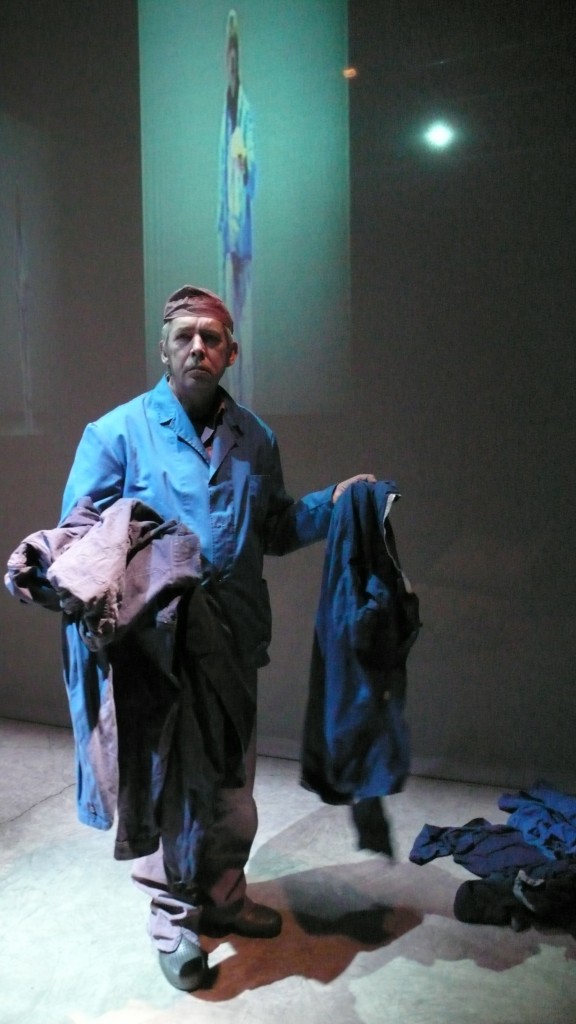
Without intervals, the spectator can linger on the main action, but it can also change focus, because all the actors inhabit the scene at the same time: the rooms are all transparent. “There is also a strong reference to the constants that span the centuries, like work and the hungry-hungry dualism", adds Maestri, summarized emblematically in the sequence of the bread riot repeated by Renzo/Paolo Maccini while he collects piles of work clothes from the ground. The project is carried out with the support of the Integrated Mental Health Department - Pathological Addictions ASL Parma.
The 'sensitive' betrothed by Lenz Rifraczioni
The Radio Tre Theater 'Theatres on trial', Rai Radio Tre, 19 maggio 2014
The ballad of the humble: the betrothed of Lenz
by Massimo Marino, BOblog, The Corriere della Sera, 23 maggio 2014
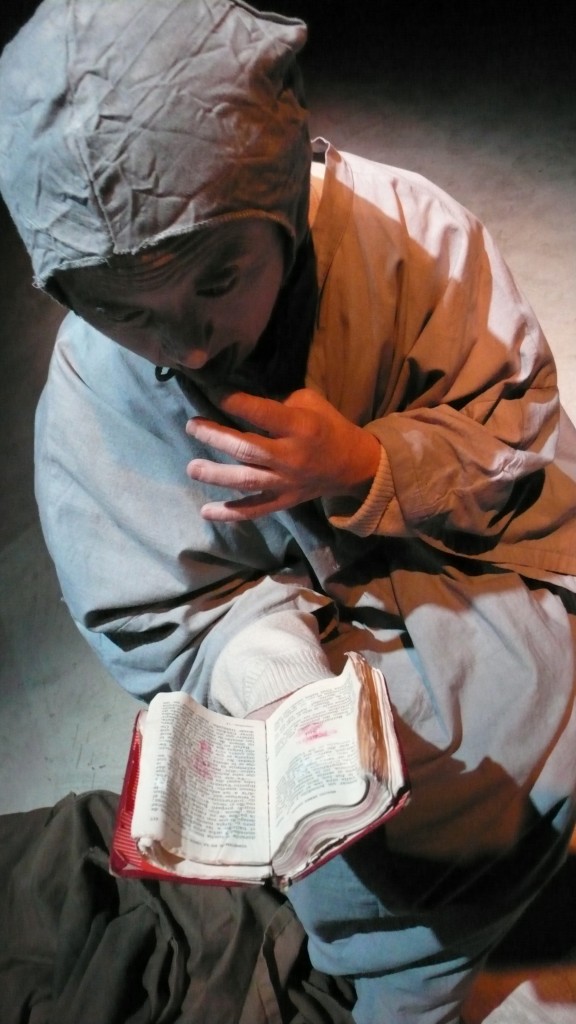
And those humble Manzonians in the Promessi Sposi according to Lenz Rifraczioni become today's outcasts, the speechless, those with a difficult gait, with bodies marked by some syndrome, with heads banged by life, from old age, from that abandonment that some call madness. The novel that founded our Italian identity has been transformed into a labyrinth of closets where the language becomes difficult, where bodies sometimes explode, and so the fury, the amazement; other times those injured bodies remain abandoned on mattresses, as under bridges made of rubble, to listen to someone speak, a voice screaming, legs, arms, trunks that clatter a little further away. The walls are transparent, veiled and screened: it's up to the viewer, which can move around the scenic cube in the center of a bare room, choose what to watch, what to listen to, whether to blur the bodies and images by getting too close to the lattice of the curtains or whether to see by moving away or peeking from the open corners; whether to follow the plot or get lost in the details, in absences, in visions. Actors often move from one environment to another, with their labored tongue, which reduces the plot to a few spoken sentences, while in every environment they flash and stay fixed, like paintings, Images. They evoke, at the beginning and at the end, in a phantasmatic way, that suburb that surrounds the Lenz warehouse, raped by a renovation (that of Parma) megalomaniac and bankrupt, with many empty apartments or offices, demolished areas, a new station, a little further, oversized for a railway hub left "provincial", without high speed (if that means anything). But now, vertical or horizontal, deformed or defined, figures stand out that recall Manzonian characters as if filtered into a grotesque carnival, brushed over by the distorted brush of Francis Bacon, elongated by the severe deforming art of El Greco, Modigliani, Giacometti.
Lenz works, for years, on projects, around authors he dissects, reverse, it loses and makes it shine. With Manzoni we are in the midst of research on the language of Italy, between interrupted memories, strident, impossible, and a desertified current situation, where you can also find a sense of communication. Manzoni comes after the Aeneid, and after the Betrothed, Adelchi will arrive. The strength of this show lies in the performers, which mix professional actors ready to experiment with any extremism and those extraordinary "sensitive actors" that Lenz trained and brought on stage on various occasions. We still have the slow Hamlet in our eyes, itinerant, shocking ghost sonata seen at the Rocca dei Rossi in San Secondo in 2010, and other work with long-term patients in Colorno. They, former patients admitted to the psychiatric hospital, currently in charge of the mental health care department for pathological addictions of the Parma Local Health Authority, plus some women with down syndrome, now permanently established as actresses in the company, like the formidable Barbara Voghera, they give the characters an indefinable aura, which makes them immediately stand out from our school memories towards a material reality of oppression, of tribulation, of a harsh life, of profound suffering that is close to us (and which we do not see), with that everyday language, ready to fly into anger, in intolerance, in incontinence, in the inane rebellion. “Sensitive actors” they call them: like few others capable of giving interior echoes, threatening, scary, but also in search of truth and solidarity, of a different human possibility. The scenes intersect, in those milky little rooms, under the manipulated notes of Verdi's Requiem, pulverized and made almost unrecognizable by Andrea Azzali_Monophon. The morality of Verdi's figures is reflected in Manzoni's tragic characters, is one of the assumptions of the show. Everything has something sacred and very popular, simple, like a story told, but with fury, indignation, fury and hope, in front of a fire in the night.
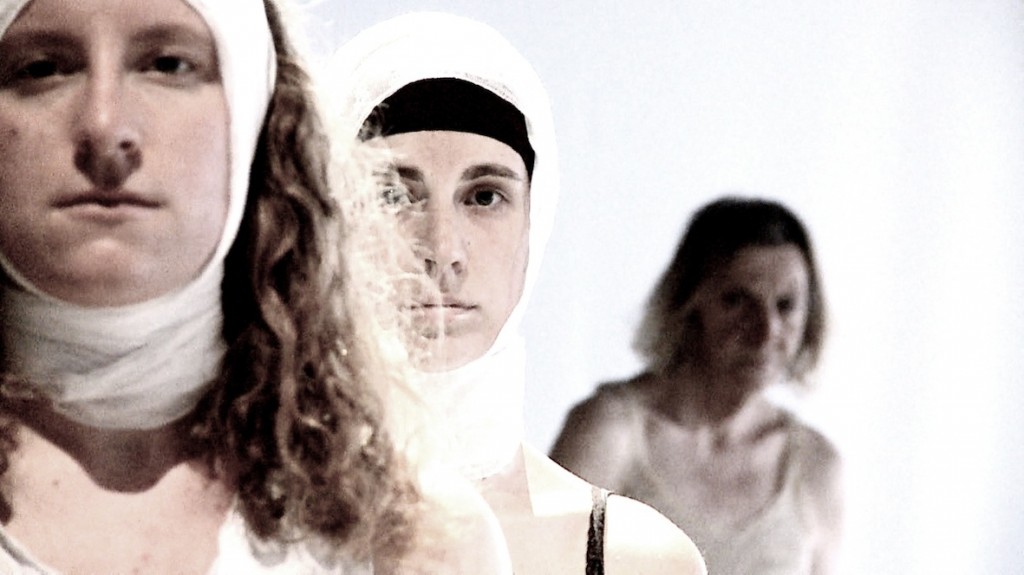
The fear of Don Abbondio, the violent screams and attempts at rebellion, Don Rodrigo's wish, separation, the creation of that monster that is the nun of Monza, with his face covered in gauze to represent incurable wounds, and then the revolt and escape, Lucia's kidnapping, the Unnamed and the Cardinal, the vote, to fish, death, providence flows like acts of a modern sacred representation, astounded, interpreted by witnesses involved in the events, in suffering, who still don't want to accept defeat.
The grievances sometimes seem like those of children, like insults, like clashes, in the episode in which Brother Cristoforo kills a knight who blocks his path with a wooden sword, ready to transform into a penitent's cross. Forgiveness, the alleviation of the pain of the bodies, the helpless cry, the repressed desire often embodied by the serpentine bodies of the actresses against the abandoned ones, static, impressive sensitive actors, they create a ritual atmosphere, of suspension, of magical inner investigation.
The language shines with luminous simplicity. The farewell between Renzo and Lucia generates a simple: “Don't leave me. I love you". Don Abbondio is a little figure crumpled by fear, cloaked like a nun, always in unstable balance on a stool. Renzo, corpulent, come don Rodrigo, passes through environments, as spectators spin around this carousel of opalescent images (like memories, like something we have inside, deep), which ends with other words that give splendor to the banal language, daily, of affections: “We're going home tomorrow. Me at my work, you to yours. And after? We'll see". In the last images projected before dark, we seem to see the courtyard of the Lenz warehouse again, which managed to survive threats of demolition, renovation and eviction, but it's still not "safe". Long life, At that time, and means, we invoke within ourselves for this ever-living outpost of an experimentation that is not an empty exercise, but a provocation to our intelligence, to our cultural belonging, to our lost feelings. Which is concentration. With the direction, the installation, the monastic or proletarian customs of Maria Federica Maestri, the dramaturgy and imagoturgy of Francesco Pititto, and the excavation of both of the text, which shines with "linguistic and anti-rhetorical extremism" (the room notes say it well), so as to restore the voice and consistency of the language of the times to Manzoni.
In scena, worth mentioning everyone, Valentina Barbarini, Frank Berzieri, Monica Bianchi, John Carnival, Charles Right, Paolo Maccini, Andrea Orlandini, Roberto Riseri, Delfina Riviera, Vincent Salemi, Elena Sorbi, Carlotta Spaggiari, Barbara Voghera. Luci (and above all shadows, twilights of vision) and sound engineer by Gianluca Bergamini and Nicolò Fornasini.
The Betrothed
by Daniel Rizzo, Persinsala.it, 24 maggio 2014
Manzoni's is a work that anyone can say they know, at least in principle. Because compared to the precise events narrated in the famous text that laid the foundations for the modern Italian language, this popularity is accompanied by a proportional ignorance of the internal references and the extraordinary interactions between characters and environment that characterize scenic and psychological descriptions on whose details experts could (pedantically) argue endlessly.
Going beyond the simplistic interpretation that reads The Betrothed in terms of testimony to the fulfillment of divine will, we are faced with a powerful text, now institutionalized as essential school reading and which has determined a precise historical and ideal model, pedagogical and cultural. Aimed at guaranteeing the sacredness of authority, whatever it is, through the separation of personal and social virtue, it represents the outcome of a triumphant cultural operation because it is capable of having practically permanent consequences from a material point of view (the Manzonian useful for purpose). Paradoxical consequences while simultaneously being revolutionary (for the reversal of history and the protagonism of the humble) and reactionary due to the confessional nature of the original intentions. Intentions that we can identify in that concept of Providence which always justifies current suffering by entrusting happiness to the future (therefore to continuously tomorrow) and that, in the era of full secularization, we can find materialized in that inevitable resignation to which the postmodern/industrial individual has destined the weakest, effectively isolating them in their own fragile subjectivity, from the moment he chose merit (fake because it is often hereditary with respect to social and cultural background) on the search for (real)
equality. This duplicity, affirmation at the same time of providential misfortune that sublimates suffering by elevating it to status and of redemption on the part of those who really find themselves at the bottom and immobile on the social ladder, exists with portentous realism in this new installation designed by Lenz Rifrazioni, staged by «former long-term mental patients and people with intellectual disabilities». Placed on the simultaneity of musical elements, videos and recitatives, and the possibility of voluntarily directing one's attention, the audience is faced with a bold attempt at harmony. What - in effect - takes place between a scenography covered by overlapping veils that leave (intra)see differently and at different levels of depth, and the free interpretation of an original text (on which however the interpreters agree) it is a complete balance. And
aesthetic balance that crosses twenty-four performative scenes in which the dramaturgical substance acquires a formal structure capable of letting the real existential presence of each individual actor emerge explosively. Despite the narrative coherence - always recognizable and traceable to precise textual references - the way in which the dramatic personality of each interpreter manages to remain intact stands out forcefully., letting out an emotionality tinged with "incredible contemporary credibility".
Between exposure (textual) and realization (scenic), between registration (voice and video) and interpretation (physics) a particularly surprising rhythmic and cadenced counterpoint is constructed given the psychological fragility of the actors on stage and the surrounding confusion caused by independent spectators in the choice of positioning themselves with respect to them and from each other. Spectators who, masters of their own autonomy, due to opposition they find themselves in the existential condition of having to witness life, accepting it without the possibility of choice, participants who are helpless and in constant discomfort in the face of the destiny that has chosen them (healthy or not without merit or fault). Spectators who, invited to take a physical position with respect to the point of view from which to watch the performance unfold, in this way they are led to experience a personal interpretative perspective of absolute solitude in the multitude, failing to shed one's own subjectivity and enter intersubjectivity in a positive way (the relationship with others).
The abyss is insurmountable because it does not depend on the amount of strength the individual can have at his disposal, or the level of knowledge, competence and ability compared to standards (paradigm from which contemporary pedagogical and didactic practice is trying to free itself). As long as he remains so (individual) remains incapable of eliminating the inconsistency, the error in which a disenchanted world confines imagination and feelings when out of control, rationality and usability in the instrumental sense of the term.
Because it is in this way that the social and political organization has taken steps to label the claims of singularity as destructive, turning the person's realization to the objective world (external) and diverting its otherness into a false because sterile contemplation and freedom into a negative because non-informative concept.
In this way - and in this sense Lenz's Promessi Sposi are exemplary - anyone can look at something different while feeling at ease, having in front of you someone in a much worse condition than your own and marginalizing yourself in a concept of life incapable of truly glorifying yourself through the acceptance of everything that would seem contrary to it (vileness and poverty, derision and contempt, suffering and death, illness and madness).
The setting inside a factory is enlightening. In it, the idea of a society that conceives itself in terms of production and consumption finds acceptance, who thinks he has overcome the concept of citizen (already alienating/limiting compared to that of a living being) in that of the consumer, and who thus sees their children disperse in the illusion of having created eternity through the institution of a universal and perennial memory in new digital tools.
In this apocalyptic context, art has a decisive role. It's up to you to be able to make the person re-draw from themselves, from that self which however now represents the denial of the instincts and values closest to life, giving him the possibility of new free and creative forms of expression.
A function that the chorality of these Betrothed, proposed in the absolute and most intimate existential solitude of the humble of today, performs with unavoidable effectiveness.