







HAM-LET
The dramaturgical design of Ham-let places Shakespeare's rewriting at the center, curated by Francesco Pititto, the process of poetic simulation of madness that brings Hamlet's tragic fate to fruition, the full truth of fiction. The direction of Maria Federica Maestri and Francesco Pititto raises the hero actor onto the pedestal of the tragic monument, played by the actress “sensitive” Barbara Voghera. In the cartoon picture gallery “paint-acted” which define the baroque micro space of Ham-let, the vocal chromaticisms and the perfect and dark gestural scores of Prince Hamlet reverberate. Set like a precious and hard gem in the drama of primary functions, the hero completes his adventure of revelation and passion by crossing the poetic rooms inhabited by Regina's tragic languages, Re, Spectrum, Ophelia and Horace.
The final phase of the Shakespeare project is carried out in collaboration with the National Association of Families of Intellectual and Relational Disabled people, involving the Lenz Rifrazioni ensemble and a group of actors with intellectual disabilities. From this need for fusion, a research process aimed at deepening contemporary theatrical expressiveness and the meaning of the artistic experience in the encounter between disabled actors and the actors of the company was born.; a profound and lasting fusion between the Lenzian poetic universe and the creative wisdom of disabled actors, united in the search for an expressive and sentimental resurrection of the theatre.
“Spirits in the light of art and beauty, in dark truth and joyful uncertainty they lay their feelings at the feet of the human monument of themselves, Hamlet's theatre. Works of voice and body, skilled at the words of the heart and the gestures of thought, actors who can speak the languages of different lives, they merge in the loving and terrible way of the scene. The theater that nestles in the time of the future is the place where natures that escape the dominion of the rule, the supreme, they unite in the art of the living.”
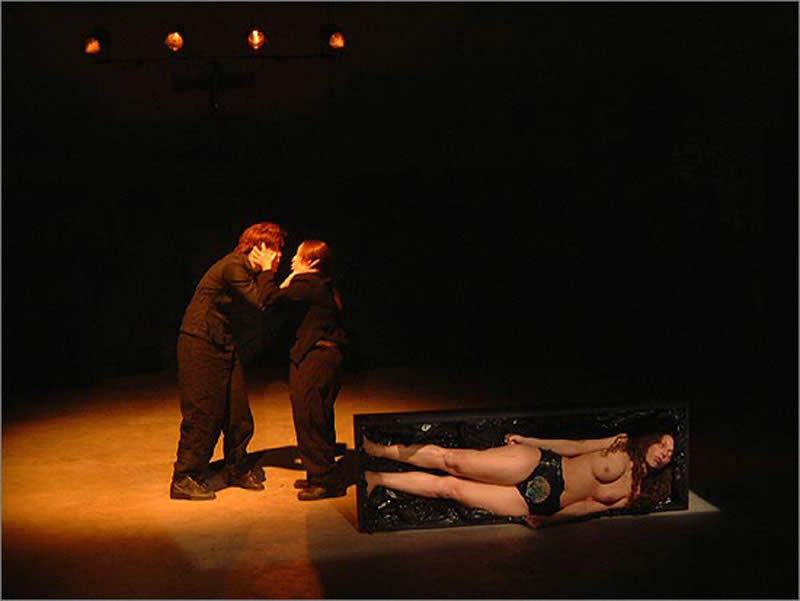
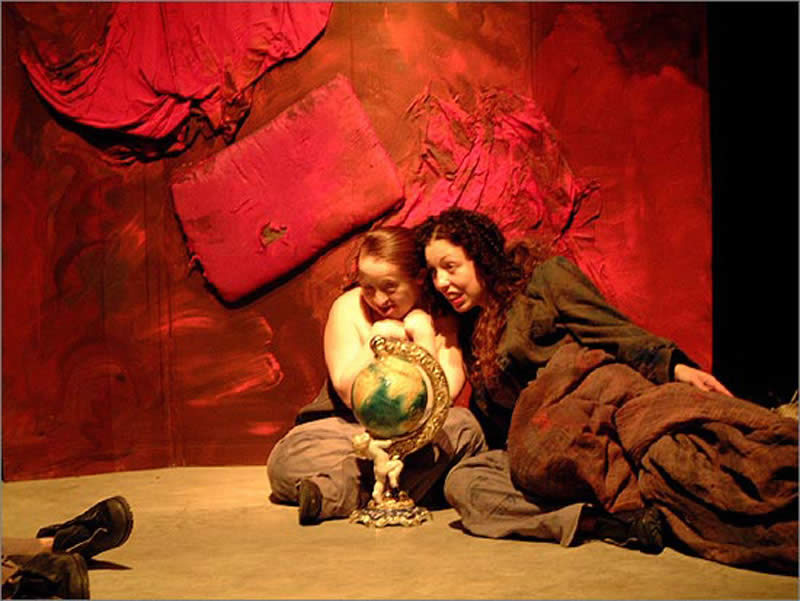
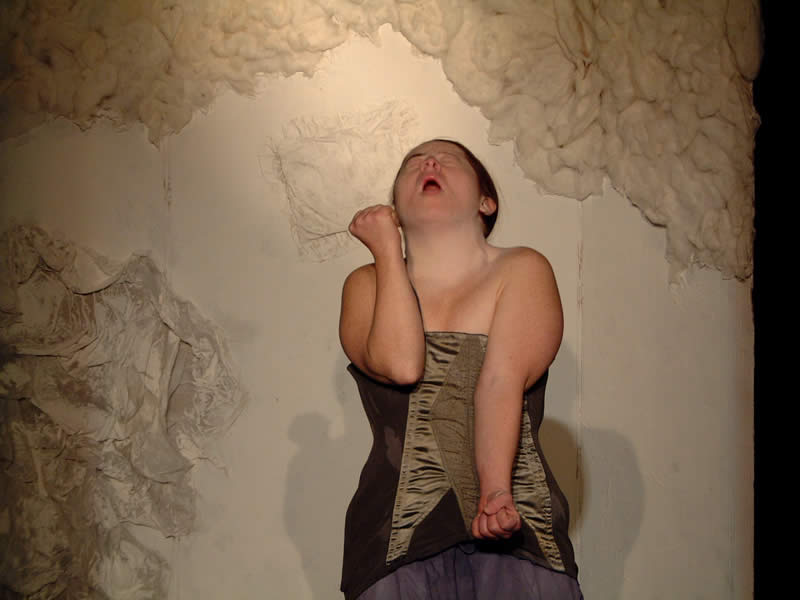
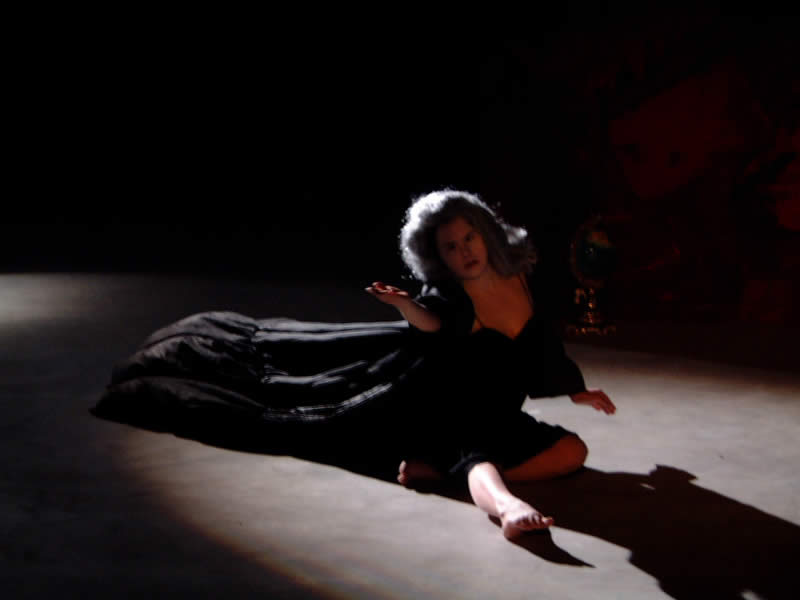
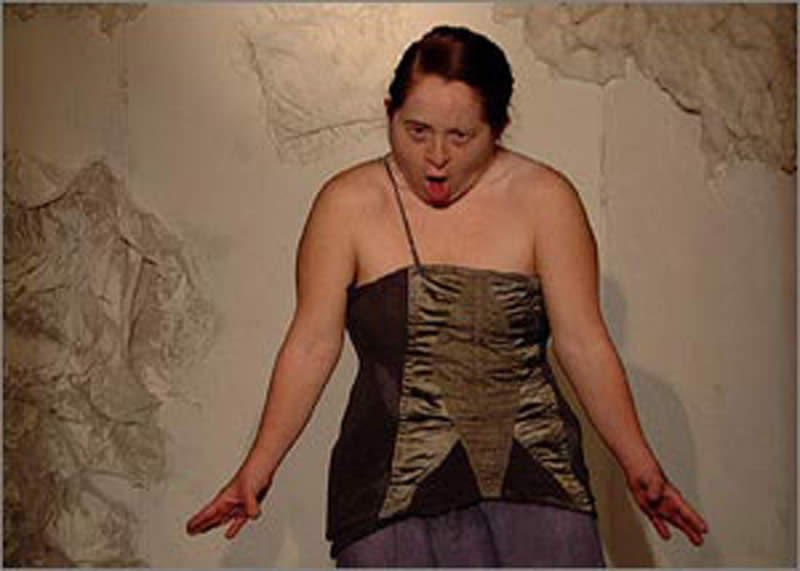
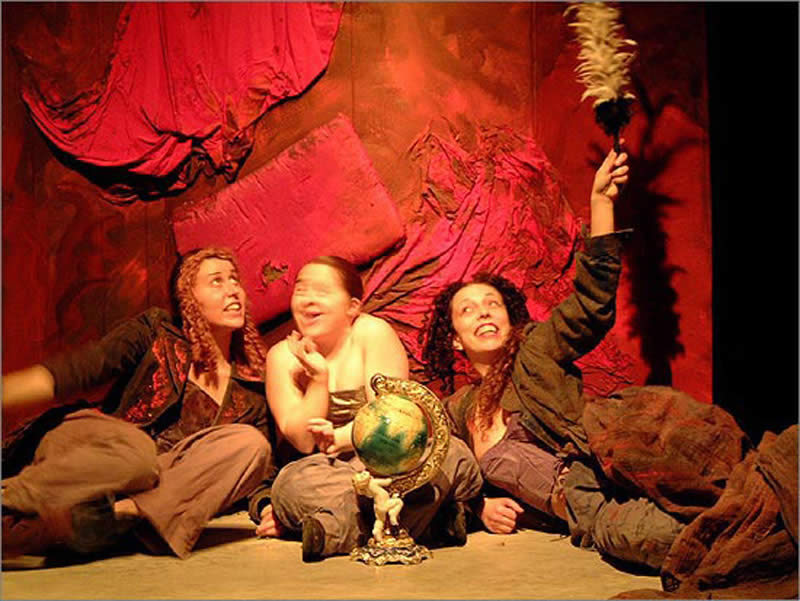
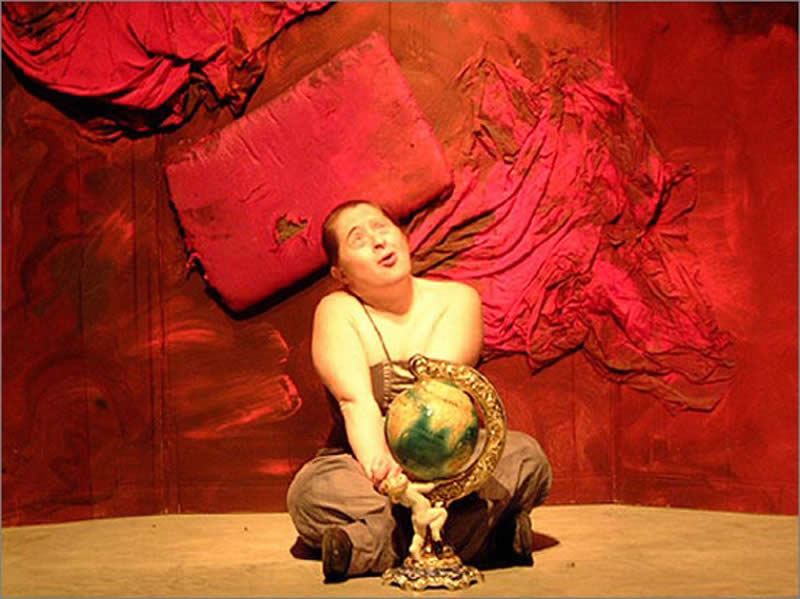
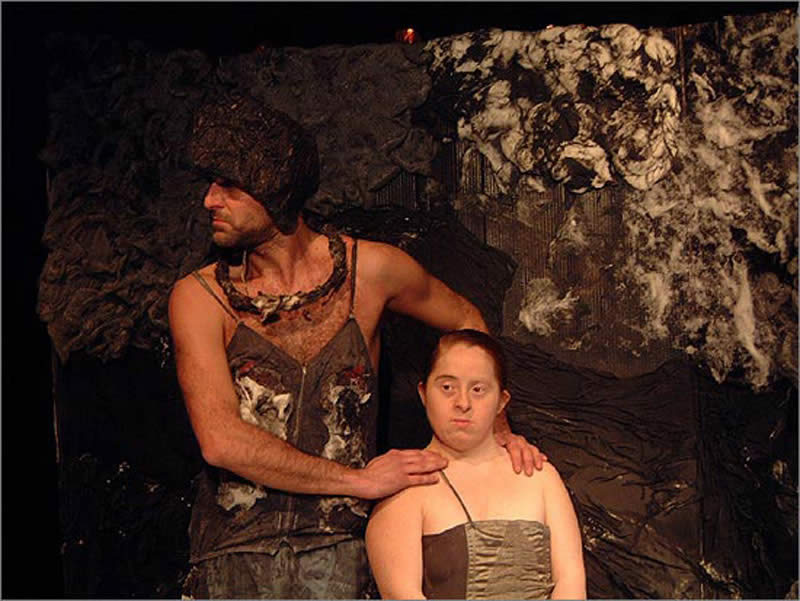
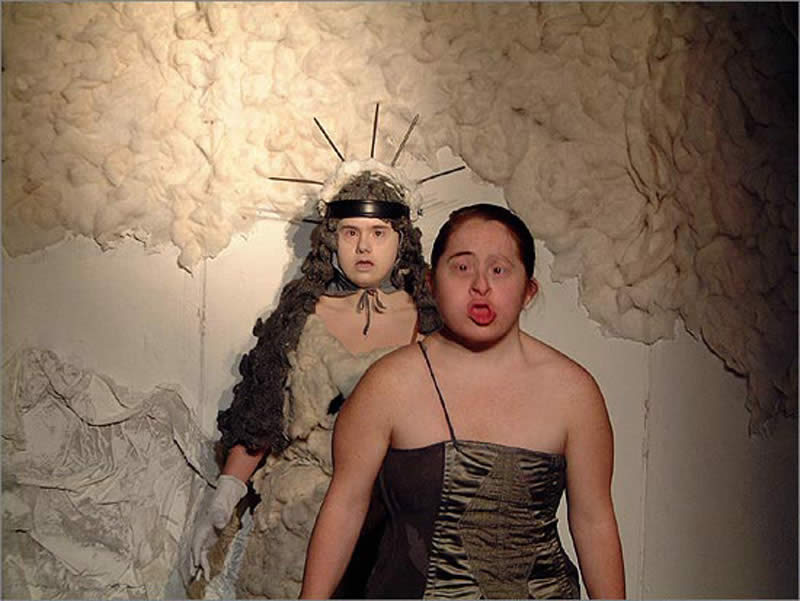
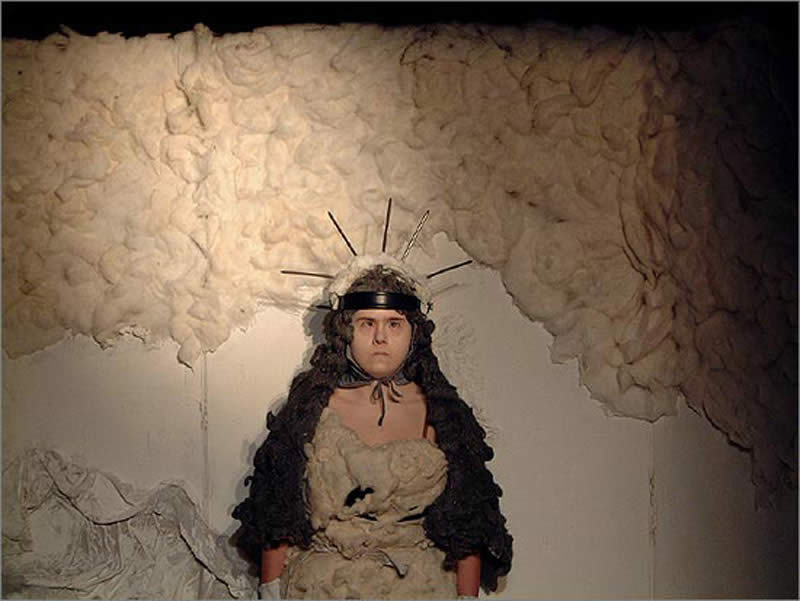

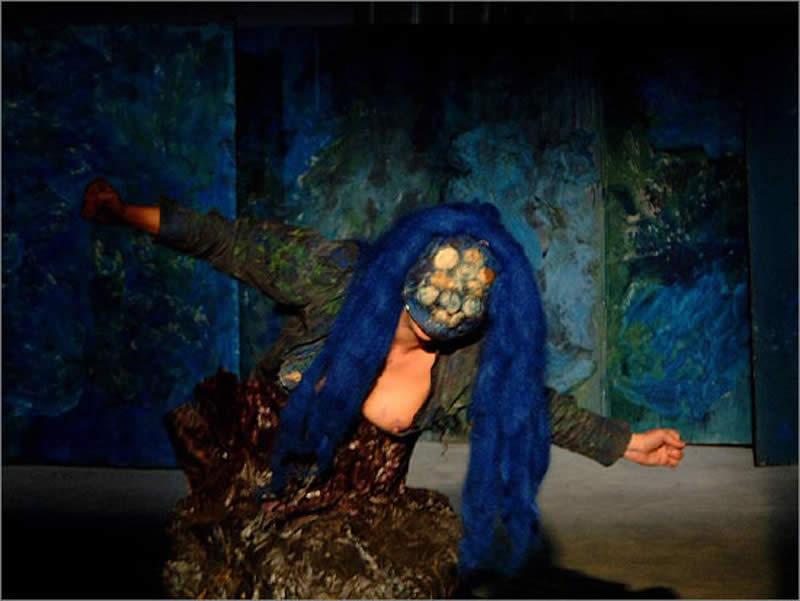
For its poetic-aesthetic contents and for the methods of inclusion of disabled actors in the Lenz Rifrazioni theater ensemble, this project presents itself as a highly innovative model of integration of disabled people into the world of artistic work, in the full exaltation of their talents and vocations.
The work has been presented in numerous international exhibitions and festivals including: Turin Hills Festival (1999), Nature Gods Theater Festival (1999), Parma Jazz Frontiers Festival (1999), European Theater Festival – Piccolo Teatro di Milano (1999), La Soffitta Theater Center of the University of Bologna (2000), Divine Festival of Settimo Torinese (2000).
Notes on the Ham-let by Francesco Pititto
A step forward in the field of language, field of superimposed signs, broken down, where the complication of the plots suddenly becomes a clear orientation map. Our research work is easy for them, from difficult and non-unique formulas they move directly to easy results. They fly over, they slip away, they fly to the point. “To be, or not to be, I there’s the point” says Hamlet. “Me here, or I not here…” with imposed assonance and firm feet planted on deconsecrated ground. Grace blesses their nature, their imagination, their talent. The theater is born every time for the first time. Straight to the point resolves the issue: Listen to me and look at me because I am beauty. They don't prepare, there is no emptying of the human condition because they enter the scene from life itself without losses. We have composed Hölderlinian and Kleistian frescoes, spoke reconstructed and new languages, reinvented sounds from Shakespearean blank-verse and collective English, set Foscolo sonnets to music and sang lost and rediscovered baroque arias: connections led us to them. They were always on the map.
Notes on the Ham-let by Maria Federica Maestri
Hamlet sings his baroque body aria, with bold folds and drapery, hero of the new time, unus who with the art of the brain holds the weight of the essence which is foreign and unknown in itself. In the badly painted cardboard rooms he hears sighing the breathlessness of the silver mother, guilty of negligent desire, Old tragedy queen, Hecuba eye of a bitch with udders swollen with sour milk. Bad is the fate that binds mother and child to gaze at each other in a mirrored portrait, both loving their strong father and new husband, muscular, but with a certain dysraphy. As a sacrifice to the pomp of the theater, without the veil of history the Infanta banishes her own blood and on her knees proclaims the nuptial bed supra omnia. This Hamlet without a member, who knows everything about nature, of his tricks, of his games, of the puzzles, of deceptions, of the jokes he coaxes, he soon learns revenge. He now inflicts harsh punishments on the soft and beautiful Ophelia, red-dressed ifigenic heifer, doe, cause, virgin of Aulis of sex kidnapped, bleeding on the altar. Marinated in rock bubbling with shells curses his faceless end. Hamlet armed with bad thoughts, in full uniform and decorated he condemns the villains of the state to death. Horatio is against him in the duel, younger and more beautiful, true glory of defeat, if by dying in the finale he robs him of the victory of his unparalleled saying.”
Ham-let Suite by Adriano Engelbrecht
The origination of perpetual chimes, detectors of an irrational time, extension of the soul, introduces us to the other time of theatre. The generation of rhythmic arrhythmias, of hearts whose beats passionately govern the meeting between Hamlet and the Ghost, they are a prelude to the construction of musical forms that have matured over history and were originally danced. The meeting between theatrical action and its musical life is inscribed in the contemporaneity of a Suite. The Consertus that wove the archaic voices of Ur-Hamlet, it now develops into an original sequence of rhythmic movements which are characterized as sarabandes, quadriga, jacket, marches, songs and hymns. E’ in the timbral chromaticism that covers the range of percussive instruments to arrive at the viola sound, cello, mandolin and voice that completes the entire dramaturgical journey. Melodic dispossession of Bach's stylistic features, research on original fragments of Greek music, baroque arias abandoned to daring vocal writings, they reveal the possible elsewhere of every artistic form.
HAM-LET
from Hamlet by William Shakespeare
translation and dramaturgy || Francesco Pititto
tragic theme and direction || Maria Federica Maestri and Francesco Pititto
music and performance || Adrian Engelbrecht
cartoons, costumes, you decorate || Maria Federica Masters
interpreters || Pierluigi Feliciati, Sara Monferdini, Elisa Orlandini, Sandra Soncini, Barbara Voghera
production || Lenz Refractions
first || Vascello Theatre, Roma, 1999
duration || 90 minutes