






EXILE
and Sadness ed Letters from Pontus of Ovid
Creation | Maria Federica Masters, Francesco Pititto
Translation, imagoturgy | Francesco Pititto
Habitat | Maria Federica Masters
Musica | Andrew Azzali
Interpreters | Valentina Barbarini, Elena Sorbi, Laura Vallavanti, Barbara Voghera
Production | Lenz Refractions
Lenz Rifraczioni presents the world premiere of Exile, created by Maria Federica Maestri and Francesco Pititto, music by Andrea Azzali, visual and performative work inspired by Sadness and at Letters from Pontus – works from Ovid's exile in Tomi (the current Constance) in Romania – made for the film part in the places where the Latin poet spent the last years of his existence. Exile marks a further development of Lenz's poetic re-figuration Refractions begun with Radical Change (2007) e Chaos (2008), creations inspired by Metamorphosis of Ovid.
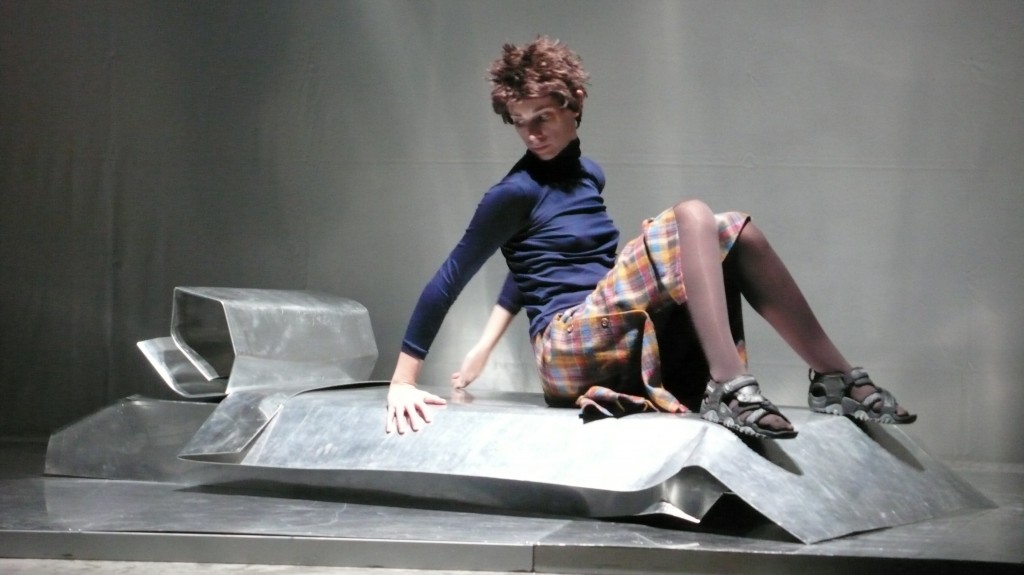
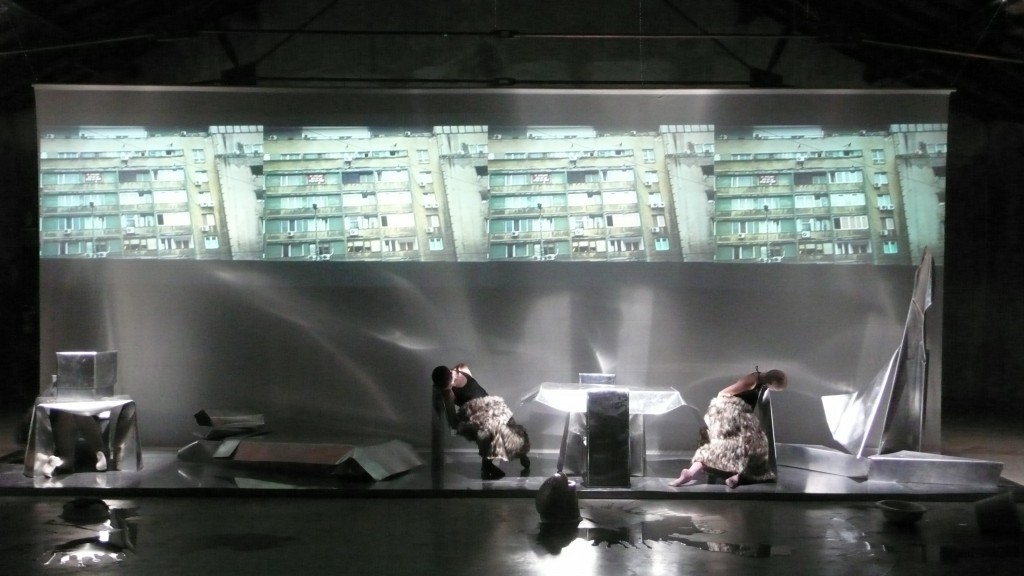
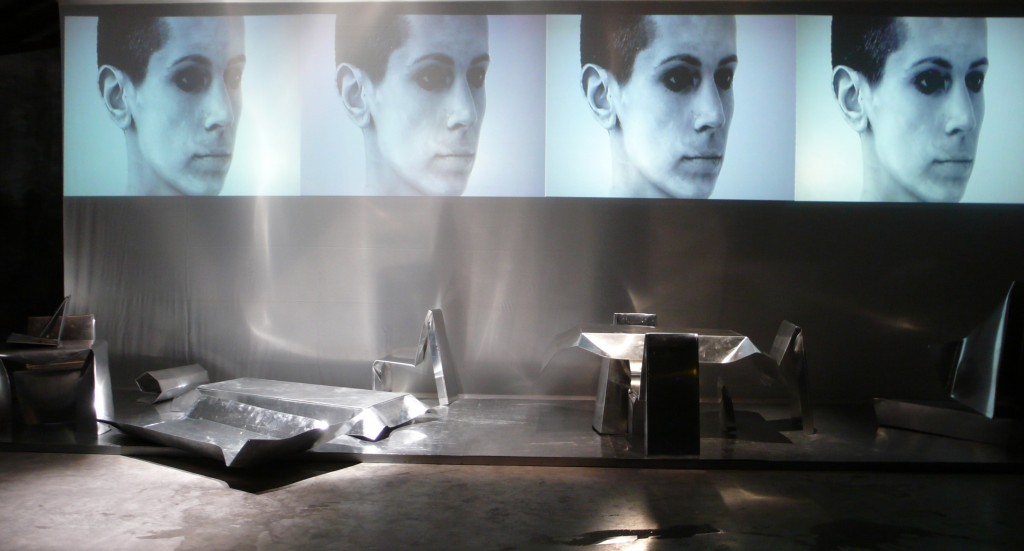
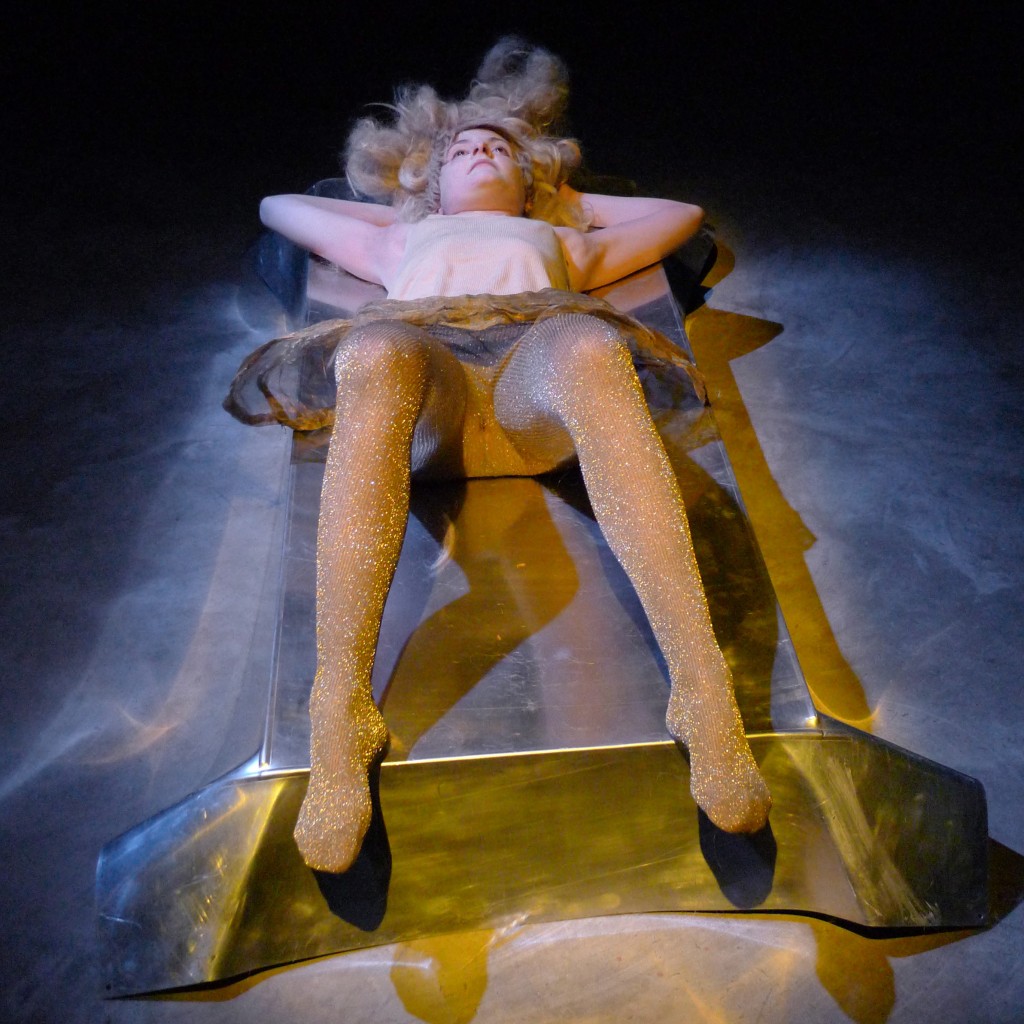
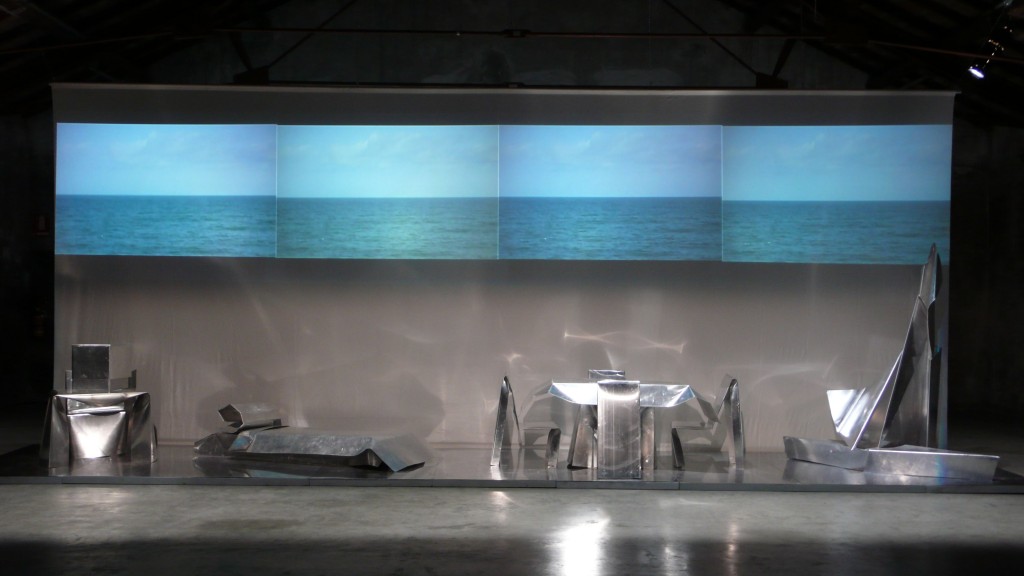
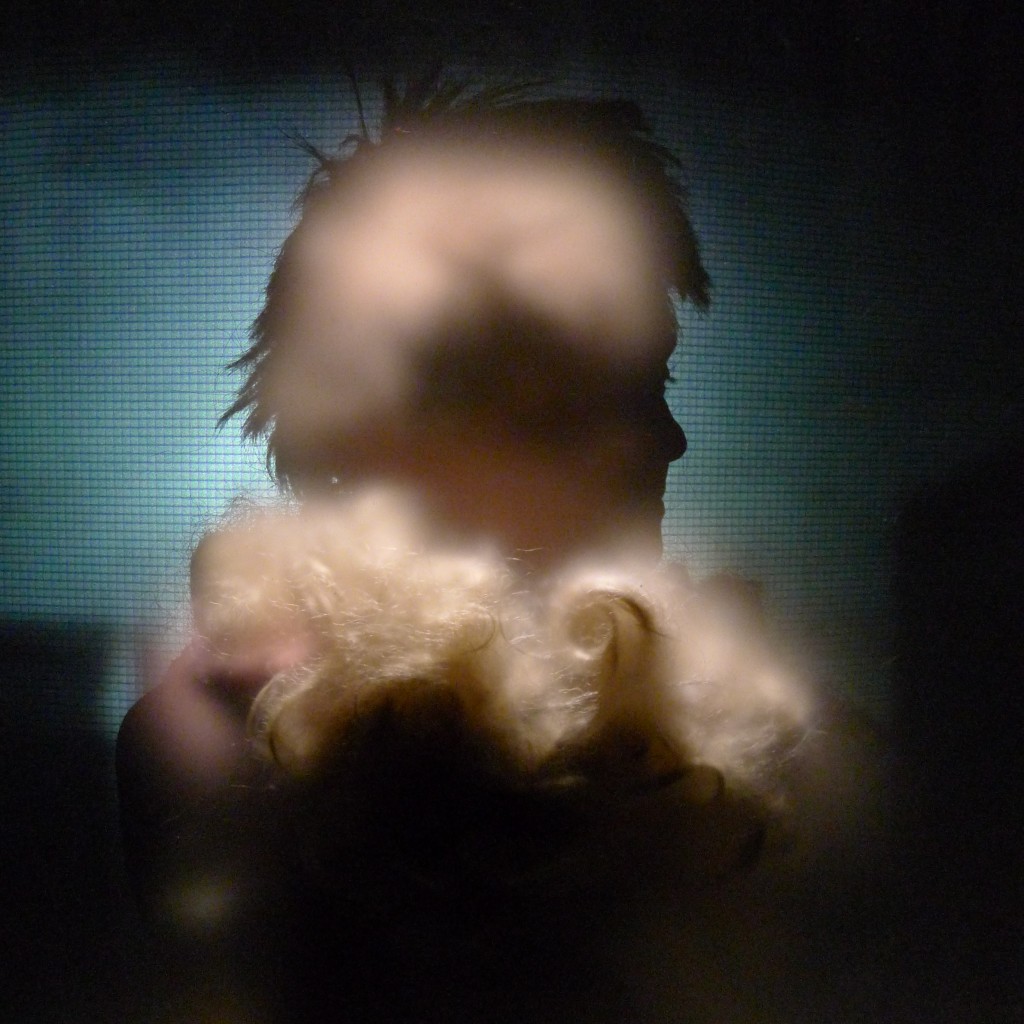
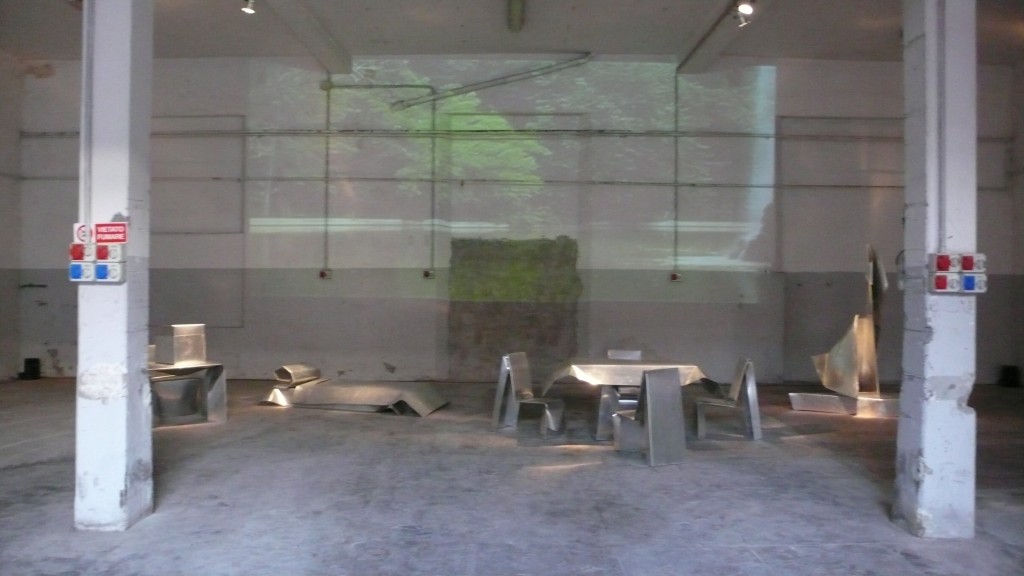
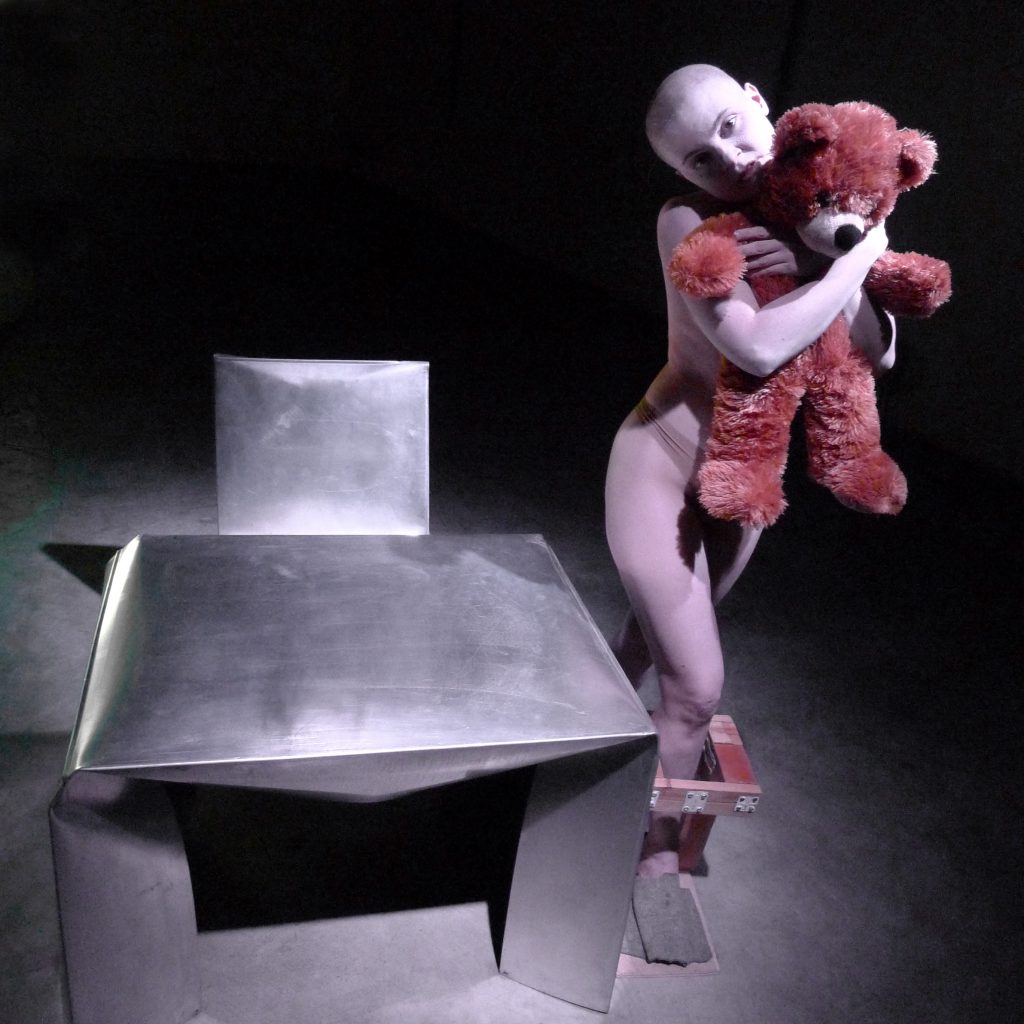
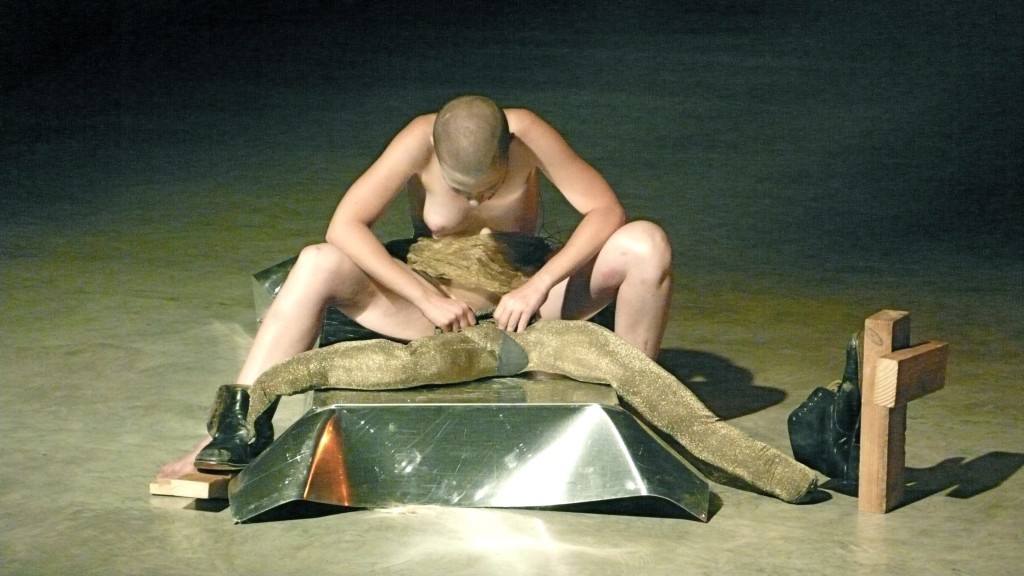
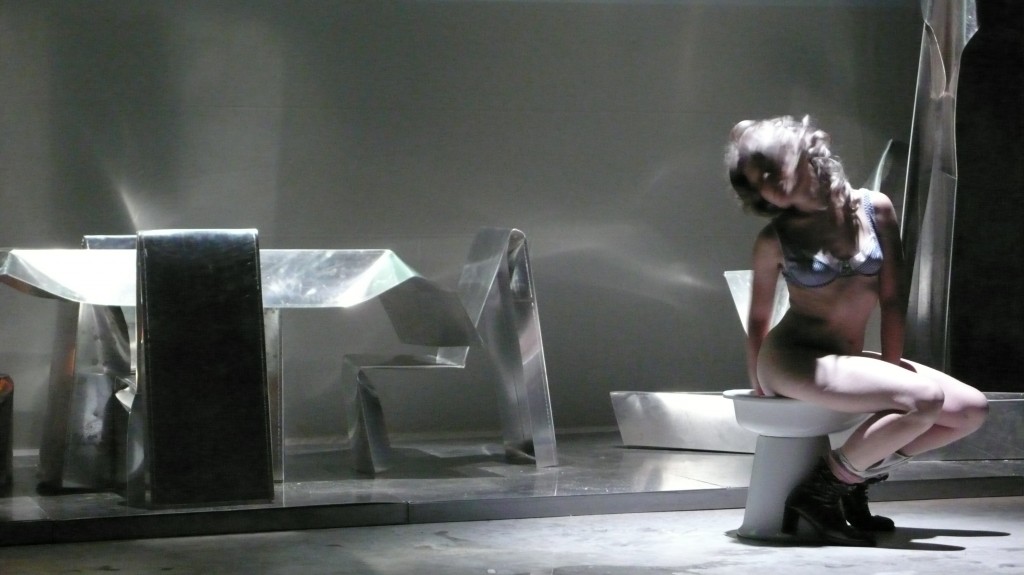
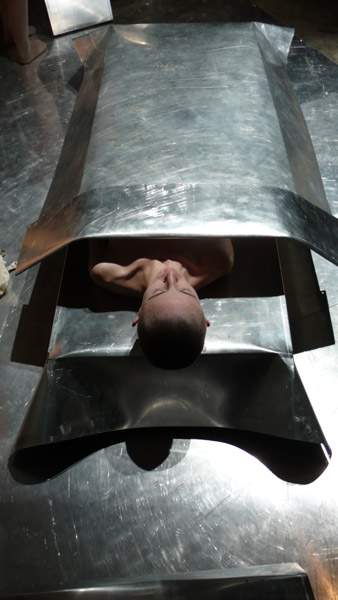
In the modern world, voluntary exile - exilium voluntaryum - practiced for reasons of subsistence has been added to imposed exile, to escape situations of war and ethnic persecution, to defend one's life and that of one's family members. Lenz Rifrazioni's exilium outlines a map of human and artistic representation of this suspended condition, of this irremediable atopy; less obvious forms of exile pertaining to a human geography confined to the urban countryside, in which subjects are exiled from beloved bodily locations and forced into saddening environments: exilia in interiors and exilia in exteriors can combine into a single non-existent existence signaled exclusively by being ex-habit and ex-habitat.
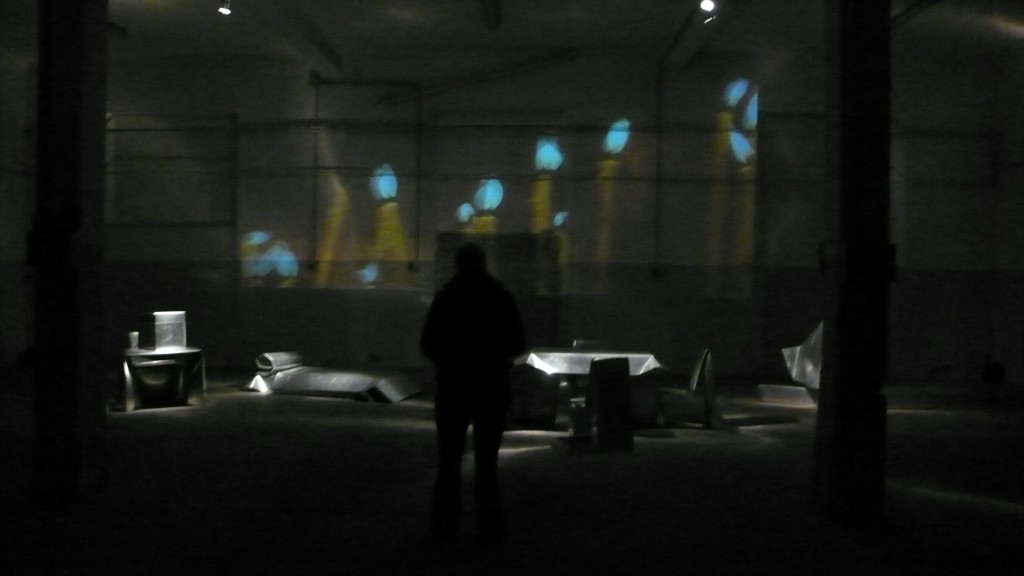
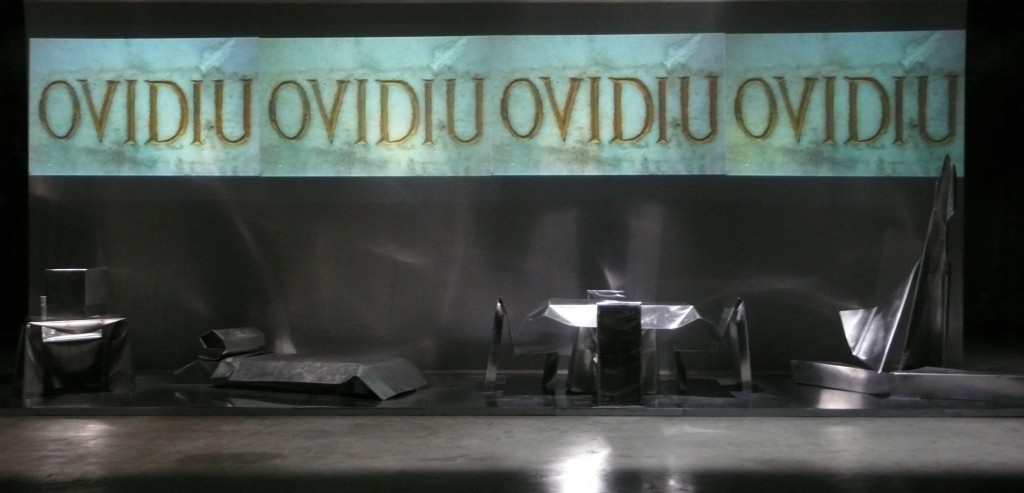
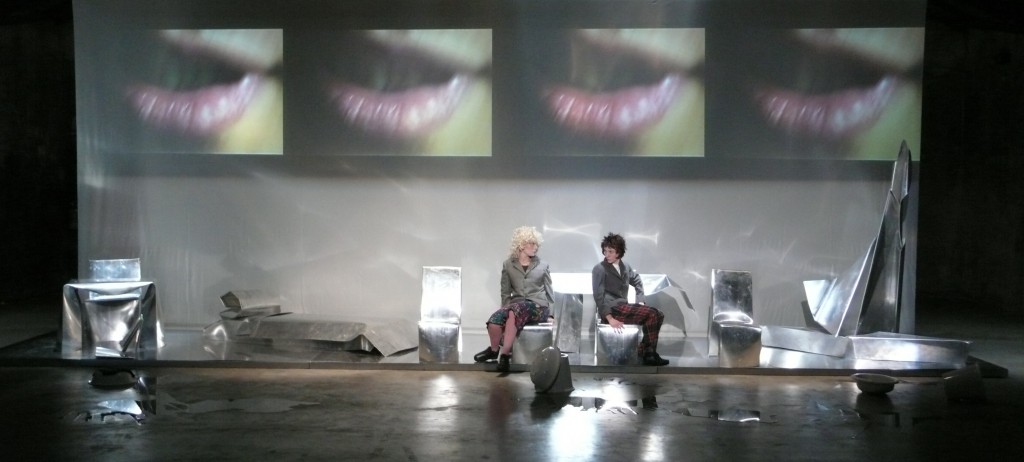
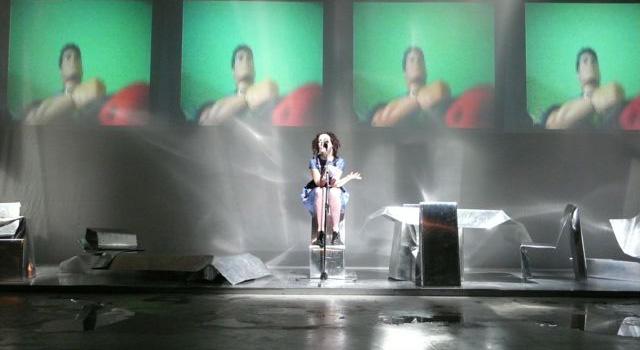
The visual system of the performance is made up of a material habitat in which some domestic-metallic-anatomical aluminum forms are installed, simulacra of a condition of violent daily life in exile: a table with a book, a bed, a table with four chairs and a small boat – symbol of the journey and of the many tragic epics by sea – dominated by four serial screens that imagoturgically tell the story of Ovid's Romanian exile. The unity of the space/habitat that hosts the various performative actions reflects the unity of a calibrated existence - from birth to death - starting from an uninterrupted and immanent condition of exile and loss.
Body and intimate washing, maximum exposure of the body's fragility – linked to a dynamic of imprisonment and distance from one's land - outlines a geography of exile of the body and from the body constituted by a violent sharing of one's intimacy. The exile and separation of a new human life from its creator are enucleated in the identity of the embryonic body: through an exchange / comparison between mater and filia gives substance to the anguishing matter of a modeling work that generates the definitive detachment. The animals, monkeys and tigers without nature anymore, exiled in a domestic interior built by the action of man, almost zero in their natural and wild movements, they suffer from environmental inadaptability to the metal objects of the habitat, showing the claustrophobic distance between natural and artificial.
In the lack of communication between two lovers, forced into exile by happiness and sex, the resignation of the bodies to the definitive defeat stands out, to alienation as an urban dynamic that structures social relationships, now deconstructed by the domestic solitudes of contemporary suburbs.
In exile from the house the wooden models of chairs, beds and wardrobes – contained in a suitcase full of objects – they are structured as material icons of reference to recover the memories of the land of origin, worn out by constant departures and forced to be contained in too small spaces. The bed of old age, of illness and death welcomes the dying and tormented body in exile from life, forcing it into definitive fixity: the metal sheet covers the body like a shroud at the end of oncological therapy. In the anguished and heartbroken chant of a little girl who playfully recites a very intimate Polish nursery rhyme, the dramatic exile of the Jewish people appears with violence, identifying the absolute tragedy in raped childhood.
The metallic elements of the habitat, now forced into the agony of superposition and oblivion, they take the form of a definitive deconstruction: placed one on top of the other they lose their symbolic and creative power, ready to welcome the definitive departure and exile. In the final exile of the metal boat, filled with clothes and identity objects, the plastic horror of the shipwreck of migrant bodies appears, at the mercy of the waters that they are forced to cross while fleeing from a land where they can no longer live.
Ovidian poetic traces – written during the Romanian exile – cross the performative scenarios of the work, recited by performers and young Romanian actresses and actors from Constanta, providing a commentary in the form of letters, placed as dramaturgical elements that substantiate the condition of exile and atopy common to all living beings.