







DELIVER TO US, GIRL, YOUR EYES
DELIVER TO US, GIRL, YOUR EYES, created by Maria Federica Maestri and Francesco Pititto, is the first ever theatrical transposition of the text The Ballad of Little Red Riding Hood by Federico García Lorca (Ugo Guanda Publisher 2005), poem in verse written in 1919 by the great Spanish poet and playwright and remained unknown until the mid-1990s. The rooms of the Royal Palace of Colorno are at the center of a large installation of visual and performing art. The text, retranslated and adapted for theatrical performance, presents, thanks to the particular poetic writing and narrative structure, particularly stimulating characteristics for the reconstruction of a poetic landscape whose boundaries, territorial and cultural, they go to the origins of the childhood imagination and memory of the whole of Europe. The retelling of the Grimm fairy tale, the reference to Dante's Divine Comedy, Lorca's poetic passion constitute a powerful metaphor for a contemporary vision of the real world. On stage Barbara Voghera, historical sensitive actress of Lenz Rifrazioni, former protagonist of Ham-let and of Lenz's successful project dedicated to the fairy tales of the Brothers Grimm, together with Valentina Barbarini interpreter of Lenz's most recent works. The original music of the new creation by Lenz Rifrazioni was created by Robin Rimbaud / Scanner, London-based electronic musician who has collaborated with musicians such as Radiohead, Bryan Ferry and Laurie Anderson and has exhibited and created works in the most prestigious contemporary art spaces including the Hayward Gallery in London, the Center Pompidou in Paris, the Tate Modern Gallery in London, the Macba of Barcelona, the MoMA in San Francisco.
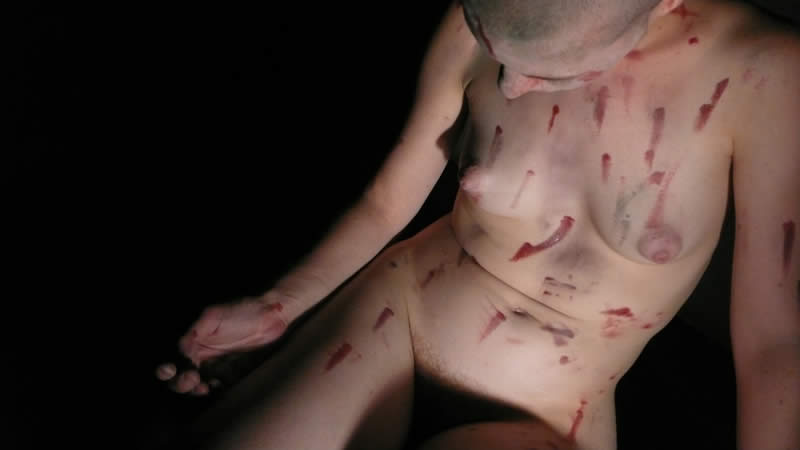

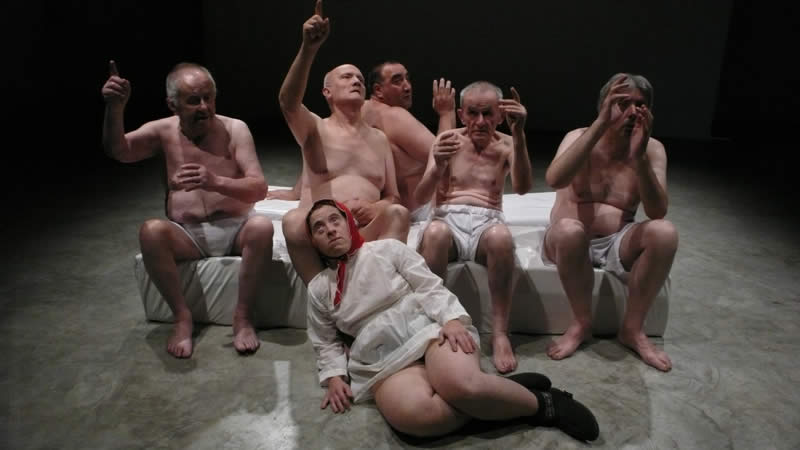
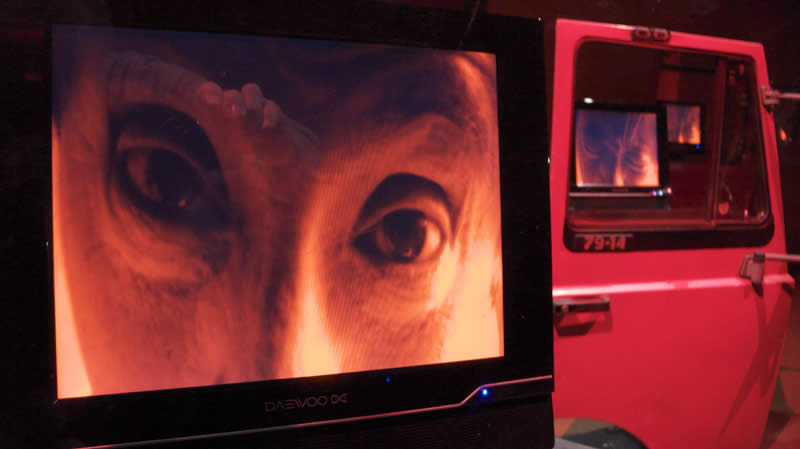
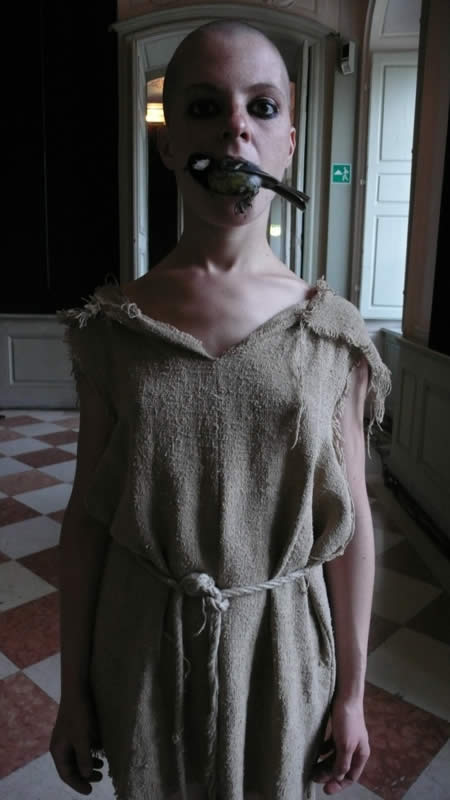
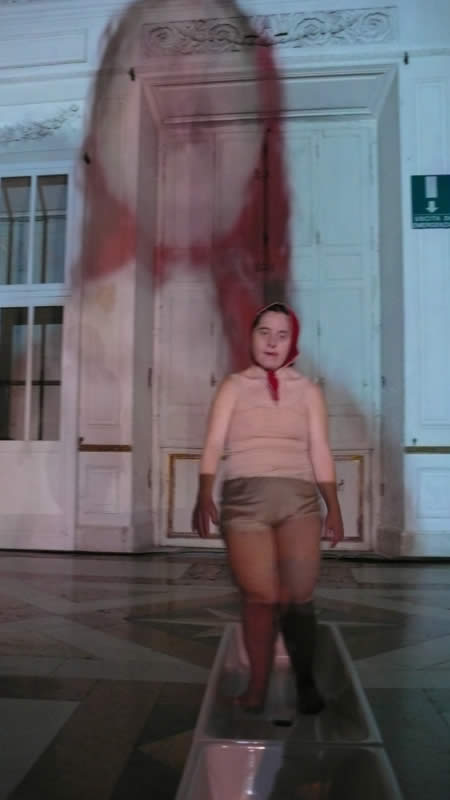
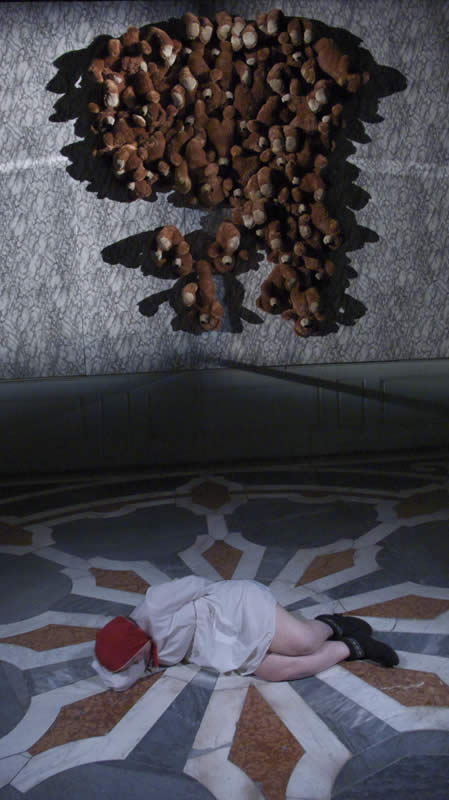
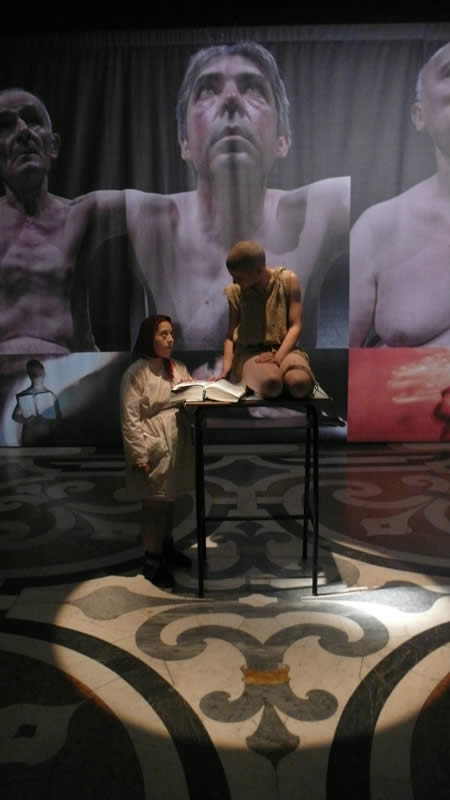
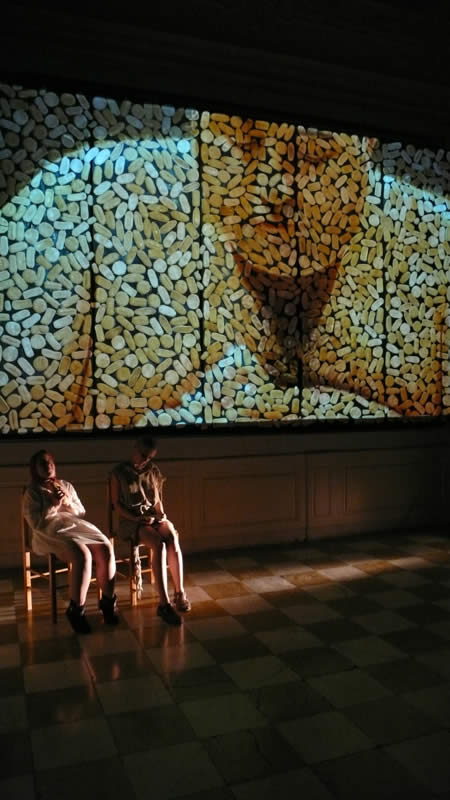
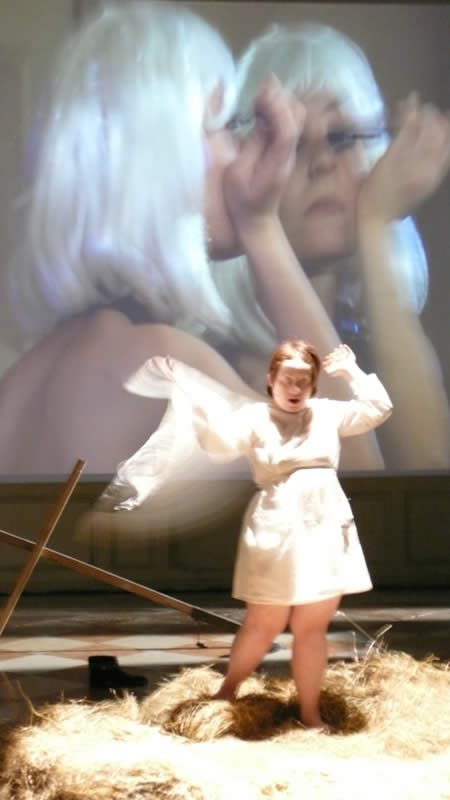
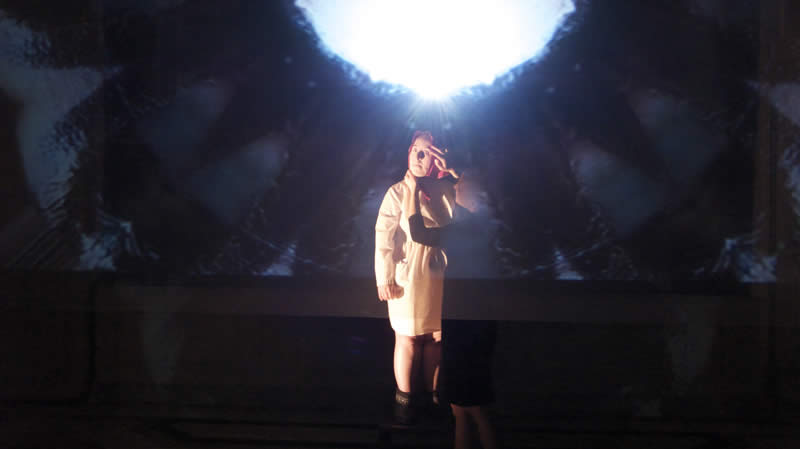
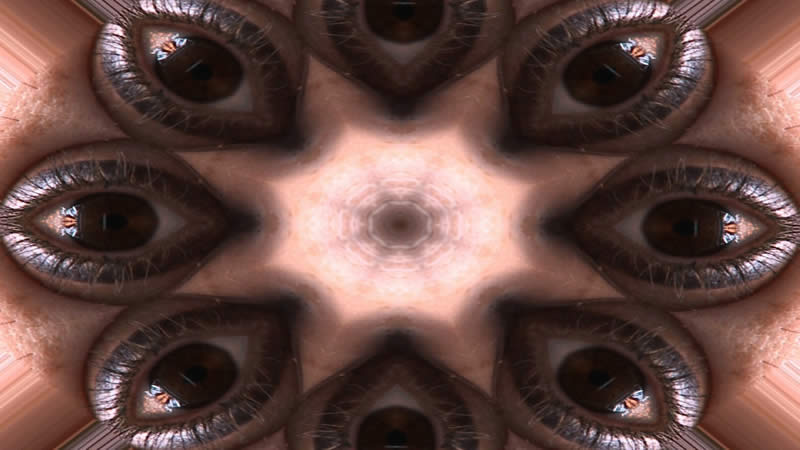
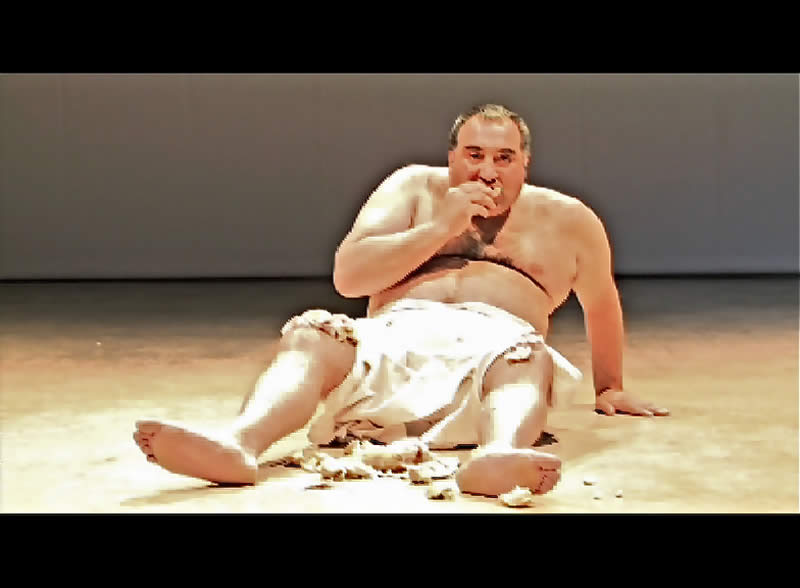
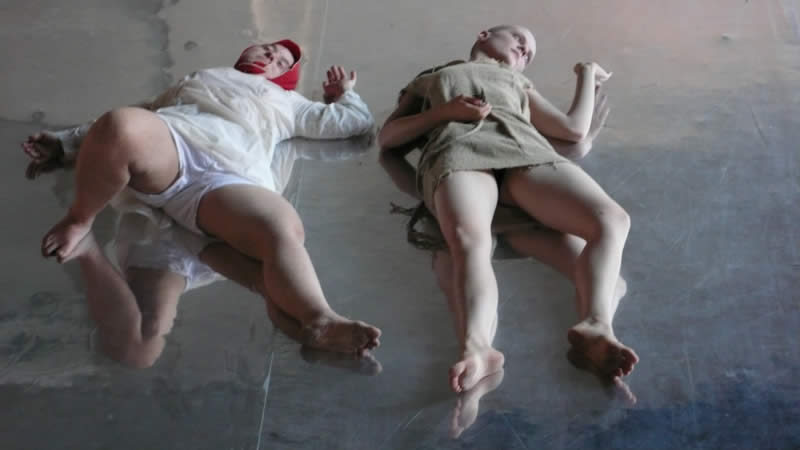
Within this original fairy tale of great aesthetic strength we follow the path of Little Red Riding Hood lost in a dark forest reminiscent of Dante, inhabited by flowers and cruel butterflies, monstrous beings who want to tear away the childlike purity of his eyes. But the path transcends the primary nature of the body to access the place of spiritual enlightenment. Through the holy bath, immersion in a baptismal stream, Little Red Riding Hood's journey to Paradise begins. His guide is Saint Francis of Assisi, il “poor guy” God's jester, who loves every being in creation: in a relationship of continuous chasing and seeking each other, the journey continues between dream and fiction, between biblical quotations and Dante references, between elements of the popular tale and cultured suggestions. The discovery of an unknown and anything but reassuring world allies itself, poetically, to a series of meetings-visions that culminate with the vulgar sanctity of San Apapucio Pappagorgia, Lorchian invention, extreme sign of ugliness in a place – Paradise – which should contain essences of beauty and spirituality. A disfigured song full of images and words about the abandonment of purity and the clear cutting of dreams of poetry and love: a journey-travel for a limited number of spectators in seventeen fascinating rooms of the Royal Palace of Colorno. An itinerant performative action within which the Lorchian tale builds its own autonomous world of material and installation creation: between video projections, contemporary objects that denote fairy-tale contexts, real bodies and fake bodies in a generative museum of artistic languages that support a great philological path of illumination of the philosophical and aesthetic substratum of Lorch's ballad. The dark and dangerous forest that attracts confusion, an upside down Paradise inhabited by dirty and ugly saints, pagan deities and mythological figures, a Virgin crucified and removed from her iconography of beauty and perfection, a Saint Francis who in his separation from the little girl shows himself as the dark identity of all the irregular spirits of creation, after having crossed the most underground thresholds of humanity. The wolf and the hare, mythical figures between fable and tragedy, they guard the little girl who has returned to the forest, elevating her to a tragic heroine of love in a world that neither the poet, nor Saint Francis, nor will the whole of humanity ever again be able to achieve.
ROBIN RIMBAUD / SCANNER
Already a guest at Lenz Teatro in 2007 for the review “As a Little Phoenix” and protagonist of the last edition of the Natura Dèi Teatri Festival with the performance From the Head to the Hip for the edition 2008 of the Festival created the original music for CONSEGNACI, GIRL, YOUR EYES, new creation by Lenz Refractions from The Ballad of Little Red Riding Hood by Federico García Lorca. Scanner, stage name of the musician, writer, English artist and critic Robin Rimbaud, is synonymous with experimentation between the arts and a unique style in the international musical and artistic panorama. The musician crosses the experimental territories between sound, space, image and form creating a multi-level sound platform that exploits technology in an unconventional way. In his first controversial works he used the scanner, a radio interception tool, to create his musical compositions. Excerpts from cell phone conversations of unsuspecting users, civil services such as ambulances or surveillance services are sampled and inserted into the artist's music as an integral part of a carpet of sounds. This path, who intended to discover the hidden sounds in modern metropolises, she has received the admiration of artists such as Bjork, Aphex Twin and Karlheinz Stockhausen. Scanner has collaborated with artists of different genres: dai Radiohead a Bryan Ferry e Laurie Anderson, from Rambert Dance to Random Dance Company, il Royal Ballet e Merce Cunningham, by musicians such as Michael Nyman and Luc Ferrari, to artists like Steve McQueen, Mike Kelley, Derek Jarman, Carsten Nicolai e Douglas Gordon. Dal 1991 is engaged in live concerts, compositions, installations and soundtracks: gli album Mass Observation (1994), Delivery (1997) e The Garden is Full of Metal (1998) they have been defined by critics as fundamental works for the contemporary electronic music scene. In the 1994 the Sound Surface work, made with Stephen Vitello, it was the first soundtrack commissioned by the prestigious Tate Modern Gallery in London. He has exhibited and created works in the most prestigious contemporary art spaces, including the SFMOMA in the United States, the Hayward Gallery in London, the Pompidou Center in Paris, la Tate Modern & Tate Britain in London, he Palais des Beaux-Arts di Lille, the Kunsthalle in Vienna, the Bolshoi Theater in Moscow and the Royal Opera House in London. His work has been featured throughout the United States, in South America, in Asia, in Australia e in Europa.
DELIVER TO US, GIRL, YOUR EYES
from The Ballad of Little Red Riding Hood by Federico García Lorca
creation || Maria Federica Masters | Francesco Pititto
translation | playwriting | imagoturgy || Francesco Pititto
regia || Maria Federica Masters
scenic installation | costumes | visual elements || Maria Federica Masters
original music || Robin Rimbaud / Scanner
Project care || Lisa Gilardino
interpreters || Barbara Voghera | Valentina Barbarini
light design || Gianluca Bergamini, Andrea Morarelli
SOUND || Stefano Glielmi
production || Lenz Refractions
duration || 80 min
first || They color, Noble Floor of the Palace, XIII ed.. International Festival Natura Dèi Teatri, 14 November 2008
The artistic project is carried out thanks to the support of the Cariparma Foundation, of the Province of Parma and the Municipality of Colorno.
In collaboration with AUSL of Parma_Department of Mental Health
We thank the Comunidad de Herederos de Federico García Lorca for granting the copyright and Ugo Guanda Editore
– Rooms at the back
by Massimo Marino, LaDifenza_24 November 2008
(…) There are toys, plastic flowers, apparitions through room escapes, crosses worn for a path of liberation that resembles a passion by the protagonist, small, helpless, with a voice as thick as honey, full of tremors and small certainties, with the vibrant and slightly hoarse warmth of those who know, despite the fear, where to go. Among the abandoned saints, in panini triumphs, with jaws in eternal movement, there is the always-eating-everything San Trippone (San Apapucio Pappagorgia in the original). And there are also pagan gods, eat Eros, which fatally wounds Caperucita. Just an old Madonna, played by Francesco, loving and ferocious wolf in the sadomasochistic role of a young slut, will be able to medicate it, precipitandola, still trembling with that fleeting beast that is love, in the forest of the initial nightmare. While the poet's words speak of dreams that must not die and entrust the custody of this champion of the imagination and of a threatened and vanished childhood to a hare and a wolf (Still), the imagination of the authors, more wickedly, The idea creeps into us that no consolation is possible in that treacherous forest, mortal, which is life. (…)
http://www.differenza.org/articolo.asp?sezione=archivio&ID=389
![[cml_media_alt id='2254']girl[/cml_media_alt]](https://lenzfondazione.it/wp-content/uploads/2014/06/bambina.jpg)