





AENEIS IN ITALY
| A #7 Compensation | A #8 LEAD GRAY | A #9 NEPHEWS |
| A #10 Various attacks | A #11 Little girl | A #12 RUTHLESS? |
By grafting his visionary poetics onto Virgilian work, Lenz Rifrazioni artistically reworks the rhetorical figures that accompany Aeneas on his journey to re-found his homeland. Made for the film part in the mythical landscapes crossed by Aeneas during the founding journey of Latinity, the creation takes on the rhetorical figures of Virgilian epos as a body of investigation, In a critical interpretation of the iconology of the potentate and dominance.
The arrival of Aeneas in Italy seems to mark the beginning of a tragic epic that remains constant in Italian history: a war without heroes, a violence without a subject, a human architecture that is silent and incapable of feeling. Thus in a meta-historical vision of the original conflict, the occupation of Lazio by the pius Aeneas and the rebellion of the young Turnus disobedient to the new order, they are transfigured in a time that has just passed, the mournful night of the seventies.
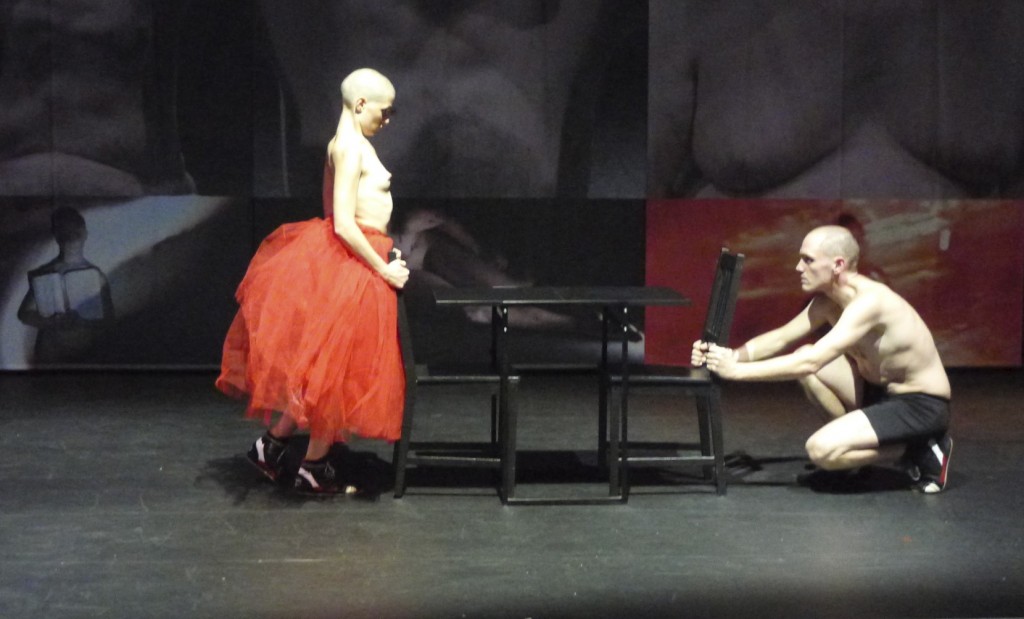
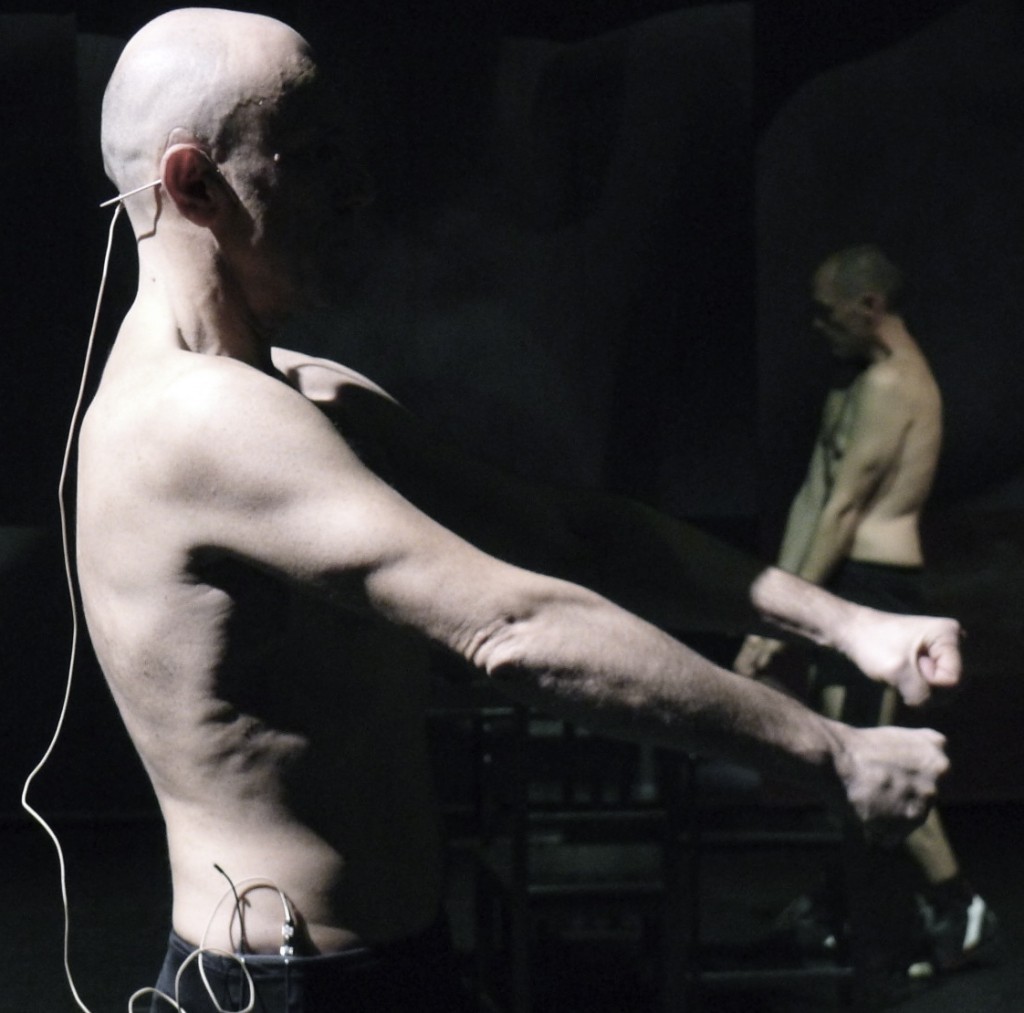
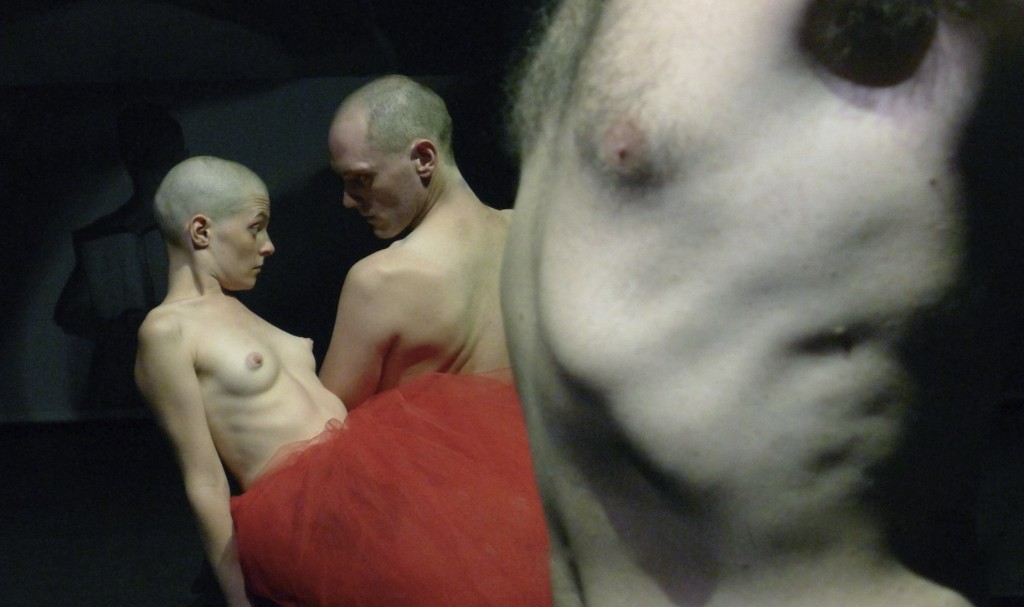
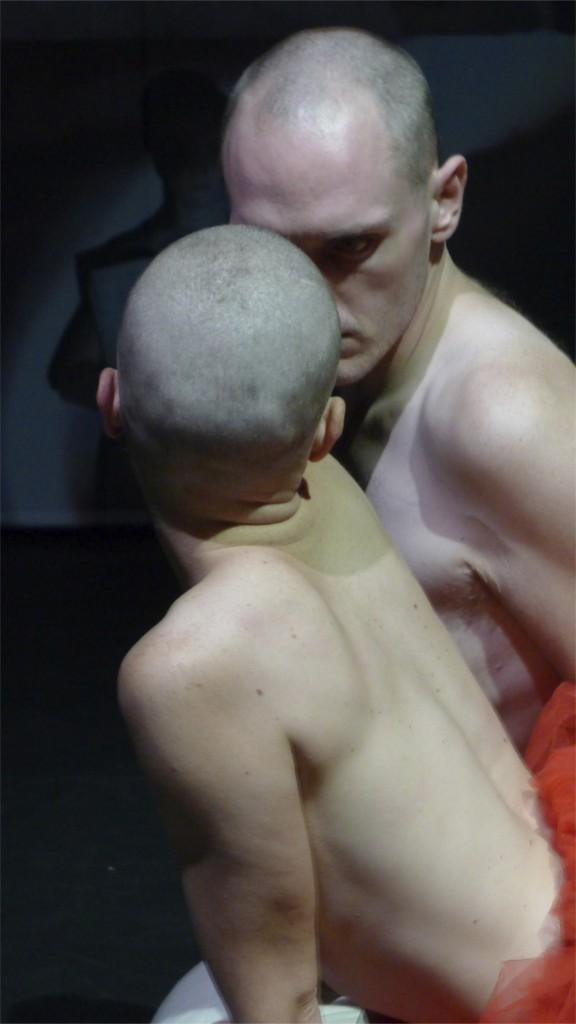
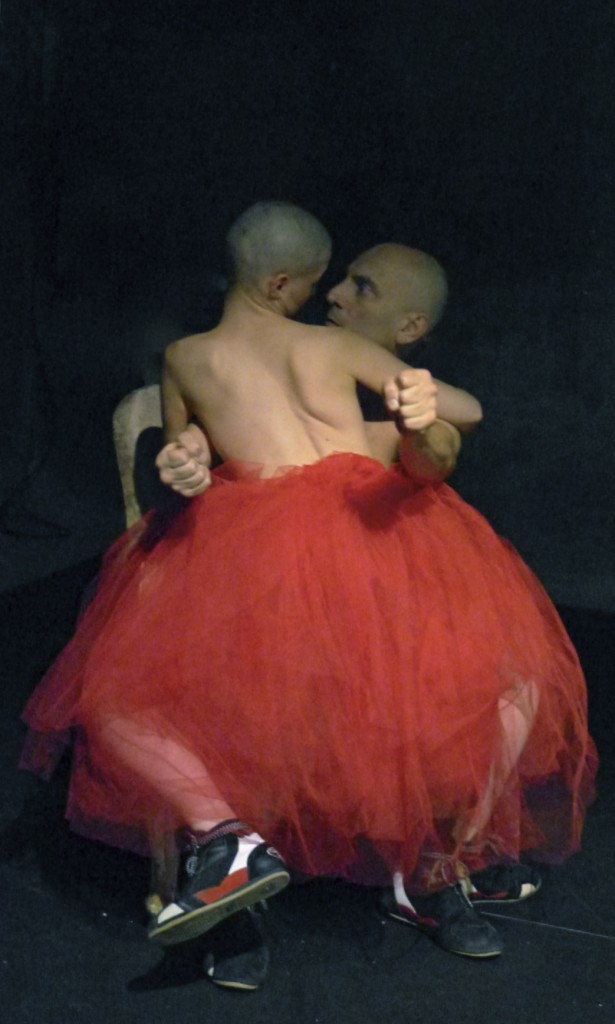
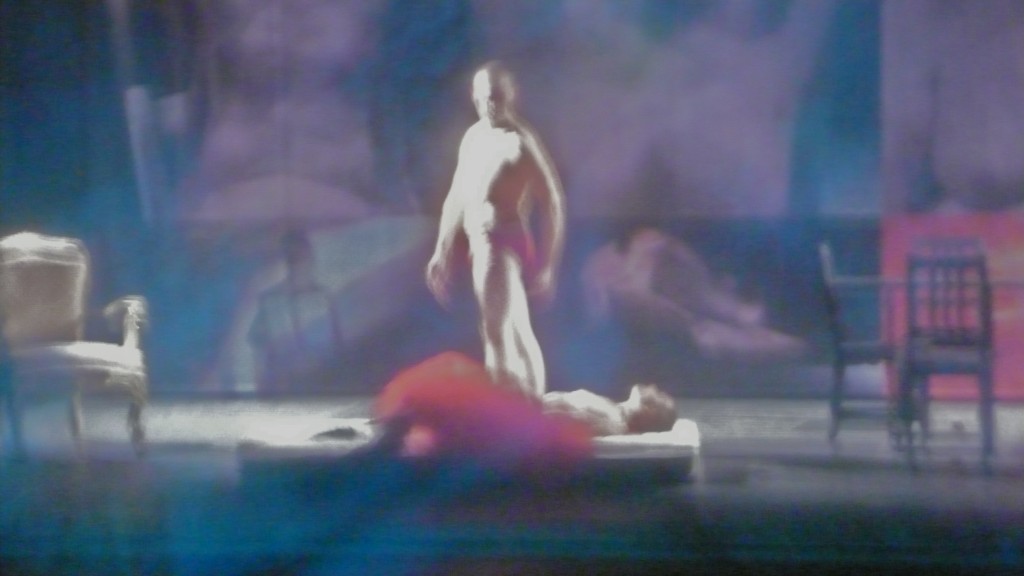
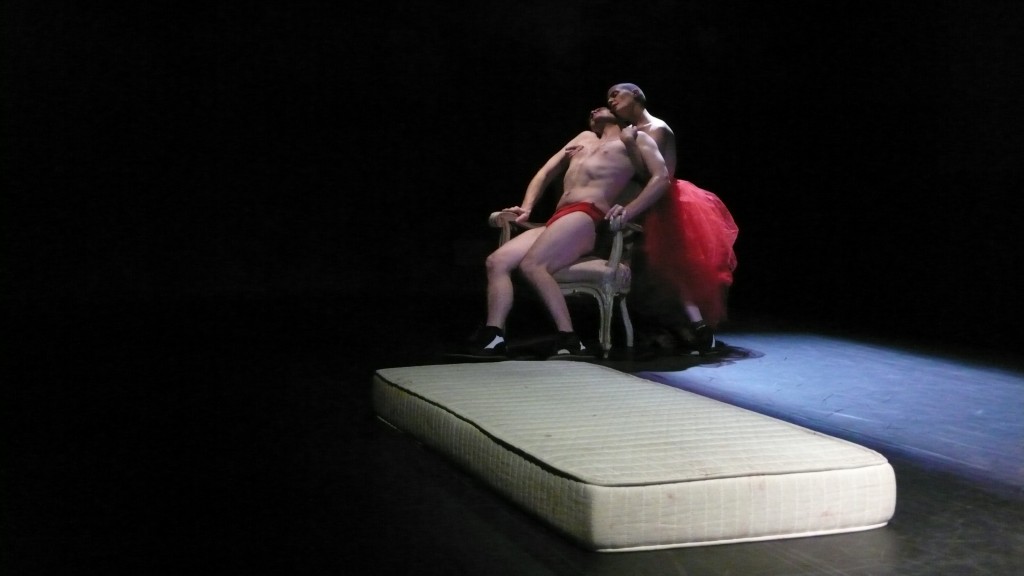
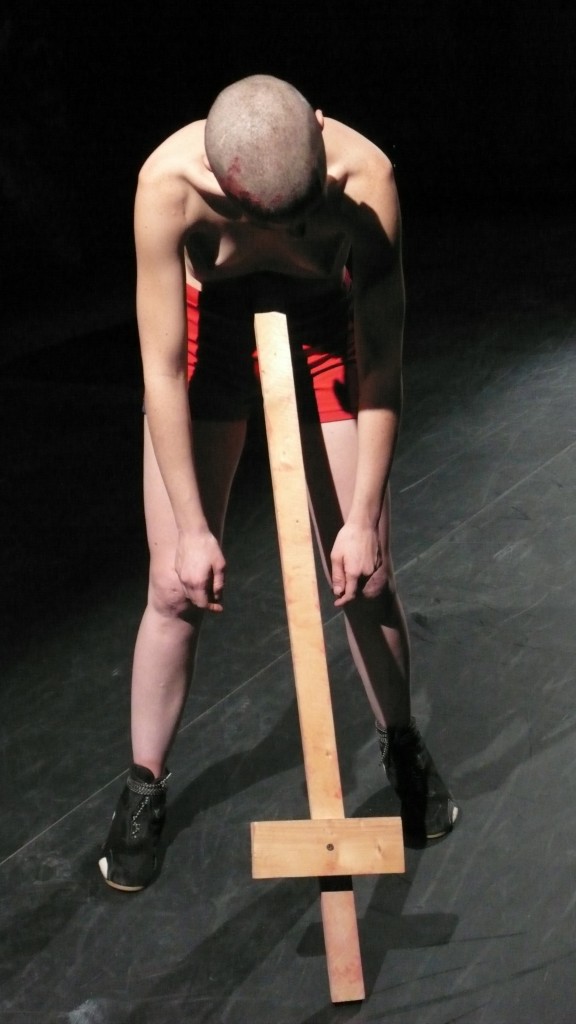
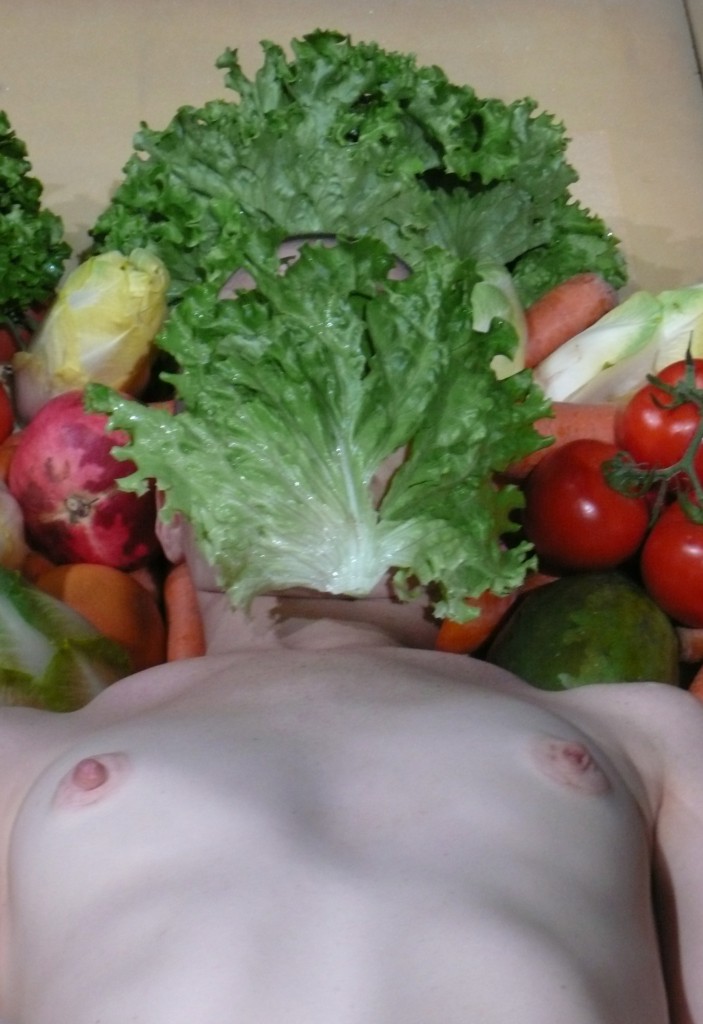
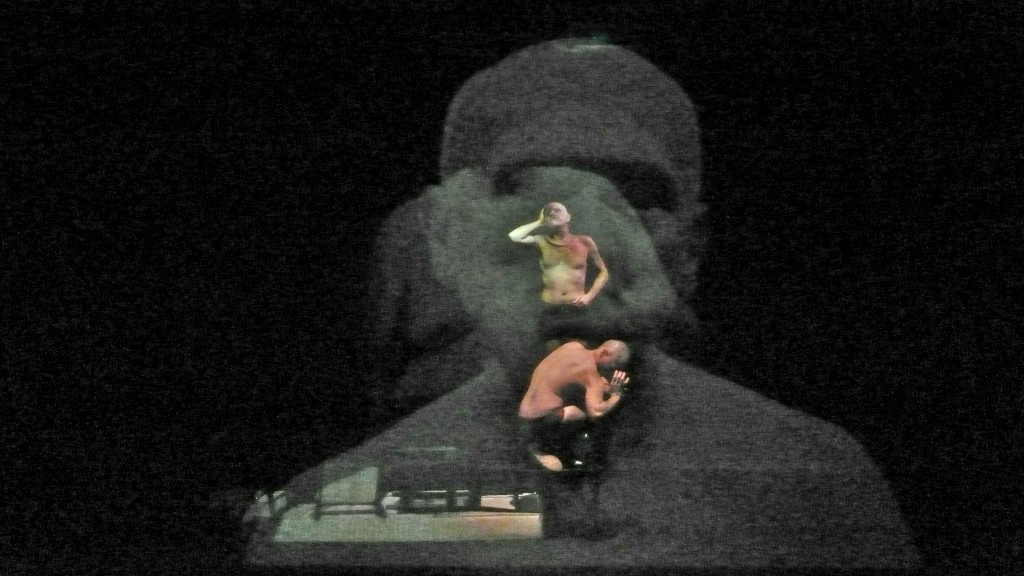
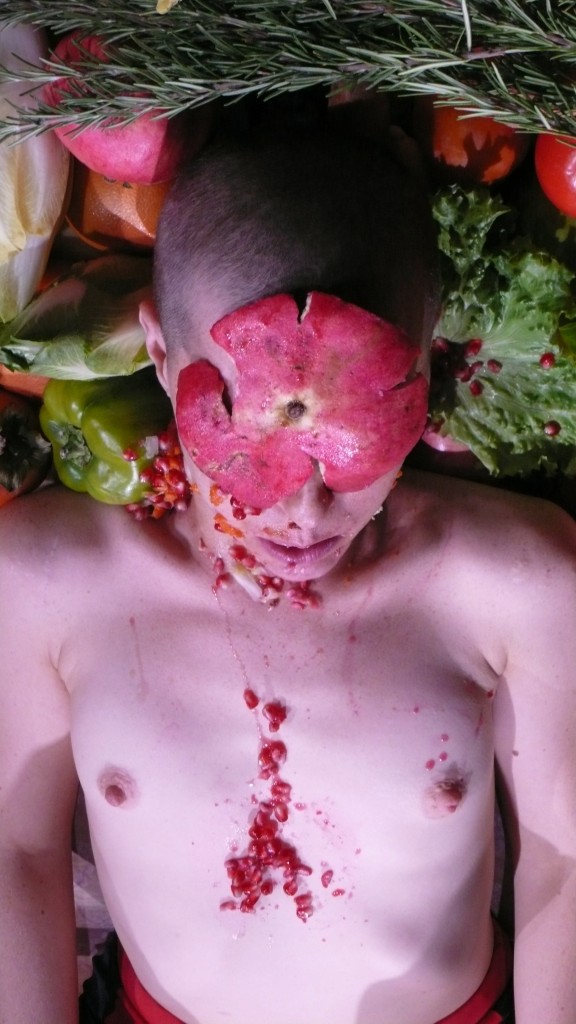
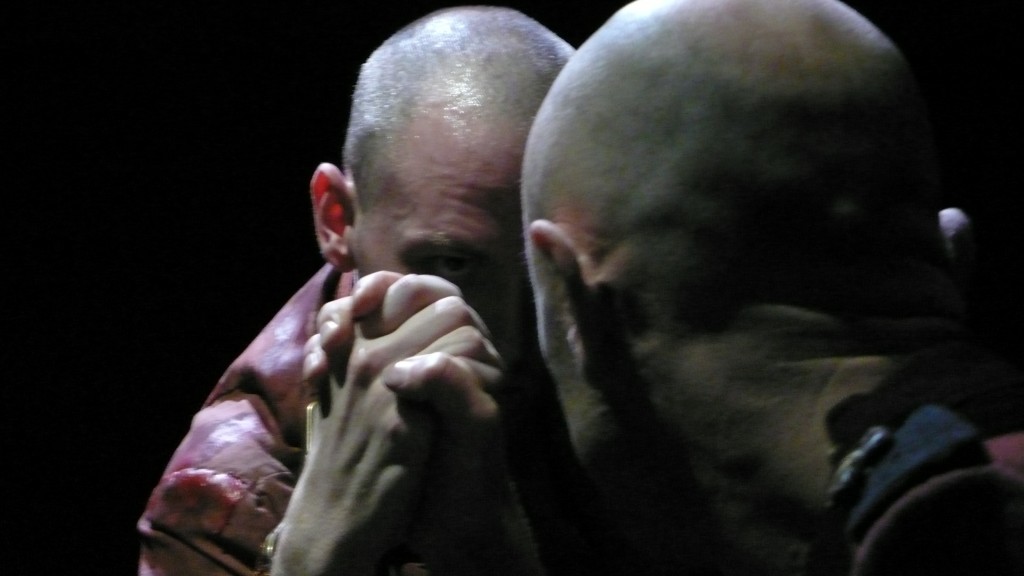
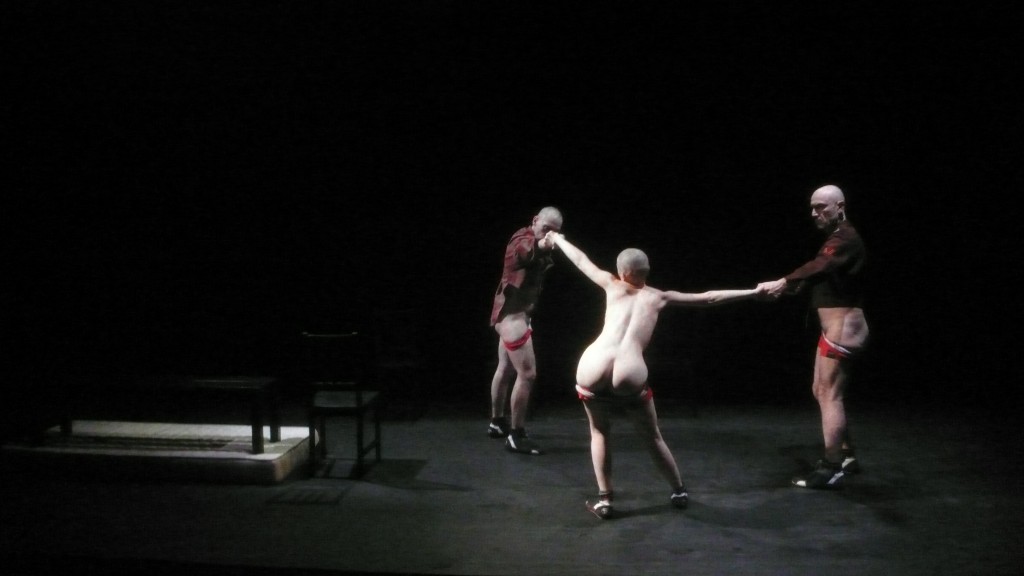
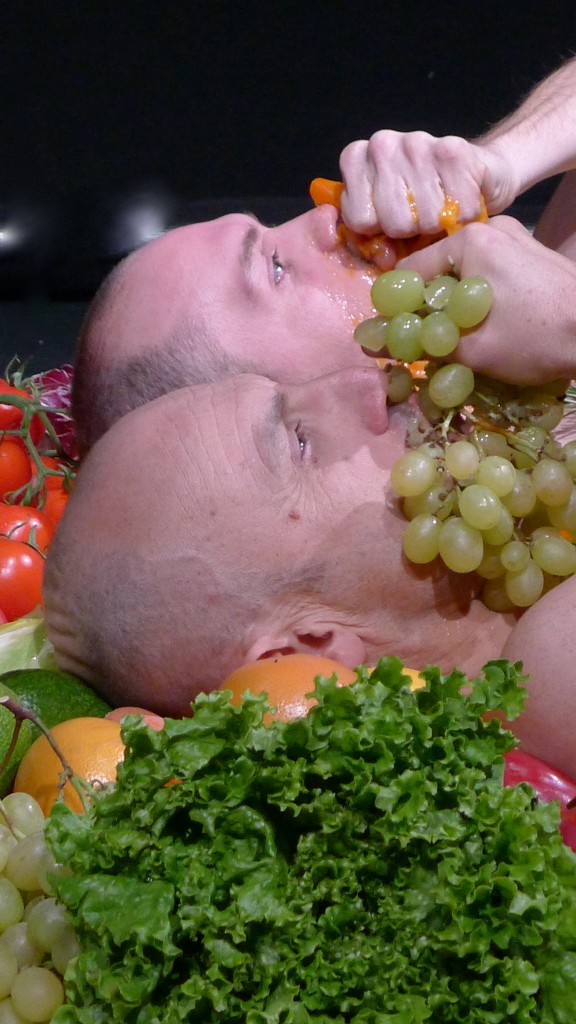
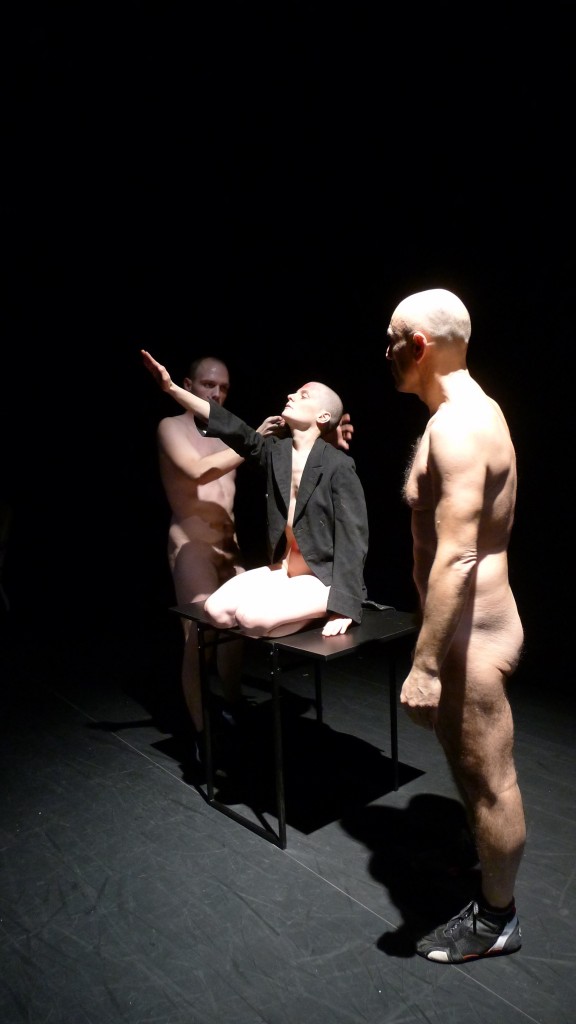
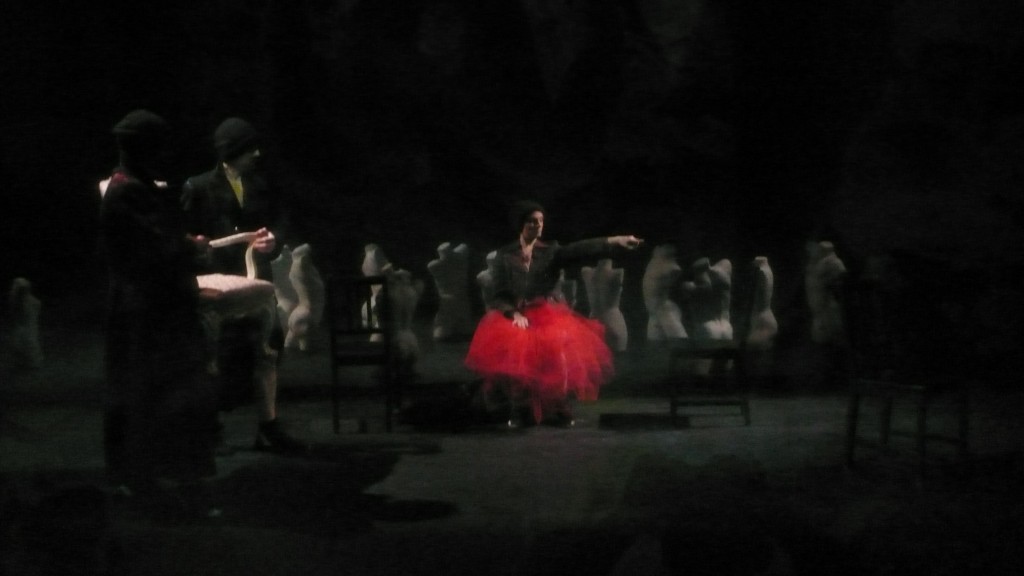
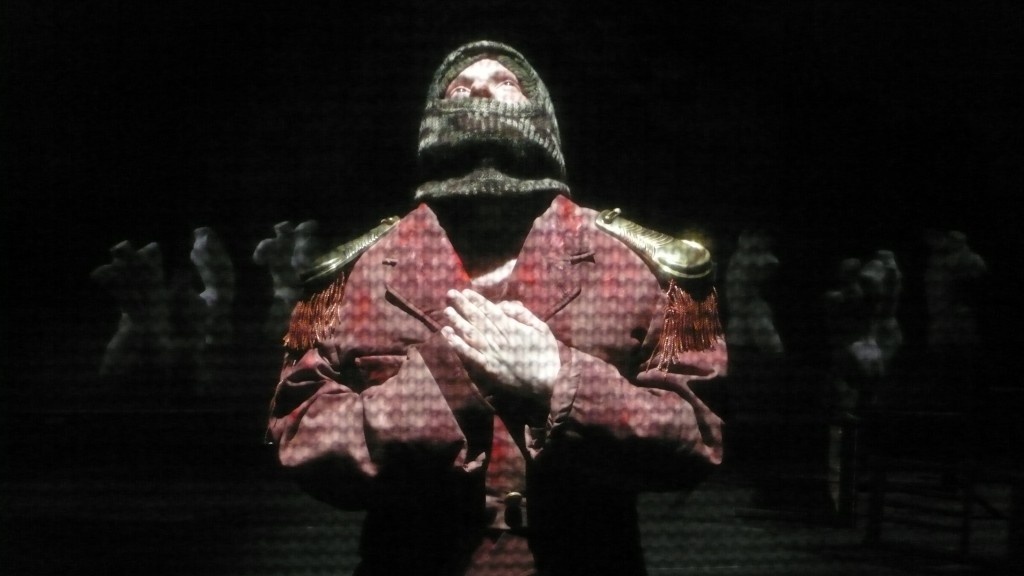
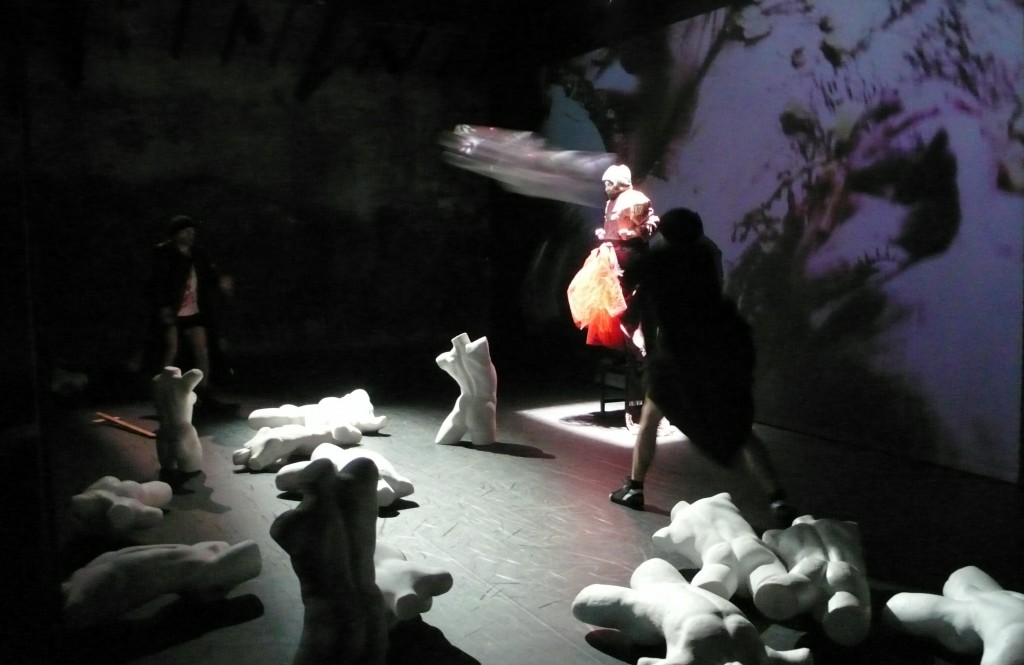
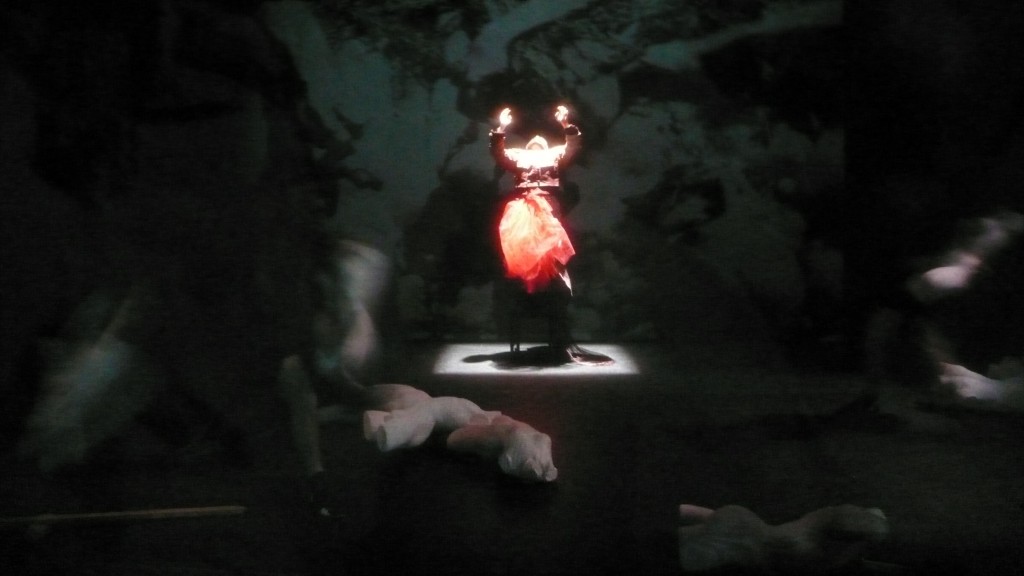
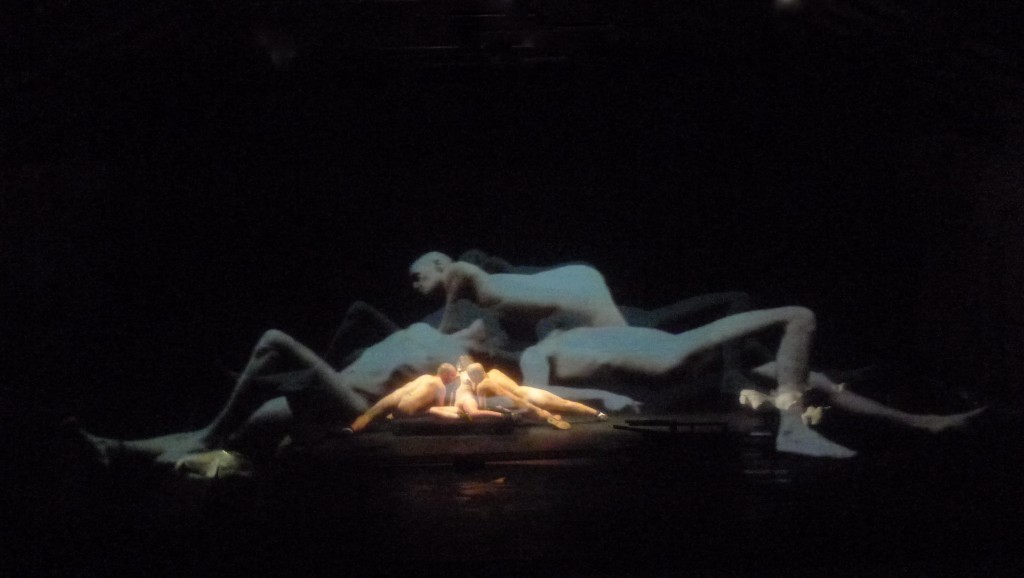
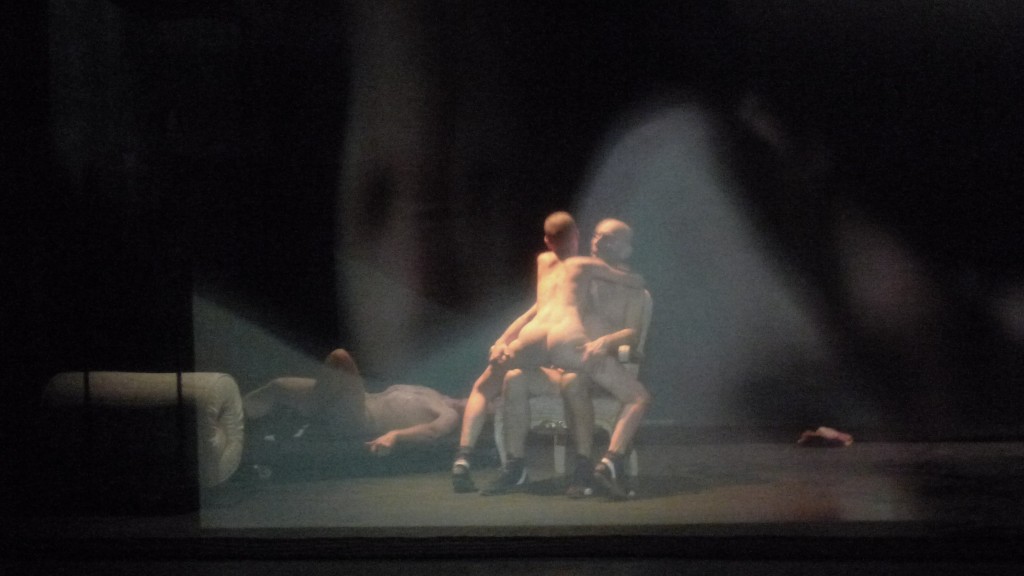
The Aeneid (Aeneas), epic poem composed in ten years (between 29 a.C. and the 19 a.C.) It is divided into twelve books. Monumental work, considered by contemporaries as a Latin Iliad, it was the official book sacred to the ideology of the Augustan regime, sanctioning the origin and divine nature of imperial power. With AENEIS IN ITALIA the two-year performative and visual project inspired by Virgil's great epic poem concludes, greatest interpreter of Latin classicism. The twelve episodes make up the creation of Maria Federica Maestri and Francesco Pititto, Visual work and contemporary performative installed on the Virgilian epic monument.
After realizing in 2011 the first six chapters of the AENEIS project < A #1 THE RACE OF THE WILD BOAR / A #2 I SUBJECT TO THE WEIGHT / A #3 THE LUNG / A #4 THE DRAGONS / A #5 OF WHICH PENALTIES AND TORTURE / A #6 ROASTED MEATS Lenz continued his dramaturgical research by staging the remaining six episodes inspired by the second part of the poem: A #7 Compensation / A #8. LEAD GRAY / A #9 NEPHEWS / A #10 Various attacks / A #11 Little girl / A #12 RUTHLESS?.
AENEIS IN ITALIA marks an important new musical chapter in the long artistic collaboration of Andrea Azzali-Monophon, engaged in the live performances of the individual episodes. Musician and experimenter of electronic elaborations, dal 2000 Graft his sound research on the dramaturgical scores of the performance creations of Lenz.
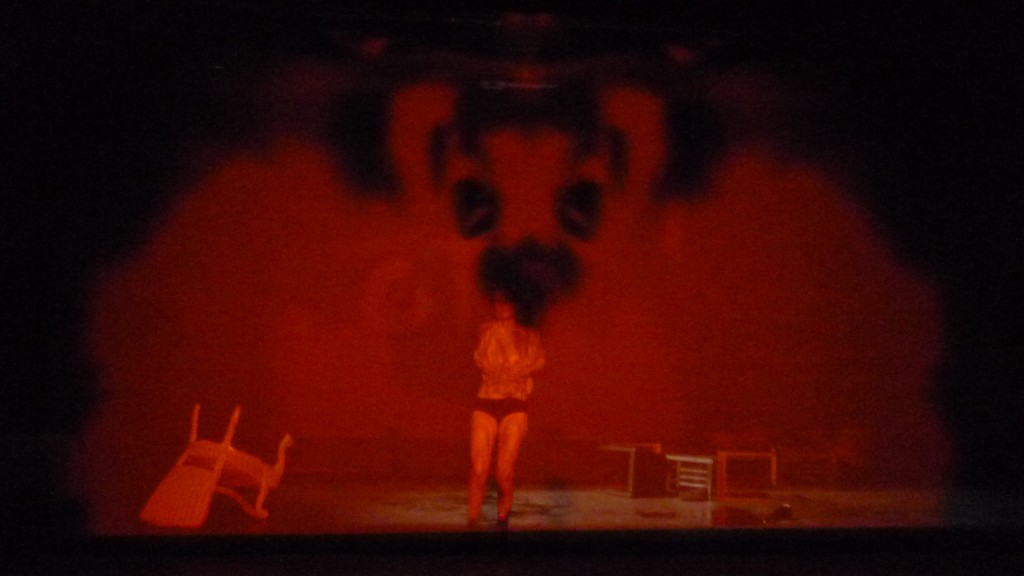
It is always the perimeter space of the Ara Pacis - a celebratory and propaganda monument erected in the Campus Martius between 13 and the 9 a.C. to glorify the Augustan victories and in the years of fascism a place for gymnastic exercises for Roman youth - to define the volume of the Aeneis scene in Italy, of which, however, the interior is shown in this second one: a place without light, a secret hideout, a clandestine hideout and no longer the bright memory chamber of the first six chapters of the work. The visual splendor of the walls "decorated" by images disappears, replaced by macro screens, which appear like enormous grates in a confessional of history, on which they flow, in permanent conflict, the visual sequences of the war between Aeneas and the Italian rebels. A large iconostasis, behind the scene, portrays a triad of human bodies reduced to stripped and mutilated torsos, old gods struck dumb by the massacre that is about to take place. No remembrance ceremony, no father to hate, no lover to abandon, no mother to wish for, no past and no future, just a 'this side' bloodied by the rhetoric of the conflict, only the anonymous present, cruel and devoid of pathos.
The arrival of Aeneas in Italy seems to mark the beginning of a tragic epic that remains constant in Italian history: a war without heroes, a violence without a subject, a human architecture that is silent and incapable of feeling. Thus in a meta-historical vision of the original conflict, the occupation of Lazio by the pius Aeneas and the rebellion of the young Turnus disobedient to the new order, they are transfigured in a time that has just passed, the mournful night of the seventies.
The renunciation of pity erases the faces of the 'boys and girls' in arms, it deprives them of their name, of family affections, of the future, because the promise of resurrection - after the universal judgment of the clash with the State - appears to be a petrifying rhetoric more powerful than daily peace. Like the doe mortally wounded by Ascanius on the banks of the Tiber, the generation without identity of the years of lead pierced by the disappointment of post-Resistance revisionism, runs unbridled in the fight against power. Only the mangled body of Pierpaolo Pasolini, like a princess destined for sacrifice, a tearful Lavinia dirty with the mud of those same shores on which History began millennia ago, overcomes the horror of oblivion and leaves its eternal sign of piety and beauty with its poetic moan.
Aeneas, second part. End the journey, purpose becomes real. Once the old people and the companions of the exile have been buried, it is necessary to take up arms again for a new homeland, a new land for tomorrow.
The new merciless era is created by young people, for pity is still young in their thoughts. First the act and then the word, after the word and then the deed. Geometric power, precise and fast as the gods of all time have demanded. Superhuman, beastly and beating heart of every history of men, told and handed down as true and false. Generations against, fathers against sons, aesthetic plausibility and real life, the modern fighters according to the responses of their oracles and their gods have fought their battle, wrote their literary epic, left their youth and their dead on the field, left the pity for a tomorrow that is today, without any monument erected to represent that time. Aeneas in Italy, Virgil's Iliad, after the fire and exile, from resistance to Fate, a new Italian Iliad in the years of Lead, the war for the new world throughout Europe and the search for everyone's homeland in the 70s, plausible and true compete in the bodies of two males and a female, with the sole weapons of language and the body of the word.
from books 7_12 of the Aeneid by Publius Virgil Marone
creation | Francesco Pititto | Maria Federica Masters
imagoturgy | Francesco Pititto
installation | Maria Federica Masters
musica | performance live| Andrea Azzali_Monophon
interpreters | Valentina Barbarini | Roberto Riseri | Pierluigi Tedeschi
production | Lenz Refractions
AENEIS IN ITALY part1
AENEIS IN ITALY part2
Inside Lenz's ovule
By Giada Russo, A Theater, 6 December 2012
Ovulo, the title chosen for the seventeenth edition of the Natura Dèi theaters festival in Lenz Rifrazioni, it sounds like a tribute to femininity. This year's program, Indeed, features only female artists, coming from Europe and the United States; lovulo, understood as macrocellular identity, as a reproductive cycle and therefore rebirth and regeneration, it is the suggestion that inspired their creations.
To inaugurate the stage of the post-industrial spaces of the Parma company, to the rhythm of electro-metal music, Icelandic artist Erna Ómarsdóttir con LazyBlood, a performance with two voices and two bodies.
Next to her, historical dancer of Jan Fabre and Alain Platel, and his choreographies on and off stage, Valdimar Jóhannsson, a giant Mephistophelian dressed in black. And up and down unbridled and sounds from beyond the grave welcome the audience to a place out of time, dove, next to the music, the bodies dance. Erna crawls on the floor, she twists in her red dress, gets closer to the spectators, it touches them, looks at them, it almost scares them. Then the devil dresses up as an angel and..., decked out with huge white wings, it trudges and falters, he still limps and eventually falls. The voices become dehumanized, almost to become animalistic. Hints of cabaret, with rhinestones and sparkles, they fail with every jolt, at every spasm of the two performers, (anti)heroes of a gothic fairy tale that knows no redemption.
The second day hosts the director, German choreographer and filmmaker, Antonia Baehr, con My dog is my piano, a bizarre three-voice solo: Antonia, alone on stage, gives substance to the two protagonists of a story without beginning or end, his mother Bettina and Tocki, the dog.
The artist creates an acoustic and visual picture of the empathetic relationship between man and animal, telling without too many words the possibility of effective communication, albeit in the absence of a common code. Bettina and the dog don't use the same language, but despite the misunderstanding of many human relationships, they listen to each other and understand each other, trying to imitate himself: in the encounter between two worlds, difference and imitation always coexist, distance and similarity.
Antonia works with few objects, very simple: two turntables, a video projector and a lectern, yet the space fills with presences. The very concept of presence is loaded with further signs and meanings: Bettina and Tocki materialize on the scene through their recorded sounds, some visual trace that only at the end, for a moment, portrays them and Baehr's voice, which becomes their voices in a linguistic continuum that goes from bau to merci. Following a score of animal and human phonemes, the artist invents an interspecies Esperanto that enchants and entertains spectators. The video also conveys presences, collecting the traces left by the two characters: those of the dog are on the doorstep, on the trees, in a burst balloon, in birds' nests; those of the woman are slow steps on the stairs of the house. In the role of a deejay of house music, literally homemade music, the performer mixes yawns, breathe, I stammered, abbai, sighs and sobs, each time renaming his very presence on the scene: she pretends to be the conductor of an orchestra and suddenly that language dances hybrid, wicked, impure, bastard.
From the little one, intima, daily story of Bettina and the dog Tocki, spectators are swept away in the sea of great history, the one with a capital S, which sees us all as protagonists, through theAeneas by Lenz Refractions, directed by Maria Federica Maestri and Francesco Pititto, Valentina Barbarini on stage, Roberto Riseri, Pierluigi Tedeschi, live music by Andrea Azzali. The show continues Lenz's ambitious project, already undertaken last year, to compete with Virgilian work, undisputed symbol of Latinity: twelve episodes for the twelve books of the poem.
This year's six performative paintings were distributed on the first two evenings of the festival, however, with the risk of interrupting the emotional and visual flow triggered in the viewer. This is not a retelling of the epic poem, as much as a reinvention and redefinition of the literary source material through facts of contemporary history that affect us more closely. The compensation/Grey lead/Grandchildren they introduce the theme that characterizes the entire second part of the work, Aeneas' war against Turnus, a power struggle that will mark the history of man throughout the centuries. The two directors have chosen a specific moment in our recent memory to bring the Aeneid up to date, the massacre of the seventies, the mournful years of lead that sowed death and terror. The same ideals are at stake: restoration and revolution, preconceived power and subversive power. In Lenz's imagoturgical project, the word is translated into graphic signs that, parallel to the physical and spoken dramaturgy of the actors on stage, they build an overwhelming visual journey.
The space is divided into three parts by two panels in which the images are projected, one in the foreground, the other in the background: in the center the emaciated bodies of the three actors, two men and a woman. In her naked body, emaciated and battered there are signs of war, of the conflict, of destruction. His limbs embellished with coats of arms and banners mimic an emptied power, a meatless wrap.
The destruction begins right from the place: the caged space between the two screens, at the beginning it is the interior of a bourgeois house, with table and chairs, an armchair and a mattress; then the chairs are thrown to the ground, the mattress is rolled back on itself in a repeated gesture, sign of an attempt to recompose the disorder, a hint of order in the chaos. The armchair remains to dominate the empty stage, cradle of a puppet destined to die. The projected images of the actors multiply the viewer's gaze and reveal a hidden identity, they reveal an action not carried out on the scene, representing the unconscious, subconscious and alter ego at the same time. They are overlapping planes: the strength of the image is enlivened by the power of the body.
The symmetry between the history of the Aeneid and the Seventies offers interpretative rough edges, complicated by a staging that, if on the one hand it is striking for its extraordinary nature and effectiveness, at times it is not easily decipherable. It's a daring job, which stratifies space as it stratifies levels of understanding. The show can be accessed with a quick hop, immediately immersing yourself in the plot, picking up references and quotations right from the start, and interpreting the artist's thoughts without hesitation. Then there is a more superficial level, equally strong, which resides in the visual and musical system so powerful as to engulf the audience in a kind of dream, of a nightmare from which one emerges tired and dazed. Some passages taken from the poem are clear thanks to the images, such as Ascanio's killing of Almone's doe, the pretext that starts the war. All Virgilian thematic nuclei are transposed into stage practice in an extreme and radical way: the Lenz shy away from any type of trivialization, sometimes at the risk of a work that is too conceptual.
In the imagination of the directing duo Maestri-Pititto there are Pasolini's words and body that imbue the entire work with meaning. Particularly in the second part, with the last three episodes attacks/La Piccina/Pietato?, his criticism of bourgeois civilization passes precisely through the distorted bodies of the actors, become objects. Severed plaster busts burst onto the scene, faceless, corpses on the battlefield who have lost all identity. Along with the images, recorded voices of the Italian right and left resonate in the space, stadium choirs where they shouted their belongings without censorship: Swastikas and Celtic crosses pop into the minds of spectators. We talk about recent history without ever abandoning an abstract dimension, out of date, in a non-place that we have all inhabited, who with memory, who with the story.
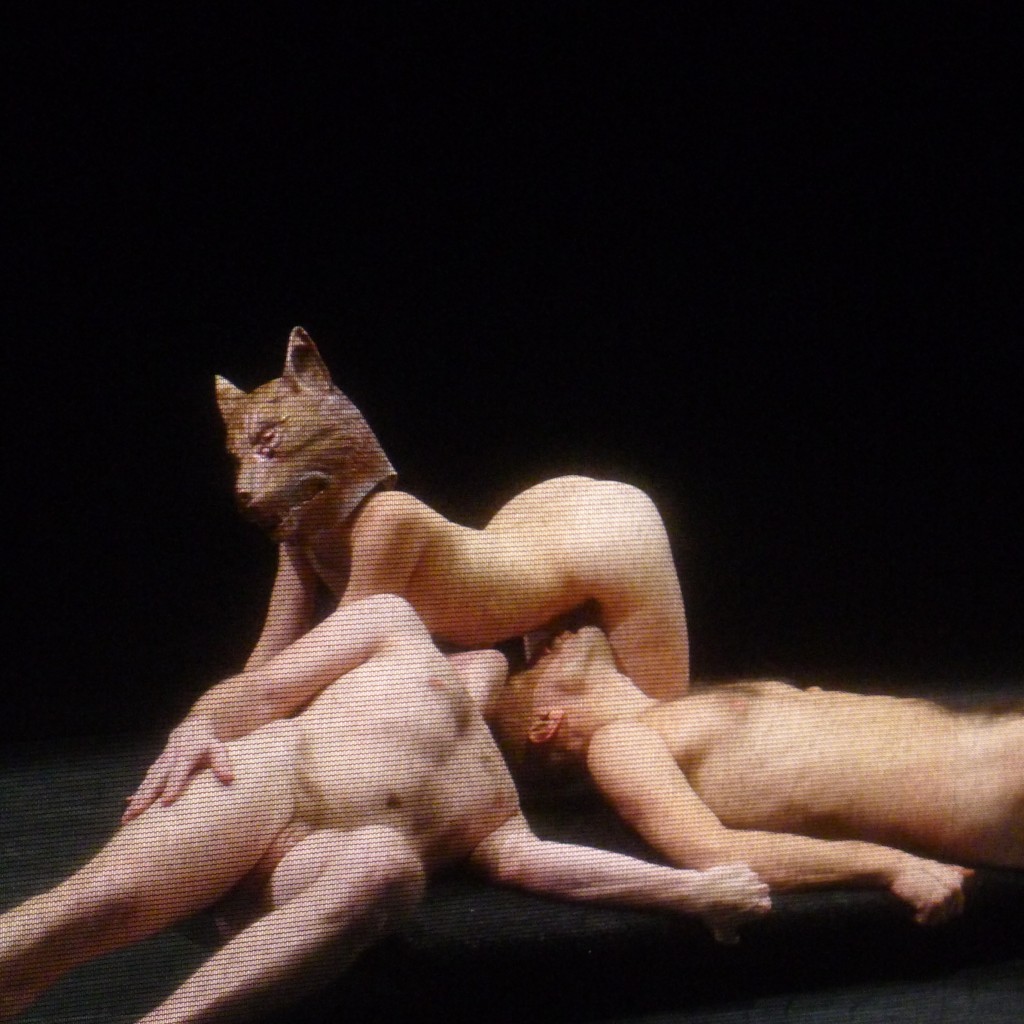
The end of the war, after employment and remission, it is sanctioned by the foundation of Rome, with Romulus and Remus (the two naked actors on stage) intent on sucking the breasts of an anthropomorphic she-wolf. Valentina's body, impoverished by battles, invigorates to nourish his children, to feed the generations to come. In a kind of Pasolini orgy, men become animals with uncontainable hunger, and the video which always distorts or magnifies the real scene during the show, here he gives a clear sexual connotation to the actions of the three performers. A cycle is completed, and another, perhaps just as nefariously he is ready to start again.
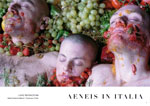
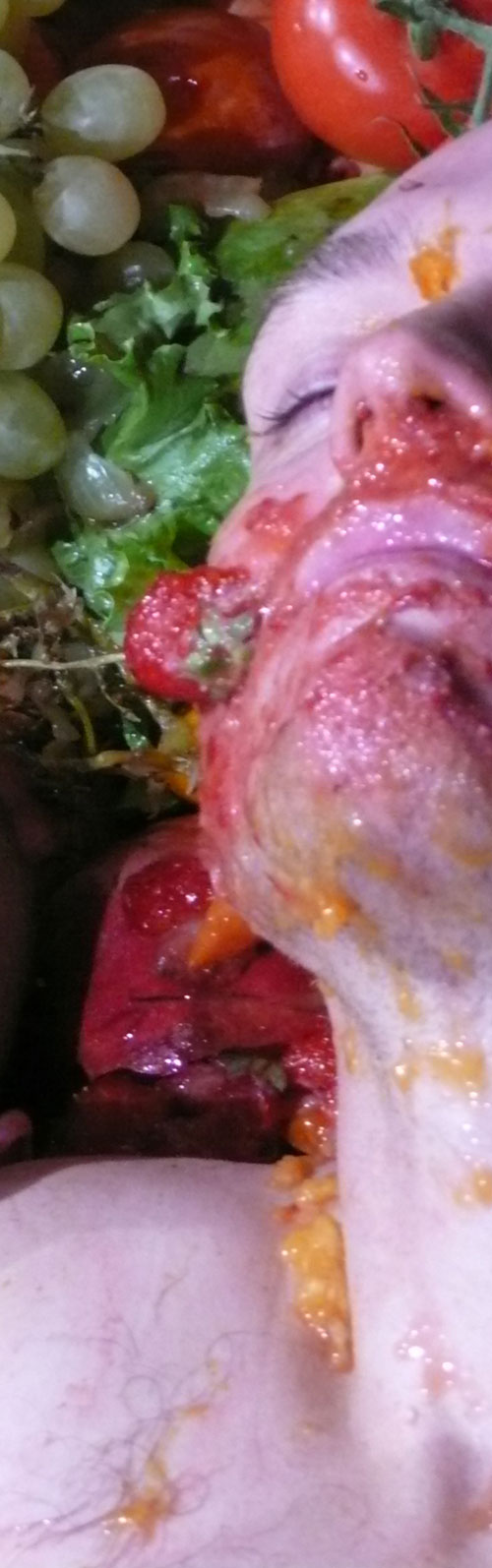
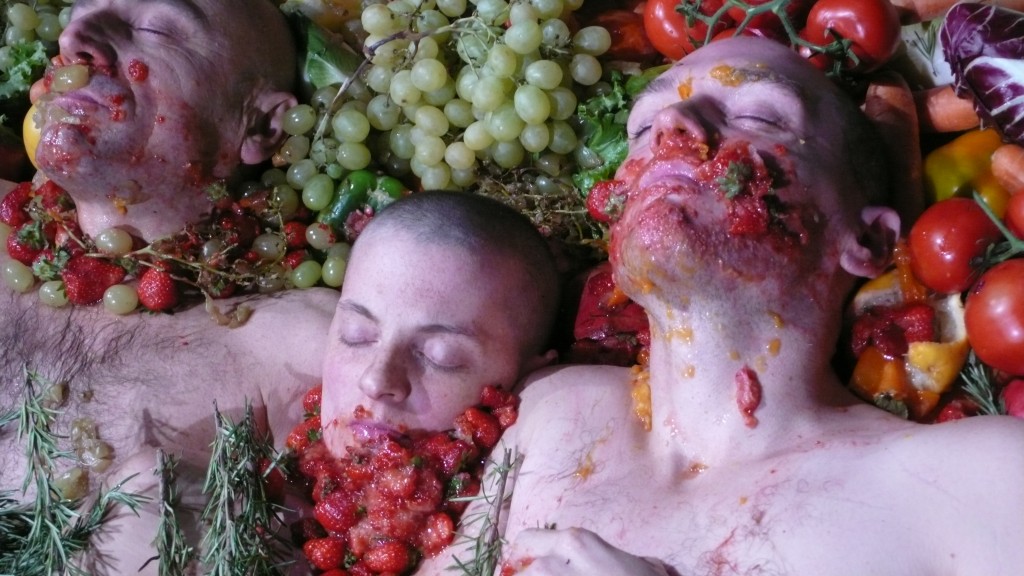
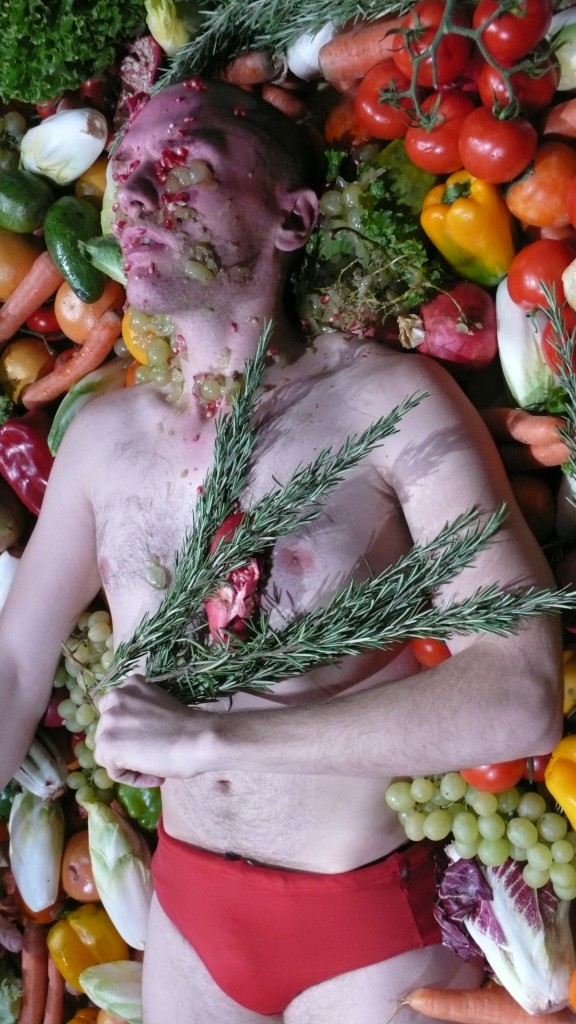
The image that acts as the cover of the work, enclosing all the meanings of which it becomes the bearer, it is the one that portrays the naked bodies of the actors in a contemporary still life: three dead men drowned in grapes, dipped in red strawberries, caressed by rosemary branches.
Aeneas in Italy: a triumph of death
By Massimo Marino, BoBlog, Courier of Bologna, 12 December 2012
Blood and more blood, of innocent victims, of guilty warriors. Old people who incite to fight and young people who burn their lives for an idea. The red of Italy tells Lenz Rifrazioni in Aeneas in Italy, cycle of short shows inspired by the latest books of theAeneid of Virgil, gathered in a single evening to conclude the event.
Lenz's show is, as always, an anti-narrative, made of suggestions and leaps, of refined and burning images and bodies in constant movement, here dressed and naked like ancient warriors, thrown to the ground, canceled out by chthonic landscapes, from vegetal growths, lying on pictorial still life carpets, living elements ready to eat, destroy vomit parts of the background... The company presents the completion of the project dedicated to the celebratory poem of the Augustan empire in its industrial space in via Pasubio at the unfortunate risk of demolition, in an area of the city of Parma already transformed into a semi-desert by the recent restructuring projects of councils wrecked in debt and political and moral bankruptcy. As always in the works of Maria Federica Maestri and Francesco Pititto, admirable for their visionary coherence and contempt for conventions and simplifications, the poem is just a starting point to associate, to scrutinize, recall and revoke, reflect on a long trail of blood that dates back to antiquity, through the monumental celebration of the Ara Pacis, it is transmitted to us and intersects with recent fratricidal struggles, until the terrorism of the 1970s. Without ever making any concessions to trivial news or linear narration.
The scene is surrounded by projections, which recreate an environment equivalent to the crypt of the Ara Pacis, the monument to the Augustan pacification. Environment, the blood of bodies wasted in fights, blushed by tutu-like skirts, shaved like survivors of marginalized worlds, like prisoners, as survivors of detention homes, like soldiers in always lost wars. A rolled up mattress, at the start, some straw chairs, precarious stands recall the arrival of Aeneas in Italy in search of a home, alliances and subsequent struggles, and then launch into connections with the Years of Lead and other military marches, while one of the characters stands as an old inciter to battle with sagging flesh, Augustan statue on the imperial forums, which will attract more flames, more red, more blood, and then other groups of statues recreated during the emotional performance, a procession of torsos without heads or arms or legs lined up like an army and then thrown against each other in an absurd battle, tangles of bodies that bend and intertwine, they lie down, they writhe and finally reveal a grotesque, deformed sculptural group referring to the Capitoline she-wolf who feeds the twins Romulus and Remus.
In the midst of so much red, images of a stone nature follow one another, of lava, of vegetal efflorescences and mineral concretions, mobile chthonic sculpture for projections that opens onto landscapes of fruit and vegetables where the bodies of the young contenders are stretched out until they tear fruit and discard the flesh, to tear parasites from their chests to bleed, in baroque figurations, from the triumph of death, from nature so luxuriant that it borders on inevitable putrefaction.
Among the enveloping images the permanent sense is that of struggle, of blood, the absurdity of the conquest of that ground identified in the folded mattress, which opens to provide contrasted soil-bed, of pressing and senseless marches, of tense fists, hands raised, of swords and desperation, of youth camaraderie and gratuitous violence, rape, torture of bodies rendered inert like things, heartbroken, dismembered, abandoned.
The actors at the end are bundled up with rags that obliterate them, then naked again, while a black shadow swallows the background and the scene into the nothingness of an antimatter hole, anti-life, which is the triumph of the massacre, ancient and modern, of Aeneas against the Latins and of Mara Cagol against the state and of the state against Mara Cagol, of a mangled young deer and immolated adolescent bodies, up to the final sculptures recalling a dubious greatness, in a show that always keeps you on the edge of your seat with its intellectual and emotional challenges, and in the end it gets you, it conquers you without conditions, with the corpses still displayed as if on one of those ancient Greek theater trolleys that came out of the royal doors after the massacres had been completed, while an unbearable gray air spreads everywhere, and the social order is exalted as a guarantee of transgression, the happiness that only difference gives. They tower in unconditional dedication to the challenge, exhausting directorial design Valentina Barbarini, Roberto Riseri and Pierluigi Tedeschi, while the old body of Guglielmo Gazzelli appears on video and the actions and images conceived by Pititto and made into an installation by Maestri dialogue incessantly with the live sounds of Andrea Azzali.
From Lenz Refrazioni’s “Aeneas in Italy” to Lazyblood’s Metal: Natura Dèi Teatri is tinged with red and black
By Rossella Menna, Rumor(s)cena, 16 December 2012
Early winter festival, a Parma. An all-female event, the one designed by the two artistic directors Maria Federica Maestri and Francesco Pititto for the edition 2012 of Natura Dèi Teatri, inserted from this year within the broader framework of "Incontemporanea Parma Festival".
The work of fifteen artists from numerous countries around the world was welcomed into the first stage of a three-year project nourished by the philosophical work of Gilles Deleuze. A first stage that collects, under the title “Ovule”, a plural reflection on the themes of the organic nature of artistic creation, of the osmotic relationship between words, sound, vocality, physicality.
Nothing more suitable, so, to inaugurate the festival, of the musical performance of the Icelandic duo Lazyblood. A unique concert in which Erna Ómarsdóttir, best known as a dancer for Jan Fabre and Alain Platel, explore all the possibilities of the sound system, engaging in the extreme vocal effort he seeks, in the body and in the performance that most belongs to a dancer, a visible relief valve. The performer, in an aggressive red outfit, sing, yell out, explodes possessed, he lets himself fall, crosses the small audience, he touches the spectators with a disturbing silicone hand. Sequins, sequins and angel wings become macabre counterparts of words of death, of reminders in the dark, of invitations to let yourself be absorbed by parallel dimensions. A performance that almost seems like a planned possession ritual, an exercise in liberating wildness nourished by deafening metal music.
A completely different atmosphere, Instead, for Antonia Baehr's show. The German performer brings to the stage, with pleasant lightness a curious work entitled My dog is my piano. Three short sections, announced immediately by the artist, in which an attempt is made to demonstrate the extent to which Bettina lives together, his mother, and Toki, family dog, has transformed into an almost complete symbiosis. With a linguistic mess of English, tedesco, French and Italian, and the use of simple devices, Baehr draws a nice and almost touching relationship between the two exponents of different species. Some recordings and a turntable through which to overlay and manipulate them, reveal the harmony between noises of different nature: the symmetrical stitches distributed by Bettina's sewing machine coordinate with the sound of a paw with which Toki scratches himself. The clink of the plate in which the woman eats her meal at the table alternates with the clink of the bowl in which the dog eats his kibble. The life lived together has amalgamated times, rhythms and languages. Dog and owner communicate in an imaginative patois of words, sounds, interjections and onomatopoeias. A sort of Esperanto that Baehr reconstructs by interpreting in the last part, from a lectern, an original score in which, for example, the order given by the mistress, assis! (sitting)it is confused with the dog's panting which produces a sound similar to the spoken word. The ending in which you reach the sound of the dog's bark is brilliant, through a slow variation of sound, to a greeting to the public in Italian.
At the center of attention, Anyway, Lenz's work Refractions, Aeneas in Italy, a very personal rewriting ofAeneid of the two historical creators of the Parma group: Maria Federica Maestri and Francesco Pititto. After the presentation of the first six chapters in 2011, on the occasion of the Natura Dèi Teatri Festival 2012, Lenz stages the final six episodes, correspondents, evidently, to the second part of Virgilian's poem.
A second part that opens with the arrival of Aeneas on the banks of the Tiber. The decision of King Latinus to marry his daughter to the foreigner, failing to fulfill the commitment made to Turnus, the killing of the deer by Ascanio, the war that breaks out between the occupier and the rebels are reconstructed in six episodes in which three actors, a woman (Valentina Barbarini) and two men (Roberto Riseri and Pierluigi Tedeschi), they lend their bodies to the different functions of an epic tale that is intertwined with the memory linked to the Piombo years. The forced occupation of Lazio by the Virgilian hero, the war, the blood, they resonate with current events in stadium chants, in politically charged greetings, in disturbed radio speeches. And Virgilian's poem becomes a trace through which to reflect on the 70s, on the most recent piece of Italian history in which the echoes of the armed struggle for and against power resonate, in which the blood of young people who died for an ideal still flows warmly. A balaclava covering the commander's face, black headgear like modern war helmets, combat jackets/uniforms, overturned armchairs, hands dirty with red paint become symbols of a time far away, iconographic tools through which mythology and epic are removed from a condition of perpetual distance from the dimension of reality.
The thematic node on which the individual scenes and the wonderful visual creations expressed in shades of black and red are grafted, Indeed, it is linked to the idea of power and domination, of building the new on the blood of the old, about the war that surpasses those who fight it, which does not generate heroes and never recognizes itself in a specific subject. It is the profoundly modern tragedy of an evil that never shows its face, of conflicts without parties in which it is not possible to recognize good and bad, in which you are inexorably swallowed up by the same invisible infernal machines that you helped create.
Set aside the characters chiseled in their individuality, investigated in the first part of the project, we proceed with broad brushstrokes, for impressive paintings, for large containers of rhetoric and meaning: the work on the intimate dimension turns into a reflection of epic scope, ample, collective.
The scenography is set on multiple levels of screening that hide the events behind them and at the same time, by virtue of such a departure, they throw the images directly into the viewer's eye, approaching instead of distancing; in the meantime, the musical-atmospheric system reduces any possibility of escape by hounding the spectator from all sides, inflating an invisible capsule that forcefully unites audience and scene. Lenz Rifrazioni designs an architecture of space and sound that exceeds the size of the spectator and overwhelms him, it involves and incorporates him.
In scena, at numerous times, naked bodies, tortured, to violence, deprived of the identity of a boy or girl. They are nothing but cannon fodder, destined to fall apart, to decompose, to become food for worms, one with the earth which welcomes its putrefaction. While the battle unfolds on stage between anonymous fighters reduced to light white polystyrene busts thrown into the fray without even wearing a uniform, on the screens, the projected images show human anatomies mixed with the earth and its fruits, as in a livid still life by Caravaggio. I vomit from my mouth, from the hands streams of bloody liquid exploded from juicy red fruits. The bucolic landscape crossed by Aeneas becomes an open-air cemetery of an abandoned battlefield.
The cancellation of human pity towards the pierced enemy generates cooled anatomies, dehumanized, faceless and nameless bodies, unknown soldiers. No difference between men and women. The actress is bald and naked, the two actors bald and naked. Even the myth of the She-Wolf turns into a voracious meal of death. From the small, exhausted breasts of a tiny and drained mother, two sons who are already men are nourished, bigger and stronger than the maternal body that gave birth to them.
It is a war fought without swords and rifles, a violence rendered through an exploded word, material, raped, forcefully thrown towards an indefinite elsewhere by scratched voices protracted in the extreme effort of speaking. A poetic word, But, which becomes a unique digital footprint, only tension towards redemption, the only distinctive sign of that identity so violently torn apart by a war that amalgamates stories and lives in an indistinct river of blood.
It is precisely the poetic word that physically extends towards the spectator, ma, even earlier, a poetry of the scene that refuses the symmetry of meaning becomes the only keys to access, however partial, to the iconographic universe, to powerful images, to the pastiche of sounds, version, quotes from a complex work, which regenerates and generates new meaning in every scene, becoming elusive yet perceivable in its entirety, in its black flow.
Lenz Refractions in Parma with the Aeneid of our time, between Pasolini and the Red Brigades.
By Giuseppe Distefano, The sun 24 Ore, 21 December 2012
To define it as just a show would be an understatement. As well as all the theatrical and performative elements, incorporating visual and installation art, with the electronic processing of the sound score, a soul flows through it, and a profound thought, perceivable in the involvement of the mind and senses. And there is a great epic scope in this dazzling scenic synthesis of the”Aeneid” operated by the Lenz Rifraczioni company. An enucleation that arises from an intelligent excavation work around the literary epic; what he's looking for, and find, in the interstices of the present, unpublished references and connections. “Aeneas in Italy” is the continuation of a performative and visual project that the Parma company, directed with passion by Maria Federica Maestri and Francesco Pititto, has been going on for two years around Virgil's epic poem. The history of the occupation of Lazio by Aeneas, precursor of the Roman people, and the rebellion of the young Turnus who disobeys the new order, is brought back by the two authors and directors, to our recent time: the mournful night of the seventies. The years of the rhetoric of conflict, of yesterday as of today, of modern fighters; of the years of lead; of the search for a homeland and a new Europe; of the violence of the squares and the massacres; of the generation of fathers against their children, and viceversa; of youth riots for freedom; of the prophecies of the poets. And Pasolini enters it not only as a quote, but as a dramaturgical and textual element, as well as visual (from the movie “Salo”), which crosses the times of the Red Brigades, of the fascist emphasis, of Christian Democratic power. In twelve episodes, true stage epiphanies follow one another with just three performers (that I am a father, Brother, fighter, company, victim, Daughter, wife, sister) swallowed up in a darkness broken by lights and veils that enlarge and three-dimensionally multiply characters projected across the field, between choreographic gestures, sculptural postures, and declamatory voices between whispers and shouts. On the dithered screen, in the abstract floating of images and sound, the silhouette of a deer - whose killing was the pretext for the outbreak of war - is tinged with red. From there on, in that place of idealistic plots, with an armchair, three chairs, a table and a mattress that also serve as a raft, among busts scattered across the battle scene, a brandished sword, manly hugs, obscenities exposed, successive shreds of political and civil history evoked with poetic synthesis. And it's powerful, for voluptuousness and disturbing references, the Capitoline she-wolf sequence, recreated by the three actors with the two men attached to the breast of the woman with the head of a wolf, while stadium chants seem to incite further violence. They are soulless human machines, without pathos, without identity, with no more history. A generation without gods. Without God.
Aeneas in Italy. Interview with Lenz Refractions
By Giuseppe Distefano, Art Tribune, 31 December 2012
Con Aeneas in Italia, Maria Federica Maestri and Francesco Pititto, souls of the Parma company Lenz Rifraczioni, have concluded the two-year performance project inspired by Virgil's epic poem. The debut took place in Parma at the Natura Dèi theaters festival, this year marked by the programmatic title Ovulo.
Starting from the 1980s Lenz Refractions he marked contemporary theater with a precise aesthetic line, and continues today, consistently, to investigate our time with a language of scenic epiphanies with surprising results. Every new creation, whether it's a classic or an original piece of writing, was born from an excavation work that found previously unpublished references in the interstices of the present. Like in the new show Aeneas in Italy, which we talked about with Maria Federica Maestri.
From what necessity did this project on the Aeneid arise??
Our work is a process of grafting: the dramaturgy anticipates the vision in a circular dynamic in which what will happen has already happened. Performative research onAeneid is grafted onto the track of the previous creation dedicated to Dido bought. Dido represents the mythical body of Africa, conquered, enjoyed and abandoned by the Western hero Aeneas, founder of Rome and the new empire, prelude to the future horrors that fascist Italy would bring to Africa with the conquest of Ethiopia in 1936. Not by chance, Indeed, in the 1930s within the reappropriation of the myth of the Roman Empire for the use of Mussolini's rhetoric, Dido is demonized as a woman symbol of the prey continent. In Aeneas in Italy we therefore continued to artistically rework the rhetoric that accompanied Aeneas on his journey to re-found his homeland in a critical interpretation of the iconology of the potentate and dominance. We wanted to "come to terms" with belonging that was certainly not just geographical, but historical and political. “We are what we hate most: the never defeated father of our origin. We are inexorably children - on the run - of Italian history, and until we recognize its initial motion, we will never understand the now – low, vulgar, rhetorical, violent.
What was the initial approach?, and the next one for the staging?
Install on mensa of the contemporary ceremony, ancient sacrifices and new gods. In the first six chapters we wanted to diagnose, visualize and physicalize the fundamental generative constraints: the cruelty of a pater demented, The horror of maternal love, The torment of old age, the grotesque brutality of the family, The horror of the bodies in erotic constriction, Violence on dying animals, neuroleptic transit in the afterlife, in a skeletal epic without consolation. In the second six chapters - a long sequence of massacres and blood - it was necessary to reset the past to exist only in the present: no ceremony of remembrance, no father to hate, no lover to abandon, no mother to wish for, no past and no future, just a 'this side' bloodied by the rhetoric of the conflict, only the anonymous present, cruel and devoid of pathos.
In the show Enea intertwines with Pasolini, with the Red Brigades, with the years of lead, with the rhetoric of war without heroes...
Like the doe mortally wounded by Ascanius on the banks of the Tiber, the generation without identity of the years of lead pierced by the disappointment of post-Resistance revisionism, runs unbridled in the fight against power. Only the mangled body of Pier Paolo Pasolini, like a princess destined for sacrifice, a tearful Lavinia dirty with the mud of those same shores on which History began millennia ago, overcomes the horror of oblivion and leaves its eternal sign of piety and beauty with its poetic moan. In his poetic testament Salò or le 120 days of Sodom – a work that strongly inspired our creation – Pasolini prophesies the advent of a new form of fascism in Italian history, which through the social control of bodies imposes violence and vulgarity, commodification and massification of bodies. In Aeneas in Italy we 'exposed' in tragic oscillation the horror of the young massacres of the red brigades and the fascist physics of the criminal power that kills Pier Paolo Pasolini.
How you worked scenically to translate into images, sounds, actions, such a complex work?
First of all we identified a concrete plastic dimension: the perimeter space of the Ara Pacis, the celebratory and propaganda monument erected to glorify the Augustan victories and in the years of fascism the place of gymnastic exercises for Roman youth. The definition of a symbolic and real volume allows us to transfer the images, the sounds and actions in a non-decorative setup: a place without light, a secret hideout, a clandestine hideout and no longer a bright chamber of memory. The images are composed on macro screens on which they flow, in a violent pictorial baroqueness, the visual sequences that portray the bodies of the antagonists flooded with fruits and chromatic magmas.
Interpreters are not just 'actors' but artistic reagents...
The work with the actors is very precise, there are no spaces for improvisational evaporation. First of all, a new gestural code is built, an extremely defined physical score; in Aeneas in Italy we have identified the composition of the performative verb in the duality of joy/sadness, and starting from that the syntax of the entire work is rewritten. Then there is a work of biographical stratification and fusion that we manage to do with some actors who have worked with us for many years, like Valentina Barbarini, an interpreter "chosen" for affinity and artistic extremism.
Yours is a work of "dramaturgy of matter" where the contemporary language, visual and musical, it is a peculiar aesthetic figure….
An incessant, continuous investigative work on language. In the first phase of our creative journey we went through the key dramaturgy of Western culture (among the others Faust, Life is a dream, Hamlet), retranscribing its poetic impulses into contemporary actions. At this stage (dal 2007 on) we have put visual and plastic research at the center of our poetics. The performative action is wedged between writing for images and the plastic creation of space, which no longer has the functional limits of the scene but tends to be a real art installation. In the preparatory period the three items – installation, imagoturgy, music – trace a “separate” personal path, independent, a solitary approach to creation, then in the compositional phase of the rehearsals the research and the landings are stratified and recomposed into a unitary tension, in which the levels of perception intertwine – multiplying in a Deleuzian way.
In your journey there is a strong rooting in the territory, specifically Parma. From what need did it arise?, and how it develops?
Our artistic action has always kept two apparently antithetical levels in conversation: the mediated word, macrological nature necessary for contemporary artistic language and belonging to the underground mapping of the place in which we live and work; a close relationship with the anthropological undercurrent of the city in which we create, without being a culturally subordinate part of it, a dynamic citizenship. Lenz is present with creative fullness in symbolic marginalities of urban reality – psychic hypersensitivity, adolescence, radical intellectuality – and gives them back, translates them, in the language of contemporary art, going beyond the profile of "local" identification. Our over ten-year work with "sensitive" actors, former long-term psychiatric patients and people with intellectual disabilities has developed a research path that is unique in Europe in terms of intensity and expressive results. The audience is the reflection/refraction of our duplicity: a broad and mobile cross-section of society, not just young people, and not just "trained", many practicing artists, many art travellers.
Lenz Refractions: the search for the contemporary
By Andrea Porcheddu, Linkiesta, 14 March 2013
What are we talking about when we talk about contemporary theatre? It sounds like a Carverian title, or a doubt of Monsieur Lapalisse.
Wanting to resolve the issue quickly, in two minutes, three words are enough: the theater that is done in our time. It's eight words, but less than two minutes.
But if you look closely, It's a trick question.
The other evening I went to Parma. I hadn't been back for many years. The occasion was a double invitation from the Lenz Rifrazioni company. The group, called by all Lenz, led by Maria Federica Maestri and Franscesco Pititto, he has been an undisputed protagonist of Italian theatrical research for years. His language, often extreme, always conceptual, does not exclude the comparison with harsh physicalities - what Romeo Castellucci called the "forgotten beauties" - that is, that broad, often marginal humanity that experiences the dynamics of diversity.
Lenz's research, In short, always in that beautiful theater created with courage and dedication in an industrial warehouse, it is deeply rooted in the tensions and contradictions of our time.
The shows, so, there were two. The first is a monologue, entrusted to the excellent Sandra Soncini, that runs through the myth of Pentesilea in Kleist's compositional vertigo. A monologue inexorably said in front of the Mac screen, which multiplies and magnifies the foreground on the background. Penthesilea alone with herself, disarmed queen, he marries himself in chat: until he devours his own myth like a glass of water. It's a story that becomes delirious, obsession, self-dialogue of those who desperately search for traces of life in the glare of the screen, help, I listen.
Then, a more complex and detailed job, Aeneas in Italy, which sinks intoAeneid like a knife, drawing a bitterly Italian essence from it, capable of uniting the legend of the founding father of Rome with the armed struggle of the Seventies.
Lenz has made a great multi-year journey on Virgil's work, divided into chapters corresponding to the books of the Aeneid, precisely to reflect on the founding myths of the "Homeland" (the quotation marks, given the Italian situation, they seem obligatory to me).
I saw the last chapters – from 7 al 12 – rely on three naked bodies, smeared in white, two men and a woman. They play, they fight, they argue, they collide, they jump, they dance, they talk. They're screeching, amplified by the dark sound – elaborated live by Andrea Azzali – which makes the Aeneid a score of suffering, a mythical story that instead tells of bestiality, violence, oppression. In the eternal return of the same of an ever devastated Italy, inked, vulgar.
After the suggestive and disturbing Hamlet in the enormous space of the Farnese Theatre, Lenz therefore continues to shuffle the cards of the classic and the myth, radically reforming the canon in the name of the contemporary.
Ecco, so, because I was wondering what contemporary was and when contemporary theater ceases to be contemporary.
We can say, trivially, that the theater is contemporary with itself, in his time? Ecco, This is where doubt creeps in. Who deals with contemporary art, he knows that ultimately it has to do with the question of Time. Federico Ferrari remembers it very well, in the introduction to an agile volume with the significant title of “Of the contemporary“. Theater seems to be contemporary almost by definition: how many times have we heard about hic et nunc, that is, of being present and alive precisely at the moment in which two communities - that of the actors and that of the spectators - meet. The look, the body, the word are the connotating elements of being present at the scenic event, which is therefore a shared time. But this does not answer the initial question. What is contemporary theater and why does it have to do with time. Ferrari remembers that we, we the human species, we are in time: we are born entering time and die leaving it. AND, basically, to paraphrase Malraux, the “human condition”. So much so that all philosophers – from Parmenides to Heidegger to Nieztsche to Giorgio Agamben – have questioned the founding question, what is time: fulcrum of philosophical thought and therefore fulcrum of artistic thought and practice. From this perspective – I summarize and make Ferrari's thoughts my own, I hope the author will forgive me – the “classics” sit on the edge of time, and wait for fashions to pass, trends, the frenzy of the moment. They carry eternal values and standards – some would say archetypes, who eternally return. On the other side, Instead, contemporary art: the new that advances, that dives into time, and tells it, tireless in its ever-changing nature, changing.
They are dichotomous forms? Conflicting? Yes, they often are. The classic loses sight of the real, certainly contemporary ages immediately. But finally there is another way of being classic and contemporary: a way in which the ferment renews the classic and the classic confirms the ferment. Today we live in a time of accelerated theater: in duration, in the production, in use. Thomas Ostermeier, to whom we owe this definition, tells us this well: it is a theater that thrives on communicative acceleration, social and at the same time contributes to reflecting on the present time. Yet in this acceleration, the theater has not lost sight of its relationship with Time. I like to shoot, about this, a now famous definition by Agamben on the contemporary: «he is contemporary who does not actually coincide with his time nor adapt to its demands and is, therefore, in this sense, out of date. But precisely through this gap and this anachronism, he is capable more than others of perceiving and grasping time".
Here then, what contemporary theater is. That theater "outside" the present time for a little girl, lieve sfasatura. A point of view, a perspective, a narrative ability. Ci dice Jean Luc Nancy, in the same booklet cited, that contemporary works therefore not only force us to take on that transversal look at ourselves and our time, but they push us, always again, to ask ourselves the incessant question of what the contemporary is. That is to say, through our gaze – which is a curved gaze, which returns to us through the gaze of the actor - the contemporary forces us to ask the question of what art is, that is, the theatre, that we are living, or what the world is, and the society we are living in. With Lenz Refractions, with other Italian companies and groups, this happens.