






Apocalypse
After the appearance of man and woman on earth with The creation (2021) and the census of the vital remnant of humanity in the Numbers (2022), the revelation of the ego inApocalypse (2023) for the third phase of the dramaturgical investigation into the Holy Scriptures, compositions and visions by Maria Federica Maestri and Francesco Pititto, music and sound design by Andrea Azzali.
The imaginative framework of the work is the Apocalypse of John, a reflection/action on the human being at the time of his greatest crisis and his minimum prospects for survival, at the end of a progressive deterioration of its living space, in the Anthropocene era.
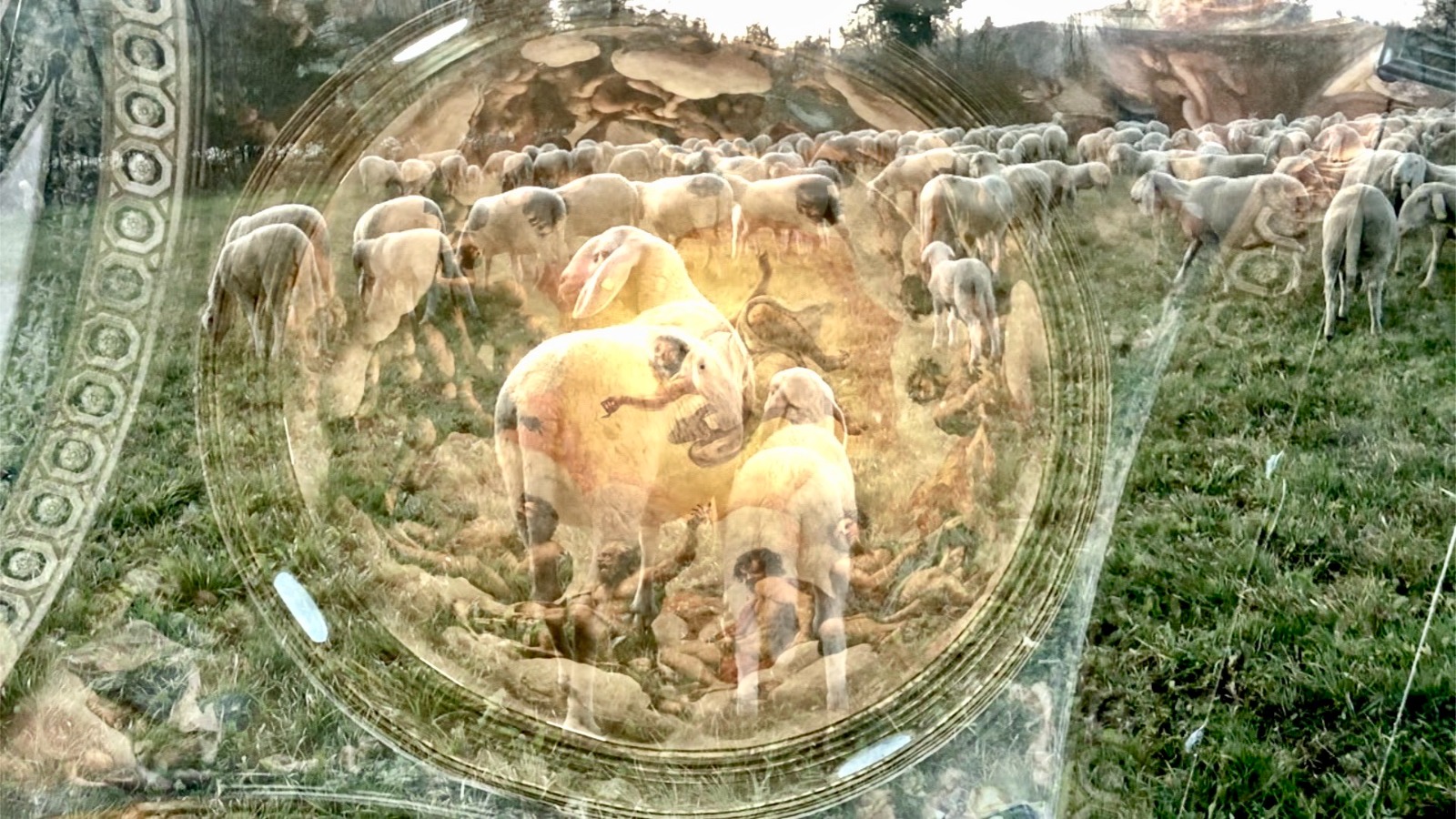
Slicing the apocalyptic evidence of the human condition into a dramatic body- hybrid view – the Seven-eyed Lamb – the work develops in a double imaginative tension: the visual part of the Apocalypse (imagoturgy) it was filmed in two symmetrical and opposite locations, in the mountain landscapes where the flocks graze freely and in Dandora, slum in Nairobi, considered the most polluted area on the planet, slums where hundreds of thousands of children live collecting waste.
SILENT IMAGE AND LOGOS
Francesco Pititto
The Apocalypse of John, or other visionary, it is a roar of images. A roar and a crash mixed with lightning and thunder in a gloomy and dazzling sky together, from which protean figures emerge, shapeshifters loaded with symbols and destructive powers, bearers of catastrophic punishments and great magnificent prophetic apparitions such as the Woman clothed with the sun, with the moon under his feet and a crown of twelve stars on his head.
The two pillars of dramaturgy, But, they address in particular the question of quantity understood as the sum of individuals united by a prophetic mission - between conquest and promised land - and that of water, vital element to the achievement of divine and human purposes, to the conscious and unconscious representation of this element. The battlefield of imagination is as wide as the universe, the seismic roar that overwhelms every border of reality reaches the peak of a concert of light and dark where everything seems to stop, the mutant shapes and the space around, in unison with the amazing electromagnetic waves.
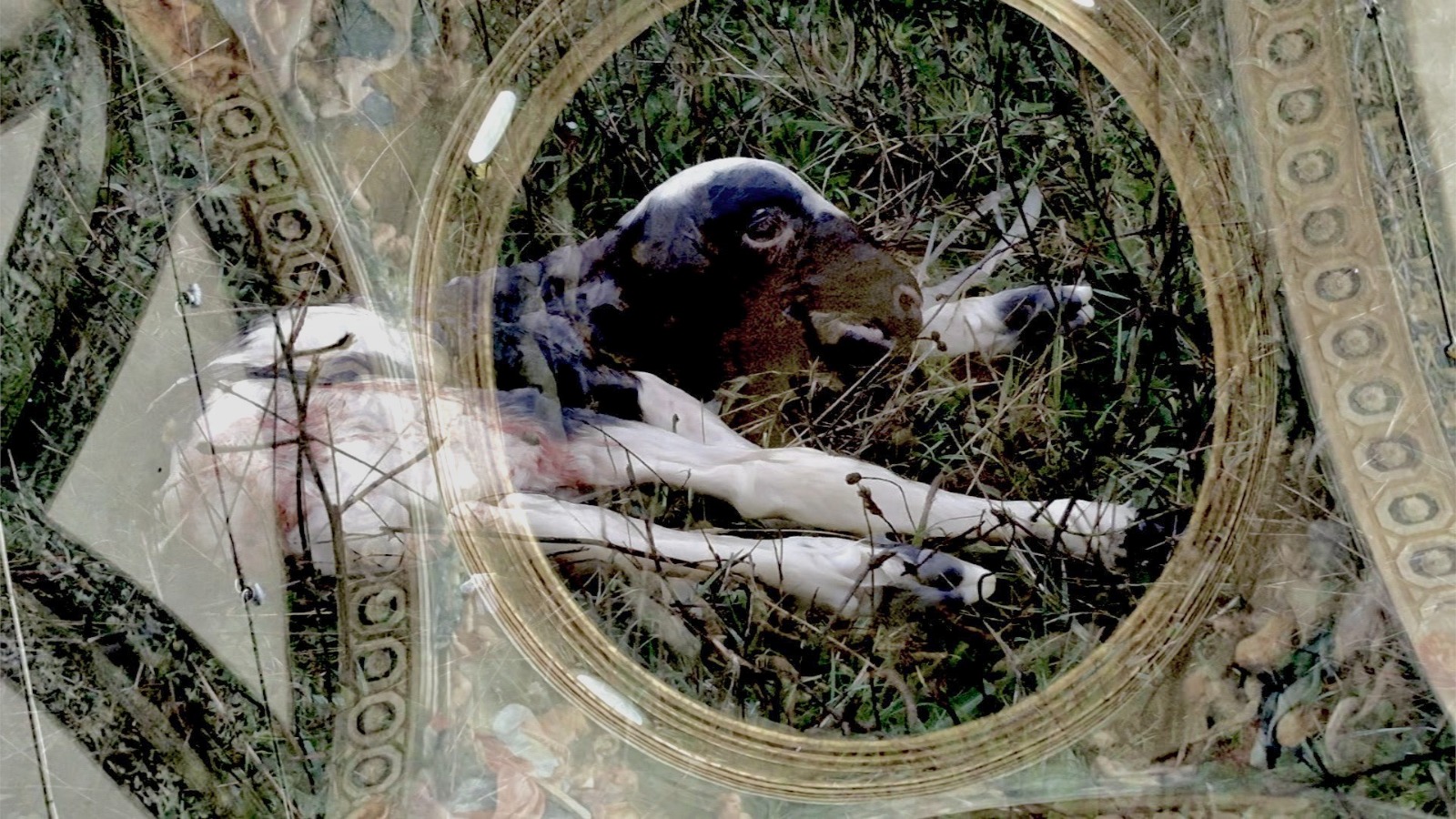
Then comes the Lamb and time stops, as on the event horizon. The lamb has human eyes and looks at us, teaches us, l’imprinting it makes the other roar of images that are our present flow quickly within us, real and true raw.
The vision belongs to us because it is what we see, we live, and which outlines our apocalypse by revealing and unveiling our internal and external cataclysm, our being thrown into the world and the very world we live in for an insignificant time, a spark.
The sacred is an image from the beginning, I think that every religion has an image at its origin, even those that do not contemplate the human figure or the face compose signs and writings, they build temples and sacred places with grandiose shapes which, even before being frequented, have the purpose of being imagined, narrated, visited first by faith and then by the incessant pilgrim wandering of every human being.
At least once in a lifetime it is said for some believers, but in the meantime the image has already been formed in the body and soul, perhaps through different shapes and colors, different visions. The image is sacred and profane at the same time, in our Apocalypse imagoturgy relates to the existing space reconstructed for action, it imprints Renaissance and contemporary figurative echoes on the walls, the Lamb of God is among the lambs grazing, he is among the children and storks of the Dandora landfill, among the resistant and wandering shepherds between mountains and valleys, in perennial transhumance between nature and poetry.
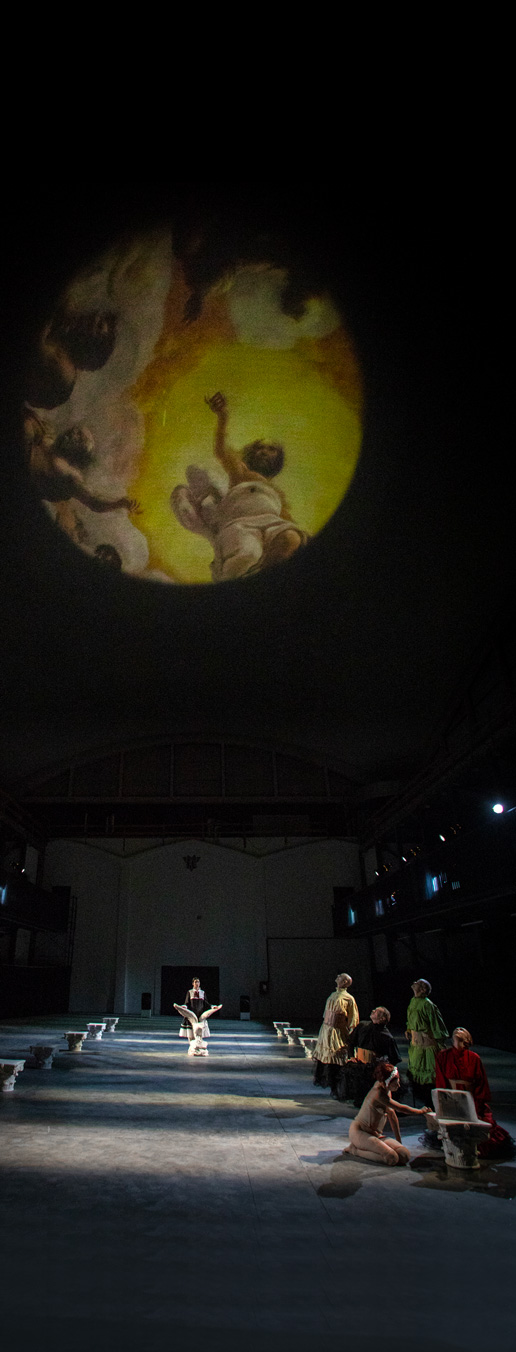
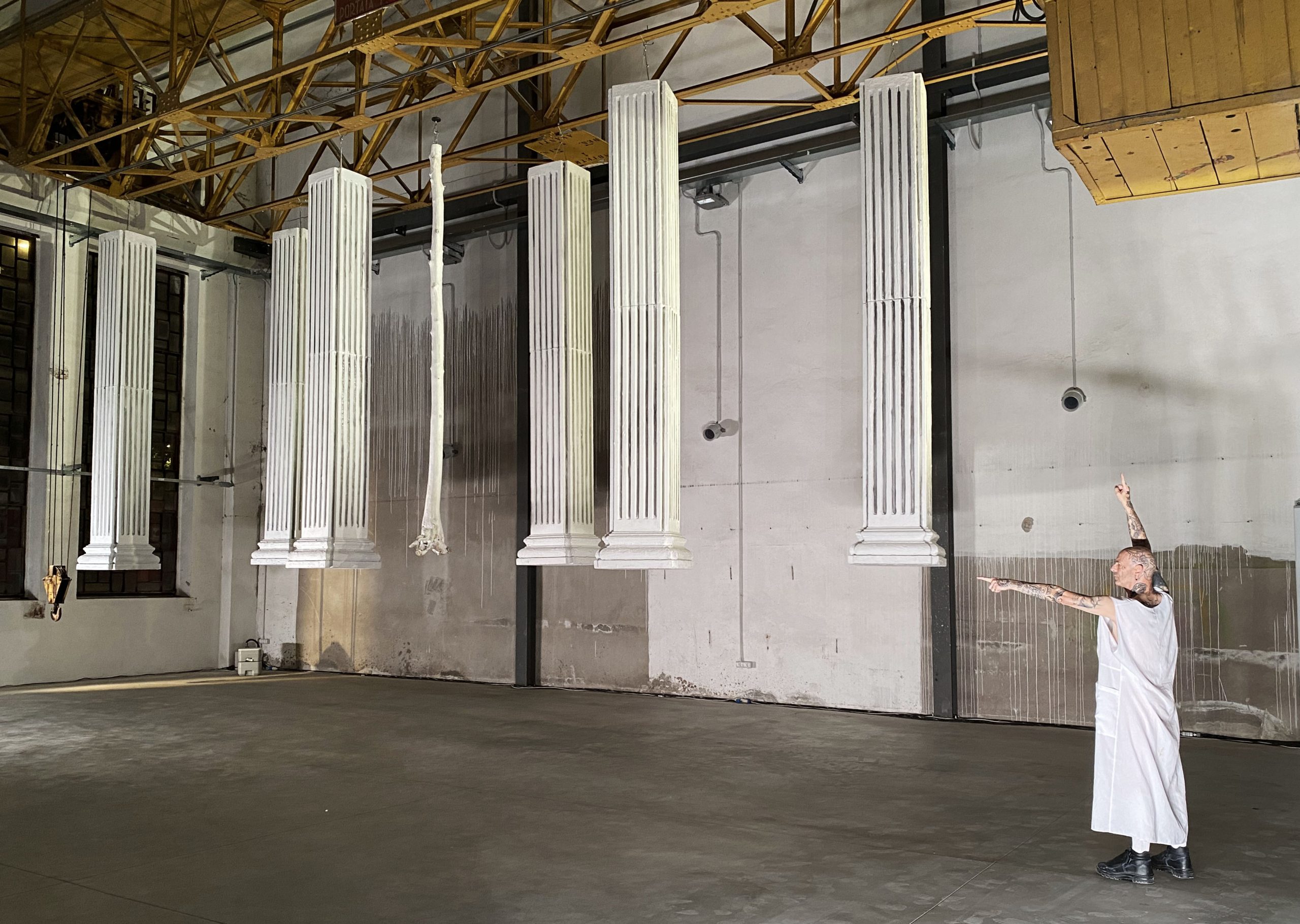
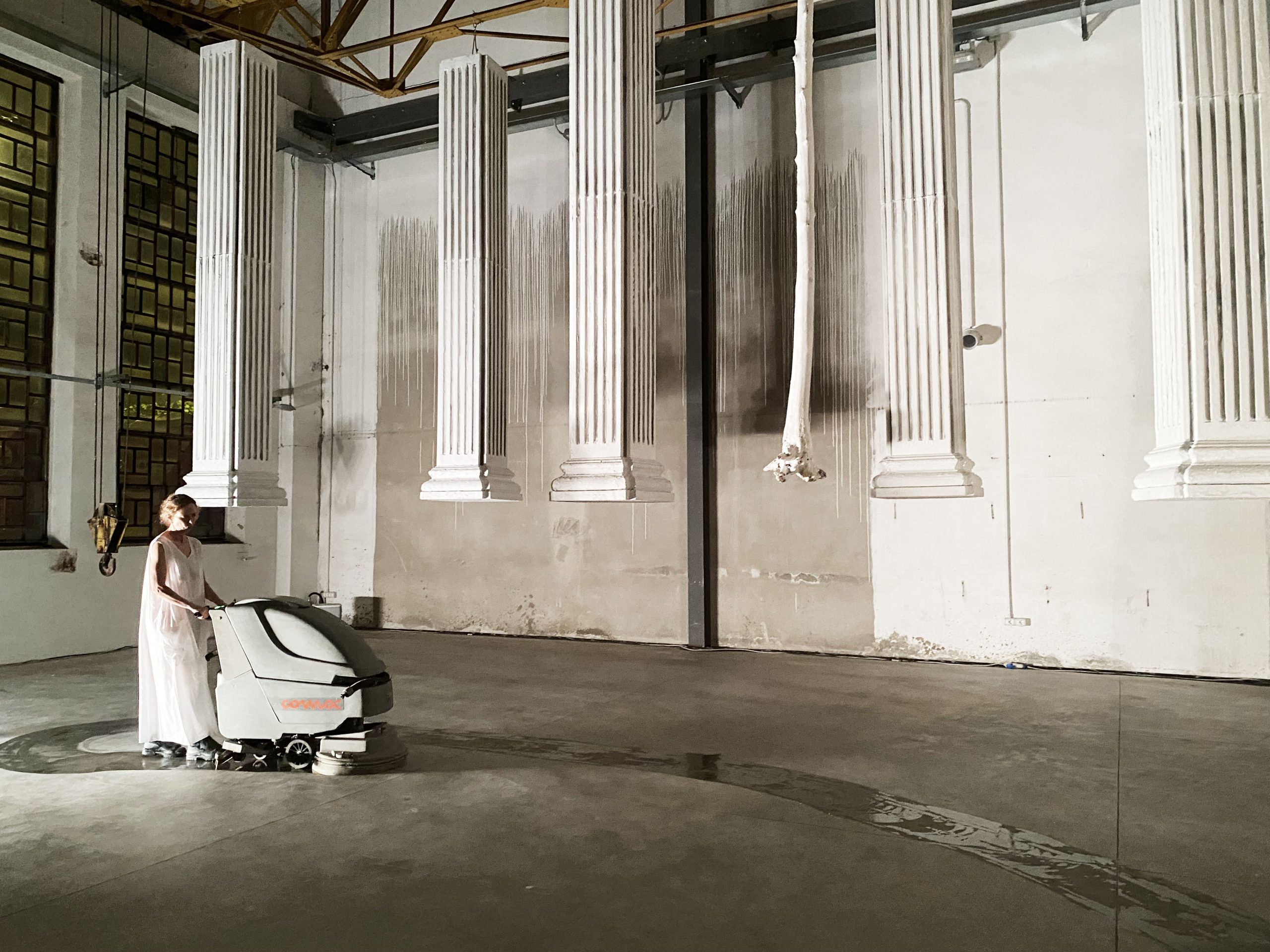
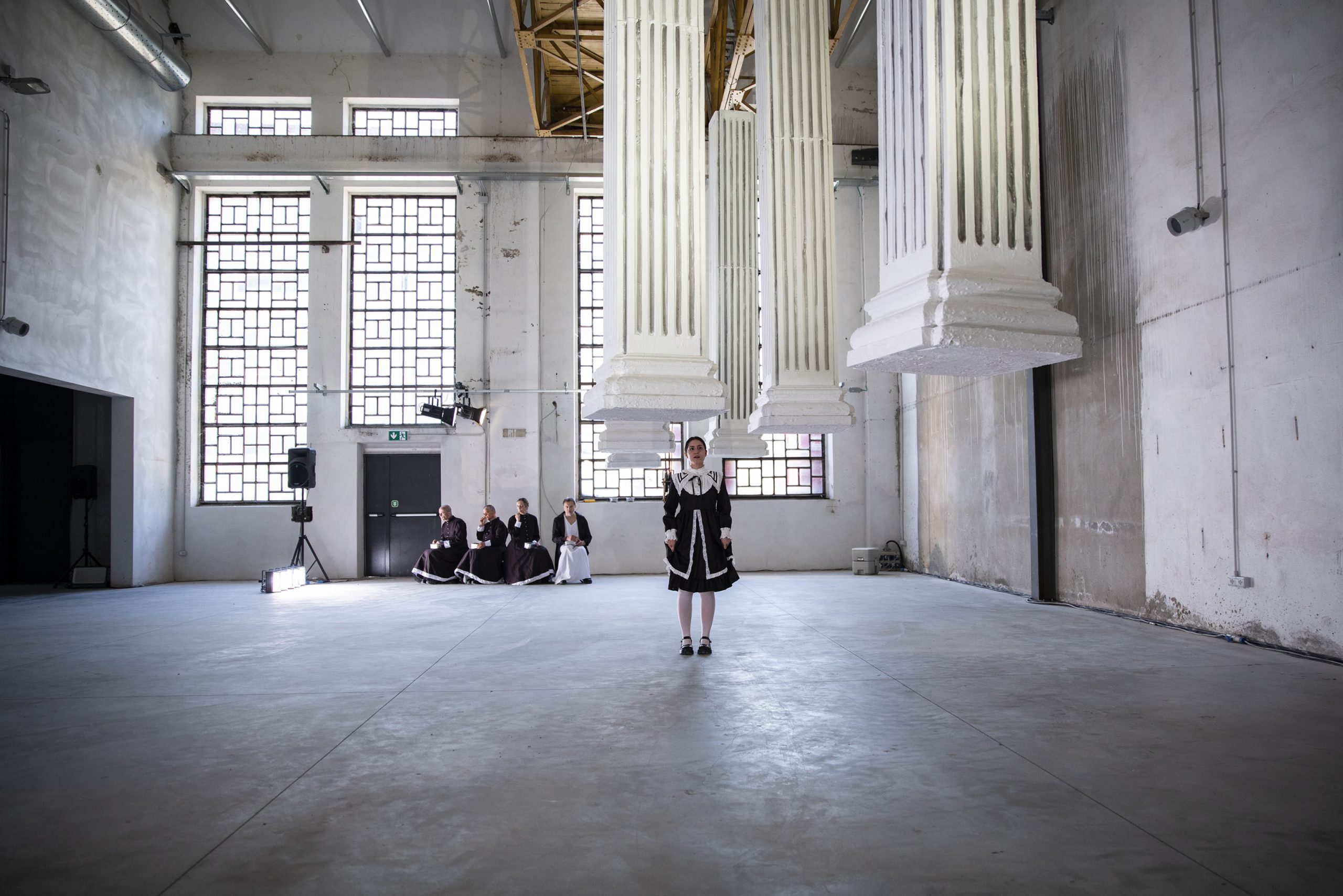
Correggio's rotating dome of San Giovanni Evangelista caresses Pierluigi Nervi's ferrocement vault and inhabits the dome of the Fabbrica, worker workplace and human events, effort and sacrifice. The action, there you, live singing and the image act as a bridge between those who participate in the rite and those who carry out the rite, together again with the scapegoat, to the Dionysian.
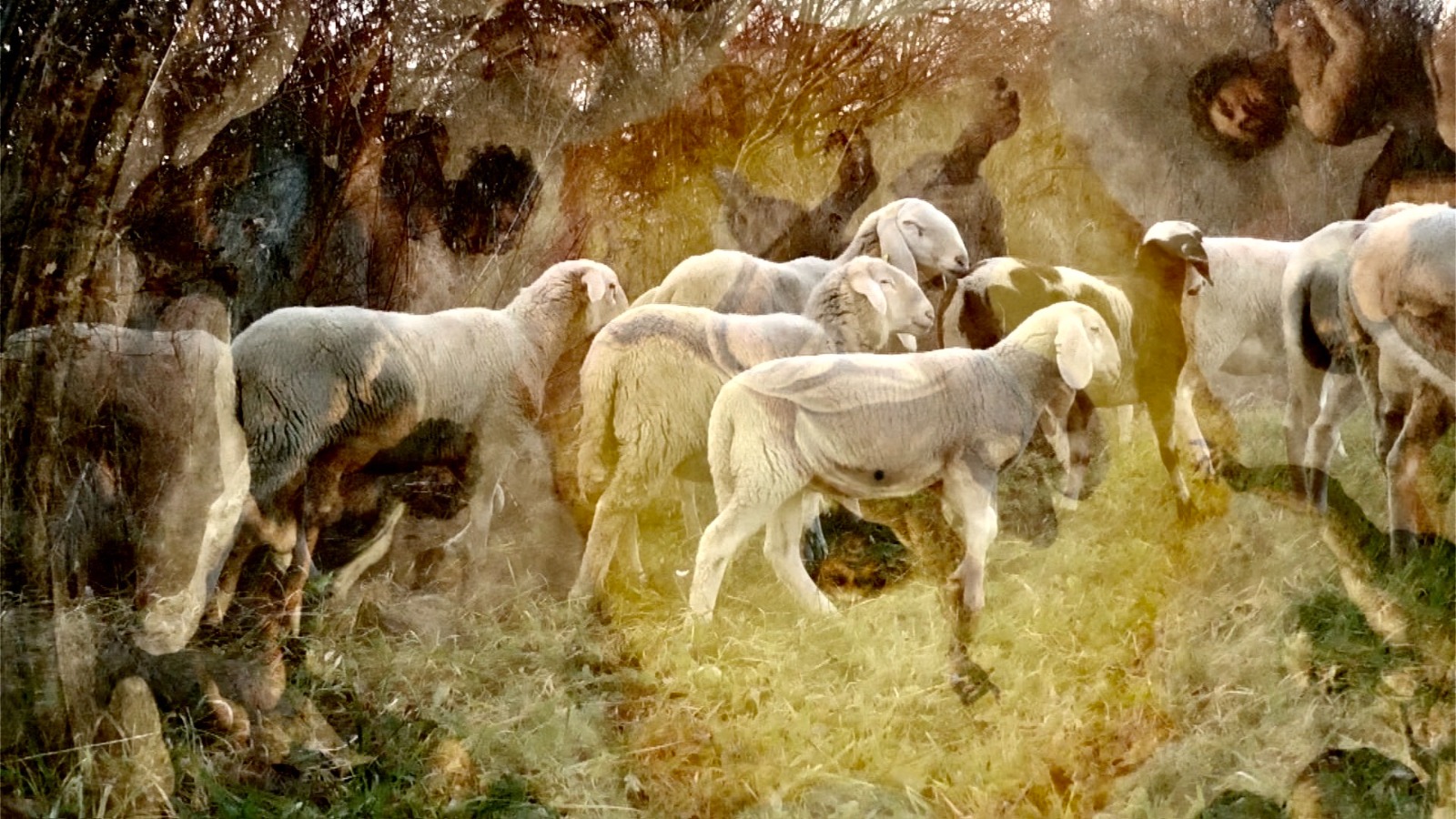
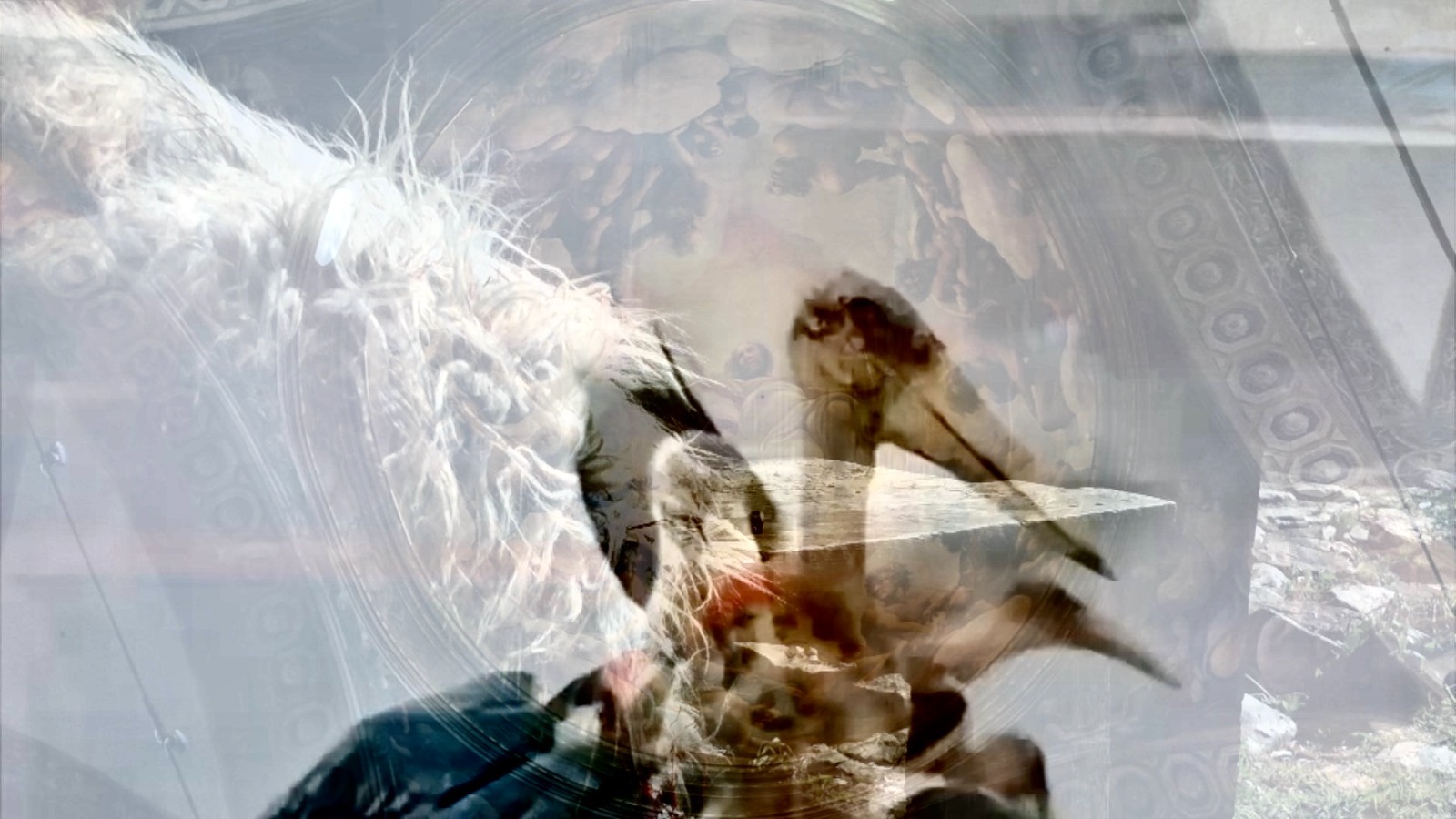
The imagoturgy of this Apocalypse enters into relation with the internal spaces of the large industrial complex, the composition is created through different construction methods: the superimposition of multiple images, in particular – Correggio's dome of the church of San Giovanni Evangelista in Parma -, documentary footage of lambs and sheep grazing, live footage of Nairobi's apocalyptic landfill – gives multi-layered visual form, in a choral ensemble movement.
Superimposition was widely used by film authors in the 1920s and later with the first experiments in surrealism and visual futurism, like the eyes rolling with desire in the Maria's Dance sequence, Brigitte Helm eat lascivious Babylonia, in Metropolis (Apocalyptic) at Fritz Lang, then later - I remember the wonderful Dalinian eyes in the hypnotic dream of Hitchcock's "I will save you" - it became an increasingly refined stylistic practice, as well as the optical illusion.
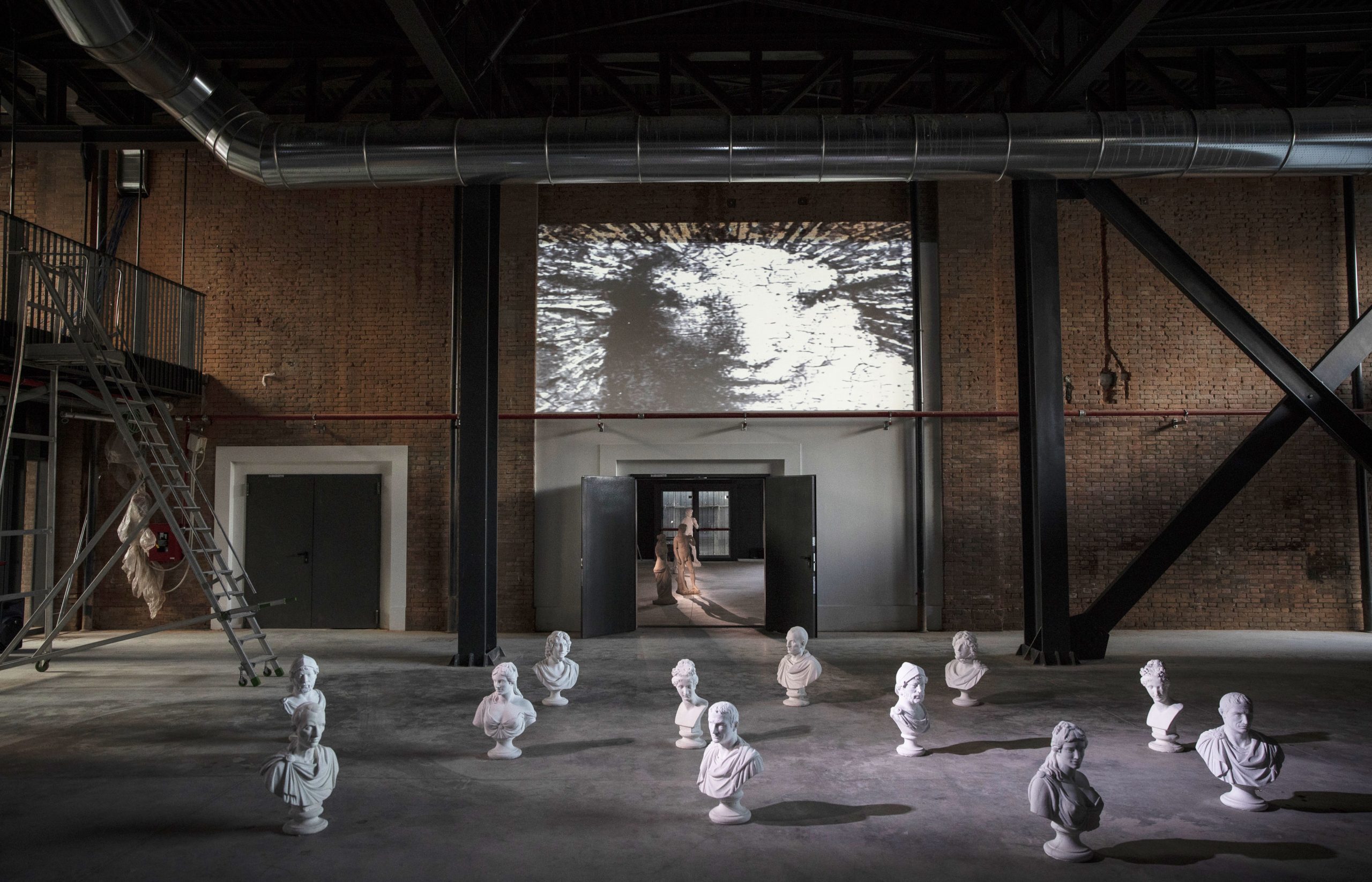
In the Hall of Busts, the head of the mystical Lamb from the Ghent altar will appear in a very slow cross-fade, in van Eyck's Polyptych, before and after the famous, much contested restoration. The eyes of the Lamb, previously almost invisible and lateral, they re-emerge frontal and almost human.
From the terror of the wordless animal we return to the word that lives, al Logos.
Apocalypse
Four -year project on the Holy Scriptures 2021 _ 2024
Visual installation + Performative work
Dramaturgy, imagoturgy
Francesco Pititto
Composition, installation, wrappers
Maria Federica Masters
Musica
Andrew Azzali
Interpreters
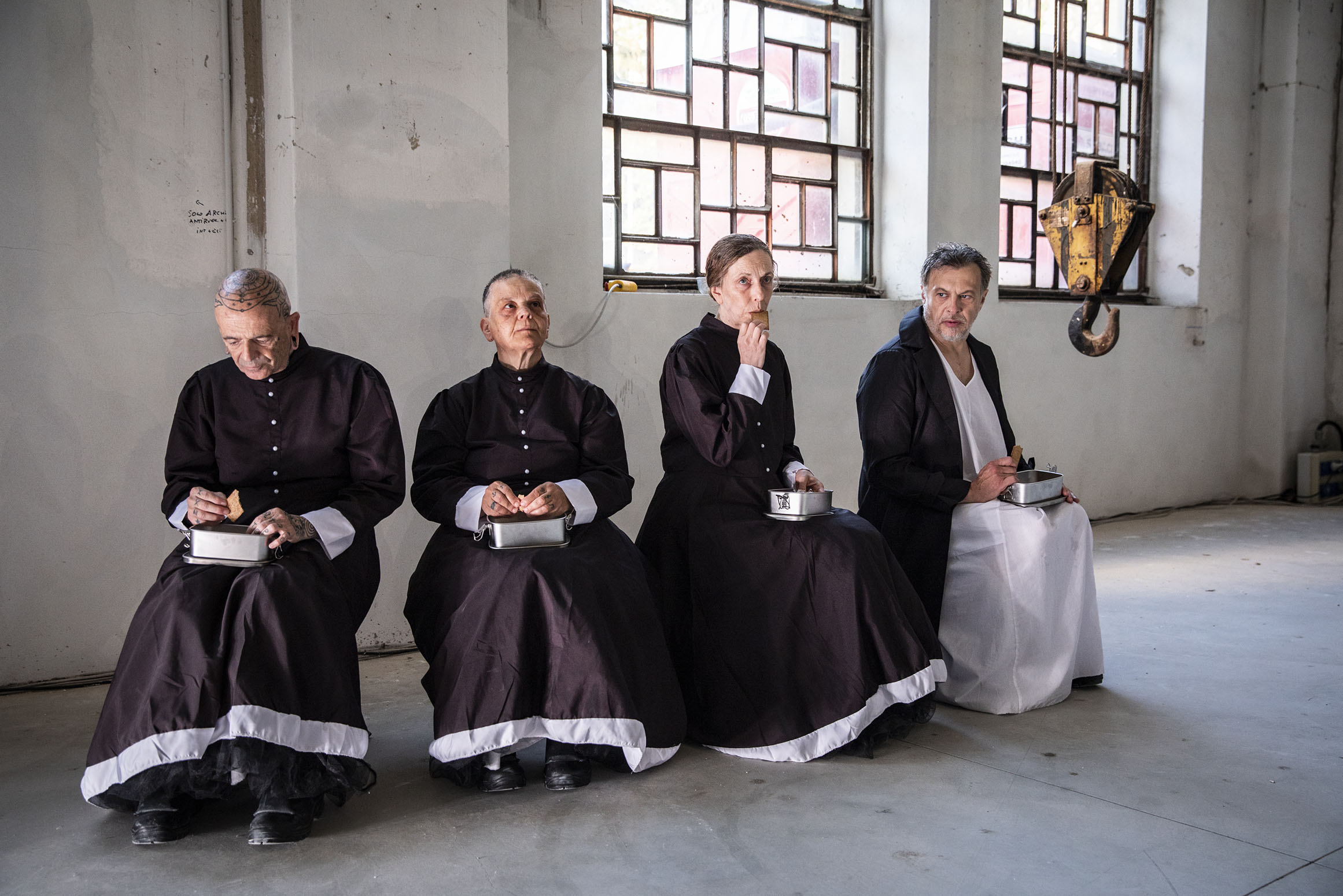
Valentina Barbarini, Fabrizio Croci, C.L.. Grugher, Sandra Soncini, Tiziana Chapel
Soprano
Victoria Vasquez Jury
documentary extractions
Anna Kauber
Video shoot
Julius Muchai // Friends of Kibiko ODV Association
Project care
Elena Sorbi
Organization
Ilaria Stocchi
Communication, Press office
Elisa Barbieri
Diffusion, graphic care
Alessandro Conti
Technical care
Alice Scartapacchio
Assistant
Giulia Mangini
Technical assistance
Lucia Manghi, Paolo Romanini, Dino Todoverto
Production
Lenz Foundation
Giuseppe Liotta – Hystrio 4/2023
The representation stays away from any type of scenic/theatrical convention and proceeds, in an often stratified manner, due to accumulation of situations: a series of epiphanic moments, of sudden apparitions where the historical and material conditions that hinder the spiritual and concrete life of man on earth are revealed.
An explicit reference to Dead class by Kantor takes us back to more strictly theatrical terrain, while it is difficult to accept that liturgical and panic theatrical thought that brings everything together, real and virtual, body and soul, sculptures and real actors, perforation symmetries and imbalances, search for sharing with the spectator and his obvious, desired disorientation.
Mario De Santis – Huffpost
"Apocalypse", further step in the rigorous work that distinguishes Lenz Teatro, in a poetic way he superimposes the apocalyptic biblical narratives on the catastrophic ones of the Anthropocene, rereading its mystical heart as a prophecy of the infra-time. Its focus is not the ultimate future or the end of history, but the purpose of it which is revealed not in the sacrifice of the Lamb which takes place before the celestial Jerusalem but, in the daily catastrophe, it is an awareness of a history that is also revealed in its shocks. In the past that reveals a future in an imaginative chasm, which is also a work of art like Lenz's “Apocalypse”., That – with its intertwining of logos and imago – illuminates from within.
Renzo Francabandiera – paneacquaculture.net
It is a rare creation and majestic in its scope, a truly incredible challenge considering that the environment is also occupied daily by the restoration site and with which, during the tests, the artists had to take turns in an attempt to insinuate art into a truly complex context. So here is the creation, in its absolute clarity, in the coherence that distinguishes Lenz's work, we could almost say the formal obsessions of the two directors, rises to a remarkable artistic level.
Maria Dolores Pesce – dramma.it
A reflection that does not confuse its investigative tools, relying with unusual and unusual purity on the mystical lens of the creative word which is the primary instrument of gnosis, and then of imagination and image, which is not so much produced as by the captured imagination, existing perhaps independently of it but taking shape and life only through it.
A gnosis that, if we want, it refers, among others, to Dostoevsky about whose conception of the world Nikolai Berdjaev wrote thus: “Dostoevsky's conception is first of all dynamic…from such a dynamic point of view there is no contradiction in Dostoevsky. He realizes the principle of coincidentia oppositorum”.
Parallel universes, one would say, in sudden communication, sacred continuity and human unpredictability that paradoxically and happily connect; Francesco Pititto and Maria Federica Maestri reconstruct with awareness and depth the often forgotten link between history and eternity, between human and divine (beyond all faith), between body and spirit starting from the same environment that welcomes this imagoturgy.